
Rotational moulding (rotomolding) has evolved from an empirical, low-pressure casting art into a highly calculated, thermodynamics-driven engineering discipline. Selecting top-tier tooling and machinery factories directly dictates cycle efficiency, dimensional stability, structural integrity, and long-term operating profitability.
In the contemporary landscape of high-performance polymer conversion, famous rotational moulding tools factories stand apart by unifying advanced metallurgy, finite element thermodynamic simulation, multi-axis high-speed CNC benched fabrication, and Industry 4.0 IoT process telemetry. Whether manufacturing high-capacity cross-linked polyethylene (XLPE) chemical vessels, seamless agricultural spraying platforms, automotive fluid conduits, or cryo-insulated cold chain units, tooling tolerance and machine kinematic stability represent the core boundary conditions of product quality.
Precision-engineered production modules built for extreme thermal uniformity, dynamic biaxial load-bearing, and minimal downtime across intensive production environments.
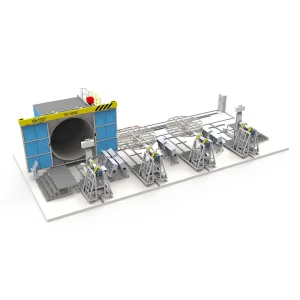
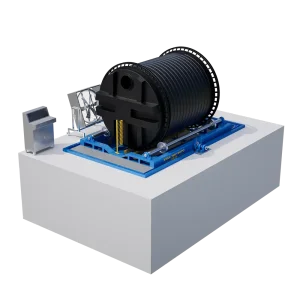
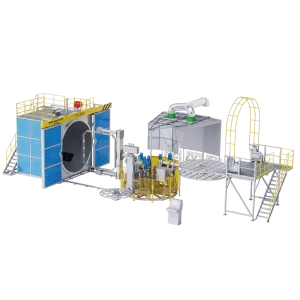
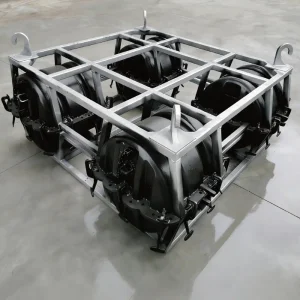
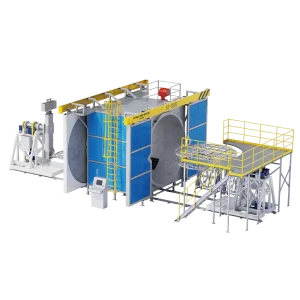
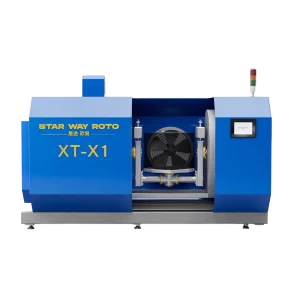
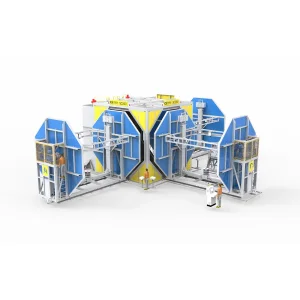
The selection of mould tooling architecture establishes the thermodynamic heat transfer rate, mechanical fatigue life, cycle cooling speed, and finished part surface finish.
Engineered predominantly for complex geometric contours, uniform wall thickness distributions, and medium-to-large production runs. Utilizing precision ceramic shell and sand core casting methods, A356 alloy provides exceptional thermal conductivity (~160 W/m·K), reducing oven residence times by up to 22% compared to ferrous tooling. Ideal for marine hulls, intricate playground assemblies, and ergonomic automotive components.
Direct multi-axis high-speed CNC milling from solid aviation-grade 6061-T6 aluminum billets delivers pore-free, hyper-dense mould cavities with zero internal porosity. Unlocks micro-level surface texturing, mirror-grade gloss polishes, and razor-sharp parting-line tolerances within ±0.05mm. Unmatched repeatability for precision medical housing, military case enclosures, and fuel storage systems.
The premier cost-effective engineering choice for massive, cylindrical, or prismatic hollow structures such as multi-thousand-liter agricultural silos, chemical storage vessels, and subterranean drainage systems. Laser-cut, CNC press-brake bent, and fully argon-arc welded, fabricated steel moulds provide exceptional mechanical endurance against severe thermal shock and heavy gravitational loads.
| Tooling Technology | Thermal Conductivity | Dimensional Tolerance | Tooling Longevity (Cycles) | Lead Time | Primary Industrial Fit |
|---|---|---|---|---|---|
| Cast Aluminum (A356) | 150–170 W/m·K | ±0.35 mm | 8,000 – 15,000+ | 30 – 45 Days | Complex Curvatures & Toys |
| CNC Billet Aluminum (6061-T6) | 165–190 W/m·K | ±0.05 mm | 20,000 – 35,000+ | 20 – 35 Days | Defense, Automotive & Medical |
| Fabricated Carbon Steel | 45–55 W/m·K | ±0.80 mm | 10,000 – 25,000+ | 15 – 25 Days | Bulk Liquid & Septic Tanks |
| Fabricated Stainless Steel (304/316) | 15–20 W/m·K | ±0.50 mm | 30,000 – 50,000+ | 25 – 35 Days | Corrosive Chemical Systems |
Integrating digital twin simulations, vertical supply clustering, and automated sub-assemblies to deliver unprecedented cost-to-performance efficiency for global industrial buyers.
Headquartered in Ningbo's world-class precision machining hub, raw material sourcing, five-axis CNC milling, robotic welding, surface fluoropolymer coating, and burner assembly occur within a 30km radius, slashing transit bottlenecks and production overhead.
Every mould frame and machine arm undergoes rigorous Finite Element Analysis (FEA) and Computational Fluid Dynamics (CFD) airflow simulation. This optimizes burner duct velocity and prevents thermal warpage across high-tonnage multi-spider arms.
Siemens and Mitsubishi PLC-driven control architectures incorporate multi-tier security permissions, recipe management for over 500 resin profiles, real-time internal air temperature (PIAT) telemetry, and automatic burner modulation.
100% pre-shipment Factory Acceptance Testing (FAT) including 72-hour continuous dynamic thermal dry runs, biaxial gear backlash validation, burner flue-gas emission profiling, and digital arm deflection verification under full mold payload.
From precision chemical handling to offshore marine craft, StarWayRoto tooling and machinery architectures empower diverse manufacturing sectors to attain zero-defect hollow part mass production.
High-capacity vertical storage, conical-bottom fermentation tanks, and multi-layer chemical dosing containers. Tooling incorporates specialized internal venting, PTFE anti-stick coatings, and reinforced flange inserts capable of processing UV-stabilized LLDPE and cross-linkable high-density polymers (XLPE) for extreme chemical corrosion resistance.
Engineering of Diesel Exhaust Fluid (DEF) reservoirs, heavy tractor fuel tanks, aerodynamic roof fairings, and complete unsinkable polyethylene recreational and commercial boat hulls. Advanced parting-line cam locks and pneumatic de-moulding ejector mechanisms ensure repeatable low-stress polymer crystal formation.
Double-walled polyurethane-injected isothermal containers, cryogenic vaccine transporters, and smart underground municipal waste receptacles. Precision CNC tooling ensures consistent wall thickness along complex corners, guaranteeing minimum R-value thermal performance and impact strength at -40°C.
A disciplined Total Cost of Ownership (TCO) methodology enables enterprise procurement officers to balance initial capital tooling expenditure against thermal operating efficiency and cycle output.
Tooling and machine procurement accounts for roughly 25-30% of lifetime asset costs. By leveraging standardized high-tensile modular arm systems and exchangeable mold spiders, capital flexibility is maximized across seasonal production transitions without purchasing separate machine chassis.
Heating represents up to 45% of running operational expenditures in rotational molding. Advanced StarWayRoto multi-layered ceramic fiber oven insulation and high-efficiency modulating burners (Riello / Weishaupt) reduce natural gas and electrical consumption by 18-28% per metric ton of processed resin.
Optimized mold venting design and dynamic airflow chamber baffling eliminate premature wall thinning, warpage, and pinholes. Integrating real-time Peak Internal Air Temperature (PIAT) feedback cuts overall cycle times by 15%, driving scrap rates consistently below 0.8%.
Exploring the revolutionary manufacturing transitions steering the rotational molding sector through 2030 and beyond.
Moving rapidly toward zero direct carbon footprint manufacturing. StarWayRoto is pioneering conductive internal ceramic jacket heating and induction mold systems, eliminating bulky open-air convection ovens and transferring heat directly into the mold wall with 90%+ thermal efficiency.
Integration of high-temperature wireless piezoelectric sensors and optical resin melt monitoring probes. Cloud-connected machine learning models automatically optimize primary and secondary rotation speeds dynamically as powder reaches viscous sintering, eliminating under-cured or degraded plastic.
Next-generation rotomoulding tooling engineered specifically for multi-layer drop-box processes processing 100% Post-Consumer Recycled (PCR) polyolefins and bio-polyamides. Skin-foam-skin co-molding structures produce ultra-rigid, lightweight hollow parts with superior carbon accountability.
Ensuring uncompromised operational safety, regulatory conformity, and immediate lifecycle service engineering across every continent.
All StarWayRoto machine architectures adhere strictly to European CE Machinery Directives (2006/42/EC, EN ISO 12100), ISO 9001:2015 quality manufacturing certifications, and North American UL / CSA electrical cabinet requirements, safeguarding facility operators and plant assets.
Secure VPN-backed cloud remote diagnostic hardware integrated into every control station allows our Senior Field Engineers to inspect PLC parameters, burner combustion profiles, and kinematic motor drives instantly from anywhere in the world, mitigating unplanned downtime.
We deploy bilingual technical commissioning crews globally for foundation leveling, electrical termination, burner commissioning, mould trial optimization, and thorough operator training covering preventative maintenance and safety interlocking.
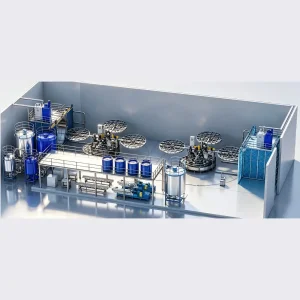
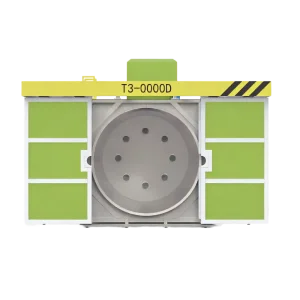
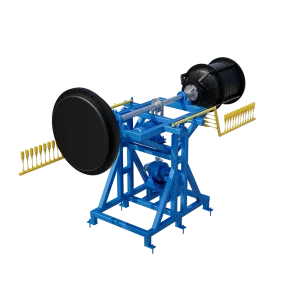
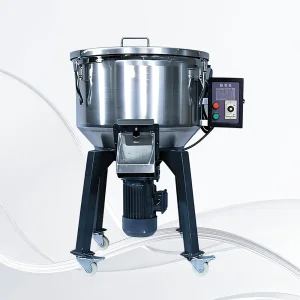
Complete the production circuit with high-precision electric ovens, high-shear pulverizers, high-speed fluidizing mixers, and space-saving automated shuttle configurations.
Clear, technically rigorous answers regarding mould design tolerances, resin rheology, machine configurations, and operational longevity.
Polymer volumetric shrinkage depends heavily on polymer density and cooling rates. For standard LLDPE (density 0.935–0.940 g/cm³), linear mould shrinkage is typically factored between 2.5% and 3.2% (approx. 0.025–0.032 mm/mm). For cross-linked polyethylene (XLPE) or high-density HDPE, shrinkage can vary from 3.0% to 3.8%. Our engineering department utilizes 3D CAD parametric scaling algorithms combined with dynamic thermal FEA simulations to apply non-uniform shrinkage compensation along reinforced structural ribs and corner radii.
A Carousel Machine operates with 3 or 4 fixed or independent arms rotating around a central hub through indexed stations (Heating, Cooling, Servicing/Demolding), making it exceptional for high-volume continuous mass production of uniform products. Conversely, a Shuttle Machine utilizes two independent carriages that move linearly into a shared central oven from opposite sides. Shuttles provide maximum flexibility for running moulds with radically different cycle times, thick walls, or varying shot weights without delaying the companion arm.
For smooth, polished aluminum or steel tool surfaces, a minimum draft angle of 1.0° to 1.5° is sufficient for polyethylene resins. However, when complex surface textures (such as leatherette, deep stipple, or grit-blasted finishes) are applied to the mould cavity, draft angles must increase by 1.0° to 1.5° for every 0.025mm of texture depth. Inward-facing female pockets and deep rib cavities require 2.0° to 3.0° to avoid part lock-up caused by polymer shrinkage onto the mould cores.
Proper venting maintains atmospheric equilibrium inside the hollow moulding during the heating and rapid cooling phases. We engineer calibrated PTFE/silicone breathable tube vents with high-temperature open-cell synthetic wool filling. This design allows escaping air and polymer volatiles to exit freely at high temperatures (preventing back-pressure pinholes) while preventing vacuum formation during rapid cooling (preventing structural wall collapse or part deformation) without letting molten resin penetrate the vent orifice.
Peak Internal Air Temperature (PIAT) is the highest air temperature recorded inside the mould cavity during the cycle. Rather than relying simply on oven residence timer duration, tracking PIAT provides absolute verification of polymer cure state. For standard LLDPE, optimum impact strength and complete powder coalescence occur at a PIAT window between 190°C and 205°C. Under-curing (<180°C) produces brittle, porous parts, while over-curing (>220°C) initiates polymer thermo-oxidative degradation, reducing elongation at break.
High-volume tooling maintenance requires: 1) Parting line seal and clamp inspection every 250 cycles to prevent flash and air leakage; 2) Micro-grit cleanings and semi-permanent mould release agent replenishment every 500-1,000 cycles; 3) Vent tube clearance verification and replacement of vent packing after every production run; 4) Spider arm mounting bolt torque checks (grade 8.8 minimum) and thermal expansion clearance verification before every shift startup.