
Verified factory quotations, turn-key processing systems, and high-output industrial setups engineered for demanding production cycles.
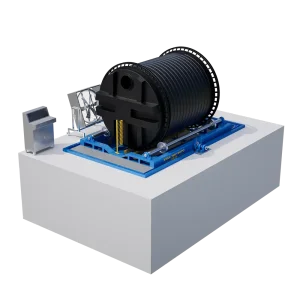
How thermodynamic modeling, billet CNC machining, and automated thermal profiling have superseded legacy fabrication methods in global plastic conversion.
For decades, the global rotational molding sector operated under the presumption that tooling was an inherently forgiving, low-pressure craft dominated by manual sheet metal fabrication and basic sand-cast aluminum. While fabricated steel sheet tooling provided a rudimentary pathway for symmetric cylindrical tanks, modern engineering requirements have fundamentally invalidated these traditional assumptions. Today’s industrial landscape demands extreme dimensional tolerances, intricate undercuts, complex insert integration, uniform wall-thickness distribution, and accelerated thermal recovery rates.
The emergence of Direct 5-Axis CNC Billet Machining and advanced Vacuum-Assisted Cast Aluminum Tooling (A356 grade) has redefined what exporters deliver to discerning original equipment manufacturers (OEMs). Direct CNC machining from monolithic wrought aluminum (6061-T6 or 7075) guarantees zero internal micro-porosity, flawless surface texturing, and exceptional heat transfer uniformity across complex geometric surfaces. This eliminates the persistent structural variances historically found in fabricated sheet molds, allowing polymer powders—such as Linear Low-Density Polyethylene (LLDPE), High-Density Polyethylene (HDPE), Cross-linked Polyethylene (XLPE), and Polyamide (Nylon 11/12)—to fuse seamlessly with predictable shrink rates.
Machined directly from forged 6061-T6 blocks with zero surface pitting. Delivers micron-level precision across parting lines, eliminating resin flashing and post-trimming bottlenecks.
Finite element thermal analysis simulates heat absorption curves during the oven cycle, pre-empting cold-spots and optimizing mold wall thickness from 8mm to 15mm.
Advanced PTFE-lined, multi-stage spring-loaded breathers maintain equalized internal pressure throughout densification, eliminating bubble pinholing and structural vacuum collapse.
Plasma-applied fluoro-ceramic non-stick coatings ensure consistent demolding characteristics, extending tool operational life past 50,000 thermal shock cycles without degrading.
Deciphering quotation matrices, hidden tool lifecycle costs, and operational trade-offs for corporate procurement teams and engineering leads.
Procuring rotational molding tooling from overseas manufacturers requires an evaluation framework that transcends baseline initial quotation costs. Inexperienced procurement directors often fall into the trap of selecting low-cost bids that utilize low-density fabricated iron or poorly degassed cast aluminum. The consequences of such procurement decisions surface immediately during production: prolonged heating and cooling cycles, high scrap rates due to warpage, premature mold fatigue cracking, and extensive manual deflashing costs that rapidly erode gross margins.
A comprehensive Request for Quote (RFQ) evaluation should interrogate the tool manufacturer across four core pillars of operational reliability: structural metallurgy, parting line clamping geometry, pneumatic ejection compatibility, and thermal transfer efficiency. Leading exporters like StarWayRoto provide transparent, line-item quotations detailing raw material purity certifications, CNC tooling hours, CMM dimensional verification reports, and finite-element cycle time projections.
| Evaluation Parameter | Fabricated Sheet Steel Molds | Standard Cast Aluminum (A356) | Precision 5-Axis CNC Billet (6061) |
|---|---|---|---|
| Tooling Cost Index | Low baseline investment | Moderate (economical for complex forms) | Premium (amortized over high volumes) |
| Dimensional Precision | ±1.5mm to ±3.0mm | ±0.5mm to ±0.8mm | ±0.15mm to ±0.3mm |
| Thermal Conductivity | 45 W/m·K (Slow cycle speed) | 150–170 W/m·K (High efficiency) | 170–190 W/m·K (Maximum throughput) |
| Parting Line Integrity | Prone to thermal warpage & flashing | Tongue-and-groove or CNC-fitted seals | Interlocking zero-flash taper locks |
| Tool Life Expectancy | 3,000–8,000 thermal cycles | 25,000–40,000 thermal cycles | 60,000+ thermal cycles |
Evaluating tool expenditure per demolded part rather than initial capital outlay. High-grade aluminum tools pay for themselves within 6 months via 18-25% shorter oven cycles.
Expert tooling engineering calculates multi-axial polymer contraction ratios (typically 2.5% to 3.5% for PE) with strategic draft angles (minimum 1.5° to 3°) to ensure effortless demolding.
Structural mounting frames (spiders) designed for multi-arm carousel and shuttle machines, ensuring balanced center-of-gravity to eliminate gear drive wear and vibration harmonics.
The technological synergy between precision foundry clusters, gantry CNC machining, and vertically integrated rotomolding manufacturing in Ningbo, China.
The global dominance of China’s rotational molding tool manufacturing is not simply a function of scale; it is rooted in concentrated industrial clustering, cutting-edge digitization, and rapid prototyping agility. Centered in world-class industrial hubs such as Ningbo, Zhejiang Province, the supply chain integrates high-purity aluminum smelting, master model CNC carving, automated sand and vacuum casting, high-precision five-axis machining, and rigorous testing within a 50-kilometer radius.
At Ningbo StarWay Roto Co., Ltd., founded in 2009 with over 23 years of accumulated engineering heritage, this industrial synergy has been synthesized into a unified Industry 4.0 ecosystem. Operating across a modern 20-acre production footprint, StarWay deploy a dedicated R&D team of 40+ senior mechanical and materials engineers (with 80% holding formal degrees and over a decade of domain expertise). This engineering density has enabled the enterprise to secure 23 core national patents, manufacture landmark systems such as the world’s largest rotomolding machine (the monumental S2-8500), and achieve official recognition as a National High-Tech Enterprise.
CAD/CAM data models interact with rotational kinematics algorithms to forecast resin flow patterns and eliminate bridging in narrow webs or structural ribs.
Automated multi-axis finishing stations deliver repeatable surface finishes from SPI-A2 mirror polish down to VDI-34 micro-matte textures with uniform draft preservation.
Every tool is mounted and dynamically fired on our full-scale carousel and shuttle machines to verify cycle times, warpage resistance, and part release before shipment.
Headquartered in Ningbo, one of the world’s busiest deep-water shipping container ports, enabling zero-delay oceanic freight consolidation directly to global ports.
How regulatory demands, industrial decarbonization, and regional supply chain configurations dictate rotational molding tooling requirements.
The commercial demands placed upon rotomolding tool exporters vary sharply by destination market. In North America, industrial buyers prioritize extreme durability, heavy-gauge steel framework bracing, and integration with high-tonnage multi-arm carousel setups. The surge in federal infrastructure investments and domestic water resource conservation has triggered massive demand for 5,000 to 20,000-liter agricultural tanks, septic vessels, and EPA-compliant cross-linked chemical containment systems. Tooling destined for this market must withstand punishing thermal profiles while maintaining exacting wall-thickness control.
Conversely, the European Union marketplace is steered by strict decarbonization targets and circular economy mandates (such as EN ISO 14001 and REACH regulations). European converters increasingly utilize post-consumer recycled (PCR) resin blends and multi-layer foaming techniques (LLDPE outer skins with foamed PE cores for structural rigidity at reduced part weights). Tooling must therefore incorporate advanced internal heat-distribution pipes, electric heating compatibility, and delicate surface texturing that conceals flow lines typical of recycled polymer compounds.
In Latin America, the Middle East, and Southeast Asia, rapid urbanization and expanding agricultural operations drive high-volume procurement of cost-effective, high-reliability rock-and-roll tooling and shuttle mold setups. Exporters must deliver highly adaptable tools capable of operating in diverse climatic environments with minimal maintenance infrastructure.
Heavy-duty ASTM A36 steel subframes, oversized trunnion mounts, and heavy-duty spring-loaded latches engineered for nonstop multi-shift industrial carousel cycling.
Molds engineered specifically for multi-layer foam co-extrusion and high-percentage PCR resins. Features precision-mated parting lines and integrated vacuum vent headers.
Robust, modular cast tools designed for quick-change spider mounts, compatible with both classic open-flame machines and automated gas-fired enclosed ovens.
Detailed breakdown of tooling configurations engineered for fluid dynamics, structural rigidity, and extreme environmental durability.
Large-scale fluid storage vessels (from 5,000L to 30,000L) require precise thermal distribution to prevent thin spots at radial corners and bottom transition knuckles. Our tooling configurations utilize hybrid cast-aluminum bodies with internal conductive heat piping and variable-wall CNC steel end-caps. This architecture ensures uniform hoop stress resistance across vertical walls while accommodating threaded bulkhead inserts, molded-in level indicators, and zero-leak flanged fittings without secondary welding.
Rotomolded coolers and biopharmaceutical cold-chain shippers require double-wall hollow geometry designed for seamless high-pressure polyurethane (PU) foam filling. Tool design incorporates split parting lines with tight tolerance CNC tongue-and-groove seals capable of withstanding the hydraulic expansion pressures of expanding rigid PU foam without surface bowing. Critical features include integrated lid gasket channels, recessed stainless-steel latches, and drainage spouts.
Recreational kayaks, fishing vessels, and marine navigational buoys demand razor-sharp keel lines, ergonomic foot-wells, and molded-in scupper holes. StarWay manufactures multi-part cast aluminum tools with pneumatic side-core pullers that retract automatically before part ejection. Mirror-finished CNC surface treatments eliminate surface friction on hull surfaces, increasing hydrodynamic glide efficiency while maintaining structural strength against underwater impact hazards.
Automotive and off-highway heavy machinery builders rely on rotational tooling for fuel tanks, Diesel Exhaust Fluid (DEF) systems, and complex HVAC ducting. Tooling requires extreme thermal resistance to process engineered materials like Cross-Linked Polyethylene (XLPE) and Polyamide 12 (PA12). Our five-axis CNC machined tooling ensures zero-leak air duct geometries, molded-in brass grounding inserts, and compliance with strict permeation and impact standards.
Clear, authoritative technical answers to the most common engineering and commercial queries encountered by global procurement managers.
Engineered for large hollow parts, high fuel-efficiency thermal cycles, and demanding factory continuous production schedules.
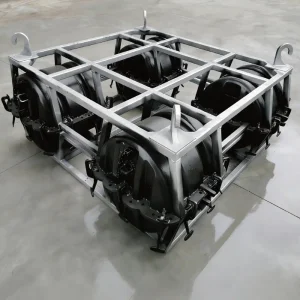
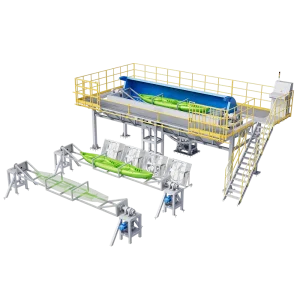

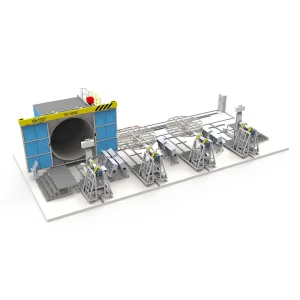
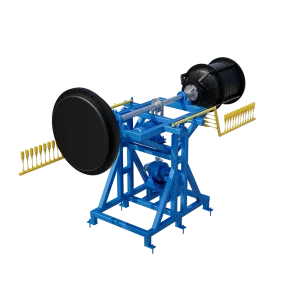
Connect directly with Ningbo StarWay Roto’s senior engineering team. Submit your 2D/3D part drawings (STEP, IGES, SolidWorks) for a comprehensive DFM feasibility report, shrinkage compensation blueprint, and formal FOB/CIF export pricing.