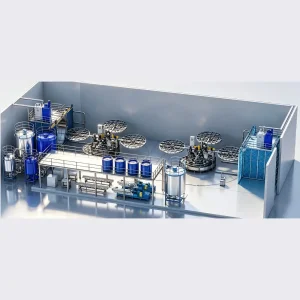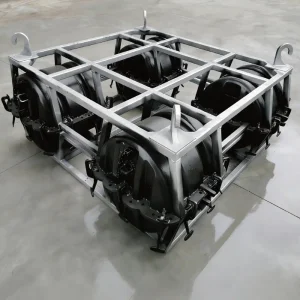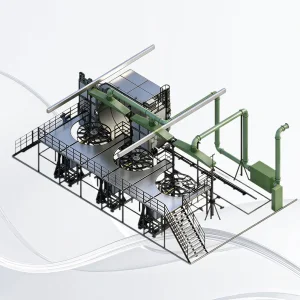
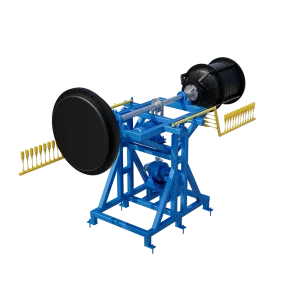
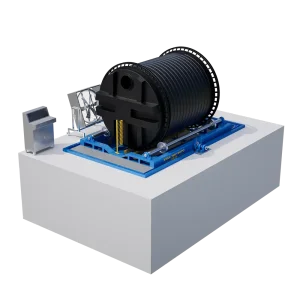
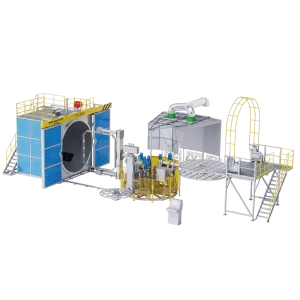
Rotational molding (Rotomolding) has evolved from a niche plastics processing technique into an indispensable pillar of modern industrial manufacturing. At the heart of high-precision, seamless hollow plastic product manufacturing lies the Oven Rotomolding Machine. Unlike traditional open-flame systems that suffer from thermal instability, uneven wall thickness distribution, and high energy dissipation, enclosed forced-air convection oven machines represent the pinnacle of process repeatabilty, thermal efficiency, and mechanical integrity.
The global market for advanced oven rotomolding machinery is experiencing a structural shift driven by the rapid growth of water treatment infrastructure, agricultural automation, off-grid chemical storage, automotive fuel/fluid reservoirs, and heavy-duty logistics containers. Valued at over $3.8 Billion globally with a projected CAGR of 6.4% through 2032, the rotomolding sector relies heavily on top-tier equipment manufacturers capable of engineering high-performance heating chambers, precise biaxial rotation control systems, and automated material handling environments.
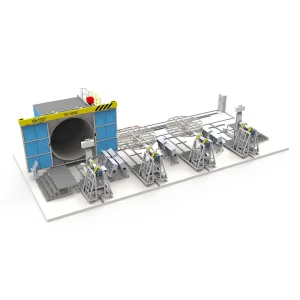
The primary operational advantage of an Oven Rotomolding Machine over primitive rock-and-roll or open-flame systems is its precise heat transfer mechanism. A premium industrial oven utilizes high-velocity forced convection fans combined with modulating gas burners (or advanced electric heating elements) to create a uniform thermal field.
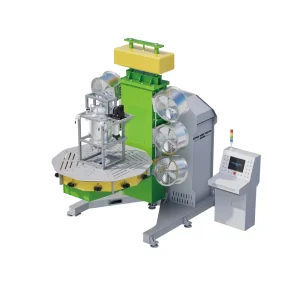
Simultaneous primary (major) and secondary (minor) axis rotation ensures polymer powder cascades smoothly over inner mould surfaces, establishing defect-free wall consistency.
Engineered airflow ducts maximize heat flux while minimizing fuel consumption. Modulating burners automatically throttle based on real-time oven temperature sensor arrays.
High-density ceramic fiber combined with rock wool insulation panels prevents external heat radiation, maintaining shell surface temperatures below 45°C for workplace safety.
| Machine Architecture | Heating Technology | Thermal Efficiency | Wall Thickness Uniformity | Primary Industrial Use Case |
|---|---|---|---|---|
| Enclosed Carousel Oven | Forced Hot-Air / Modulating Gas | 88% - 94% | ± 1.2 mm | High-volume tanks, OEM automotive, mass production |
| Shuttle Oven System | Dual-Chamber Gas / Electric Hybrid | 82% - 89% | ± 1.5 mm | Custom job shops, large structural hollow items |
| Electric Heating Oven | Clean Electric Radiant & Convection | 92% - 96% | ± 0.8 mm | High-precision R&D, medical grade, cleanroom tanks |
| Open Flame Rock & Roll | Direct LP Gas Flame Exposure | 45% - 58% | ± 3.5 mm | Low-cost basic agricultural tanks, simple shapes |
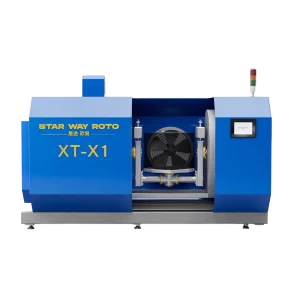
In the global machinery procurement ecosystem, China—specifically manufacturing hubs like Ningbo and Zhejiang province—has emerged as the premier destination for advanced rotomolding machine manufacturing. The competitive superiority of Chinese manufacturers like StarWayRoto (Ningbo StarWay Roto Co., Ltd.) stems not merely from cost competitiveness, but from deep industrial cluster integration.
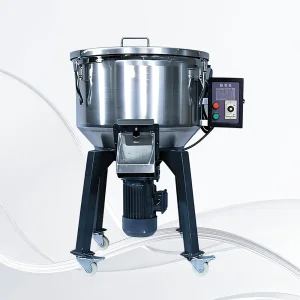
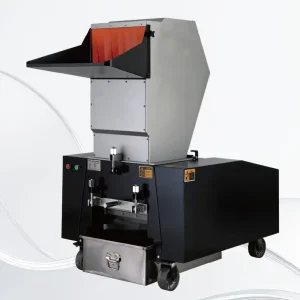
From raw steel fabrication and precision CNC aluminum mould carving to PLC software customization and auxiliary machinery (pulverizers, mixers, automatic weighing systems), Chinese factories deliver turn-key single-source ecosystems.
While Western OEMs require 8 to 12 months for custom carousel machine delivery, Chinese tier-1 suppliers complete custom engineering, thermal testing, and shipping within 60 to 90 days without compromising ISO/CE compliance.
Capital expenditure (CapEx) savings of 40% to 60% compared to European counterparts allow global plastics converters to scale production lines faster, achieve quicker payback periods, and maintain price leadership in local end-markets.
Oven rotomolding machines provide unprecedented versatility. By precisely controlling heating phase timing, cooling rates, and internal air pressures, manufacturers produce seamless, stress-free parts across high-spec industries.
Vertical and horizontal multi-layer PE tanks ranging from 500 Liters to 50,000 Liters. Advanced ovens allow double-layer or foam-cored wall constructions for UV resistance, chemical inertness, and structural strength.
Fuel tanks, AdBlue (DEF) reservoirs, hydraulic oil tanks, tractor cabins, kayaks, and floating dock pontoons. Rotomolded seamless structures eliminate weld-seam leaks under heavy impact or vibration.
Insulated coolers, dry ice containers, biological sample transport cases, and vaccine boxes filled with polyurethane (PU) foam, engineered with ultra-flat sealing surfaces achievable only via precision oven control.
Automated livestock feeders, fertilizer spray tanks, water troughs, and waste management systems requiring chemical resistance to harsh pesticides, acids, and organic farm waste.
When global procurement directors, plant engineers, and operational managers evaluate famous oven rotomolding machine manufacturers, a rigorous audit protocol is required. Below is the standard engineering assessment framework utilized by top-tier plastics manufacturing groups:
| Evaluation Pillar | Critical Engineering Metric | Benchmark Specification | Risk Mitigation Target |
|---|---|---|---|
| Thermal Efficiency | Oven Heat Losses & Burner Modulating Ratio | Gas Consumption < 0.12 m³/kg polymer melted | Prevents fuel cost spikes; reduces carbon footprint |
| Automation & PLC | Siemens / Schneider PLC with Real-Time IAT tracking | SCADA integration + 100-recipe memory memory storage | Eliminates operator error & cycle timing variations |
| Mechanical Durability | Arm Bearing Heat Seals & Gearbox Load Ratings | Heavy-duty forged steel arms with internal cooling | Eliminates arm deflection under heavy mould loads |
| Cooling System | Multi-stage Air & Water Mist Cooling Chambers | Programmable cooling rate (1°C to 15°C / min control) | Prevents part warpage, shrinkage, and stress cracking |
| Safety Compliance | CE, UL, ISO 12100 & Explosion-Proof Fan Motors | Dual safety interlocks + automated door safety curtains | Ensures full compliance with Western OSHA/CE standards |
The rotational molding sector is undergoing rapid technological innovations designed to meet carbon-neutral directives and improve processing precision:
Replacing gas burners with zero-emission electric heating arrays powered by solar or industrial grid energy. Electric ovens offer pin-point temperature accuracy within ± 0.5°C, making them ideal for high-tech engineered resins like Polypropylene (PP) and Polyamide (PA12).
Integration of wireless Internal Air Temperature (IAT) telemetry inside the mould chamber. Real-time AI algorithms calculate exact polymer bubble suppression and melt crystallization stages, automatically triggering the cooling cycle at the exact optimum moment.
Modern ovens feature optimized air turbulence profiles that allow processing of Post-Consumer Recycled (PCR) polyethylenes without suffering from pinholes, thermal degradation, or structural embrittlement.