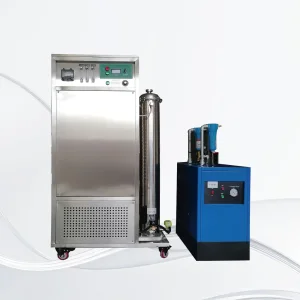
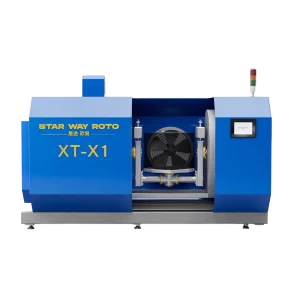
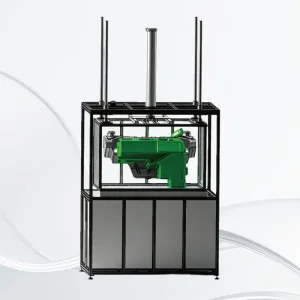
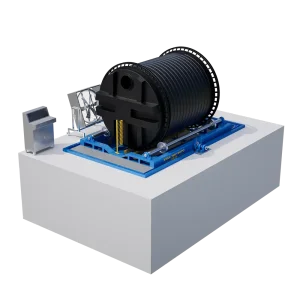
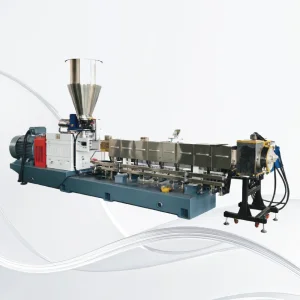
High-precision rotational molding machinery, automated processing units, and high-speed polymer preparation systems
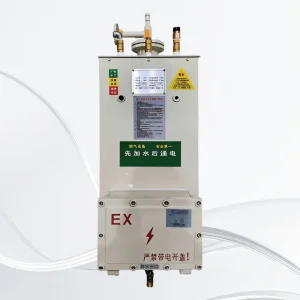
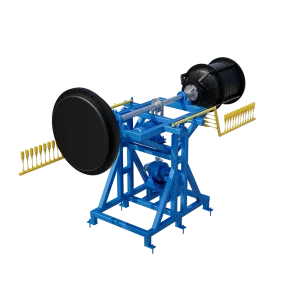
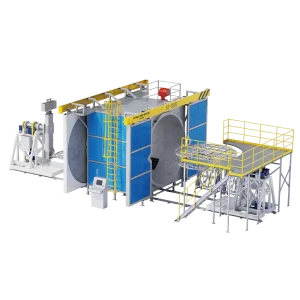
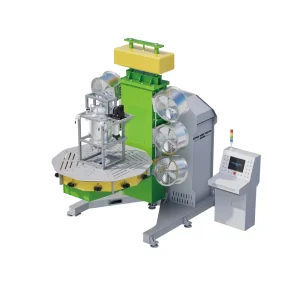
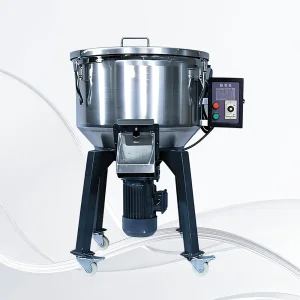
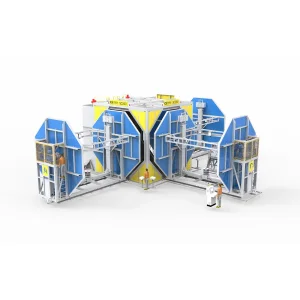
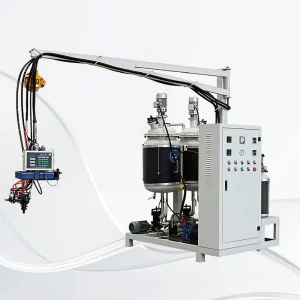
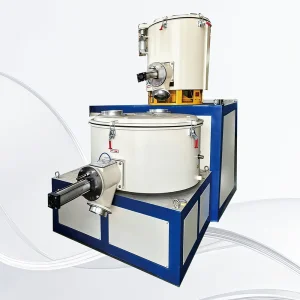
An empirical evaluation of polymer sintering, biaxial rotation physics, and structural advantages over conventional molding techniques.
Rotational plastic molding (Rotomolding) has undergone a fundamental technological shift over the past decade. Once limited to basic hollow containers and toys, it is now an advanced polymer manufacturing process capable of producing highly complex, structural, stress-free OEM components for heavy industry, defense, automotive, and environmental engineering sectors.
At its core, custom rotational molding operates on low-pressure, high-temperature biaxial rotation thermodynamics. Powdered thermoplastics—primarily Linear Low-Density Polyethylene (LLDPE), High-Density Polyethylene (HDPE), Cross-linked Polyethylene (XLPE), Polypropylene (PP), and Polyamide (PA12)—are introduced into a hollow mold cavity. As the mold rotates simultaneously along major and minor axes within a controlled heating chamber, resin particles undergo thermal softening, wall adhesion, micro-void coalescence, and complete liquid sintering without mechanical shear stress.
The quality of custom rotomolded parts depends directly on Peak Internal Air Temperature (PIAT). Melt coalescence is governed by surface tension driven viscous flow: $y^2 = \frac{3 \cdot \gamma \cdot r \cdot t}{2 \cdot \eta}$, where y is the neck radius between sintering polymer granules, γ is surface tension, r is particle radius, t is dwell time, and η is melt viscosity. Maintaining optimum PIAT (typically 190°C – 210°C for LLDPE) ensures zero micro-void gas entrapment while preventing thermal-oxidative degradation.
For industrial buyers evaluating manufacturing routes for heavy-duty hollow or semi-hollow components, the following matrix outlines the strategic and technical advantages of custom rotational molding:
| Engineering Parameter | Custom Rotational Molding | Blow Molding | Injection Molding |
|---|---|---|---|
| Tooling Cost (CAPEX) | Ultra-Low ($5k - $40k) | Moderate to High ($50k - $180k) | Extremely High ($100k - $500k+) |
| Residual Structural Stress | Near Zero (Stress-Free) | Moderate (Stretched Orientation) | High (Shear & Injection Stress) |
| Wall Thickness Uniformity | Excellent Corners & Uniform Edges | Thin Corner Stretch Defect Risk | High Precision, Thickness Limited |
| Part Volume Capacity | 10 Liters to 30,000+ Liters | Up to 2,000 Liters Max | Limited by Press Tonnage (< 500L) |
| Multi-Layer / Foam Insulated | Native Co-rotation / Dual Shot | Complex Multi-head Extrusion | Not Feasible for Hollow Cores |
| Metal Insert Integration | Molded-in Solid Mechanical Interlock | Secondary Post-Molding Insert | Insert Molded (High Pressure Risk) |
From digital CAD surface modeling to automated thermal cycling and non-destructive quality verification.
Draft angle evaluation (min 1.5°–3°), rib structure reinforcement design, thermal shrinkage radius compensation (1.5%–3.0%).
CNC-machined forged A356 aluminum or sheet steel tooling with mirror surface finishing (SPI-A2) and pneumatic venting systems.
Cryogenic or high-speed pulverizing of virgin resins down to 35-50 mesh size (300-500 microns) for optimal melt fluidity.
Biaxial rotation (arm ratio 4:1) with wireless real-time Internal Air Temperature (IAT) telemetry monitoring.
Ultrasonic wall thickness scanning, CMM dimensional verification, hydrostatic leak testing, and low-temp Charpy impact test.
Selecting the appropriate mold architecture is critical to project ROI. Our factory engineers evaluate structural geometry, production volume, surface aesthetic requirements, and heat transfer efficiency:
Tailored rotational molding OEM engineering designed to meet rigorous regional compliance standards across global markets.
High-impact cross-linked polyethylene (XLPE) diesel fuel tanks, DEF (Diesel Exhaust Fluid) reservoirs, and heavy machinery covers certified under US DOT and EPA Title 40 regulations for zero vapor permeability.
Underground modular rainwater harvesters, biological sewage vessels, and chemical tanks adhering to EN 12566 and CE compliance. Formulated with UV15+ stabilized virgin LLDPE resins resistant to chemical corrosion.
PU-foam-filled marine navigation buoys, high-density aquaculture floating pontoons, and solar-powered agricultural chemical sprayers designed to withstand high salinity, intense wave action, and tropical solar exposure.
Ruggedized military transit cases tested under MIL-STD-810G, flame-retardant (UL94-V0) battery enclosures for off-grid energy storage, and explosion-proof chemical processing containers.
Vertical integration, raw resin compounding capabilities, and rapid TCO optimization for international OEM procurement teams.
Global procurement executives and engineering directors face mounting pressure to balance supply chain stability, speed to market, and strict manufacturing cost control. As a modern China-based rotational molding OEM/ODM powerhouse, our facility delivers a unified end-to-end supply ecosystem that eliminates middleman markup and operational latency.
Pioneering sustainable bio-polymers, smart sensor integration, and Industry 4.0 automated digital twins in rotomolding.
Integration of up to 40% post-consumer recycled (PCR) rotomolding-grade resins and ISCC PLUS certified sugarcane-derived bio-PE, maintaining ESCR (Environmental Stress Crack Resistance) over 1000 hours.
Doping resin powders with multi-walled carbon nanotubes (MWCNTs) or graphene nanoplatelets to increase tensile modulus by 30%, reduce gas permeability, and grant permanent electrostatic dissipative (ESD) properties.
Deploying ANSYS Polyflow thermal CFD modeling prior to mold cutting to predict material flow, eliminate thin spots on complex deep-draw radiuses, and optimize heating cycle duration by 25%.
Detailed answers to critical engineering, tooling design, material selection, and international sourcing questions.
In custom rotational molding, sharp 90-degree internal corners must be strictly avoided. Wall material naturally flows away from sharp exterior radii and builds up excessively on inside radii. The golden rule is to maintain an outer corner radius ($R_{outer}$) of at least 3.0 mm to 5.0 mm, with an inner radius ($R_{inner}$) matching 1.5 times nominal wall thickness. Nominal wall thickness can range from 2.5 mm up to 15.0 mm with an achievable tolerance of ±0.5 mm across large surfaces.
Molded-in brass or stainless steel threaded inserts are designed with aggressive aggressive coarse knurling, deep undercut grooves, and hexagonal flanges. During the heating cycle, molten polymer fully encapsulates the knurled undercut structure. As the plastic cools, its natural thermal shrinkage (approx. 1.5% to 2.5%) clamps around the metal insert under radial compression, creating an airtight, high-torque, leak-proof mechanical lock capable of enduring high hydraulic and pneumatic pressures.
Standard LLDPE features linear molecular chains that melt and solidify reversibly, offering great impact strength, flexural modulus, and recyclability. Cross-linked PE (XLPE) incorporates a chemical cross-linking agent (such as organic peroxide) triggered during the high-heat molding phase. This creates a 3D interconnected polymer network. XLPE delivers superior chemical resistance, environmental stress-crack resistance (ESCR > 2000 hours), and high-impact toughness at sub-zero temperatures (-40°C), making it essential for heavy-duty chemical and fuel storage tanks.
International OEM buyers should enforce a comprehensive 4-stage QA protocol: 1) 3D CMM inspection report verifying mold cavity dimensions before sample trial; 2) First Article Inspection (FAI) report covering wall thickness distribution via ultrasonic gauge scanning; 3) Low-temperature impact testing (ARM standard impact drop test at -40°C); 4) Hydrostatic static head pressure and air-bubble leak testing for sealed vessels. Our facility provides full digital documentation and video audits for every production lot.
Electric heating rotomolding machines provide precise, closed-loop thermal control with zero direct carbon emissions at the point of manufacture. They eliminate hot-spots within the mold chamber, reduce ambient thermal radiation, lower noise pollution, and allow precise digital regulation of internal air temperature. This results in consistent batch-to-batch polymer sintering, zero surface scorching, and lower long-term operating costs in zero-emission green industrial parks.
Complete ecosystem support including laboratory testing units, single-screw pelletizers, and specialized rotomolding machinery