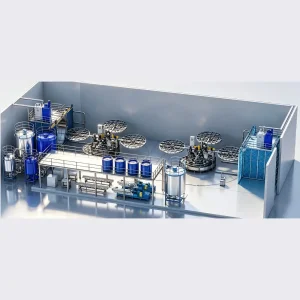
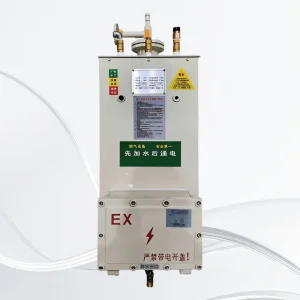
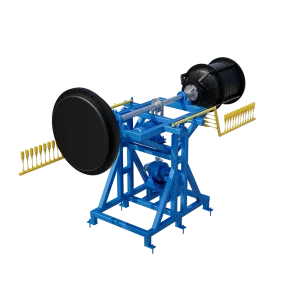
High-precision carousel, shuttle, and rock-and-roll rotational molding systems designed for high-capacity hollow plastic manufacturing.
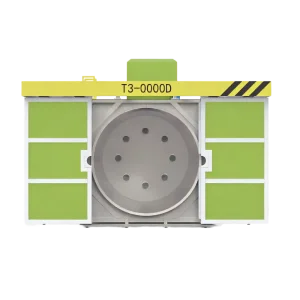
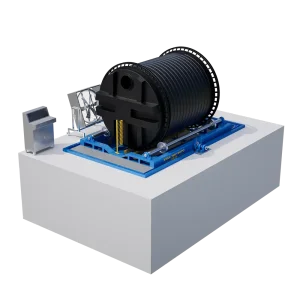
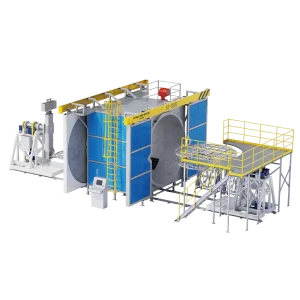
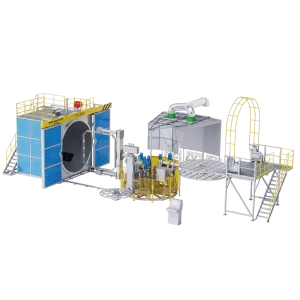
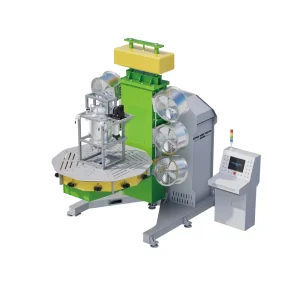
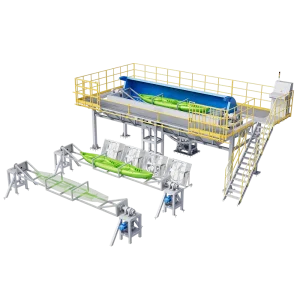
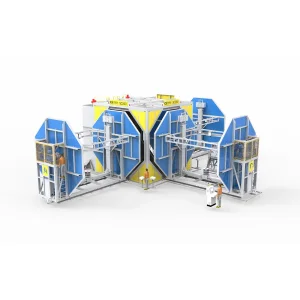
Unlike high-pressure injection molding or stretch blow molding, rotational molding (rotomolding) relies on zero-shear thermal fusion within a biaxially rotating mold cavity.
Rotomolding is fundamentally an atmospheric pressure process. Thermoplastic powders melt and coalesce incrementally against heated mold walls without external shear forces. This yields seamless, stress-free hollow parts with exceptional environmental stress-crack resistance (ESCR) and zero molded-in residual stresses.
By rotating the mold along major and minor axes simultaneously at low angular speeds (typically 2 to 20 RPM), gravity distributes the polymer powder uniformly across intricate geometries. Adjusting rotation speed ratios enables precise wall thickness control even at steep radii and deep recesses.
Because plastic accumulates preferentially in internal corners during rotation, rotomolded parts feature naturally reinforced external corners and uniform wall profiles. This spatial mass distribution delivers unmatched impact strength, structural rigidity, and load-bearing performance.
| Manufacturing Parameter | Rotational Moulding | Blow Moulding | Injection Moulding |
|---|---|---|---|
| Internal Pressure | Atmospheric (0 bar) | Low to Medium (5 - 10 bar) | Very High (500 - 1500+ bar) |
| Part Geometry | Complex, seamless hollow shapes | Simple hollow containers & bottles | Solid parts or ribbed open shells |
| Tooling Investment | Low (Cast Aluminum / Fabricated Steel) | Moderate to High | Extremely High (Hardened Tool Steel) |
| Wall Thickness Uniformity | Excellent corners, adjustable thick walls | Thin corners, stretching variations | Highly uniform, limited thickness range |
| Residual Stress | Virtually Zero (Stress-Free) | Moderate (Oriented stresses) | High (Shear-induced frozen stresses) |
From raw polymer powder micronization to post-mold dimensional validation, every step requires precise thermal management and physical control.
Raw polyolefin resins (LLDPE, HDPE, XLPE, PP, PA12) are converted into fine powder via precision high-speed disc pulverizers. Ideal powder flowability requires particle sizes between 35 and 50 mesh (300 to 500 microns) with high bulk density and smooth particle morphology. During this stage, UV stabilizers, anti-oxidants, anti-static agents, and color masterbatches are homogeneously compounded into the matrix.
The internal mold surfaces of CNC-machined cast aluminum or fabricated sheet steel tools are cleaned and treated with semi-permanent release agents (e.g., cross-linked siloxanes). A precisely weighed charge of powdered polymer is poured inside the cavity. Exact dosing governs final wall thickness, mechanical strength, and volumetric capacity.
The locked mold frame enters the heating chamber (heated via natural gas burners or high-efficiency electrical heating elements) at temperatures ranging from 250°C to 400°C. The mold rotates biaxially along major and minor axes at calibrated velocity ratios (typically 4:1 or 3:1). Heat conducts through the mold shell, causing the powder to pass through its glass transition temperature, tackify, and form a molten layer that coats every interior detail.
As heating continues, the trapped air bubbles within the polymer melt diffuse outward through the viscous liquid matrix. Process engineers monitor the Peak Internal Air Temperature (PIAT) via wireless telemetry. Achieving optimal PIAT (180°C–220°C for polyethylene) ensures complete bubble elimination, optimal molecular cross-linking, and maximum impact resistance without thermally degrading the polymer chain.
While continuing biaxial rotation, the mold shifts to the cooling station. Cooling must be strictly managed to control polymer crystallization and prevent part shrinkage or warpage. A combination of forced ambient air and atomized water mist lowers the temperature gradually, allowing the polymer to solidify cleanly against the mold cavity walls while maintaining dimensional stability.
Once the part drops below its heat deflection temperature (HDT), rotation stops, the oven doors or cooling arm opens, and pneumatically assisted mechanical clamps release the mold halves. Operators or robotic arms carefully extract the rigid hollow component from the mold cavity.
Flash, parting lines, and hole cutouts are trimmed using 5-axis CNC routers. The product undergoes rigorous Quality Assurance: ultrasonic wall thickness measurement, low-temperature (-40°C) drop-impact testing, hydrostatic pressure testing for liquid tanks, and CMM dimensional scanning to guarantee adherence to customer specifications.
A critical, often overlooked factor in custom rotomolding is internal mold venting. As air inside the mold heats up, it expands rapidly. Without engineered venting systems (such as fluoropolymer-coated high-temp vent tubes), internal pressure builds up, pushing polymer out along parting lines or creating internal pinholes. Proper vent sizing maintains neutral atmospheric pressure while preventing powder escape.
The worldwide rotational molding market continues to expand rapidly, driven by the replacement of metallic structures with high-performance light-weight polymers across chemical logistics, agriculture, and green energy infrastructure.
North America and Europe currently lead high-value sectors such as marine craft, insulated cold-chain logistics, and medical sanitation containment. Simultaneously, the Asia-Pacific region, spearheaded by top China OEMs, dominates machinery manufacturing, large-capacity agricultural water tanks, and industrial chemical storage containers.
With stringent global carbon reduction mandates (EU CBAM, ESG protocols), equipment manufacturers are transitioning from traditional direct-fired gas ovens to eco-friendly electric heating rotomolding machines. Electric ovens deliver up to 95% thermal efficiency, precise zone heating control, zero carbon emissions inside the workplace, and lower maintenance costs.
The industry is embracing next-generation materials: Cross-Linked Polyethylene (XLPE) for high-temperature chemical transport, conductive antistatic compounds for explosive environments, and Post-Consumer Recycled (PCR) polyolefin blends engineered specifically for rotational sintering without pinhole defects.
The future of rotational moulding lies in smart digital twins, real-time wireless telemetry, robotics, and advanced polymer science.
Traditional rotomolding operated as a "black box" where operators relied on fixed timer cycles. Modern advanced systems utilize wireless infrared temperature sensors mounted inside the mold cavity. Combined with AI-driven closed-loop machine controllers, the machine automatically adjusts burner intensity or electric power output based on real-time polymer phase transitions (melting, densification, cooling).
Human labor overhead and thermal exposure during loading and unloading are being eliminated by automated cell integration. Automated gravimetric weighing and feeding systems precisely inject pre-measured powder batches into hot molds, while articulated 6-axis robots strip finished parts from molds and perform high-speed deburring.
Innovations in multi-drop drop-box technology allow multi-layer construction in a single thermal cycle. Products can now feature an outer solid UV-resistant skin, a lightweight cellular foamed polyethylene core for structural insulation, and an inner chemically inert barrier liner (e.g., PVDF or Nylon blends).
Custom rotational moulding delivers robust, seamless components engineered for extreme environments across major global market sectors.
Manufacturing ultra-large (up to 50,000 Liters) vertical storage tanks, steel-lined plastic chemical vessels, double-walled secondary containment systems, and acid transport tanks that resist aggressive fluids like sodium hypochlorite and sulfuric acid.
Roto-molded high-density polyethylene (HDPE) yacht hulls, workboats, navigation buoys, marina pontoon floats, and dock systems filled with closed-cell polyurethane foam for non-sinkable buoyancy and harsh saltwater corrosion resistance.
Seamless diesel fuel tanks, hydraulic oil reservoirs, tractor cabs, air intake ducts, adBlue DEF tanks, and agricultural machinery sprayers designed to endure severe vibration, impact, and outdoor thermal cycling.
Commercial heavy-duty insulated coolers, medical vaccine transport chests, military drop-containers, and roto-molded kayakers engineered with PU insulation cores capable of maintaining ice retention for over 10 days.
Commercial waste carts, underground septic tanks, grease traps, mobile sanitation units, and municipal water filtration housings designed for 30+ year buried or exposed service lifespans.
Seamless animal watering troughs, modular livestock feeders, grain hoppers, and silage containers featuring smooth, non-porous surfaces that prevent bacterial growth and simplify cleaning.
In-depth answers to common engineering, procurement, and process design questions regarding custom rotational moulding.
Explore our full line of OEM/ODM electric heating ovens, shuttle machines, rock-and-roll systems, and automated feeding auxiliaries.