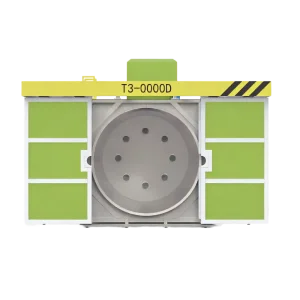
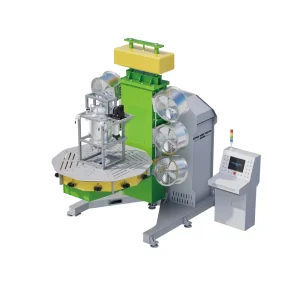
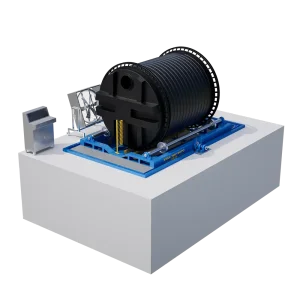
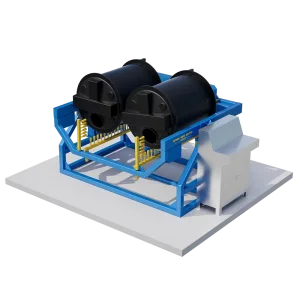
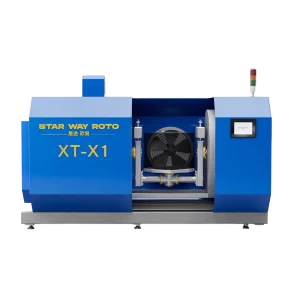
Explore high-efficiency electric heating systems, rock-and-roll multi-axis machinery, and heavy-load shuttle installations engineered for severe duty industrial manufacturing.
The global polymer processing sector is experiencing an unprecedented structural transition. Rotational molding machinery has emerged as the premier manufacturing methodology for high-volume, stress-free, seamless hollow polymer structures.
Global demand for rotomolded products is accelerating across municipal water security, agricultural mechanization, chemicals logistics, and commercial automotive sectors. Unlike injection molding or blow molding—which require astronomically expensive high-pressure tooling and hydraulic clamping assemblies—rotational molding utilizes low-pressure, gravity-driven biaxial gyration. This fundamentally reduces capital expenditure (CAPEX) by up to 75% for large-scale parts while providing completely seamless, stress-free wall integrity with enhanced impact resistance.
China's rotational molding equipment ecosystem has evolved from basic open-flame systems to world-class, automated multi-arm carousels, clean electric-heated ovens, and large-format CNC tooling plants. Ningbo StarWay Roto Co., Ltd. (established in 2009 with over 23 years of sector heritage) stands at the vanguard of this engineering evolution. Operating across a 20-acre modern facility with 40+ specialized R&D engineers, we have engineered world-record systems such as the S2-8500 while exporting robust industrial infrastructure to over 40 countries across Europe, the Americas, the Middle East, and Southeast Asia.
A transparent breakdown of how equipment quotations, tooling investments, and operating parameters are calculated for high-yield industrial plants.
Machine quotations correlate directly with the effective spherical swinging diameter (e.g., from 1,200 mm for compact shuttles to over 8,500 mm for mega systems), maximum arm carrying payload (1,000 kg to 15,000 kg), number of independent arms (Fixed, Independent Carousel 3/4/5-Arm), and burner rating (Riello/Weishaupt dual-fuel or high-density ceramic electric matrices).
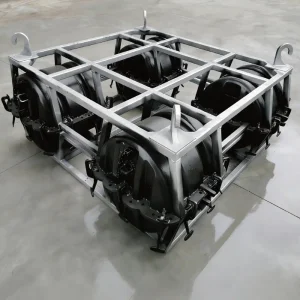
Tooling quotes depend heavily on alloy selection and precision manufacturing methods. Options range from fabricated sheet steel (Q235/SS304) for high-capacity cylindrical storage tanks, to cast aluminum (A356) for complex textures, to 5-axis high-speed CNC billet aluminum (6061-T6) tooling for aerospace, automotive, and aesthetic consumer goods requiring tight ±0.5 mm tolerances.
Complete project pricing encompasses downstream integration: high-efficiency cryogenic/ambient polymer pulverizers, automated vacuum material feeding, internal mould air pressurization systems, mould temperature telemetry sensors (K-Thermocouples/Datapaq), and Siemens/Schneider PLC SCADA control architectures.
| Machinery Type | Typical Chamber / Size Range | Heating Media Options | Optimal Product Volume | Target Quotation Scope (FOB/CIF) |
|---|---|---|---|---|
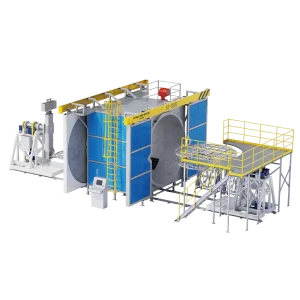
| Carousel Multi-Arm System | 1,600 mm – 5,000 mm Swing Dia. | Natural Gas, Diesel, LPG, Direct Electric | High-Volume Mass Production (Coolers, Toys, Drums) | Enterprise Tier / Turnkey Plant Systems |
| Shuttle Dual-Station System | 2,000 mm – 7,500 mm Chamber | Natural Gas, LPG, Thermal Oil | Medium-to-High Flexibility (Tanks, Auto, Marine) | Mid-to-High Tier / Modular Scalable Line |
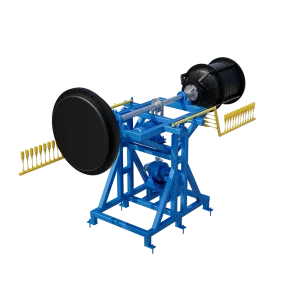
| Rock & Roll Open Flame / Oven | Up to 15,000 mm Length | LPG, Natural Gas, Diesel Burners | Extra-Large Cylindrical Tanks (Up to 50,000L) | Optimized Capital Tier / Large Vessel Line |
| Eco Electric Heating Machine | 1,000 mm – 3,500 mm Chamber | Clean Electric Matrix Heating | Zero-Emission Plants, High-Precision Polymer Parts | Eco Tier / Low Carbon Infrastructure |
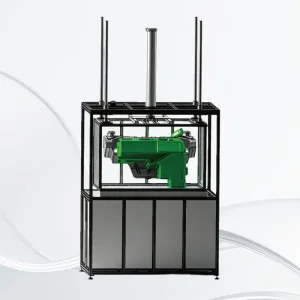
| Laboratory / Sampling Unit | 500 mm – 1,200 mm Swing | Infrared / Electric Heating | R&D, Material Formulation, Quality Testing | Specialized Scientific Tier |
Understanding the 4-stage thermodynamic lifecycle governing wall-thickness uniformity, polymer sinter coalescence, and crystal morphology control.
Micronized polymer powder (typically 35 mesh / 500-micron Linear Low-Density Polyethylene - LLDPE, HDPE, XLPE, or PA6/PA12) is precisely weighed and loaded into the open mould cavity. Pneumatic or high-tensile toggle clamps seal the tool with high-temperature silicone or fluoroelastomer gaskets.
The mould enters the thermal chamber heated to 220°C–320°C. Gyroscopic primary (major) and secondary (minor) axes rotate at independent speed ratios (typically 4:1, 3:1, or 1:1). Centrifugal force is avoided; gravity causes the cascading molten polymer pool to coat and sinter onto the interior mould walls uniformly.
The rotating mould moves to the cooling station. Programmable sequencing of ambient forced air, fine water atomization fog, and high-velocity evaporative draft brings the polymer through its crystallization phase without thermal warpage, sink marks, or residual internal shear stress.
Once the internal temperature reaches the demolding safe point (below 60°C), the mould is opened. The hollow component is ejected, weighed, and subjected to wall-thickness ultrasonic gauging, hydrostatic leak testing, and impact drop tests to ensure total conformity.
StarWay's next-generation rotomolding equipment features real-time Peak Internal Air Temperature (PiAT) radio telemetry. By tracking the exact thermodynamic state of the internal air cavity, our intelligent ovens automatically adjust thermal exposure, ensuring optimal resin fusion, preventing polymer degradation (anti-oxidation protection), and slashing heating cycle times by up to 18%.
Featuring heavy-duty hardened helical-bevel gearboxes, SEW-Eurodrive servo gearmotors, and variable frequency drives (VFD), StarWay machines deliver whisper-quiet, ultra-smooth rotational accuracy. Independent spindle speed adjustment gives engineers complete control over resin distribution in highly asymmetrical mould designs.
From extreme chemical containment to commercial marine craft and automotive fuel tanks—rotational molding supports critical infrastructure worldwide.
Production of vertical, horizontal, and cone-bottom liquid containment vessels ranging from 200 Liters to 50,000 Liters. Cross-linked high-density polyethylene (XLPE) provides extreme chemical inertness, UV resistance, and environmental stress crack resistance (ESCR) compliant with ASTM D1998 standards.
Seamless manufacture of one-piece recreational kayaks, motorboat hulls, navigation buoys, marina floating docks, and offshore aquaculture cages. Hollow buoyancy compartments are filled with in-situ closed-cell polyurethane foam for unsinkable structural stability.
Complex geometry diesel fuel tanks, AdBlue/DEF reservoirs, hydraulic oil tanks, air intake ducts, and tractor cabins. StarWay machinery easily manages multi-layer co-extruded barrier layers (PA/EVOH/PE) preventing hydrocarbon fuel vapor permeation.
Heavy-duty roto-molded ice coolers, pharmaceutical insulated transport bins, dry-ice shippers, and fish boxes. Thick double-walled walls provide extreme structural rigidity, impact absorption at sub-zero temperatures, and extended multi-day thermal holdover.
Heavy commercial mobile garbage bins (MGBs 240L–1100L), underground septic tanks, stormwater detention chambers, spill containment pallets, road safety barriers, and chemical dosing stations resistant to aggressive ground conditions.
Modular spiral tube slides, rock-climbing stones, sensory playground fixtures, outdoor furniture, illuminated LED planchers, and architectural light spheres created with custom surface textures and high UV-stabilized masterbatch coloration.
From initial part feasibility and mould CAD/CAM simulation to on-site commissioning, factory acceptance testing (FAT), and rapid global spare parts dispatch.
Our team of 40+ R&D engineers performs extensive Part Optimization, Draft Angle Analysis (minimum 1.5° to 3° for textured surfaces), Finite Element Analysis (FEA) for structural load integrity, and MoldFlow thermal flux simulations before steel or aluminum cutting begins.
Manufactured on high-precision CNC 5-axis machining centers or high-grade steel fabrication bays. Every mould and machine undergoes rigorous Factory Acceptance Testing (FAT) with dry cycling, burner calibration, safety interlock auditing, and test mold trial shots in Ningbo.
StarWay provides certified mechanical and electrical field engineers deployed to customer facilities across 40+ countries. We manage complete mechanical leveling, gas/electrical line integration, PLC parameterization, and comprehensive hands-on operator training.
Complete your production line with high-precision testing machinery, custom aluminum/steel tooling, laboratory polymer R&D systems, and ultra-efficient electric ovens.
Direct engineering answers addressing search intent, machinery specifications, energy consumption, and international project execution.