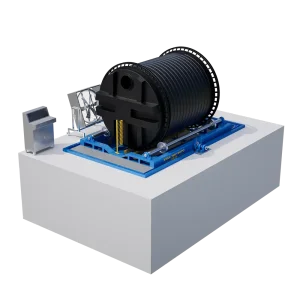
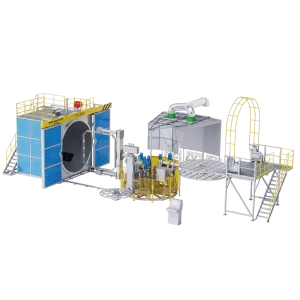
Explore our flagship OEM/ODM rotational moulding machinery, intelligent shuttle systems, multi-arm carousels, and precision mold assemblies engineered for global export markets.
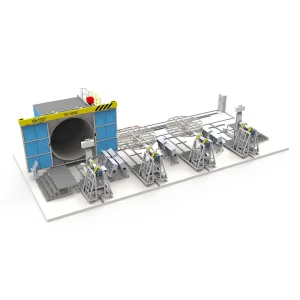
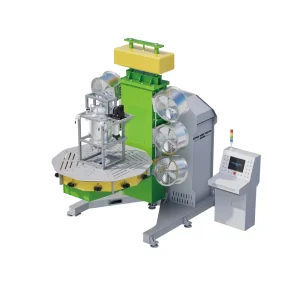
Quantitative breakdown of global manufacturing capabilities, efficiency gains, and structural advantage delivered by leading Chinese rotomolding OEMs.
The global rotational moulding (rotomolding) market has experienced a transformative shift, accelerating from a legacy niche fabrication technique into a high-precision, automated polymer processing sector. Driven by expanding demand in industrial liquid storage, municipal water infrastructure, automotive fluid reservoirs, marine vessels, and heavy-duty logistics containers, the global rotational molding market size was valued at approximately USD 5.8 Billion in 2023 and is projected to expand at a Compound Annual Growth Rate (CAGR) of 5.4% through 2032.
Unlike high-pressure polymer processing methods such as injection molding or blow molding, rotational moulding operates as a stress-free thermoplastic process utilizing biaxial rotation inside a heated mold cavity. This fundamental thermodynamic distinction grants rotomolding unparalleled engineering advantages when manufacturing large-scale, seamless, stress-free hollow plastic components with uniform wall thickness and complex double-walled geometry.
| Manufacturing Technology | Tooling Cost Ratio | Residual Internal Stress | Max Part Size Capacity | Wall Thickness Uniformity |
|---|---|---|---|---|
| Rotational Moulding | Low - Medium (1.0x Base) | Zero / Near-Zero | Ultra-Large (Up to 50,000L+) | Excellent (Corner reinforcement) |
| Blow Moulding | Medium - High (3.5x Base) | Moderate | Medium (Up to 5,000L) | Moderate (Wall thinning at stretch) |
| Injection Moulding | Very High (8.0x - 15.0x Base) | High (Shear-induced) | Small - Medium | High (Strict rib design required) |
| Thermoforming | Medium (2.0x Base) | Moderate - High | Medium (Sheet size constrained) | Variable (High deep-draw thinning) |
As global OEMs seek to minimize Capital Expenditure (CapEx) while maximizing Operational Expenditure (OpEx) efficiency, China’s Rotational Moulding Manufacturers have evolved from budget suppliers into technological innovators. Integrating state-of-the-art 5-axis CNC mold machining, computerized PLC thermal profiling, electric heating ovens, and automatic powder dosing, top-tier Chinese manufacturers offer turnkey rotomolding systems compliant with strict international standards (CE, ISO 9001:2015, OSHA compliance).
The success of the rotational moulding process hinges upon the thermodynamic behavior and melt flow characteristics of powdered polymers. Unlike injection molding where high melt pressures force viscous polymers into small channels, rotomolding relies entirely on gravity-driven powder coalescence and zero-shear melt sintering.
Comprising over 85% of global rotomolding volume, LLDPE delivers exceptional impact strength, environmental stress crack resistance (ESCR), and superior thermal stability during extended oven cycles. Melt Flow Index (MFI) typically ranges from 2.0 to 7.0 g/10min (ASTM D1238).
Engineered with thermosetting chemical cross-linking agents (organic peroxides), XLPE forms a 3D molecular matrix during the heating cycle. Crucial for heavy-duty chemical storage tanks, diesel fuel cells, and high-impact industrial vessels subject to structural stress.
Polyamide 11 & 12 (Nylon), Polypropylene (PP), and Polyvinylidene Fluoride (PVDF) are deployed in extreme environments demanding high heat distortion temperatures (HDT), high mechanical stiffness, or impermeable hydrocarbon barrier capabilities.
Prior to moulding, virgin resin pellets must undergo cryogenic or mechanical pulverization into fine powders. Premier Chinese rotomolding facilities adhere to strict mesh quality standards: 35 Mesh (500 Microns) with dry-flow capability below 25 seconds per 100g (ASTM D1895). Proper PSD eliminates intra-powder air traps, drastically reducing bubble formation and pinhole defects during the polymer melt phase.
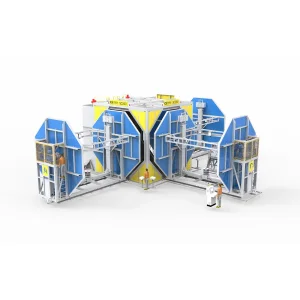
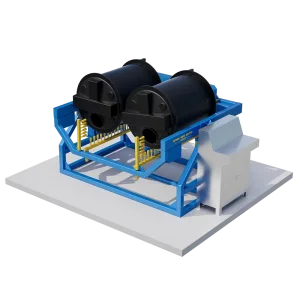
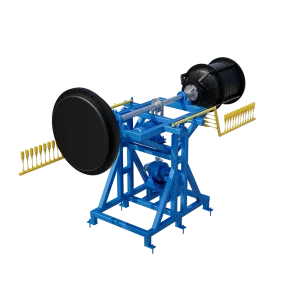
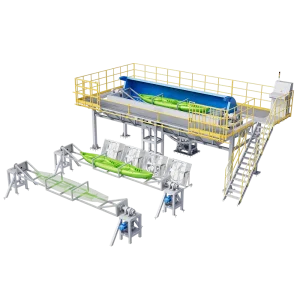
Modern rotational moulding production plants utilize specialized machine topologies tailored to product geometry, annual production throughput, footprint availability, and energy consumption specs.
Featuring 3 to 5 independent working arms operating in a circular index (Heating -> Pre-Cooling -> Cooling -> Unloading/Loading). Ideal for mass production runs of uniform container sizes with optimized station cycle balancing.
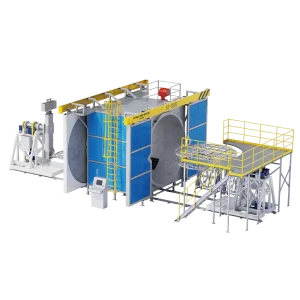
Equipped with a central oven and linear shuttles on left and right rails. Saves up to 30% factory floor space compared to traditional layouts, accommodating multi-mold setups with completely independent heating times.
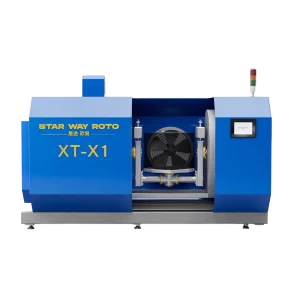
Designed specifically for long, narrow hollow bodies such as kayaks, boat hulls, ultra-long packing cases, and large cylindrical storage tanks. Features full 360-degree rotation along the longitudinal axis and up to 45-degree rock movement.
During the thermal cycle, the mold rotates simultaneously on major (primary) and minor (secondary) axes at low angular velocities (typically 1 to 12 RPM). The rotational speed ratio (e.g., 4:1, 3:1, or 1:2) governs fluid powder dispersion across complex mold pockets.
State-of-the-art Chinese rotomolding machines incorporate Wireless Internal Air Temperature (IAT) Telemetry. By continuously measuring internal mold cavity temperatures in real time, operators can pinpoint exact polymer phase transitions (Powder Coalescence, Peak Internal Air Temperature (PIAT), Bubble Dissolution, and Recrystallization Cooling), guaranteeing peak mechanical toughness and zero thermal degradation.
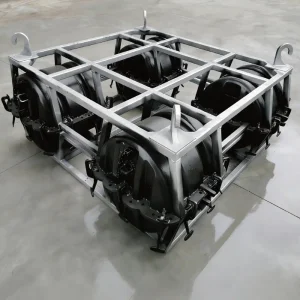
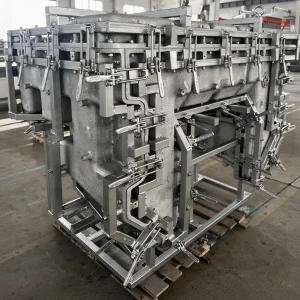
Tooling design forms the core foundation of dimensional fidelity, thermal efficiency, and surface finish quality in rotational moulding.
| Mold Construction Type | Typical Alloy Grade | Thermal Conductivity | Best Suited Applications | Surface Finish Capabilities |
|---|---|---|---|---|
| Cast Aluminum Molds | A356 / A357 Grade Aluminum | High (~160 W/m·K) | Complex 3D curves, toys, medical cases, coolers | Mirror polish, shot-blast, textured graining |
| Machined CNC Molds | 6061-T6 Aircraft Aluminum | Very High (~170 W/m·K) | High-precision technical parts, tight tolerances | Ultra-smooth, zero-porosity optical finish |
| Fabricated Steel Molds | P20 / Mild Carbon Steel | Moderate (~50 W/m·K) | Large flat chemical tanks, basic cylindrical shapes | Painted, Teflon coated, basic industrial finish |
Polyethylene shrinks between 1.5% to 3.0% during cooling. China’s master mold engineers utilize advanced CAD/CAM shrinkage compensation vectors during CNC pattern carving. Furthermore, specialized PTFE silicone venting tubes are installed to balance internal pressure differentials, preventing mold parting-line blowouts and vacuum implosions while maintaining pristine part aesthetics.
Rotational moulding technology serves vital critical infrastructure and consumer manufacturing sectors globally. Below is a breakdown of localized industrial demand across major economic zones:
Dominant demand for high-end outdoor leisure goods (heavy-duty PU insulated coolers, commercial kayaks), agricultural sprayer tanks, and septic treatment vessels compliant with EPA and ASTM standards.
Focus on circular economy regulations, bio-based polyolefins, electric heating rotomolding systems, and lightweight automotive ducting/def-tanks adhering to CE & REACH environmental standards.
High volume requirement for multi-layer UV-stabilized potable water storage tanks (10,000L to 50,000L), heavy-duty diesel transport containers, and modular plastic road safety barriers.
Rapid urbanization driving massive demand for municipal drainage sumps, agricultural chemical containers, aquaculture floating pontoons, and low-cost sanitation infrastructure.
The next decade will witness unprecedented automation and digital integration in rotational moulding plants worldwide. Leading Chinese machinery manufacturers are driving this roadmap:
Automated gravimetric resin feeding systems integrated directly into shuttle loading arms, eliminating manual labor and reducing powder spillage by 99.5%.
Machine-learning algorithms reading IR thermographic camera feeds to automatically adjust gas burner intensity or electrical resistance arrays per arm station.
Replacing fossil gas burners with high-efficiency direct electrical infrared heating arrays, powered by factory solar installations to meet global Scope-1 carbon targets.
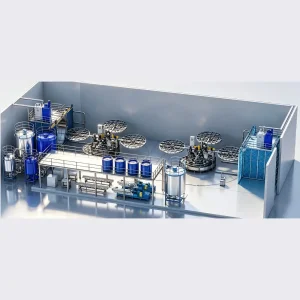
Investing in a rotational moulding facility requires meticulous planning beyond machine purchasing. Top China Rotomolding Solution Providers deliver end-to-end factory design covering key operational pillars:
Optimizing plant floor space to accommodate shuttle rail travel, pulverizer room isolation (noise & dust control), high-pressure compressed air distribution, and cooling tower water lines.
Engineered energy savings: Utilizing insulated oven doors, high-density rock wool thermal insulation, and frequency inverter motors can lower operational electricity costs by up to 25% annually.
In-depth technical answers addressing common inquiry intent from international buyers, procurement engineers, and plant operations managers.
Explore auxiliary pulverizers, automated weighing systems, custom steel moulds, and high-load machinery line options.