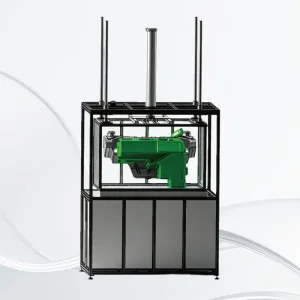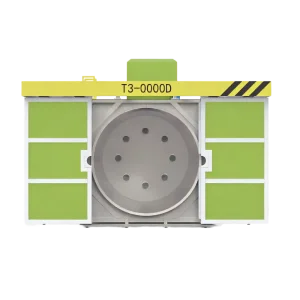

Precision thermal molding machinery and auxiliary stations engineered for standard touring, sit-on-top, angling, tandem, and multi-layer structural marine watercraft.
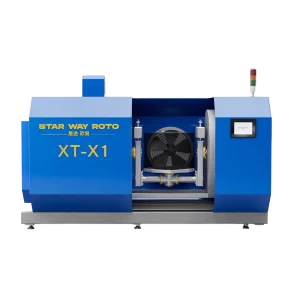
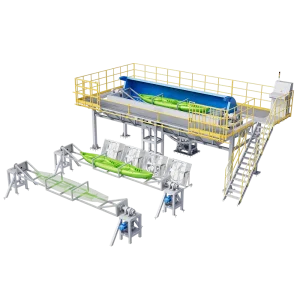
Analyzing global procurement trends, supply chain re-shoring dynamics, and the technological leap from traditional thermoforming to advanced rotational molding (Rotomolding).
The outdoor marine market has shifted from bare-bones recreation toward specialized pedal-drive fishing kayaks, multi-person sit-on-tops, and lightweight touring craft. This requires rotomolding machines capable of processing high-aspect-ratio, multi-chambered molds with integrated rudder tunnels, transducer recesses, and reinforced transom mounts.
Modern brand owners and OEM factories require faster thermal cycle turnover and lower fuel burn rates per hull. Compared to legacy European or North American machines with exorbitant capital costs, Chinese manufactured high-end rotomolding lines deliver identical or superior thermal consistency at 40–60% lower CapEx, yielding an accelerated ROI curve.
Marine durability dictates that kayaks withstand severe ASTM D256 impact standards, cold-crack tests down to -40°C, and ASTM G154 accelerated UV weathering up to UV20+. Producing such hulls demands rotomolding equipment with millimeter-precise temperature profiles to prevent micro-porosity, internal thermal stresses, and resin embrittlement.
Unlike rotationally molded storage tanks or trash bins, a performance kayak hull is long (typically 2.8m to 5.4m), slender, and structurally asymmetrical. Thermal gradients across the mold must not exceed ±3.5°C along the entire length; otherwise, longitudinal warping, banana-bending, and uneven keel thickness will compromise hydrodynamic balance.
Selecting the exact mechanical configuration based on vessel length, daily cycle volumes, footprint limitations, and energetic thermal balances.
Best for: Dedicated kayak, canoe, SUP, and boat manufacturing plants.
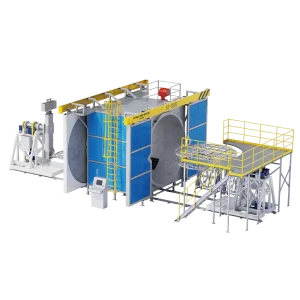
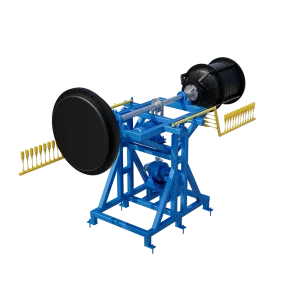
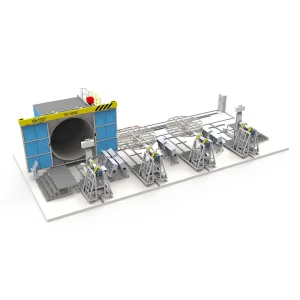
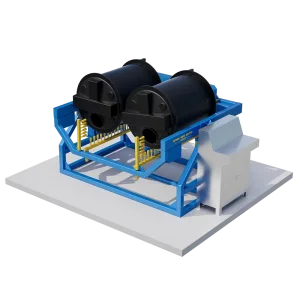
The mold rotates 360° about its major roll axis while rocking ±45° longitudinally. Enclosed oven models optimize fuel efficiency via forced thermal convection, ensuring uniform polymer skin thickness across pointed bows and slender stern profiles while eliminating open flame hot-spot degradation.
Best for: Flexible multi-product factories balancing kayaks and accessories.
Features a central high-efficiency thermal chamber flanked by two independent cooling and demolding carriages. Allows variable cycle times: while Carriage A undergoes a 28-minute 3-layer kayak cure, Carriage B completes a 14-minute cycle on cooler boxes or storage hatch accessories.
Best for: Mega-scale mass production exceeding 20,000 hulls annually.
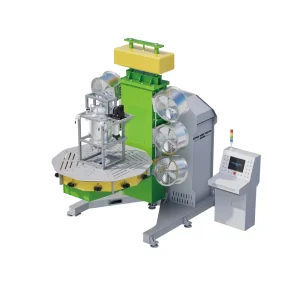
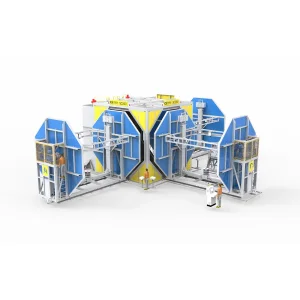
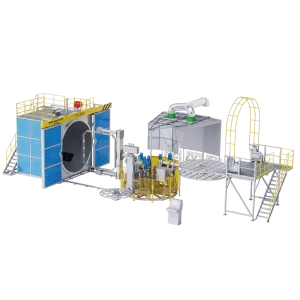
3-arm or 4-arm independent station carousels execute heating, multi-stage fan/water-mist cooling, and demolding simultaneously. Armed with robust heavy-duty straight or offset arms, this system minimizes dead-time between continuous molding cycles.
| System Architecture | Typical Vessel Range | Thermal Chamber Type | Energy Source | Daily Yield (24h) | Key Competitive Edge |
|---|---|---|---|---|---|
| Oven Rock & Roll (R&R-6000) | 2.4 m – 6.0 m Kayaks | Insulated Modular Oven (Rocking ±45°) | Natural Gas / LPG / Diesel / Electric | 36 – 54 Hulls / Arm | Optimized Keel Flow Minimal floor width |
| Linear Shuttle (S2-5500) | Up to 5.2 m Dual-Molds | Dual-Door Center Convection Oven | Natural Gas / Electric Heating | 60 – 90 Hulls | Asymmetric Recipes Multi-tool flexibility |
| 4-Arm Carousel (C-4800) | 2.8 m – 4.5 m High Volume | Cylindrical Multi-Zone Oven | Direct Fired Burner / Clean Gas | 120 – 180 Hulls | Mass Output Lowest labor cost per hull |
| Eco-Electric Clean Machine | 1.8 m – 3.8 m SUP & Kayaks | Infrared + Nichrome Convection | 100% Electric Grid / Solar Ready | 24 – 40 Hulls | Zero Local Emissions Strict ESG Compliance |
Mastering resin sintering, peak internal air temperature (PIAT) telemetry, and skin-foam-skin cellular core engineering for unsinkable structural hulls.
High-grade rotomolding demands Linear Low-Density Polyethylene (LLDPE) or High-Density Polyethylene (HDPE) pulverized to 35 mesh (500 micron) with a dry flow rate under 25s/100g. StarWay Roto auxiliary pulverizing units ensure zero electrostatic agglomeration and uniform grain distribution for rapid wall consolidation.
Over-curing results in polymer embrittlement and volatile odor; under-curing causes pinhole porosity and premature impact failure. StarWay machines deploy real-time wireless mold temperature telemetry (PIAT) targeting 195°C–205°C, guaranteeing 100% resin bubble coalescence and optimal flexural modulus (1100–1400 MPa).
For elite expedition kayaks, our drop-box automated charging systems introduce: (1) Outer UV-stabilized solid LLDPE skin (2.0mm), (2) Chemical blowing agent expandable PE foam core (4.0mm–6.0mm), and (3) Inner abrasion-resistant solid skin (1.5mm). The result is a 30% stiffer hull that is intrinsically unsinkable without added weight.
How tooling design dictating thermal conductivity, parting line integrity, venting dynamics, and surface texturing determines finished hull quality.
Machined directly from solid aerospace-grade forged aluminum blocks. Delivers absolute zero-porosity, razor-sharp parting lines (<0.05mm gap), uniform wall heat transfer, and infinite dimensional stability on complex footwells, scupper holes, and accessory tracks.
Cost-effective for high-curvature organic hull shapes. Our micro-melt degassing process eliminates subsurface voids, ensuring rapid thermal absorption during heating and fast heat shedding under cooling spray regimes.
Specially calibrated PTFE/fluoropolymer microporous vents prevent internal pressure build-up during heating while equalizing atmospheric vacuum during cooling, preventing bow suck-in and flat bottom oil-canning deformities.
Replaces slow manual bolt clamping with automated air-over-oil or heavy spring-lever toggle clamps, reducing demolding time from 12 minutes to under 3 minutes per cycle while safeguarding parting-line edges.
From raw granule intake to post-mold robotic finishing and certified airtightness testing — designing end-to-end automated manufacturing lines.
Precision mill pulverizers grind virgin polymer pellets into consistent 30–40 mesh powder with integrated multi-color blending systems, anti-static micro-dosing, and automated pneumatic vacuum conveyors directly feeding mold charge hoppers.
Eliminate manual operator trimming hazards. Industrial 6-axis articulated robots equipped with high-frequency spindle routers automatically cut scupper holes, drive-well slots, rod holder pockets, and flush hatches in under 90 seconds with ±0.1mm repeatability.
Integrated multi-point ultrasonic wall thickness gauges continuously log bottom hull, gunwale, and bow integrity into SPC databases. Automated pneumatic pressure decay testers pressurize the hull to 0.25 bar, verifying 100% watertightness before final packaging.
Full alignment with international electrical, gas safety, and environmental standards backed by responsive on-site commissioning teams.
All control cabinets, dual gas burner trains (Riello/Weishaupt), and emergency stop circuits comply strictly with European CE machinery directives (EN 60204-1) and North American UL 508A / NFPA 86 industrial oven safety regulations.
StarWay Roto field engineers provide turnkey on-site installation, thermal balancing, recipe programming, and operator training across North America, Europe, Southeast Asia, South America, and Australasia.
Every machine incorporates encrypted cloud telemetry (Siemens / Omron PLC edge gateways). Our engineering team can remotely analyze thermal curves, monitor motor torque anomalies, and update PLC logic in real time.
Key mechanical wear parts (heavy-duty slewing rings, ceramic fiber seals, high-temp fan bearings, heating elements) are stocked in regional distribution centers for prompt 48-hour global air dispatch.
Forward-looking innovations in zero-carbon heating, closed-loop AI thermal modulation, and self-optimizing kinematic cycles.
Developing next-generation heating chambers combining high-density infrared emitters with dual-fuel hydrogen/biomethane micro-burners, slashing carbon footprints per manufactured kayak by over 75% to meet strict EU CBAM carbon border mandates.
Embedded multi-spectral infrared matrix sensors map external mold surface temperatures at 100 Hz. AI neural networks dynamically adjust burner damper positions and rotational ratios in real time, automatically compensating for environmental ambient swings.
Engineering specialized low-shear rotational kinematics to process up to 60% post-consumer recycled marine plastics and circular bio-based polyethylene without sacrificing ASTM cold-drop impact strength or UV longevity.
Authoritative technical answers to common queries raised by plant managers, production engineers, and sourcing directors.
For a single-layer LLDPE kayak hull (weighing approx. 28–32 kg with 3.5mm–4.0mm nominal wall thickness), the total cycle time in an efficient oven Rock & Roll machine averages 22 to 26 minutes (14–16 min heating at 280°C, followed by 8–10 min controlled air/water cooling). For 3-layer foam sandwich hulls, total cycle time ranges between 32 and 38 minutes depending on density requirements.
Open flame machines expose the mold exterior directly to burner jet plumes, causing severe localized hot spots, thermal oxidation of parting lines, and inconsistent wall thickness along long kayak profiles. Enclosed convection ovens circulate recirculated hot air uniformly at 260°C–310°C, maintaining mold temperature balance within ±3.5°C, reducing fuel consumption by 35%, and extending aluminum mold working life.
During heating, air inside the sealed mold expands rapidly. Without proper venting, high pressure forces molten polymer into seal flash lines. More critically, during the cooling phase, contracting air creates internal vacuum. If vents are undersized or clogged, atmospheric pressure collapses flat bottom keel sections inward (oil-canning). Our molds use non-clogging PTFE membrane breather vents precisely sized at 12–16mm per cubic meter of mold cavity.
Cast A356 aluminum molds offer lower initial tooling costs and are ideal for complex multi-contoured recreational hulls, but may possess minor micro-porosity. CNC Billet 6061 molds are CNC-carved from solid forged blocks, guaranteeing 100% density, zero subsurface porosity, exceptional parting line durability (>100,000 shots), and perfect fit for high-precision sliding inserts such as transducer scupper ports and drive locks.
Yes. Shuttle-type and Carousel machines excel at this versatility. Using modular spider frames, an operator can mount one 4.5m kayak mold on Arm 1, while Arm 2 holds an array of four 45-quart cooler box molds or storage hatch lids with independent cycle recipe parameters programmed into the PLC touch panel.
Our heating systems are engineered with modular burner trains supporting Natural Gas (LNG/CNG), Liquefied Petroleum Gas (LPG/Propane), Light Diesel, and 100% Clean Electric Resistance / Infrared heating configurations for zero-emission factories.
Explore our full line of industrial rock and roll machines, electric eco-chambers, heavy-load shuttles, and quality inspection units.