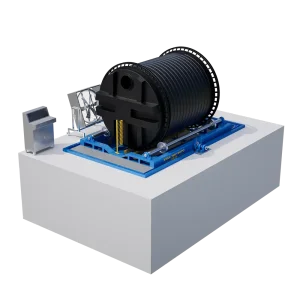
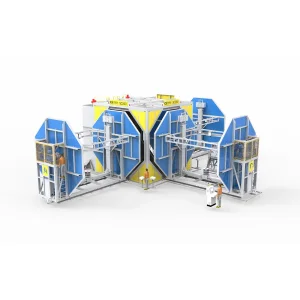
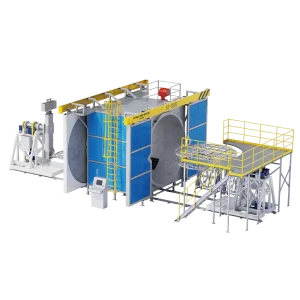
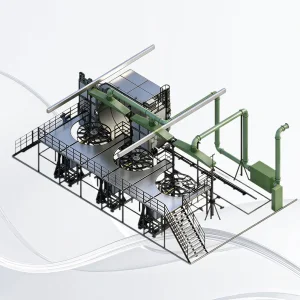
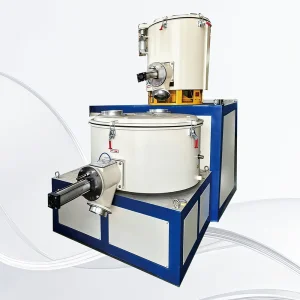
Explore our flagship series of CE-certified rotational molding machines engineered for ultra-low emissions, optimal thermal distribution, and modular factory automation.
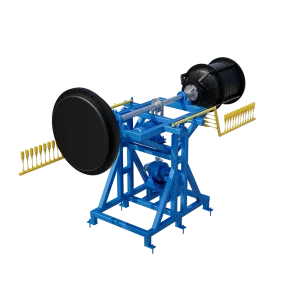
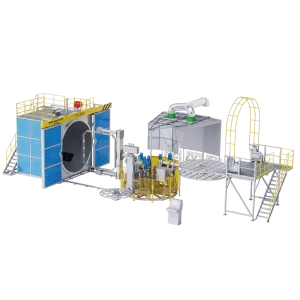
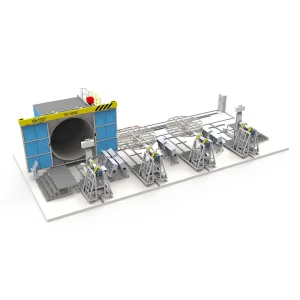
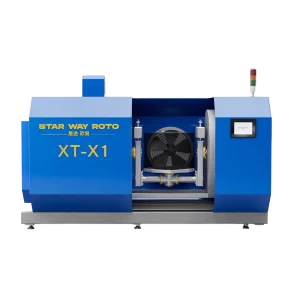
Navigating European Conformity Directives, Machinery Safety Protocols (2006/42/EC), EN 746-2 Combustion Standards, and SIL 3 Safety System Integration.
In the modern industrial equipment sector, securing true CE certification for rotational molding (rotor moulding) machinery is not merely a administrative checkbox—it represents a comprehensive engineering commitment to structural safety, electromagnetic compatibility, thermal containment, and operational risk mitigation. For OEM buyers, plant procurement managers, and industrial decision-makers across Europe and global markets, sourcing machinery from a certified manufacturer ensures compliance with mandatory European Economic Area (EEA) safety parameters.
A fully certified CE rotational molding installation must satisfy multiple overlapping European Directives simultaneously. Foremost is the Machinery Directive 2006/42/EC, which governs mechanical risk assessments, physical interlocks, emergency stop architectures, and structural load-bearing tolerances of multi-axis rotating arms. Additionally, machines utilizing gas combustion heating systems must strictly adhere to EN 746-2 (Industrial Thermoprocess Equipment - Safety Requirements for Combustion and Fuel Handling Systems), ensuring safe gas purging, automatic flame detection, zero-leakage safety shutoff valves, and explosion-relief venting.
Mandates rigorous ISO 12100 risk assessments. Requires dual-channel safety relay loops, physical perimeter guarding with solenoid-locked interlocks (EN ISO 14119), and category 3/4 stop functions for high-inertia rotating carousels.
Governs electrical panel assembly, thermal management inside control enclosures, electrical isolation, grounding continuity, and short-circuit withstand capability according to EN 60204-1 safety standards.
Ensures that high-power Variable Frequency Drives (VFDs) and burner igniters do not emit electromagnetic interference that disrupts plant networks, while providing immunity against external surge spikes.
When evaluating a CE certification rotor moulding factory, buyers must request the formal Technical File (TCF), including Declaration of Conformity (DoC), Risk Assessment documentation, circuit schematics validated to EN 60204-1, and third-party Notified Body audit certificates. StarWayRoto embeds these compliance protocols directly into the engineering design phase, reducing field commissioning risks for global enterprises.
Analysis of energy transition shifts, closed-loop thermal recirculation, wireless in-mold temperature profiling, and advanced resin processing.
The rotational molding industry is undergoing its most radical transformation in decades, driven by stringent global carbon reduction mandates, rising natural gas tariffs, and demanding OEM performance requirements for hollow plastic structures. Historically characterized by empirical thermal management and open-flame heating systems, modern rotor moulding operations are rapidly transitioning toward digitized, high-efficiency closed-loop environments.
High-velocity hot air recirculation systems minimize thermal leakage by ducting exhaust heat back through secondary heat exchangers, achieving thermal efficiency gains exceeding 28% compared to conventional open draft ovens.
Zero-emission electric rotational molding machines equipped with infrared radiant elements eliminate combustion byproducts, enabling cleanroom operation for medical and food-contact container manufacturing.
Transmitting real-time internal air temperature (PIAT) data directly from inside rotating molds allows PLCs to dynamically adjust burner output, eliminating pinholes, under-cure brittleness, and thermal degradation.
Furthermore, the industry is witnessing a material synthesis evolution. While standard Linear Low-Density Polyethylene (LLDPE) remains the dominant resin, leading global manufacturers are expanding into engineering polymers such as Cross-linked Polyethylene (XLPE) for chemical resistance, Polyamide (PA6 / PA12) for fuel barrier performance, and Polypropylene (PP) for high stiffness applications. Machining high-performance resins requires absolute thermal control within the mold cavity, underlining the necessity of precision-engineered, CE-certified carousel and shuttle machinery.
Strategic decision matrix for international B2B buyers: Evaluating capital expenditure, thermal performance metrics, and operational yield optimization.
Procuring heavy rotomolding equipment represents a multi-decade capital commitment. Strategic buyers evaluate machinery manufacturers not only on initial purchase price (CapEx), but on operational expenditure (OpEx), spare parts availability, tooling versatility, and structural durability over a 15-to-20-year operational lifecycle.
| Machine Architecture | Target Application | Thermal Efficiency | Cycle Versatility | Footprint Impact |
|---|---|---|---|---|
| Independent Arm Carousel | High-volume standardized production (e.g., water tanks, drums) | High (Continuous oven utilization) | Medium (Fixed indexing sequence) | Moderate to Large circular space |
| Linear / Lined Shuttle | Diverse product mix, frequent mold changes, variable cure times | Very High (Dual independent ovens) | Exceptional (Independent station timing) | Compact (30% less floor area requirement) |
| Rock & Roll System | Long, slender hollow bodies (e.g., kayaks, large chemical pipes) | Medium to High (Targeted directional heating) | High for specific geometries | Narrow linear length requirement |
| Electric Radiant Line | High-precision technical parts, cleanroom medical containers | Maximum (Direct radiation transfer) | High (Individual zone modulation) | Minimal exhaust venting needed |
A comprehensive TCO analysis reveals that energy consumption accounts for approximately 40% to 55% of the total operating costs of a rotational molding line over 10 years. Machines engineered with superior burner control (modulating burners with 10:1 turn-down ratios), high-density rock wool thermal insulation (150mm to 200mm wall thickness), and pneumatic chamber seals dramatically minimize thermal leakage, delivering substantial long-term savings.
How Ningbo’s industrial ecosystem combines vertical integration, advanced CNC mold machining, and smart IoT automation to deliver global competitive advantages.
China's manufacturing ecosystem has evolved from high-volume production into a global hub for sophisticated, high-precision industrial machinery. Located at the epicenter of China’s advanced machinery sector in Ningbo, Zhejiang Province, StarWayRoto (Ningbo StarWay Roto Co., Ltd.) leverages unmatched vertical supply chain integration to deliver world-class rotational molding equipment to over 40 countries worldwide.
From structural frame steel cutting and stress-relieving heat treatment to precision 5-axis CNC mold milling and PLC software architecture, 100% of critical components are manufactured in-house under strict ISO 9001 supervision.
Integrated Siemens S7-1500 PLC platforms with multi-language HMI touch panels support SCADA connectivity, OPC-UA protocols, remote cloud telemetry diagnostics, and real-time energy monitoring.
Integrated CNC aluminum casting foundries allow StarWayRoto to complete complex custom molds and complete machinery production lines up to 40% faster than traditional Western suppliers.
China's Industry 4.0 framework provides global buyers with high-end machinery specifications—such as laser-aligned arm drive assemblies, Italian-imported burner systems (Riello / Weishaupt), SEW-Eurodrive gear reducers, and Schneider electrical components—at a highly competitive total acquisition cost.
Versatile manufacturing solutions engineered for water treatment, automotive, maritime, logistics, and agricultural sectors.
Rotational molding is uniquely suited for producing seamless, stress-free, hollow plastic articles with uniform wall thickness and complex double-wall geometries. CE-certified machinery lines engineered by StarWayRoto support demanding global applications across multiple sectors:
Heavy-duty vertical and horizontal chemical storage tanks (500L to 50,000L), underground septic tanks, rainwater harvesting vessels, and double-walled hazardous chemical containment units.
Seamless AdBlue/DEF fluid tanks, diesel fuel tanks, air intake ducts, tractor roofs, construction machinery cabs, and heavy-truck mudguards engineered from impact-resistant materials.
High-buoyancy marine pontoons, dock floats, navigational buoys, commercial kayaks, small watercraft hulls, and oil spill containment barriers built with UV-20 stabilized polyethylene.
Insulated roto-molded ice boxes, military-grade rugged transit cases, insulated fish tubs, heavy-duty plastic pallets, and industrial waste collection containers.
Detailed answers to critical questions regarding CE compliance, machine calibration, material handling, and thermal optimization.
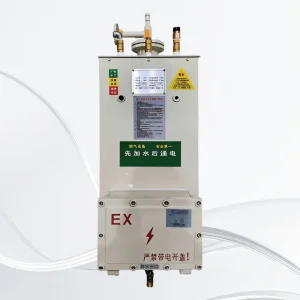
Explore our full line of specialized rotomolding equipment, high-speed pulverizers, gasifier units, and custom carousel lines designed for heavy industrial throughput.