Engineered for high-volume, uniform wall thickness, and low-energy industrial manufacturing.
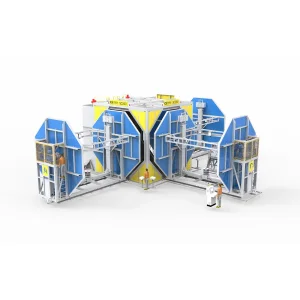
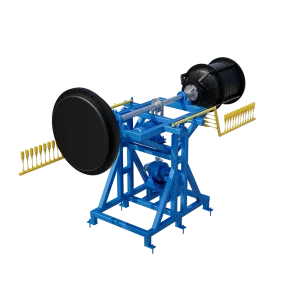
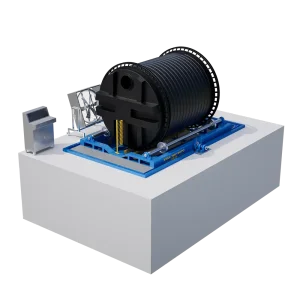
Navigating modern procurement standards, regulatory compliance, and thermal dynamics in rotational molding equipment manufacturing.
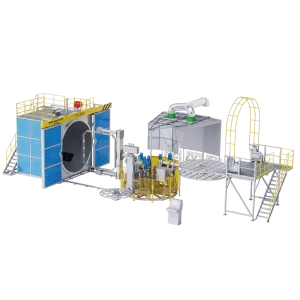
In the rapidly evolving landscape of global polymer processing, CE Certification Rotor Molding Factories & Service providers represent the pinnacle of industrial safety, thermal efficiency, and mechanical reliability. Rotational molding (rotomolding) has transcended its historical roots as a niche process for hollow plastic toys and basic containers. Today, it stands as a cornerstone of advanced industrial manufacturing—capable of producing seamless, stress-free, multi-walled, and complex geometric structures ranging from 10,000-liter chemical storage tanks to aerospace ducting and insulated medical transport systems.
Global original equipment manufacturers (OEMs) and enterprise buyers face an increasingly complex procurement environment. Rising energy costs, stringent carbon emissions regulations, and the demand for zero-defect production require factory partners who do not merely assemble machinery, but offer full-stack engineering expertise—from finite element analysis (FEA) mold design to PLC-driven IoT factory automation.
CE Certification serves as a comprehensive validation of equipment compliance with the European Union's rigorous health, safety, and environmental protection benchmarks. For rotomolding equipment—which involves high-temperature heating chambers (ranging from 250°C to 400°C), heavy rotating mechanical arms, pneumatic systems, and gas combustion lines—CE compliance requires adherence to several mandatory directives:
Mandates risk assessments, mechanical safeguard interlocking systems, dual-channel emergency stops, and ergonomically compliant loading stations to eliminate pinch-point and crush hazards for plant technicians.
Governs electrical panel safety, compliance with EN 60204-1 (Safety of Machinery - Electrical Equipment of Machines), short-circuit insulation ratings, grounding integrity, and IP54/IP65 protective enclosures.
Ensures variable frequency drives (VFDs), PLC microprocessors, and wireless sensor arrays operate without emitting electromagnetic interference or suffering disruption from ambient industrial power fluctuations.
Furthermore, gas-fired carousel and shuttle machines must integrate CE-approved burner management systems complying with EN 746-2 (Industrial thermoprocess equipment - Safety requirements for combustion and fuel handling systems). This guarantees automated flame supervision, double-block safety shutoff valves, and positive pressure airflow monitoring to prevent gas accumulation within the thermal chamber.
How IoT integration, real-time wireless air temperature monitoring (TPAT), and eco-friendly electric heating redefine rotational molding productivity.
Modern rotational molding has evolved from an empirical art into a data-driven science. The primary challenge in rotomolding is achieving consistent wall thickness and optimal impact strength without degrading the polymer resin through over-baking or creating porosity through under-curing.
Real-time wireless radio-frequency sensors mounted inside the mold cavity stream live internal air temperature curves to the master PLC, triggering automated oven-exit timing precisely at the polymer's peak bubble-removal phase.
Advanced ovens employ high-velocity, reverse-flow air recirculation baffles powered by energy-efficient VFD motors, guaranteeing temperature uniformity within ±1.5°C across massive 8.5-meter mold envelopes.
Eliminating direct fossil fuel combustion, next-generation electric heating rotomolding systems reduce localized carbon emissions to zero, drastically lower thermal noise, and cut maintenance costs by 40%.
China's industrial manufacturing ecosystem has undergone a profound structural shift toward high-precision smart manufacturing. As the premier global hub for rotational molding equipment production, China offers international enterprise buyers an unparalleled combination of supply chain resilience, engineering speed, and cost efficiency.
| Evaluation Parameter | Traditional Western OEMs | China Industry 4.0 Factories (StarWay Roto) | Procurement Value Advantage |
|---|---|---|---|
| Capital Expenditure (CAPEX) | High Baseline Costs ($450k - $900k) | Optimized Cost Structure ($180k - $420k) | 40% - 60% Savings reallocated to tooling & R&D |
| Manufacturing Lead Time | 20 to 32 Weeks | 8 to 14 Weeks | 50% Faster Time-to-Market for new product launches |
| CE & International Compliance | Native Compliance | Fully Certified (CE, ISO 9001, TÜV audited) | Identical Safety & Electrical Reliability |
| Supply Chain Integration | Outsourced Multi-vendor Components | In-House Tooling, Machining & Assembly | Seamless System Interoperability & Spare Parts Access |
| Customization & Engineering Speed | Standardized Rigid Modular Options | Rapid CAD/FEA Custom Arm & Machine Design | Tailored to Specific Factory Footprints & Products |
Ningbo StarWay Roto Co., Ltd. exemplifies this modern Chinese industrial strength. Operating from a 20-acre specialized manufacturing campus equipped with 5-axis CNC machining centers, automated laser cutting systems, and specialized dynamic arm balancing rigs, StarWay Roto integrates 23+ patents to deliver world-class machine stability.
Understanding the mechanical distinctions between Carousel, Shuttle, and Rock & Roll machine configurations to match specific production intents.
Designed for continuous, high-volume mass production. Featuring 3 to 4 independent arms operating across isolated heating, cooling, and loading/unloading stations. Maximizes throughput with minimum thermal idle time.
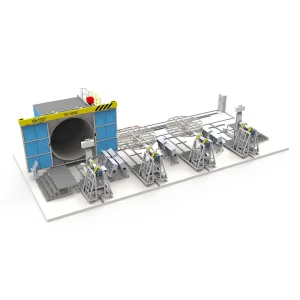
Offers maximum production flexibility for factories running medium volumes or varying mold sizes. Utilizes a central oven shared by two independent carts moving linearly along heavy-duty track beds.
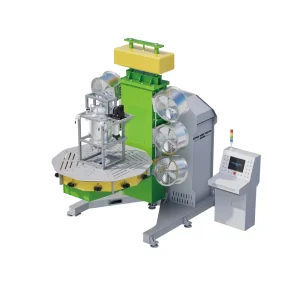
Engineered specifically for long, narrow, or massive cylindrical products. Rotates 360 degrees on the major axis while rocking along the minor axis, drastically reducing oven footprint and energy usage.
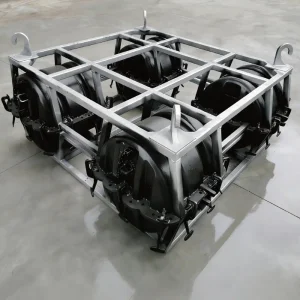
The success of the rotomolding process relies heavily on mold thermal conductivity and surface integrity. Factory buyers can select between two primary mold manufacturing technologies based on target product complexity:
CE Certified rotomolding factories supply high-performance polymer products across critical infrastructure, commercial, agricultural, and defense sectors globally:
Double-walled polyethylene storage tanks, hazardous chemical containment vessels, IBC totes, and municipal water purification tanks requiring UV-stabilized, cross-linked LLDPE/HDPE materials resistant to stress-cracking.
Heavy-duty PU-foamed insulated cooler boxes, vaccine transport containers, and dry ice storage chests requiring seamless hermetic seals, impact resistance, and FDA/EU food-grade contact compliance.
Rotomolded kayaks, unsinkable boats, floating dock pontoons, navigation buoys, and marine fuel tanks designed for long-term saltwater submersion and high impact durability.
Diesel fuel tanks, DEF tanks, tractor cabins, air intake ducts, and wheel fenders for agricultural machinery, construction excavators, and commercial trucks.
When procuring rotational molding machinery, senior purchasing officers must evaluate Beyond Initial Purchase Price (CAPEX). True Operational Value lies in minimizing total life-cycle cost (OPEX):
Expert insights addressing technical, operational, and purchasing queries for global rotomolding factory projects.
A fully compliant CE rotomolding machine must be backed by an official EU Declaration of Conformity issued under the Machinery Directive 2006/42/EC. Required technical files include an EN ISO 12100 risk assessment report, EN 60204-1 electrical safety test certificates, burner compliance certificates (EN 746-2), system P&ID schematics, and an audited English Operation and Maintenance Manual.
Electric heating systems offer absolute zero direct carbon emissions at point of use, lower operating noise levels, and precise thermal control without requiring burner nozzle maintenance or fuel gas line permits. While gas heating remains popular in regions with low natural gas prices, electric heating rotomolding machines are rapidly gaining dominance in Western Europe and North America due to strict environmental mandates and renewable energy integration.
In rotational molding, uneven wall thickness leads to localized structural weak spots, part warping, excess resin consumption, and longer cycle times. Modern machines utilize independent variable-speed AC servo drives for major and minor axes, allowing operator programming of precise rotation ratios (e.g., 4:1, 8:1) tailored to specific mold geometries, combined with real-time temperature feedback to ensure smooth polymer powder deposition.
StarWay Roto machines are engineered to process a broad range of thermoplastic materials, including linear low-density polyethylene (LLDPE), high-density polyethylene (HDPE), cross-linked polyethylene (XLPE), polypropylene (PP), polyamide (Nylon/PA6/PA12), and polyurethane (PU) foaming systems for insulated structures.
When operated under standard industrial conditions and serviced according to preventive maintenance schedules, a heavy-duty CE-certified rotomolding machine has a design lifespan exceeding 15 to 20 years. Critical wear components such as oven burner tubes, arm bearings, and thermal seals can be easily serviced or replaced without replacing structural chassis frames.
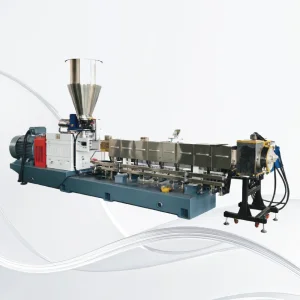
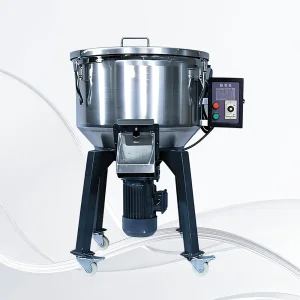
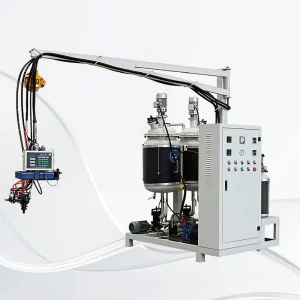
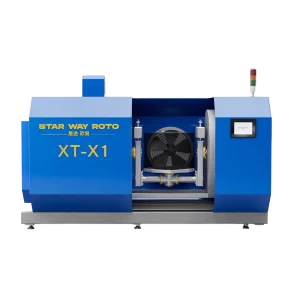
Complete your turn-key production plant with lab testing units, pelletizing lines, and PU foaming systems.