
Explore precision-engineered rotational moulding equipment designed for demanding industrial applications, from lab testing to high-load mass production.
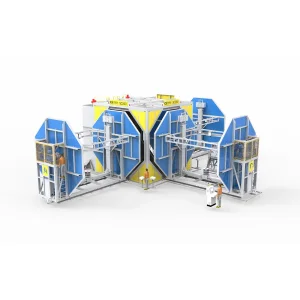
In the global polymer processing machinery sector, obtaining verifiable **CE Certification** is not merely an export formality—it is a rigorous, legally binding declaration of conformity with stringent European Union health, safety, and environmental protection legislation. For global plant managers, procurement directors, and operations executives investing in high-capacity rotational molding machinery, validating compliance with the **Machinery Directive 2006/42/EC**, the **Low Voltage Directive (LVD) 2014/35/EU**, and the **Electromagnetic Compatibility (EMC) Directive 2014/30/EU** is the single most critical risk-mitigation step.
Rotational molding involves simultaneous high-temperature convection heating (often exceeding 300°C), biaxial mechanical rotation of massive payloads (up to 15,000 kg per arm), and high-velocity cooling cycles. Non-compliant machinery presents catastrophic industrial risks: structural arm deflection, thermal chamber blowouts, pneumatic locking failures, and catastrophic electrical arc flashes.
Every CE-marked rotational molding machine produced by tier-1 manufacturers must undergo third-party Notified Body audits against these harmonized standards:
The rotational moulding sector is experiencing a structural paradigm shift driven by automation, material engineering breakthroughs, and severe energy cost pressures.
With industrial natural gas and electricity prices fluctuating across Europe, North America, and APAC, thermal oven aerodynamics have become the primary determinant of manufacturing profitability. State-of-the-art machines utilize high-density ceramic fiber refractory insulation, variable-frequency recirculation blowers, and smart dual-fuel modulating burners, cutting energy consumption per kilogram of molded resin by up to 28% compared to legacy machinery.
Rotomolding is no longer restricted to low-density polyethylene (LLDPE) water tanks. Tier-1 automotive, aerospace, and chemical storage manufacturers require CE-compliant machinery capable of processing high-viscosity polyamides (PA6, PA11, PA12), cross-linked polyethylene (XLPE), polypropylene (PP), and fluoropolymers (PVDF) for aggressive media containment and hydrogen tank liners.
Global enterprises operating distributed plants demand centralized SCADA integration, automated recipe dispatch, and predictive maintenance capabilities. Cloud-enabled Siemens S7-1500 or Allen-Bradley control architectures permit real-time vibration analysis of primary gearboxes, heating zone temperature drift detection, and certified Remote Factory Acceptance Testing (FAT) with sub-second data logging.
Selecting the proper machine kinematic architecture is critical to balancing capital expenditure (CapEx) against operational unit economics (OpEx).
| Machine Type | Kinematic Arm Configuration | Max Payload Capacity | Primary Industrial Applications | CE Safety Architecture | Typical Factory Quote Range (USD) |
|---|---|---|---|---|---|
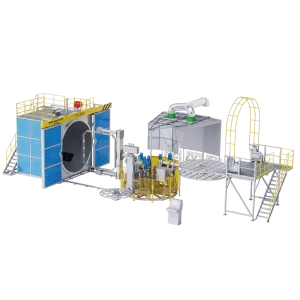
| Carousel (Fixed / Independent Arm) | 3 to 6 Independent Arms, Central Turret Rotation | 1,500 – 7,000 kg / Arm | High-volume industrial bins, IBC containers, water tanks, playground sets | EN 13849-1 Cat 3 Optical Light Curtains & Physical Interlocked Gates | $180,000 – $580,000 |
| Shuttle System (Linear / Square) | 1 to 2 Carriages Moving Linearly into Central Oven | 2,000 – 15,000 kg / Arm | Heavy agricultural storage (up to 30,000L), septic tanks, large boat hulls | Dual-zone pneumatic mechanical locking pins & emergency brake stops | $120,000 – $390,000 |
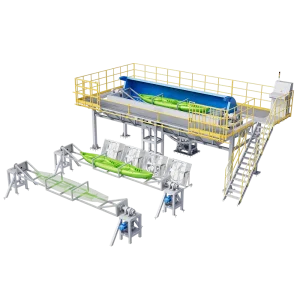
| Rock & Roll (Oven / Open Flame) | Single-axis continuous 360° rotation with ±45° rock swing | 500 – 8,000 kg | Long, cylindrical hollow vessels, kayaks, canoes, pipes, pontoon floats | Burner ignition safety flame controllers (EN 746-2), thermal limiters | $45,000 – $160,000 |
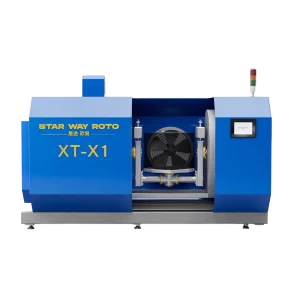
| Laboratory / Pilot Scale | Biaxial, High-Precision Servo-Driven Arm | 50 – 300 kg | Polymer R&D testing, masterbatch sampling, technical academic research | Fully enclosed safety interlock chamber, low noise, zero emissions | $30,000 – $75,000 |
Customized rotomolding cell configurations built to withstand intense 24/7 continuous industrial production schedules.
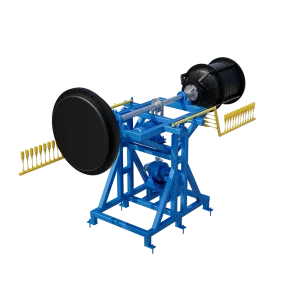
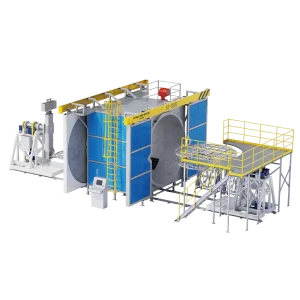
Turnkey multi-station Shuttle rotomolding lines engineered with extreme arm load bearings capable of holding tooling and resin charges up to 15 metric tons. Designed specifically for vertical/horizontal storage tanks from 5,000 to 30,000 liters with uniform wall-thickness distribution.
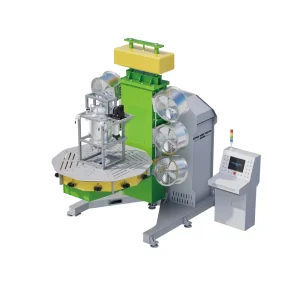
High-precision independent arm carousel rotomolding machines tailored for EV battery thermal housings, seamless crosslinked polyethylene (XLPE) fuel tanks, DEF/AdBlue tanks, military grade cases, and hydrodynamic kayak hulls.
Dedicated high-speed rock-and-roll and multi-arm setups for premium roto-molded cooler boxes, heavy-duty insulated transport containers, insulated dry-ice storage, municipal waste management bins, and hygienic pallets.
When requesting an industrial quote for a CE-compliant rotational molding production line, pricing transparency and technical clarity are paramount. A credible manufacturer quotation is structured around distinct engineering deliverables rather than arbitrary machine tags.
Key components influencing your final factory quote include:
Inquire about bundled tooling packages. Sourcing CNC aluminum moulds and auxiliary pulverizers directly alongside your CE machine can reduce total project CapEx by up to 22%.
Pioneering the future of rotational molding through intelligent autonomous process control and carbon-neutral thermal technology.
Traditional rotational molding relies heavily on operator intuition. StarWay's upcoming Intelligent Control Suite incorporates real-time viscosity calculation algorithms that dynamically adjust rotational speed ratios (major-to-minor axis) and oven burner output in response to ambient factory humidity and resin lot variations, eliminating warpage and bubble entrapment.
To comply with the European Green Deal and global net-zero carbon mandates, our research and development laboratories are piloting clean-combustion hydrogen burners and rapid-response infrared induction heating arrays, enabling zero Scope-1 emission rotational molding without compromising cycle throughput.
Engineering next-generation biaxial arm kinematics to accommodate ultra-fast powder compaction for carbon-nanotube reinforced polyethylene and bio-based polymers (PLA/PHA blends), catering to lightweight aerospace and advanced defense structural specifications.
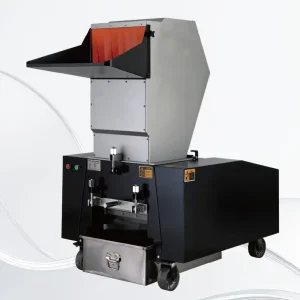
Complete your rotational molding plant ecosystem with heavy-duty carousel systems, CNC-machined steel moulds, high-speed pulverizers, and mixing auxiliaries.
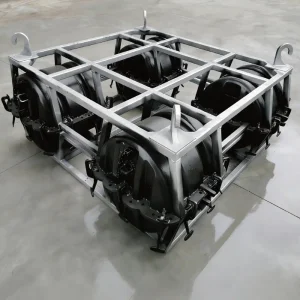
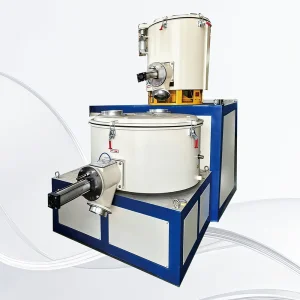
Detailed insights into CE certification protocols, machine selection, utility consumption, and factory acceptance procedures.
Connect directly with our senior rotational molding engineering team. Receive customized machine sizing calculations, thermal energy consumption audits, mould layout drawings, and formal CE-certified commercial quotations within 24 hours.