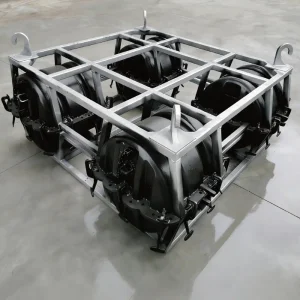
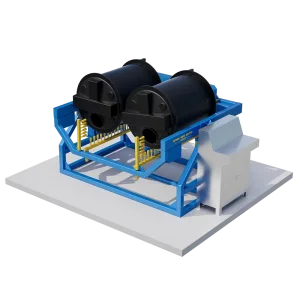
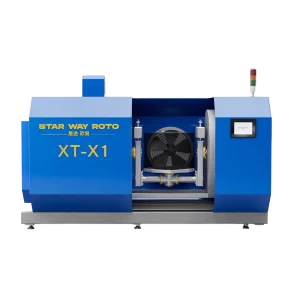
Engineered for high thermal transfer efficiency, structural stress mitigation, and continuous duty-cycle industrial production.
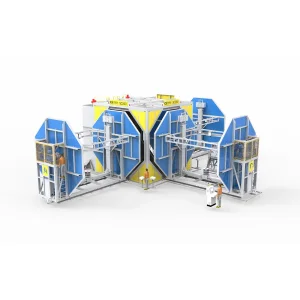
Deploying heavy machinery within the European Economic Area (EEA) and compliant global markets requires strict adherence to harmonized mechanical, thermal, and electrical safety standards.
Complete compliance with EN ISO 12100 for holistic risk assessment and EN ISO 13849-1 for Safety-Related Parts of Control Systems (SRP/CS). Evaluates physical pinch-points, dynamic bi-axial swing envelopes, and emergency deceleration braking curves under maximum payload scenarios.
Conforming to EN 60204-1 for industrial machine electrical safety. Covers short-circuit ratings, high-voltage insulation barriers, continuous bonding continuity testing (<0.1Ω), and automated power-isolation interlocks during maintenance cycle ingress.
Electromagnetic compatibility validation (EN 61000-6-2 / EN 61000-6-4) ensuring noise-free VFD inverter drive operations. Combined with EN 746-2 combustion systems safety for gas/oil burners, automatic flame ionization detection, and overpressure exhaust fail-safes.
| Compliance Parameter | Harmonized European Standard | Engineering Implementation | Audit Status |
|---|---|---|---|
| Mechanical Risk Mitigation | EN ISO 12100:2010 | Comprehensive hazard identification, safety distances per EN ISO 13857, physical torque limiting clutches | Certified |
| Functional Safety Control | EN ISO 13849-1:2015 | Fail-safe PLC logic, Cat 4 PL e dual-channel e-stop loops, monitored light curtains | Certified |
| Combustion Thermal Safety | EN 746-2:2010 | Auto-purge cycle timers, UV flame scanner supervision, explosion relief top roof latches | Certified |
| Industrial Electrical Wiring | EN 60204-1:2018 | Equipotential bonding, numbered halogen-free wiring, color-coded multi-conductor harnesses | Certified |
| Industrial Noise Emissions | EN ISO 3744:2010 | High-efficiency low-RPM backward-curved blowers, acoustic insulated burner hoods | < 76.5 dBA Tested |
Rotational moulding provides critical structural advantages: stress-free molecular orientation, seamless hollow geometries, uniform wall thickness control, and chemical resistance unmatched by thermoforming or blow molding.
Manufacture of 500L to 50,000L vertical/horizontal storage vessels, chemical dosing tanks, and intermediate bulk containers (IBCs). Utilizing cross-linkable high-density polyethylene (XLPE) and virgin LLDPE with high environmental stress crack resistance (ESCR > 1000 hrs).
Diesel fuel tanks, DEF (AdBlue) urea reservoirs, hydraulic oil tanks, complex cabin roofs, engine air intake ducts, and wheel arch fenders. Replaces multi-part stamped steel assemblies with lightweight, corrosion-free single-piece mouldings.
Engineered for high hydrodynamic loads: navigation buoys, marina pontoons, rotomolded unsinkable leisure kayaks, offshore fish-farming cage support floats, and double-hull tenders filled with marine-grade closed-cell polyurethane foam.
Heavy-duty roto-moulded cooler boxes, pharmaceutical vaccine transit containers, dry-ice shippers, and insulated food handling tubs. Constructed with dual-wall food-grade LLDPE shells filled with high-density polyurethane (PU) insulation foam.
One-piece monolithic septic tanks, storm-water attenuation cells, inspection chambers, grease traps, and automated municipal underground waste sorting systems. Superior hoop-strength ribbed profiles resist soil pressure and hydrostatic uplift.
Heavy-duty rotationally molded plastic pallets, hazardous spill containment bunds, automated guided vehicle (AGV) chassis covers, commercial playground spiral slides, and high-impact traffic safety barriers.
Strategic integration within the Ningbo & Yangtze River Delta industrial belt delivers measurable capital expenditure advantages, precision tooling execution, and compressed lead times for global enterprises.
China's comprehensive supply cluster enables rapid in-house CNC machining of Cast Aluminum (A356) and Fabricated Steel/Stainless Steel molds. Utilizing 5-axis high-speed milling centers with surface finish tolerances within ±0.05mm.
Modern Chinese machinery engineering incorporates computational fluid dynamics (CFD) modeled oven airflow. Dual-recirculation blowers with directional louver gates eliminate cold spots, ensuring uniform resin fusion and shortening heating cycles by 18-24%.
The rotational moulding sector is transitioning from empirical craftsmanship to data-driven, closed-loop telemetry and green material engineering.
Integration of internal air temperature sensors (TPIS/Rotolog systems) directly transmitting live Peak Internal Air Temperature (PIAT) data to the master PLC via 2.4 GHz wireless telemetry. Eliminates under-cure brittle failure and over-bake discoloration.
Replacing traditional hydraulic drives and chain transmissions with high-torque electric servo motors paired with planetary gearheads. Provides micro-stepped rotation angle indexing, infinite major/minor axis ratio setting, and 95%+ energy efficiency.
Machine design tailored to handle Post-Consumer Recycled (PCR) HDPE and bio-based Polyethylene (Bio-PE). Features precision cooling station air/water mist ramps to prevent micro-crystallinity shrinkage warping in recycled polymers.
Evaluating Capital Expenditure (CapEx) against Operational Expenditure (OpEx) is crucial when investing in high-volume rotational moulding lines. The matrix below outlines budgetary ranges based on machine architecture, heating media, and mold swing capacities.
| Equipment Category | Effective Swing Diameter | Heating Configuration | Arm Payload Capacity | Budgetary Range (USD) | Primary Industrial Application |
|---|---|---|---|---|---|
| Lab / R&D Testing Machine | 1,000 mm – 1,500 mm | Precision Electric Infrared / Ceramic | 100 – 250 kg | $22,000 – $45,000 | Material Testing (PE/PP/PA), Pigment R&D |
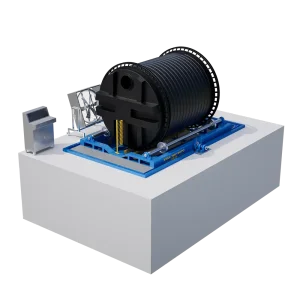
| Open-Flame Rock & Roll | 2,000 mm – 4,500 mm | Open Flame LPG / Natural Gas | 1,500 – 5,000 kg | $35,000 – $85,000 | Large Water/Chemical Storage Tanks (Up to 30,000L) |
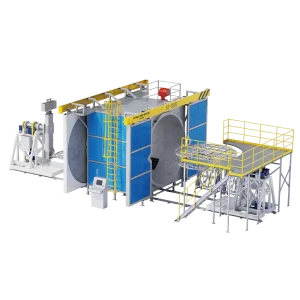
| Standard Shuttle Machine (2 Arms) | 2,000 mm – 3,500 mm | Enclosed Gas Burner (Riello / Weishaupt) | 800 – 2,500 kg / arm | $65,000 – $140,000 | Kayaks, Insulated Boxes, Agricultural Spray Tanks |
| High-Load Square Shuttle | 3,500 mm – 5,000 mm | Modulating Gas / Dual-Fuel Chamber | 2,500 – 6,000 kg / arm | $120,000 – $240,000 | Septic Tanks, Underground Manholes, Large Totes |
| Carousel Fixed-Arm Machine (3-4 Arms) | 2,500 mm – 4,200 mm | High-Velocity Enclosed Convection | 1,200 – 3,500 kg / arm | $180,000 – $380,000 | High-Volume Continuous Production Lines |
| Heavy-Duty Independent Arm Carousel | 3,000 mm – 5,500 mm | Fully Automated Multi-Zone Hot Air | 2,000 – 5,000 kg / arm | $280,000 – $550,000+ | Automotive Tier-1, Marine Hulls, Multi-Product Runs |
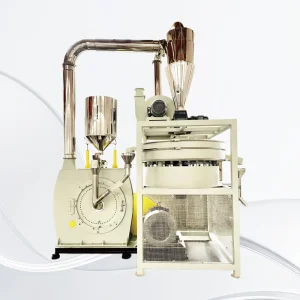
| Plastic Pulverizer / Grinder Unit | Disc Dia: 500 – 800 mm | Water-Cooled High-Speed Rotor | 150 – 600 kg/hr output | $14,000 – $38,000 | Virgin LLDPE/HDPE Pellet to 30-50 Mesh Powder |
In-depth technical answers addressing CE certification, machine selection, mold metallurgy, and operational parameters.
A legitimate CE compliant delivery comprises the EU Declaration of Conformity (DoC), Risk Assessment Report conforming to EN ISO 12100, Electrical Schematics conforming to EN 60204-1, Noise Emission Test Certificate, Burner/Combustion Safety Certificates (EN 746-2), and a multi-lingual Operating & Maintenance Manual with comprehensive lockout/tagout (LOTO) protocols.
Cast Aluminum (A356) is superior for complex geometries requiring high thermal conductivity, intricate surface texturing, and moderate volume runs (e.g., kayaks, cooler boxes, toys). Fabricated Steel (Q235 or Stainless 304) is ideal for large cylindrical tanks, septic vessels, or simple hollow profiles due to superior structural durability, lower initial tooling costs, and faster modification ease.
Standard rotomolding grades require a 35-mesh (500 micron) powder with dry flowability under 25 seconds (per ASTM D1895) and bulk density >0.35 g/cm³. Too coarse (>30 mesh) leads to poor sinter fusion, surface pinholes, and internal voids; too fine (>60 mesh) creates poor powder flow and bridging inside narrow mold cavities.
Electric heating systems offer zero on-site emissions, ultra-precise ±1.5°C chamber temperature stability, and lower maintenance (no burner or exhaust duct cleaning). They are highly favored in cleanroom or strictly regulated urban facilities. Gas-fired convection ovens offer faster ramp-up rates and lower utility operational costs in regions where natural gas is economical.
The speed ratio between the primary arm and secondary plate (commonly 4:1, 3:1, or 1:4) determines the path of powder dispersion across the mold walls. Adjusting this kinetic ratio prevents resin pooling at flat bottoms and ensures uniform wall thickness across sharp internal corners and intricate draft angles.
Every machine undergoes a rigorous 72-hour continuous Factory Acceptance Test (FAT) prior to dispatch. This includes laser alignment of arm drive axes, thermal imaging validation of oven chamber heat dispersion, full load mechanical testing with simulated weights, and simulated emergency stops to verify Category 4 safety relay trips.
Complete customized machine variants, precision laboratory R&D units, and heavy-duty steel molds built to global industrial standards.