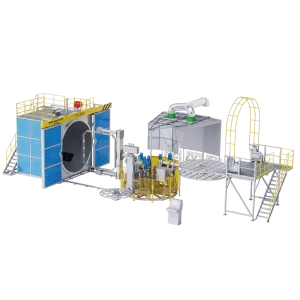
Explore high-performance rotomolding machinery engineered for energy savings, precise thermal distribution, and seamless EU compliance.
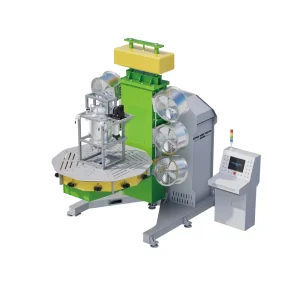
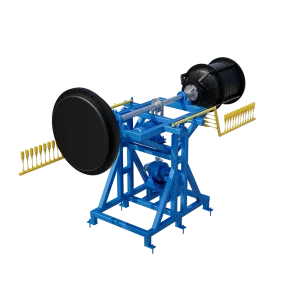
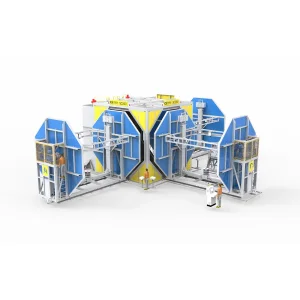
Analyzing the macro-economic and engineering forces driving demand for CE-certified Rock and Roll rotational molding machinery globally.
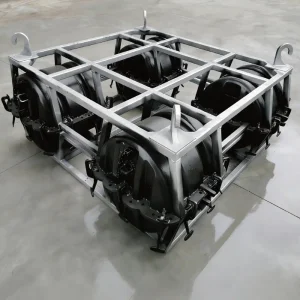
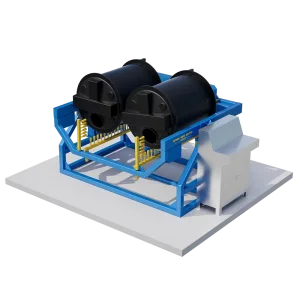
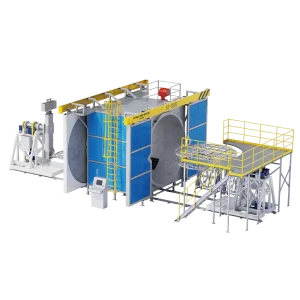
Traditional Carousel and Shuttle rotomolding machines excel at symmetrical, multi-directional hollow parts such as spherical water tanks and cubic containers. However, long-aspect ratio products—such as kayaks, chemical pipe liners, street lamp poles, and agricultural troughs—face major thermal inefficiencies on traditional machines. Rock and Roll (RnR) rotomolding technology solves this by isolating movement to a full 360° longitudinal roll and a controlled ±45° rocking axis, significantly minimizing oven volume and reducing power consumption by up to 40%.
Industrial buyers across the European Union, North America, and Australia demand strict compliance with international safety directives. A CE mark is not merely a label; it represents rigorous compliance with the Machinery Directive 2006/42/EC, Low Voltage Directive 2014/35/EU, and EMC Directive 2014/30/EU. Leading factories must integrate dual-channel safety PLCs, explosion-proof combustion valves (EN 746-2), and ergonomic loading structures to mitigate operational liability.
With volatile natural gas prices and stringent carbon taxation policies (such as CBAM in Europe), rotomolding OEMs are rapidly evolving. The industry is shifting from direct open-flame systems to high-efficiency enclosed hot-air recirculation ovens and zero-emission Electric Heating Rotomolding Systems. Energy recovery loops and digital twin telemetry are now paramount for high-volume modern facilities.
A granular look at the mechanical structure, thermal control loops, and European safety compliance frameworks built into certified Rock & Roll machines.
Every certified Rock and Roll rotomolding machine engineered by top-tier Chinese factories undergoes rigorous risk assessments according to EN ISO 12100. The structural frames are fabricated using high-tensile structural steel (Q235B/Q355B) subjected to Finite Element Analysis (FEA) to eliminate mechanical resonance during full-load rocking motion.
The core advantage of Rock & Roll machinery lies in its specialized two-axis differential movement profile. Unlike bi-axial carousel machines that maintain fixed velocity ratios, RnR machinery allows independent drive tuning for the rolling gear and the rocking hydraulic cylinders.
| Technical Criterion | Rock & Roll Machine (RnR) | Carousel Rotomolding Machine | Shuttle Rotomolding Machine |
|---|---|---|---|
| Primary Target Geometry | Long, slender hollow parts (Kayaks, Pipes, Light Poles) | Symmetrical high-volume containers (Tanks, Drums) | Large, heavy-duty irregular hollow products |
| Floor Space Footprint | Ultra-Compact (Linear orientation) | Large Circular Footprint | Medium-Large Linear Footprint |
| Energy Consumption Index | Baseline (100% - Highest Thermal Efficiency) | 145% (Higher oven volume heat loss) | 130% (Intermittent oven entry heat loss) |
| CE Safety Implementation | EN 746-2 Gas Train, Enclosed / Open Rocking Safety | Multi-station Safety Light Curtains & Interlocks | Rail Transit Interlocks & Zone Sensors |
| Tooling Flexibility | Single or dual long mold configurations | Multiple arms carrying diverse mold sets | Independent arm indexing per shuttle car |
| Capital Expenditure (CapEx) | Low - Medium | High | Medium - High |
Charting the technological evolution of Rock & Roll rotomolding equipment toward Industry 4.0 automation and green manufacturing.
Moving away from inefficient direct open-flame systems toward fully enclosed, insulated heating chambers. Implementation of modulated burners (Weishaupt/RIELLO) and stainless-steel electric heating elements featuring pulse-width modulation (PWM) PID control for steady oven dynamics.
Integration of real-time wireless pyrometers and internal air temperature sensors directly inside the rotating mold cavity. The machine dynamically adjusts rocking frequencies and heating cycles based on actual polymer melt phase transitions rather than fixed timers, virtually eliminating part warping and pinholes.
Artificial Intelligence algorithms analyze historical thermal imaging data to dynamically adjust rocking tilt speeds during the liquid-to-solid transition phase. Exhaust heat recovery units (HRU) capture waste heat from oven purging cycles to pre-heat raw resin powders (LLDPE/HDPE/PP/PA12), driving overall thermal efficiency past 85%.
Achieving consistent wall thickness in a 6-meter kayak or industrial conduit mold requires precise balance between thermal energy input and powder distribution velocity. If the rocking motion is too fast, resin pools collect at the extremities; if too slow, thermal degradation occurs at the center. Modern CE-certified PLC software utilizes recipe-driven multi-stage speed profiles to solve this issue automatically.
How Rock and Roll rotomolding equipment serves specialized industrial sectors worldwide with engineered precision.
Fabrication of double-walled HDPE culverts, underground drainage inspection chambers, and continuous chemical conduit liners. RnR machinery allows high wall thickness (12mm–25mm) without sag.
Single-seater and multi-seater recreational kayaks, canoes, floating pontoon docks, and heavy-duty boat hulls. Rock & Roll machines handle mold lengths up to 8+ meters with ease.
Slender fertilizer spray booms, liquid feed troughs, and narrow chemical transport tanks designed to fit truck chassis profiles where traditional round tanks are unsuitable.
Modular highway crash barriers, decorative light poles, trash chutes, and cable protection ducting requiring seamless stress-free weatherable polyethylene construction.
Why sourcing CE-certified Rock and Roll machinery from Ningbo, China offers unprecedented value, engineering precision, and operational safety.
Headquartered in Ningbo, China's premiere machinery manufacturing hub, factories leverage an ultra-dense supply chain. Precision CNC machining centers, steel laser cutting facilities, cast aluminum mold foundries, and drive component suppliers are located within a 50 km radius. This cluster reduces production lead times by up to 35% compared to Western counterparts.
Leading Chinese exporters do not merely build machines; they offer one-stop turnkey solutions integrating custom steel and aluminum rotomolding moulds directly onto the machine frame. Pre-shipment dynamic balancing and mold fitting guarantee plug-and-play installation upon arrival at the customer's global facility.
Quality assurance is backed by ISO 9001:2015 certified protocols. Prior to container loading, every CE-certified Rock and Roll machine undergoes a 72-hour continuous thermal cycle test, electrical ground continuity checking, hydraulic pressure hold testing, and laser alignment verification of the primary roll shafts.
End-to-end global service engineering, remote diagnostics, and regulatory documentation for effortless plant commissioning.
Deploying certified field service engineers worldwide to handle physical installation, electrical hookup verification, burner calibration, and operator training. Remote VPN gateway modules installed on Siemens/Schneider PLCs allow real-time diagnostic support directly from factory R&D engineers, eliminating costly downtime.
Every exported unit is accompanied by a full CE Technical File (TCF) required for European customs clearance and local labor health and safety audits.
In-depth technical answers addressing buyer intent, compliance details, and operational performance of Rock & Roll Rotomolding Systems.
Explore auxiliary equipment, custom steel moulds, high-capacity shuttle units, and testing systems to complete your industrial plant.