Analysis of modern rotational molding shifts, technical compliance imperatives, and global market dynamics
The industrial rotational molding (rotomolding) sector has experienced a profound paradigm shift over the past decade. Transitioning from simple, low-tolerance commodity container manufacturing to highly engineered, structural, and multi-layer hollow polymer component fabrication, global OEMs now demand absolute structural integrity, cycle-time efficiency, and rigorous regulatory compliance. At the apex of this engineering evolution is the requirement for CE Certification Plastic Rotational Mould Manufacturers & Quotes capable of meeting strict international standards while optimizing total tooling costs.
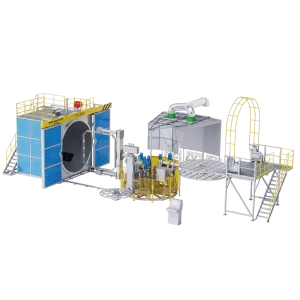
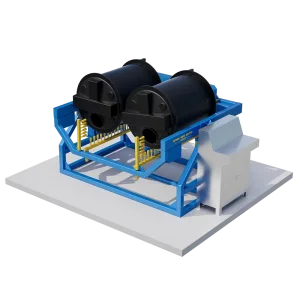
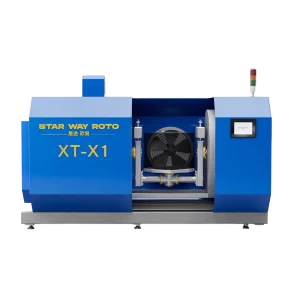
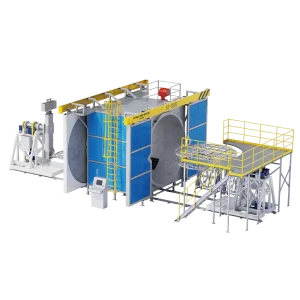
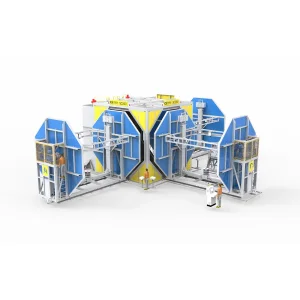
CE Marking is far more than a decorative quality badge; it represents a legally binding declaration of conformity with essential European Health, Safety, and Environmental Protection Directives. For rotational moulds and associated automated machinery—such as Shuttle, Carousel, and Rock & Roll systems—CE compliance mandates adherence to:
Comparative engineering evaluation of tool construction, thermal kinetics, and surface texturing
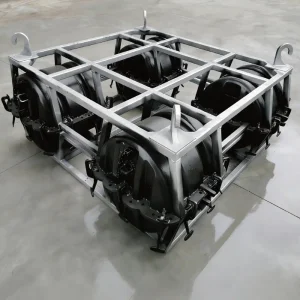
Cast aluminum moulds are the gold standard for complex geometries, aesthetic consumer products, automotive air ducts, and intricate outdoor equipment. Utilizing CNC-machined master patterns and high-density A356 aluminum alloy, these moulds deliver exceptional thermal conductivity ($k \approx 160 \text{ W/m}\cdot\text{K}$), enabling rapid heating and cooling cycles.
Fabricated steel molds excel in producing large, cylindrical, or rectangular hollow vessels such as 10,000L agricultural chemical tanks, septic systems, and heavy industrial IBC totes. Precision laser-cut Q235 structural steel or 304 stainless steel plates are TIG/MIG welded on heavy-duty jig fixtures to prevent thermal warpage during repeated thermal cycling ($260^{\circ}\text{C} - 320^{\circ}\text{C}$).
| Evaluation Parameter | CNC Cast Aluminum (A356) | Fabricated Steel (Q235/SS304) | CNC Block Machined Aluminum |
|---|---|---|---|
| Thermal Conductivity | 150 - 170 W/m·K | 45 - 55 W/m·K | 180 - 200 W/m·K |
| Dimensional Tolerance | ±0.5 mm / m | ±1.5 mm / m | ±0.1 mm / m |
| Expected Tooling Life | 100,000+ Cycles | 50,000+ Cycles | 250,000+ Cycles |
| Polishing & Surface Quality | SPI A2 - Micro-grit Texture | Commercial Smooth / Painted | Mirror Optical Finish (SPI A1) |
| Optimal Polymers | LLDPE, XLPE, PP, PA12 | LLDPE, HDPE | Complex Engineering Resins (PA, PVDF) |
| Relative Cost Factor | Medium - High | Low - Medium | High (Premium Tooling) |
How vertically integrated manufacturing hubs in Ningbo & Zhejiang drive cost reduction and delivery speed
Before raw aluminum pouring or steel sheet cutting occurs, advanced CAE tools simulate thermal dissipation across mold walls. Finite Element Analysis (FEA) identifies stress points during rotational arm reversal, eliminating wall thinning and pinhole formation prior to physical tooling trials.
Utilizing high-speed 5-axis CNC machining centers enables total surface continuity across complex split-line moulds. This guarantees zero plastic flash leakage during high-pressure molding cycles and reduces manual benching time by 60%.
Located in Ningbo, China's core manufacturing ecosystem offers immediate access to raw aluminum ingot foundries, custom burner suppliers, automated PLC panel assembly shops, and international shipping ports—compressing tooling lead times from 90 days down to 35 days.
Deconstructing the variables behind plastic rotational mould quotations and hidden operational costs
When evaluating vendor quotations for CE-certified rotational moulds, procurement professionals must look beyond the initial purchase price (CapEx). A low-cost mould constructed with inadequate wall thickness, poor venting geometry, or substandard clamping mechanisms will quickly accumulate substantial OpEx losses through extended cycle times, high scrap rates, and premature tool fatigue.
Deploying CE-certified rotational tooling across critical commercial and industrial markets
Utilizing large-scale fabricated steel and cast aluminum moulds to produce seamless, stress-free vertical and horizontal storage vessels (500L to 20,000L). Molds feature multi-layer foaming inserts for thermal insulation and UV-stabilized LLDPE compatibility.
Precision cast aluminum moulds for cross-linked polyethylene (XLPE) diesel fuel tanks, air intake ducts, adBlue urea tanks, and military vehicle fenders requiring complex multi-piece split cores and hydraulic pull-pins.
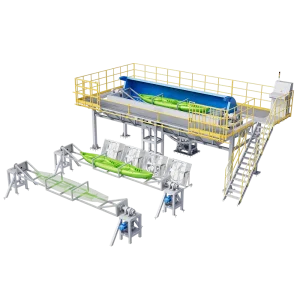
Highly polished aluminum CNC tooling designed for high-end recreational kayaks, yacht hulls, floating docks, and ultra-long packing cases. Equipped with rock & roll open-flame or oven heating compatibility.
Expert technical clarity addressing direct procurement inquiries, compliance parameters, and engineering practices