
Explore our flagship rotomolding machinery configurations engineered for multi-layer water tank fabrication from 200 Liters up to 50,000 Liters.
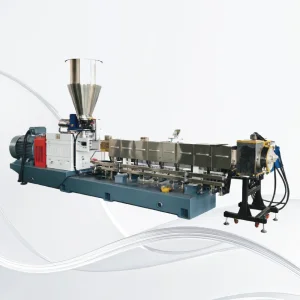
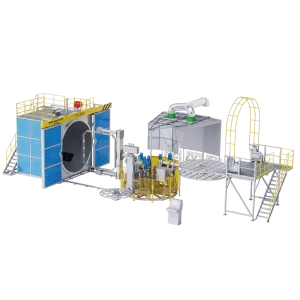
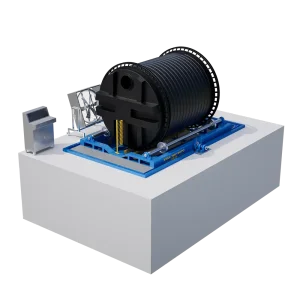
A comprehensive macroeconomic perspective on rotational molding automation, multi-layer resin formulations, and the rising demand for liquid storage solutions across global markets.
The global demand for industrial and potable water storage tanks has undergone unprecedented expansion over the last decade. Rapid urbanization across emerging markets, heightened industrial chemical safety directives, and escalating climate-induced drought challenges in agricultural heartlands have collectively turned rotomolded polyethylene (PE) and cross-linked polyethylene (XLPE) storage containment into critical infrastructure assets. When enterprise buyers evaluate how to buy a water tank manufacturing machine from a certified factory or engineering partner, the procurement equation is no longer solely focused on mechanical press cost. It now hinges on overall thermal efficiency, scrap-rate reduction, multi-layer wall thickness distribution algorithms, and turnkey factory lifecycle economics.
Global water scarcity, rainwater collection mandates, and industrial chemical containment standards (EPA/CE) require durable, seamless tanks capable of 25+ year service lifespans without oxidative degradation.
The industry has shifted from single-layer tanks to 3-layer, 4-layer, and insulated foam-core structures: combining UV-resistant outer skins, carbon-black intermediate shields, structural microcellular foam, and virgin FDA food-grade inner antibacterial liners.
Energy consumption accounts for 22%–35% of operational expenditure in rotomolding. Modern forced-air circulation ovens and direct electric heating systems reduce burner consumption by up to 28% per kilogram of processed polymer.
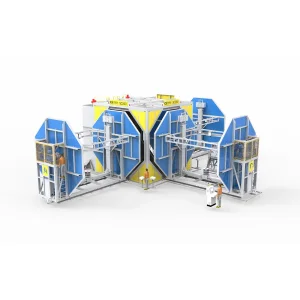
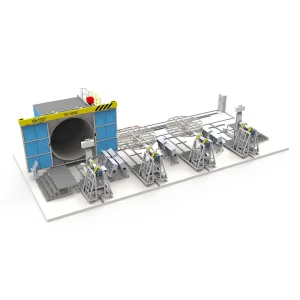
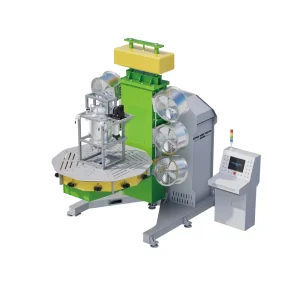
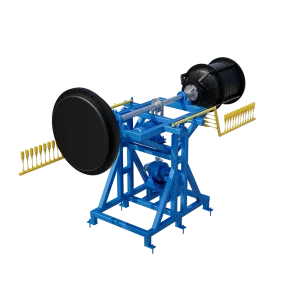
Understanding the kinematic, thermal, and spatial differences between Carousel, Shuttle, and Rock & Roll platforms.
Rotational molding is uniquely suited for hollow, stress-free container production. Unlike blow molding or injection molding, rotational molding utilizes biaxial low-speed gyration combined with conduction and convection heating, allowing for complex geometries, uniform corner thickness, and virtually zero internal residual stress. However, selecting the appropriate machine frame architecture dictates plant throughput, mould changeover flexibility, and factory floor utilization.
| Machine Architecture | Ideal Tank Capacity | Throughput / Daily Yield | Thermal Distribution Method | Automation Flexibility | Recommended Industrial Use |
|---|---|---|---|---|---|
| Independent Arm Carousel | 200L – 5,000L | Ultra-High (Continuous Station Indexing) | Closed Convection Oven (Gas/LPG/Diesel) | High (PLC Indexing, Auto-Doors) | Standard domestic & commercial vertical water tanks in continuous batches. |
| Square & Lined Shuttle Systems | 1,000L – 25,000L+ | Medium - High (Flexible independent carts) | Hot Air Recirculation Chamber / Electric | Moderate to High (Separate cart programming) | Custom large-volume water storage, agricultural chemical tanks, septic tanks. |
| Rock & Roll (Open Flame / Oven) | 5,000L – 50,000L+ | Low - Medium (High payload per cycle) | Direct Flame Burner Array or Chamber Oven | Manual to Semi-Automatic Arm Tilting | Extra-large horizontal transport tanks, cylindrical drainage culverts, bulk storage. |
| Direct Electric Heating Systems | 100L – 3,000L | High (Precise zone thermal feedback) | Integrated Electrical Resistance Internal Matrix | Maximum (Cleanroom & Zero-Emission Compliant) | Eco-regulated plants, potable water medical/food tanks, zero-fossil-fuel facilities. |
Carousel rotomolding machines represent the pinnacle of continuous batch manufacturing. Utilizing 3 to 4 independently articulated carrier arms, each arm progresses through dedicated heating, intermediate conditioning, high-velocity forced-air/water-mist cooling, and demoulding/servicing stations. This completely isolates heating cycles from manual mould servicing, eliminating thermal downtime and securing consistent cycle repeatability required by high-output municipal tank suppliers.
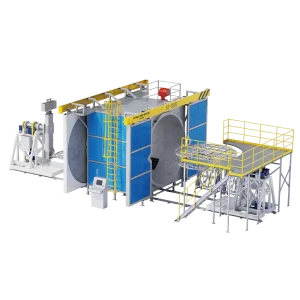
For operations manufacturing divergent tank sizes—such as alternating between a 1,000-liter loft tank and a 20,000-liter underground rainwater harvester—shuttle machinery provides unmatched operational versatility. Equipped with dual independent shuttle carts running along heavy-duty linear guide tracks, one carriage undergoes heating inside the central oven chamber while the opposite carriage is cooled and stripped, reducing shop-floor footprint by over 30% compared to equivalent carousel layouts.
Strategic financial modeling for industrial factory setups, raw material optimization, and utility expenditure control.
Polyethylene resin represents 55%–68% of total production cost. Modern high-precision mold heating eliminates hot spots, delivering uniform ±0.5mm wall tolerances and preventing resin wastage.
Equipped with Italian/German multi-stage modulated burners (Riello/Weishaupt) and digital airflow damper actuators, achieving optimal air-fuel stoichiometry and reducing gas consumption per heat cycle.
Pneumatically assisted clamping, quick-lock mould flanges, and automated arm repositioning compress demoulding windows by 40%, enabling a 2-person crew to manage complete high-output shifts.
Typical turnkey rotomolding water tank installations achieve full CAPEX amortization within 14 to 22 months when operating on dual shifts at 75% nominal capacity utilization.
A high-yield water tank factory is an interconnected manufacturing ecosystem. Seamless operations require upstream and downstream auxiliary harmony:
The quality of your finished water storage tank is defined by the thermal transfer precision and structural rigidity of the mould cavity.
Manufactured from high-grade A356 aluminum alloy, CNC precision-machined molds deliver exceptional thermal conductivity (up to 3x faster heat dissipation than steel). Ideal for multi-layer domestic tanks (200L to 3,000L) featuring intricate thread inserts, threaded inlet/outlet bungs, custom logo embossing, and cosmetic outer rib patterns. Ensures ultra-smooth internal surfaces that inhibit biofilm and bacterial colonization.
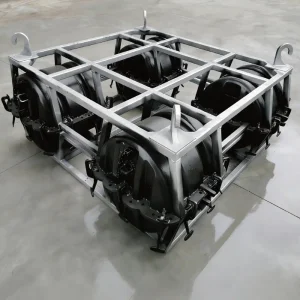
Engineered from pressure-vessel grade Q235B/Q345R carbon steel or SUS304 stainless steel plates. Ideal for large-scale municipal and agricultural tanks (5,000L to 50,000L+). Fabricated with laser-cut perimeter flanges, CNC-rolled heavy stiffener rings, and pneumatic clamping lugs. Provides extraordinary structural durability against thermal cycling distortion, thermal fatigue, and continuous factory mechanical stress.
Ensuring compliance with international safety codes, electrical harmonizations, and providing boots-on-the-ground plant deployment.
Every rotational molding machine is manufactured under rigorous ISO 9001 quality frameworks and bears official CE certification, complying with Machinery Directive 2006/42/EC and Low Voltage Directive 2014/35/EU.
Standardized on global electrical architecture including Siemens S7-1500 / Schneider PLCs, Schneider contactors, Omron temperature controllers, and SEW-Eurodrive geared motor reducers with worldwide parts availability.
Our senior commissioning engineers provide complete factory layout design, ducting blueprints, foundation civil works guidance, overseas on-site mechanical erection, PLC programming, and operator skill certification.
Pioneering closed-loop thermal analytics, digital twin process monitoring, and real-time resin fusion algorithms.
The historical barrier in rotomolding has always been the "black box" nature of internal oven thermodynamics. StarWayRoto is pioneering intelligent closed-loop process monitoring to turn rotational molding into an exact, data-driven science:
Wireless in-mould temperature sensors track powder fusion point (PIAT) in real-time, automatically triggering the cooling cycle precisely when bubble dissolution completes, eradicating under-cured or pinholed tanks.
Infrared thermal scanners inspect oven chamber temperature uniformity across 16 points, auto-balancing fan speeds and damper angles to guarantee 100% circumferential wall uniformity on massive 20,000L tanks.
Integrated vibration and thermal sensors on main drive gearboxes and spindle bearings forecast mechanical wear up to 400 operating hours prior to breakdown, streaming telemetry to our 24/7 technical helpdesk.
Integrate our precision moulds, auxiliary testing equipment, and high-load shuttle machines to complete your factory line.
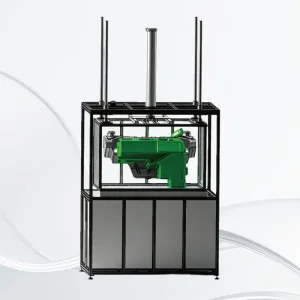
Authoritative insights addressing common engineering, procurement, and operational inquiries.
On an advanced forced-air circulation shuttle or carousel rotomolding machine, a 3-layer 1,000-liter PE water tank requires approximately 18 to 26 minutes of heating (depending on ambient temperature and burner BTU output) and 12 to 16 minutes of controlled forced-air/water-mist cooling. Total cycle time per arm is typically between 32 and 45 minutes.
Multi-layer manufacturing utilizes sequential drop-box dosing or manual compound staging. First, black UV-stabilized outer skin powder is loaded and melted; subsequently, automated internal drop-boxes release the foaming agent / intermediate insulating resin, followed by the final release of pure FDA-compliant white virgin antibacterial resin, creating a solid chemical bond between all layers without adhesive agents.
Our enclosed oven chambers can be configured with multi-fuel burner systems supporting Natural Gas (LNG/CNG), Liquefied Petroleum Gas (LPG), Light Industrial Diesel, Bio-mass pellets, or zero-emission Direct Electric heating coils depending on local utility tariffs and environmental regulations.
A standard 3-arm Carousel machine accommodating up to 5,000L tank moulds requires a clear plant footprint of approximately 18m x 18m with a minimum ceiling hook clearance of 6.5 meters to permit overhead crane mould servicing and spider arm rotation.
Yes. Rotomolding machinery provides exceptional tooling versatility. By mounting different steel or aluminum moulds to the arm spider plate, you can produce septic tanks, underground drainage pits, chemical dosing tanks, road barriers, marine navigation buoys, cooler boxes, and playground slides on the same production line.
All main structural frames, oven chamber steel shells, and CNC drive spindles are engineered for a 20+ year continuous industrial service life. We provide a comprehensive 12 to 24-month comprehensive mechanical and electrical warranty along with lifetime remote PLC telemetry diagnostics and rapid spare parts dispatch.
Connect directly with our senior rotational molding engineering consultants to receive a customized plant layout proposal, burner fuel consumption calculation, and complete equipment quotation tailored to your target volume capacity.