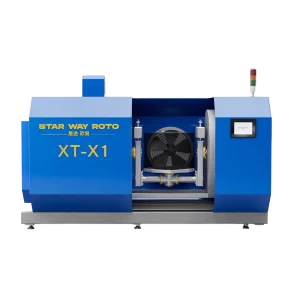
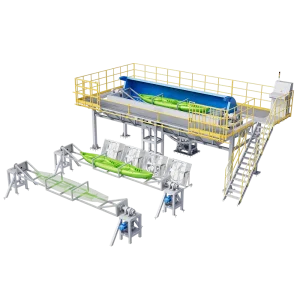
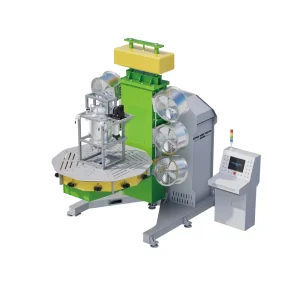
Explore our heavy-duty rotational molding machines, integrated shuttles, and precision auxiliary equipment engineered for high-throughput marine and industrial component fabrication.
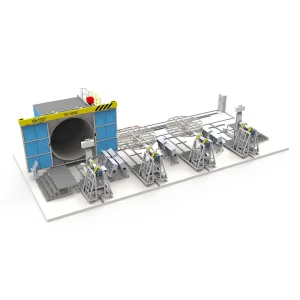
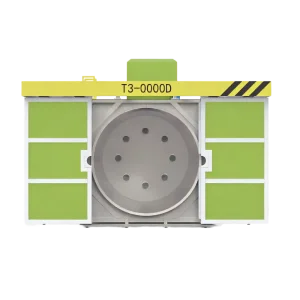
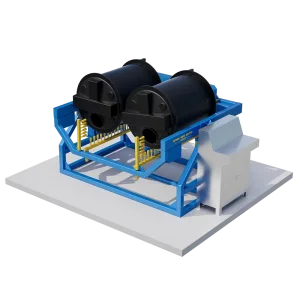
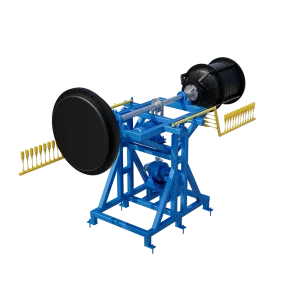
Addressing the surging global demand for durable polyethylene watercraft through automated biaxial rotation, thermodynamic precision ovens, and high-integrity CNC tooling.
The global watercraft and paddlesports market has experienced exponential structural growth over the past decade, driven by outdoor recreation, commercial kayak rental operations, eco-tourism, and professional angling. Within this landscape, rotational molding (rotomolding) represents the gold standard manufacturing process, accounting for more than 82% of all hard-shell kayaks, sit-on-top fishing boats, touring canoes, and tandem watercraft produced worldwide. Unlike thermoformed sheet assemblies or blow-molded hulls, rotomolded kayaks deliver seamless, one-piece construction with zero structural weld seams, exceptional environmental stress-crack resistance (ESCR), and superior impact strength against rocky shorelines and shallow reefs.
As recreational gear brands transition toward more complex hull geometries—such as integrated transducer scuppers, molded-in gear tracks, pedal-drive wells, dry storage compartments, and multi-chine hull profiles—the technical requirements on the machinery and tooling have escalated. Sourcing managers and industrial entrepreneurs seeking to buy kayak mold machine quotes and product lines face significant technical decisions spanning oven chamber aerodynamics, biaxial vs. rock-and-roll kinematic drives, cast aluminum vs. CNC billet tooling, and energy-efficient burner modulation.
Rotomolding creates a continuous molecular structure using linear low-density polyethylene (LLDPE) or high-density polyethylene (HDPE). The absence of adhesive or sonic-welded joints eliminates the risk of hull splitting under hydrodynamic shear or heavy payload strain.
Advanced rock-and-roll and shuttle machines feature programmable multi-axis indexing that ensures wall thickness is precisely reinforced along keel baselines and scupper tubes while keeping gunwales lightweight for optimal paddling dynamics.
Compared to injection molding tooling costing upwards of $500,000 for large items, high-precision CNC cast aluminum kayak molds require only a fraction of the capital investment, allowing rapid iteration of seasonal hull designs.
Comprehensive breakdown of thermodynamic oven airflow, rock-and-roll kinematic axes, CNC cast aluminum tooling, and automated PLC control loops.
Unlike standard symmetric hollow vessels such as cylindrical water tanks or chemical drums, a watercraft hull is inherently elongated, slender, and asymmetrical along its lateral axis. A typical single or tandem kayak mold measures between 2.8 meters (9.2 ft) and 5.2 meters (17.1 ft) in length, presenting unique rotational inertia and thermodynamic heat-transfer challenges. If an uncalibrated rotational molding system is employed, thermal stratification causes polymer powder to pool unevenly, resulting in paper-thin bow/stern tips and excessively thick keel lines.
To achieve structural uniformity and defect-free production, modern kayak rotomolding machinery relies on specialized kinematics and thermal management:
1. Rock-and-Roll Kinematics vs. Biaxial Shuttle Systems: Rock-and-roll machines rotate the elongated mold 360 degrees along the longitudinal primary axis while rocking it back and forth up to ±45 degrees on the secondary axis. This mechanical action drives the fluidized polyethylene powder evenly across the entire length of the kayak without requiring huge, energy-wasting spherical oven volumes.
2. Forced Re-circulatory Airflow Chambers: High-CFM centrifugal blowers coupled with modulating Riello/Weishaupt gas burners channel thermal air at speeds between 8 to 14 m/s across the aluminum mold skin, ensuring uniform wall thickness within ±0.35mm across the entire hull profile.
3. High-Integrity Cast A356 Aluminum Tooling: CNC-machined master patterns are used to cast dense A356 grade aluminum molds featuring integrated steel backing frames, pneumatic quick-release clamps, micro-venting ports, and precision CNC-milled tongue-and-groove parting lines.
| Machine / Mold Type | Optimal Product Scope | Footprint & Energy Rating | Average Cycle Time | Tooling Payload Capacity | Best Suited For |
|---|---|---|---|---|---|
| Oven-Type Rock & Roll Machine | Long Kayaks (3.0m - 5.5m), Canoes, SUPs | Compact Footprint / 28-35 m³/hr Gas | 35 - 45 Minutes | 800 kg - 2,500 kg | Dedicated High-Volume Kayak Lines |
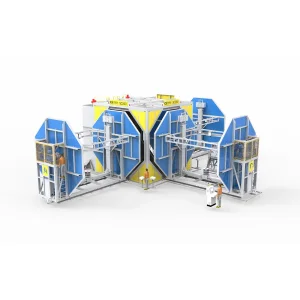
| Square Shuttle System (Multi-Arm) | Kayaks + Coolers + Mixed Marine Goods | Flexible Modular / 38-50 m³/hr Gas | 40 - 52 Minutes | 1,500 kg - 4,500 kg | Multi-Product Factories & OEMs |
| Open-Flame Rock & Roll Machine | Budget Poly Kayaks, Basic Dories | Minimal Footprint / Direct LPG Burn | 45 - 60 Minutes | 500 kg - 1,200 kg | Low-CAPEX Regional Production |
| Biaxial Carousel System | High-Volume Standardized Small Crafts | Large Spatial Area / High Efficiency | 30 - 40 Minutes | 2,000 kg - 6,000 kg | Mass Industrial 24/7 Operations |
How Ningbo StarWay Roto integrates complete engineering ecosystems to deliver high-precision machinery at 40-60% lower capital expenditure.
Global procurement executives analyzing rotomolding machinery and kayak mold pricelists consistently encounter the massive supply chain clustering benefits of Ningbo, China. As one of the world’s foremost hubs for mold-making, precision machining, and rotational polymer processing, Ningbo delivers an unmatched end-to-end industrial ecosystem that significantly compresses lead times and optimizes machinery costs.
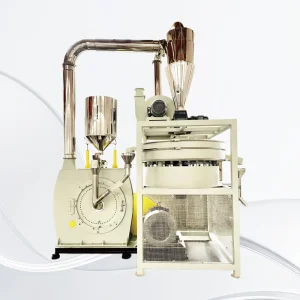
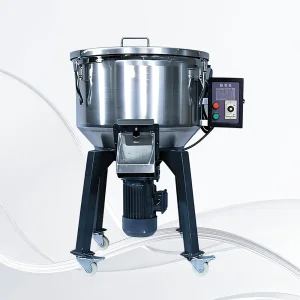
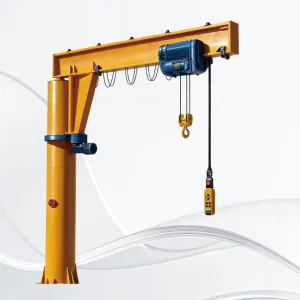
Rather than sourcing equipment from fragmented vendors, StarWay Roto provides full turnkey plants: precision high-speed pulverizers (turbomills), multi-color high-shear mixers, industrial water chillers, de-molding cranes, and hull trimming jigs under a single unified PLC architecture.
Leveraging in-house large-format 5-axis CNC machining centers, wooden pattern shops, and dedicated aluminum foundry lines, custom kayak mold prototyping and delivery is compressed from typical 12-16 week Western timelines down to just 20 to 30 working days.
Our machines utilize globally recognized, easily serviceable electrical and hydraulic components including Siemens S7 PLCs, Schneider Electric switchgear, NSK/SKF heavy bearings, SEW-Eurodrive geared motors, and CE/UL certified combustion systems.
From professional fishing platforms to ultra-light white water crafts, explore the specialized mold tooling requirements for modern polyethylene vessels.
Features complex internal mold core inserts for pedal-drive cavities, battery compartments, transducer mount wells, molded flush rod holders, and heavy-duty transom mounts for electric trolling motors.
Engineered for extreme durability, stackability, and rapid self-bailing scupper performance. Mold design emphasizes heavy bottom hull thickness to withstand constant beach drag and rental abuse.
Multi-drop machine cycle capabilities allow sequential charging of solid virgin PE skin, chemical foaming agent PE middle layer, and inner protective layer—yielding unsinkable, stiff touring hulls.
Smart telemetry, continuous internal air temperature (PIAT) feedback, and sustainable bio-polymer processing.
The rotomolding industry is rapidly evolving from an operator-dependent craft into a precision digital manufacturing process. When requesting machine quotes today, forward-thinking enterprises evaluate Industry 4.0 integration, real-time thermodynamic feedback, and energy-reduction telemetry. StarWay Roto’s next-generation equipment lines incorporate:
Wireless In-Mold Temperature Sensors (PIAT): Real-time wireless telemetry probes measure the peak internal air temperature inside the kayak mold during rotation. This eliminates guesswork, allowing the PLC to automatically initiate cooling the exact moment the polymer reaches complete fusion (typically 195°C - 205°C), preventing resin degradation and trimming cycle times by 10-15%.
Green Combustion & Full Electric Heating: As environmental carbon taxes and natural gas volatility impact European and North American factories, electric-element heating chambers and ultra-low NOx modulating burners are rapidly becoming the preferred choice for forward-thinking facilities.
Key technical specifications and factory operational parameters required to receive a comprehensive turnkey proposal.
Specify your maximum kayak length (e.g., 4.2m tandem), hull beam width, and depth. This defines the machine's required swing diameter and oven chamber volume.
State your utility infrastructure: Natural Gas (LNG), Liquid Petroleum Gas (LPG), Diesel, or 3-Phase Electric Heating (380V/440V/480V, 50/60Hz).
Clarify your expected daily output (e.g., 20 units/shift) to determine whether a dedicated single-arm Rock & Roll machine or a multi-station Shuttle system is required.
Authoritative technical answers to common queries from global sourcing directors, factory owners, and engineering leads.
Enhance your production line with high-precision pulverizers, laboratory test units, high-temperature ovens, and electric heating rotomolding systems.