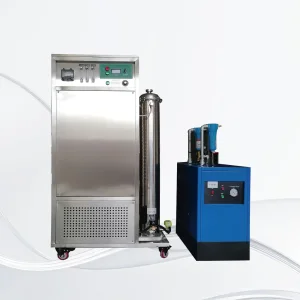
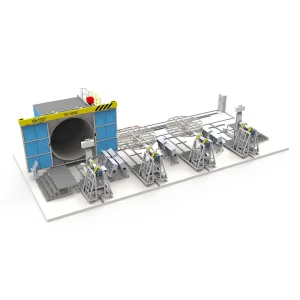
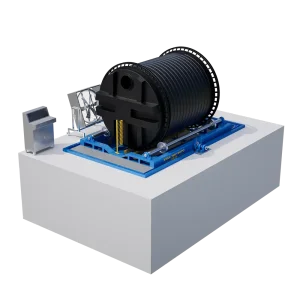
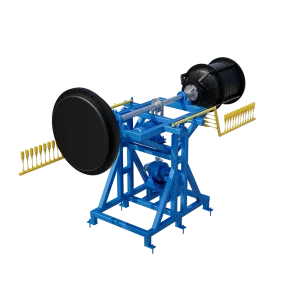
High-duty carousel platforms, rock and roll machines, automated feeding systems, and specialized quality-control testing units engineered for high-output global manufacturing plants.
An engineering breakdown of low-pressure biaxial kinematics, thermodynamic phase transitions, and polymer rheology defining modern hollow-core manufacturing.
Rotational molding (Rotomolding / Roto-casting) stands as a foundational polymer processing discipline distinct from high-pressure injection molding and continuous extrusion blow molding. By leveraging simultaneous multi-axis rotation—typically utilizing primary major axis ratios between 1:4 and 1:1 to minor secondary planetary rotation—the process distributes micronized thermoplastic powders against heated mold cavities entirely through gravity and thermal adhesion.
Because rotational molding relies on centrifugal-free, zero-shear conditions, the resulting end-use components are inherently void of residual internal molded-in stresses. This fundamental thermodynamic advantage makes rotomolded components supremely resistant to Environmental Stress Cracking (ESC), heavy cyclic hydrostatic pressures, dynamic fatigue loads, and sub-zero brittle impact failures.
The modern rotomolding frontier is defined by precise Peak Internal Air Temperature (PIAT) control. Monitoring real-time chamber thermodynamics ensures optimal resin powder coalescence without polymer thermal degradation:
Phase 1: Powder Laydown (100°C - 130°C)Phase 2: Sintering & Fusion (160°C - 195°C)Phase 3: Bubble Dissolution & Densification (PIAT ~200°C)Phase 4: Controlled Crystallization Cooling (Down to 60°C)
| Engineering Parameter | Rotational Molding | Injection Molding | Extrusion Blow Molding |
|---|---|---|---|
| Tooling Cost & Capital Entry | Low to Medium ($5K - $50K) | Very High ($50K - $500K+) | High ($30K - $150K) |
| Internal Molded-in Residual Stress | Zero Stress (Zero Pressure Process) | High (High Packing Pressure) | Moderate to High (Extrusion Shear) |
| Maximum Part Volume & Capacity | Virtually Unlimited (up to 50,000L+) | Limited by Platen & Clamping Force | Limited by Parison Sag & Mold Size |
| Wall Thickness Uniformity on Corners | Naturally Reinforced Thick Corners | Uniform but requires drafting angles | Significant corner thinning effects |
| Multi-Layer & Foam Core Integration | Excellent (Drop-box / In-situ Multi-shot) | Complex (Requires Co-injection) | Moderate (Multi-layer Extrusion Dies) |
A rigorous procurement decision framework evaluating resin mechanical properties, UV stabilization index, mold metallurgies, and Total Cost of Ownership (TCO).
Selecting specialized micro-pellet and pulverizing grades determines structural tensile, flexural modulus, and chemical compatibility:
Matching precision mold architecture to production volume and dimensional aesthetic criteria:
Enterprise B2B procurement mandates strict adherence to international industrial regulatory benchmarks:
How Ningbo StarWay Roto integrates vertically coordinated tooling, intelligent thermal kinematics, and scalable assembly lines to compress global supply lead times.
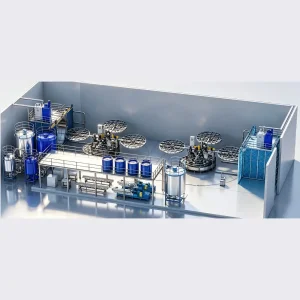
Located across a comprehensive 20-acre production footprint in Ningbo, StarWay Roto eliminates outsourcing bottlenecks. By centralizing raw steel heavy fabrication, precision CNC mould cutting, electronic Siemens PLC programming, and final thermal chamber calibration under one roof, we reduce total production cycle times by up to 35% compared to fragmented supplier models.
Pioneering the green transition in polymer processing, our proprietary electrical heating rotomolding systems replace carbon-heavy open flame burners. Featuring high-efficiency infrared-assisted radiant coils, digital temperature zone tuning, and heavy insulated oven shrouds, our machines slash direct thermal losses by 30% while achieving zero localized carbon footprint.
Engineered for unprecedented industrial scale, StarWay delivered the world-renowned S2-8500 large-scale rotomolding machine. Capable of indexing massive multi-ton tooling setups and producing monolithic water/chemical vessels exceeding 50,000 liters, our machinery leads the global sector in torsional frame rigidity and thermal air circulation efficiency.
Optimizing production throughput by selecting the appropriate mechanical architecture: Carousel, Shuttle, Rock & Roll, and R&D Pilot units.
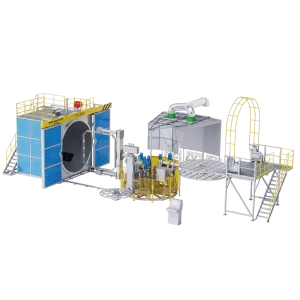
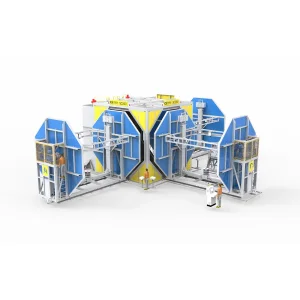
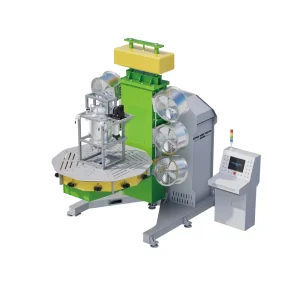
Engineered for high-volume automated series production. Features 3 to 5 independently indexable arms operating through discrete heating, pre-cooling, water-mist cooling, and demolding stations. Delivers uninterrupted 24/7 output with maximized thermal retention.
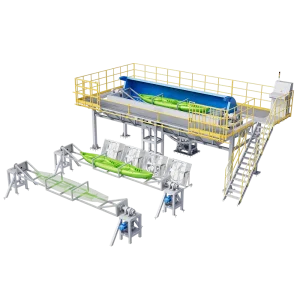
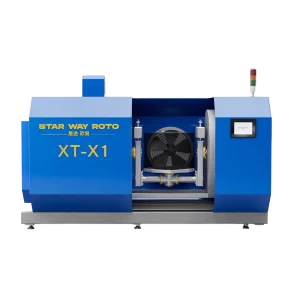
The ideal balance of flexibility and footprint economy. Configured with a central high-efficiency thermal oven flanked by 1 to 3 mobile mold carts. Allows operators to run radically different mold sizes and cycle times on opposing arms without cross-station delays.
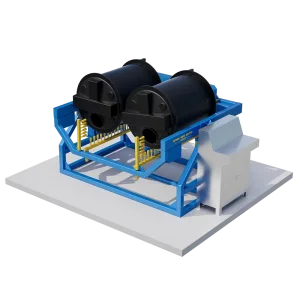
Dedicated mechanical architecture for ultra-long, cylindrical, or massive hollow geometry parts. Employs 360-degree axial rolling combined with controlled longitudinal rocking (up to ±45°), offering both open-flame and enclosed-oven energy delivery options.
Precision micro-scale rotomolding platforms engineered for university labs, polymer resin compounders, color masterbatch blenders, and rapid prototype validation. Features full digital data logging of internal mold temperatures and heating curves.
From mission-critical chemical tanks and offshore marine hulls to rugged off-highway automotive components and cold-chain cold-storage solutions.
Rotomolded vertical silos, horizontal leg transport tanks, conical bottom vessels, and double-wall secondary containment bunds (100L up to 50,000L). Engineered with high-density cross-linked polyethylene (XLPE) to resist extreme corrosive acids, alkalis, and industrial wastewater treatment reagents.
Monolithic polyethylene yachts, sit-on-top fishing kayaks, luxury leisure paddleboards, marine navigation buoys, and heavy floating dock pontoons. Seamless hollow construction ensures unsinkable buoyant integrity, high UV stabilization against saltwater sun exposure, and zero hull corrosion.
Under-chassis Diesel Exhaust Fluid (DEF) tanks, complex ergonomic air intake ducts, hydraulic oil reservoirs, tractor roof cabins, and structural battery housing enclosures for commercial electric utility vehicles. Eliminates secondary welding while meeting strict evaporative barrier mandates.
Automated livestock weighing stalls, anti-microbial feeding troughs, calf housing hutches, pesticide sprayer boom tanks, and automated liquid dispenser units. Non-toxic, smooth hygiene surfaces eliminate bacterial stagnation and endure severe animal physical impacts.
Heavy-duty military-spec cooler boxes, vaccine cold-chain transport bins, dry-ice insulated containers, and temperature-controlled insulated bulk shipper boxes. Utilizing high-density polyurethane (PU) foam pressure injection inside double-wall rotomolded PE skins for multi-day passive thermal hold.
Rotomolded traffic barrier crash cushions, safety cones, municipal underground utility chambers, illuminated architectural furniture, underground septic holding tanks, and commercial playground tunnel/slide elements engineered to EN1176 safety standards.
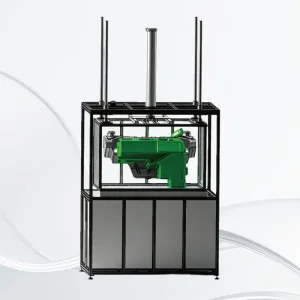
Rotomolded part performance requires scientific testing protocols. At StarWay Roto, every production run and tooling commissioning phase undergoes thorough quality validation to guarantee wall thickness uniformity and polymer molecular cross-linking:
From concept CAD modeling and Mold Flow Rheology analysis to CNC tooling fabrication, pilot sample testing, and high-volume mass production:
Direct answers to core technical and commercial procurement questions faced by operations directors, tooling engineers, and global supply managers.
Because rotomolding is a low-pressure thermal process with inherent resin volumetric shrinkage (typically 2.5% to 3.5% for Polyethylene), standard industrial tolerances are generally ±1.5% to ±2% of nominal dimensions. However, utilizing high-grade CNC billet aluminum tooling with precision PLC cooling air controls, tight tolerances down to ±0.5% or ±0.5mm on critical mounting faces and bushing inserts can be reliably maintained.
Rotational molding tooling generally costs between 15% and 25% of an equivalent-sized injection mold. Because the rotomolding process operates at atmospheric pressure, molds do not require thick forged steel tool blocks, high clamping force channels, or complex internal runner systems. Cast aluminum or fabricated sheet metal molds provide massive CAPEX savings for medium-to-large hollow components.
Electric heating rotomolding systems utilize intelligent infrared radiant heating elements that deliver exact thermal profiling across complex geometries without open flame hot spots. They eliminate localized gas emissions, reduce factory noise, improve energy thermal efficiency by up to 30%, and integrate smoothly into modern ESG-compliant, solar-powered clean energy industrial facilities.
Yes. Multi-layer structures are routinely engineered using automated drop-boxes or multi-shot sequence loading. Common high-performance configurations include a 3-layer wall: a solid virgin PE outer cosmetic skin, a thick expanded polyethylene or polyurethane cellular foam core for thermal insulation and structural stiffness, and an anti-static/chemical-resistant pure PE inner barrier liner.
Rotomolding requires pulverized polymer powder rather than raw pellets. The industry standard is 35 mesh (500 microns) with a minimum dry flow rate of <28 seconds/100g. Proper powder particle size distribution and micro-pulverizing ensure rapid, void-free heat transfer and eliminate pinhole surface defects during the oven fusion cycle.
Custom CNC machined or cast aluminum rotomolding tooling generally requires 30 to 45 days, including 3D CAD modeling, casting/machining, surface finishing, and initial sample part pressing. Standard Shuttle or Carousel rotomolding machines require 60 to 90 days for complete mechanical fabrication, PLC wiring, gas/electric oven assembly, and in-house factory testing.
Explore our full line of eco-friendly electric heating units, compact shuttle machinery, rock and roll systems, and automated processing equipment.