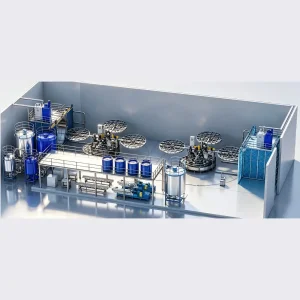
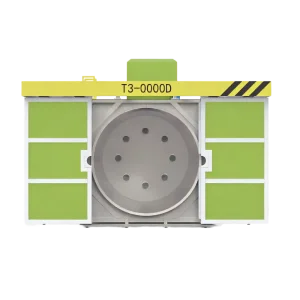
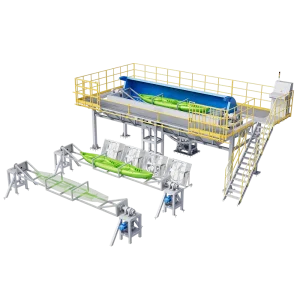
As the primary economic, commercial, and industrial nexus of Nicaragua, the Department of Managua accounts for over 35% of the national gross domestic product. Positioned between Lake Managua (Xolotlán) and Lake Nicaragua (Cocibolca), the city forms the central hub for Central American logistical corridors. Industrial expansion across Tipitapa, Ciudad Sandino, and the free trade zones adjacent to Augusto C. Sandino International Airport has accelerated demand for resilient, anti-corrosive, and UV-stabilized rotational molded polyethylene structures. From large-scale municipal water storage vessels to agro-industrial containment tanks and dairy processing units, rotomolding technology plays a vital role in sustaining local economic infrastructure.
However, operating rotational molding machinery and assembling high-performance polymer products in Managua presents unique operational challenges due to local environmental and macroeconomic factors. The tropical wet-and-dry climate features intense solar radiation (UV index consistently reaching 11+), elevated humidity, and annual ambient temperatures averaging 28°C to 34°C. Furthermore, municipal water networks in regions surrounding the capital face periodic pressure fluctuations, necessitating decentralized domestic and commercial water storage solutions. To prevent thermal degradation, environmental stress cracking, and fluid leakage, rotomolders in Managua require premium-grade rotomolding accessories—such as spin-weld bulkheads, heavy-duty insulated inspection covers, internal air temperature (IAT) sensors, and high-impact brass-threaded polyethylene inserts—that outperform standard injection-molded components under harsh tropical weathering.
The integrity of a rotationally molded vessel or container is dictated not only by the primary structural resin, but fundamentally by the quality of its peripheral accessories and integrated hardware. In modern rotational molding applications across Managua—ranging from chemical dosing tanks used in sugar refineries to heavy-duty septic tanks installed in residential developments—failure points almost exclusively occur at structural penetrations, mechanical joints, and threaded connection points.
Rotomolding accessories engineered for the Central American climate utilize specialized Linear Low-Density Polyethylene (LLDPE) and High-Density Polyethylene (HDPE) resins compounded with Hindered Amine Light Stabilizers (HALS) and Carbon Black UV-24 absorption packages. Standard polymer accessories degrade rapidly under intense sun exposure, experiencing polymer chain scission, micro-cracking, and mechanical embrittlement. Our manufactured fittings and tank accessories undergo accelerated weathering testing according to ASTM G155 standards, maintaining over 90% tensile strength and impact resistance after 10,000 hours of continuous UV exposure.
Spin welding represents the benchmark technique for permanently attaching fittings to rotomoulded hollow bodies. By leveraging high-speed rotational friction to melt the interface between the molded tank body and the accessory fitting, a homogeneous, molecularly fused bond is created. We manufacture precision-machined spin-weld fittings, including heavy-wall bulkhead connectors, thread adapters, and dip tube assemblies designed with precise friction melt depths. These components withstand internal working pressures up to 16 Bar without requiring mechanical gaskets or chemical adhesives that deteriorate over time.
For industrial applications demanding extreme chemical containment—such as sodium hypochlorite dosing or agricultural pesticide storage in Chinandega and Managua—we export custom XLPE fittings. XLPE offers a 3D polymer network that resists environmental stress cracking (ESCR) under aggressive solvents where standard LLDPE fails.
Our rotomolding machinery for the Managua market incorporates wireless IAT sensors mounted directly inside the mold cavity. By tracking real-time resin fusion temperatures rather than relying on fixed furnace timers, operators cut natural gas or electric energy usage by 12% to 18% per cycle.
Procuring industrial rotational molding machinery, CNC-machined aluminum moulds, and specialized tank accessories requires a supplier with verified technical authority, transparent quality control, and robust international export logistics. Established in 2009 in Ningbo, Zhejiang Province, our manufacturing footprint spans 20 acres equipped with 5-axis CNC machining centers, high-precision injection molding presses, and automated robotic welding cells.
We do not operate as simple commercial traders; we are primary equipment designers and polymer engineers. Our technical department—comprising over 40 degree-qualified process engineers—works directly with client engineering teams in Managua to develop custom mould geometry, optimize shrinkage rates (typically 2.5% to 3.0% for LLDPE), and integrate custom brass or stainless steel threaded inserts directly into the rotational molding process. Every machine build includes full Factory Acceptance Testing (FAT) validated with live video reports prior to ocean packaging.
Operating under ISO 9001:2015 quality management certified protocols, every batch of accessories and machinery components undergoes rigorous mechanical testing. Metallic inserts are forged from corrosion-resistant CW617N brass or 316-grade stainless steel to handle aggressive water chemistry. Polyethylene accessories are tested for melt flow index (MFI 3.5 to 5.0 g/10 min) and density compliance according to ASTM D1505 standards. All structural electrical components feature CE certification and optional UL-compliant control cabinets designed for 60 Hz electrical grids prevalent in Nicaragua.
The operational versatility of rotational molding enables custom solutions across diverse economic activities within the Department of Managua and neighboring departments such as Masaya, Granada, and León.
To combat localized water shortages, domestic and commercial properties across Managua rely heavily on vertical and horizontal storage tanks ranging from 500 L to 10,000 L. Our accessory range includes Food Grade FDA-compliant threaded manway lids (16" to 22" diameter) equipped with integrated air breathers, gasket seals, and heavy-duty bottom bulkhead drain valves designed to prevent mosquito breeding and bacterial contamination.
Nicaragua's agricultural backbone requires specialized liquid transport tanks for cattle farming, sugar cane spraying, and liquid fertilizer application. We supply rotational molders with impact-resistant sump outlets, heavy-duty anti-surge baffles, and chemical-resistant polypropylene valves capable of handling dense agrochemical solutions without stress cracking.
Environmental remediation initiatives and commercial tilapia farming in coastal zones utilize rotomoulded pontoon floats, floating walkways, and water quality monitoring buoys. Our heavy-wall LLDPE marine docks and UV-resistant connection pins provide long-term buoyancy in brackish water environments without requiring painting or anti-fouling treatments.
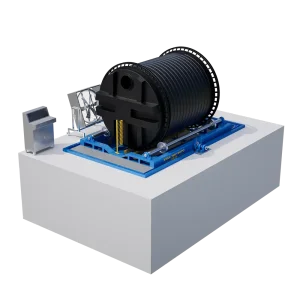
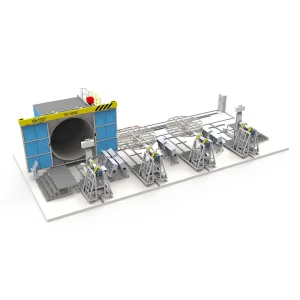
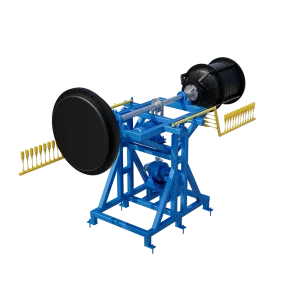
Rapid municipal infrastructure upgrades in Managua require durable road barriers, traffic cones, and commercial waste containers. We supply high-capacity carousel rotomolding machines and robust moulds that produce impact-absorbing, color-fast road safety equipment capable of enduring vehicle impact and intense tropical UV degradation.
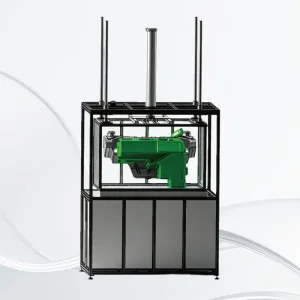
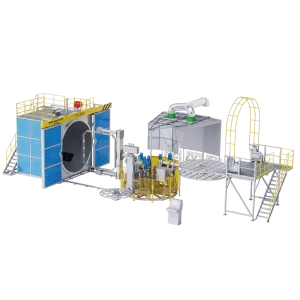
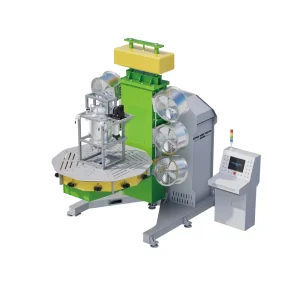
For multinational corporations, procurement directors, and regional plastic factory owners setting up new production lines in Managua, establishing a resilient supply chain requires strict adherence to international standardizations. Rotational molding is a thermal-intensive molding process where machine repeatability, oven temperature uniformity (±2°C across the heating chamber), and mould thermal conductivity dictate operational profitability.
While low initial machinery cost may seem attractive, energy consumption accounts for up to 65% of lifetime machine operational costs. Our burner control systems incorporate proportional gas valves and dual centrifugal blower recirculation units that maintain optimum air velocity over mould surfaces. This reduces gas consumption per kilogram of processed polyethylene resin by 15% to 22% compared to conventional open-flame systems, offering a rapid return on investment (ROI) within 14 months of deployment in Nicaragua.
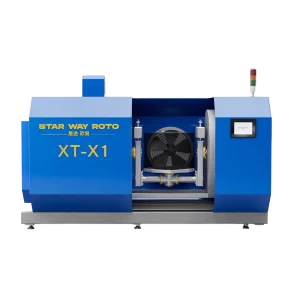
To prevent downtime in Central America, all Starway machines utilize globally recognized industrial automation components. Our PLC systems are built on Siemens S7-1200 or Schneider Electric platforms with multi-lingual user interfaces (including Spanish and English). Burner controls incorporate Italian Riello or Honeywell burner management systems, ensuring that replacement electrical relays, sensors, and mechanical valves are readily available through local supply houses in Managua.
Contact our senior engineering team today to receive detailed technical drawings, custom accessory specifications, and a competitive factory-direct quote tailored to your business goals.
Send Inquiry Now