Analyzing market dynamics, structural shift from traditional materials, and why B2B buyers are migrating toward OEM rotational molding contracts.
The global industrial and municipal liquid storage sector is undergoing a profound structural transition. For decades, metallic storage infrastructure—ranging from galvanized iron to stainless steel—and blow-molded or fiberglass tanks dominated commercial water storage. However, severe degradation mechanisms such as oxidative corrosion, weld line cracking, joint leakages, and high weight-to-volume transport ratios have exposed the physical limitations of legacy materials. Today, rotational molding (Roto Moulding) has emerged as the definitive engineering standard for high-capacity, stress-free, seamless polyethylene water storage vessels ranging from 200 liters to upwards of 50,000 liters.
Driven by expanding agricultural irrigation networks, rapid urbanization across emerging markets, stringent municipal potable water standards (NSF/ANSI Standard 61), and chemical storage requirements in industrial processing plants, the global market for rotomolded water tanks is projected to grow at a Compound Annual Growth Rate (CAGR) of 6.8% through 2032. Consequently, global enterprise buyers, municipal contractors, and distributor networks are seeking qualified OEM Roto Mould Water Tank Factories capable of delivering precise wall thickness uniformity, advanced multi-layer polymer structures, and competitive direct-from-factory quotes.
Modern commercial procurement is no longer concerned merely with tank capacity; the structural intelligence lies in multi-layer co-rotational molding architecture. Modern OEM water tanks incorporate up to 4 distinct polymer layers simultaneously fused during the thermal rotation cycle: an outer UV-20+ stabilized protective skin, an insulating expanded foam core, a carbon-black micro-layer for complete light blockage (algae eradication), and an inner FDA-compliant antibacterial virgin LLDPE liner.
Understanding the thermodynamics, furnace heating control, mold rotation dynamics, and resin selection that govern high-performance tank manufacturing.
Rotomolding requires micro-pelletized or 35-mesh micronized powder with a narrow Melt Flow Index (MFI) typically between 3.5 to 5.0 g/10 min (ASTM D1238). High-density polyethylene (HDPE) or Linear Low-Density Polyethylene (LLDPE) resins with ESCR (Environmental Stress Crack Resistance) values exceeding 1,000 hours are mandated to withstand hydrostatic pressure over multi-decade service life.
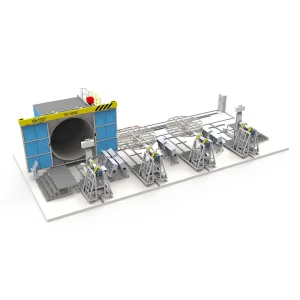
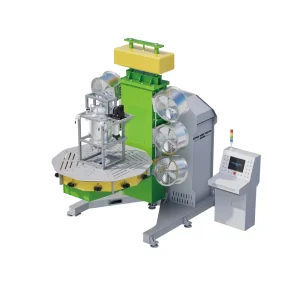
The fundamental physics of roto moulding depend on the major-to-minor axis rotation ratio (typically 4:1 to 8:1). As the hollow mold rotates within the heating chamber, centrifugal forces are intentionally minimized, allowing gravitational flow to evenly coat the internal mold surface as the polymer transitions through its Vicat softening temperature (approx. 120°C–130°C).
Precision OEM factories utilize wireless Internal Air Temperature (IAT) sensor probes attached directly inside the mold cavity. By monitoring real-time powder fusion, bubble elimination (coalescence phase), and peak internal air temperature (PIAT at 190°C–210°C), engineers ensure 0% thermal degradation while completely eliminating microscopic pinhole voids.
| Layer Sequence | Material Composition | Target Thickness | Primary Functional Role | Key Testing Standard |
|---|---|---|---|---|
| Outer Layer (Skin) | Virgin LLDPE + 2.5% Carbon / HALS UV-20 Stabilizer | 1.5 mm – 3.0 mm | Resists atmospheric degradation, solar UV radiation, and external mechanical impact. | ASTM G154 (Accelerated Weathering) |
| Middle Foam Layer | Chemical Foaming Agent + Micro-LLDPE Compound | 4.0 mm – 12.0 mm | Provides structural flexural rigidity without increasing weight; offers thermal insulation. | ASTM D790 (Flexural Modulus) |
| Black Barrier Layer | 100% High-Density Carbon-Black Masterbatch PE | 1.0 mm – 1.5 mm | Completely blocks photosynthetically active radiation (PAR) to stop internal algae growth. | ISO 18553 (Pigment Dispersion) |
| Inner Contact Layer | 100% Pure Virgin Food-Grade LLDPE / Nano-Silver Anti-Microbial | 1.5 mm – 2.5 mm | Direct liquid contact layer ensuring zero chemical leaching, zero odor, and potable purity. | FDA 21 CFR 177.1520 / NSF 61 |
How enterprise purchasing directors evaluate factory RFQs, tooling amortization, NRE costs, and total cost of ownership (TCO).
Evaluating an OEM quote for rotational molded tanks requires analyzing cost components beyond unit price. An itemized commercial offer from an established China manufacturer typically breaks down into four core financial modules:
| Parametric Metric | Cast Aluminum Moulds | Fabricated Steel Moulds |
|---|---|---|
| Upfront Cost (NRE) | Higher ($8,000 – $35,000) | Lower ($3,000 – $15,000) |
| Thermal Conductivity | Superior (Fast Heating/Cooling) | Moderate (Slower Thermal Transfer) |
| Geometric Complexity | Extremely High (Complex Ribs/Logos) | Medium (Cylindrical/Box Shapes) |
| Surface Finish Quality | Flawless Satin/Texture Finish | Visible Weld Line Trajectories |
| Tooling Lifespan | 50,000+ Production Cycles | 15,000–25,000 Production Cycles |
Why leading international brands partner with specialized Chinese rotomolding hubs like Ningbo StarWay Roto for OEM production.
Chinese rotomolding clusters integrate fully automated 5-axis CNC high-speed machining centers directly driven by CAD/CAM models, reducing mold tooling lead times from 12 weeks down to just 25 days.
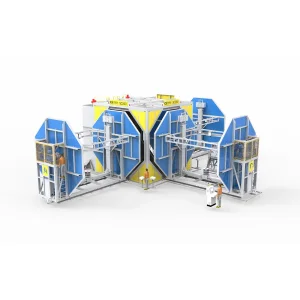
Pioneering the shift away from gas burners, China’s latest CE-certified electric heating shuttle and carousel rotomolding machines achieve 35% lower energy consumption with zero localized carbon emissions.
Robotic powder feeding arms accurately weigh and load precise micronized polyethylene charges into molds, maintaining wall thickness variance across 10,000L tanks within an ultra-strict ±3% tolerance band.
Headquartered in Ningbo—home to the world's busiest container port—factories eliminate inland trucking delays, delivering FOB shipments directly onto major maritime routes serving North America, Europe, and Asia.
From severe desert environments to deep-sea maritime transport, rotomolded tanks excel across harsh global conditions.
Farmers and commercial agribusinesses across South America, Australia, and Africa require heavy-duty cone-bottom agricultural tanks. Rotomolded LLDPE withstands aggressive liquid fertilizers (liquid nitrogen, UAN) and pesticides without stress cracking, while conical bottoms allow 100% complete drainage without residual sludge accumulation.
Rapidly growing metropolitan centers in Southeast Asia and the Middle East utilize vertical and horizontal modular water storage tanks connected in battery banks. Micro-grooved internal surfaces prevent biofilm adherence, ensuring municipal drinking water remains clean during prolonged storage cycles.
Chemical processing plants require cross-linked polyethylene (XLPE) rotomolded vessels designed for specific gravities up to 1.9 (e.g., concentrated sulfuric acid or sodium hypochlorite). XLPE provides molecular cross-linking bonds that increase tensile strength and chemical resistance across extreme temperature ranges (-40°C to +65°C).
Humanitarian aid organizations deploy lightweight, impact-resistant rotomolded emergency water bladders and rigid tanks into earthquake or flood zone camps. Featuring molded-in carrying handles, forklift pockets, and heavy-duty brass inserts, these tanks can be rapidly deployed via tactical air drops or off-road trucks.
Custom-shaped OEM tanks designed to fit tightly within cramped boat hulls or recreational vehicle chassis spaces. Built with internal baffles to suppress liquid sloshing during dynamic motion, these tanks utilize high-impact polyolefins to prevent cracking under continuous vibration.
Engineered corrugated subterranean tanks designed to resist soil overburden pressures. Rotomolded with structural perimeter ribs, these underground tanks serve as dedicated emergency water reserves for commercial fire sprinkler systems in seismic-prone zones.
How bio-based polymers, digital twin simulations, and green factory practices are reshaping the rotomolding industry.
Leading OEM manufacturers are integrating up to 30% high-grade post-industrial recycled (PIR) or ISCC PLUS certified bio-attributed polyethylene resin into middle tank layers. This circular manufacturing approach reduces the carbon footprint per tank by over 40% without compromising structural tensile integrity.
Utilizing finite element analysis (FEA) and computational fluid dynamics (CFD), engineers simulate heat transfer inside complex mold cavities before physical metal tooling begins. This predictive modeling identifies potential thin spots, warpage risks, and structural stress points early, ensuring first-article sample compliance.
Expert technical answers addressing tooling timelines, material certifications, quality testing, and quote comparisons.
For standard fabricated steel moulds, initial tooling design to T1 sample testing takes approximately 20 to 30 days. For complex cast aluminum moulds requiring high-precision 5-axis CNC machining, lead times range between 35 to 45 days, including 3D CMM dimensional inspection and hydrostatic pressure testing.
Rotomolded tanks are completely stress-free and seamless, eliminating vulnerable seam lines found in blow-molded products. Compared to fiberglass (FRP), rotomolded polyethylene offers superior impact ductility, zero brittleness at sub-zero temperatures, 100% recyclability, and lower long-term maintenance costs.
We recommend virgin Linear Low-Density Polyethylene (LLDPE) compounded with Hindered Amine Light Stabilizers (HALS) rating UV-20 or higher. For complete algae protection, a 3-layer co-molded design with a dedicated middle carbon-black layer is strongly advised.
Every OEM production batch undergoes rigorous testing: Ultrasonic Wall Thickness Gauging (ensuring compliance across critical corners), Hydrostatic Burst Pressure Testing, Dart Impact Resistance Testing (ASTM D5420 at -40°C), and Melt Flow Index (MFI) verification.
Yes. Molded-in threaded brass inserts, heavy-duty flange connections, and permanent molded-in graphics/logos are standard features in modern rotomolding, eliminating the need for post-molding adhesive labels or secondary drilling that could compromise tank integrity.
To provide an itemized quote, please supply: 3D CAD files (STEP/IGES format), target tank capacity/dimensions, wall thickness specifications, material requirements (e.g., food-grade, UV rating, chemical compatibility), annual volume projections, and packaging/shipping requirements.