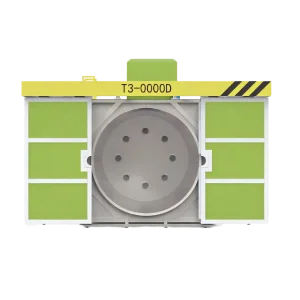
Direct from OEM manufacturing lines: specialized rotomolding systems, industrial carousel frameworks, and auxiliary compounding stations designed for seamless industrial scaling.
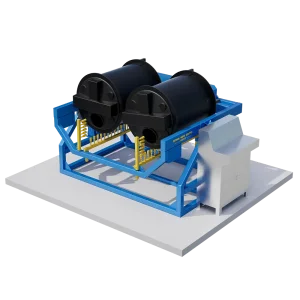
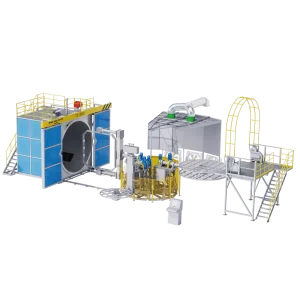
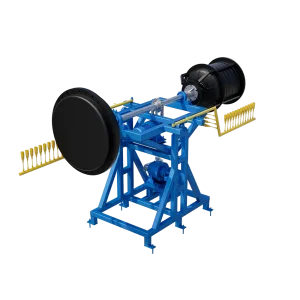
An engineering breakdown of operational decoupling, thermodynamic station flexibility, and high-efficiency polymer processing across modern rotational molding plants.
In high-capacity polymer molding, the traditional fixed-turret carousel rotomolding machine has long presented an intrinsic engineering compromise: synchronous indexing cycle bottlenecks. In a fixed-arm machine architecture, every station—heating, pre-cooling, secondary cooling, and loading/demolding—is inextricably linked to the longest dwell time among all operating arms. If an arm bearing an 8-layer multi-wall cross-linked agricultural chemical tank requires an extended 28-minute heating phase, lighter tooling fixtures running thin-walled consumer goods on adjacent arms are forced to idle or undergo catastrophic thermal degradation (over-curing, resin oxidation, and embrittlement).
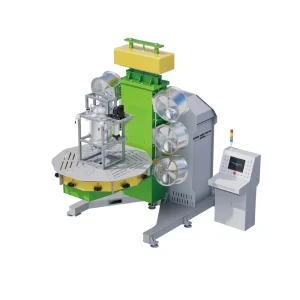
The rise of the OEM Independent Arm Rotomolding Machine represents the modern engineering solution to this fundamental limitation. By deploying independently articulated carriage units mounted either on concentric central turrets with multi-track orbital drives or linear floor-mounted servo transfer axes, modern OEM factories provide total thermodynamic and kinematic decoupling for every operational arm. Each arm executes its own custom programmed recipe: heating ramp rate, variable bi-axial speed ratios, forced-draft air or atomized evaporative cooling durations, and ergonomic demolding pauses, all without impacting the simultaneous cycles of adjacent mold carriages.
Global demand for monolithic hollow structures is surging across environmental sanitation, marine transport, precision logistics, and DEF automotive reservoirs. Traditional single-station or fixed-dwell machines can no longer maintain profitability against volatile utility prices and strict wall-tolerance standards.
Equipped with dual-convection high-velocity reverse air circulation and modulating ceramic burners, our independent arm systems eliminate hot-spots, ensuring seamless powder coalescence, rapid bubble evacuation, and uniform polymer crystallization across all surfaces.
Featuring AC frequency-invertible dual servo motors delivering continuously adjustable major and minor rotation ratios (from 1:1 to 1:8). The machine continuously adapts rotation axes to direct resin pooling precisely into complex hollow geometric recesses and high-stress points.
Parametric analysis of Starway Roto's OEM Independent Arm series, detailing structural tolerances, thermal output, dynamic drive parameters, and automation protocols.
| System Metric | Starway Ind-Arm IA-2500 | Starway Ind-Arm IA-3800 | Starway Ind-Arm IA-5000 | Super-Scale Mega IA-8500 |
|---|---|---|---|---|
| Max Spherical Swing Diameter | 2,500 mm | 3,800 mm | 5,000 mm | 8,500 mm (World Record Class) |
| Arm Payload Capacity (Per Arm) | 1,800 kg | 3,500 kg | 6,200 kg | 15,000 kg |
| Thermal Delivery Source | Dual Fuel (Nat Gas/LPG) / Elect | High Velocity Modulating Gas | Low-NOx Air-Forced Burner | Multi-Burner Distributed Matrix |
| Oven Operating Temp Range | 160°C – 320°C (±1.5°C) | 160°C – 320°C (±1.5°C) | 160°C – 340°C (±2.0°C) | 160°C – 340°C (±2.5°C) |
| Bi-Axial Rotation Speed | Primary: 0-18 RPM; Sec: 0-24 RPM | Primary: 0-14 RPM; Sec: 0-18 RPM | Primary: 0-10 RPM; Sec: 0-14 RPM | Primary: 0-6 RPM; Sec: 0-8 RPM |
| Drive Control Architecture | Siemens S7-1500 PLC / Profinet | Siemens S7-1500 PLC / Profinet | Beckhoff IPC EtherCAT | Dual Redundant Industrial Bus |
| Process Validation System | Real-time IAT Wireless Sensor | Real-time IAT Wireless Sensor | Dual-zone Telemetric Pyrometry | Multi-point Infrared Thermal Array |
| Applicable Tooling Modules | CNC Cast/Billet Alum, Sheet Steel | CNC Alum, Structural Steel | Multi-Cavity CNC Shell Molds | Monolithic Heavy Structural Steel |
A critical engineering challenge in heavy-duty rotational molding is the continuous shifting of the center of gravity as the polymer powder pools, heats, clings to the mold wall, and solidifies. On conventional machinery, this creates substantial torque ripple on gearing systems, leading to accelerated backlash wear, micro-vibrations, and non-uniform wall distribution.
Starway Roto addresses this through high-torque planetary cycloidal reduction drives directly coupled to dynamic torque-vectoring servo controllers. The control algorithm samples motor current draw at 1,000 Hz, instantly modulating torque to compensate for unbalancing moments during high-speed rock-and-roll movements or multi-cavity eccentric rotations. The result is perfectly smooth biaxial trajectory curves, protecting drive shafts and yielding uniform wall thicknesses within ±0.2 mm tolerances even across complex 90-degree internal radii.
Across six continents, our machines produce mission-critical components that meet strict agricultural, maritime, defensive, and chemical engineering standards.
Processing capacities up to 50,000 liters. Multi-layered polymer construction combining cross-linked virgin polyethylene (XLPE) for extreme chemical resistance with outer UV-stabilized layers. Independent arm cycle timing ensures the internal foaming or multi-shot barriers cure with complete cross-linking integrity without thermal blistering.
Engineered for tight-tolerance DEF tanks, hydraulic reservoirs, and intricate under-hood air induction ducts using liquid polyamides (Nylon 6/12) and flame-retardant polymers. Requires precise Internal Air Temperature (IAT) curve management to avoid degradation while ensuring complete pinhole-free crystallization.
Longitudinal hollow components measuring 3.5 to 7.0 meters. Utilizing high-efficiency rock-and-roll arm configurations with dual flame/hot-air hybrid heating, minimizing longitudinal shrinkage variations and preserving hull hydrodynamics with strict symmetry.
Double-walled high-density polyethylene (HDPE) shells designed for robotic polyurethane (PU) foam injection. Tooling runs on CNC aluminium molds with intricate gasket tracks, requiring zero warpage on mating parting lines to guarantee hermetic cold-chain performance.
Vibrant, UV8 to UV24 compound resins formed into large slides, crawl tunnels, and structural roof systems. Multi-color compounding without cross-contamination is achieved via dedicated independent arm loading zones and recipe-specific air flow programs.
Drop-tested transit cases, subterranean septic retention systems, grease interceptors, and hazardous waste spill pallets. Engineered with reinforced structural ribbing patterns and continuous load-bearing capabilities up to 5,000 kg dynamic payload.
Strategic advancements in real-time internal air thermodynamic monitoring, automated powder handling, and carbon-neutral curing mechanisms.
Historically, rotational molding has been regarded as a craft-based thermal process heavily reliant on operator trial-and-error. Starway Roto is actively transitioning the industry into a predictive, mathematically validated discipline. Modern OEM independent arm installations are driven by three convergence technologies:
Deploying wireless ceramic-shielded thermocouple telemetry nodes directly inside the mold cavity. Instead of relying on crude oven air temperatures, the oven dwell timer switches based on the exact internal polymer melt curve—pinpointing polymer melt initiation (Point A), bubble dissolution (Point B), and peak internal air temperature (PIAT). This completely prevents brittle under-cured or burnt over-cured parts.
Using computational fluid dynamics (CFD) modeling to direct air through servo-actuated air knife dampers. Rather than dispersing hot air uniformly throughout the whole chamber, convective currents are dynamically channeled directly toward the densest mold tooling sections, cutting energy losses by 18-24% and drastically reducing overall oven dwell times.
Developing fully electric, zero-emission internal heating elements embedded within CNC aluminum tooling matrix cavities. By eliminating large fossil-gas heated ovens entirely, this approach slashes direct carbon emissions to absolute zero when combined with industrial renewable solar or wind energy arrays.
Furthermore, cloud-linked SCADA software continuously monitors arm rotational resistance, bearing wear profiles, heating coil resistance, and cooling fan static pressures. Predictive maintenance algorithms detect bearing stress or transmission backlash anomalies up to 300 production hours before actual mechanical failure, eliminating costly unplanned downtime during continuous multi-day operations.
From greenfield site evaluation to plant layout, auxiliary resin preparation, and quality assurance checkpoints—how we engineer high-efficiency rotomolding facilities.
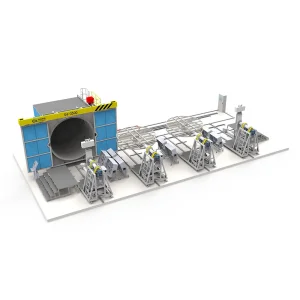
Comprehensive plant layout design optimizing raw powder intake, resin storage, mold prep, demolding stations, and quality control lines to minimize forklift transport distances and eliminate production bottlenecks.
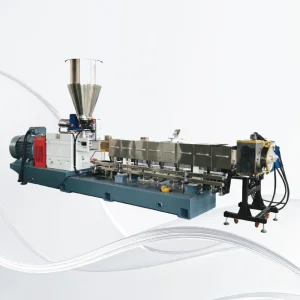
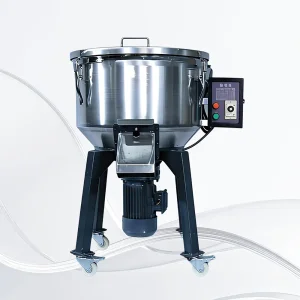
Supplying state-of-the-art cryogenic pulverizers, high-speed turbomixers, and single-screw pelletizing units (such as our Model 160-150) to process standard resins into 35-mesh powder with optimum bulk density.
Fully equipped CNC machining centers transforming forged aircraft-grade 6061-T6 aluminum ingots into precision molds featuring micro-engineered parting lines, vacuum-assisted core pins, and rapid-release clamped frameworks.
Every line completes complete Factory Acceptance Testing (FAT) with mold mounting, burner firing, safety interlock diagnostics, and full video validation before maritime packaging and dispatch.
In-depth technical answers addressing operational mechanics, thermodynamic efficiency, tool compatibility, and OEM plant implementation.
In a standard fixed carousel, the arm requiring the longest heating cycle governs the speed of the entire line. If Arm A requires 24 minutes for a thick chemical storage vessel and Arm B requires 12 minutes for a thin container, Arm B is forced to wait in the oven (causing resin degradation) or sit idle outside the station. Independent Arm machines decouple these dwell times completely. Each arm moves to its next programmed station the instant its cycle completes, preventing idling and increasing overall production throughput by 30% to 45%.
Straight Arms deliver the highest rigid load capacities and are ideal for massive cylindrical vessels where molds can be centered directly over the secondary spindle. Offset (L-shaped) Arms allow larger spherical swing envelopes for asymmetrical parts such as kayaks, agricultural sprayers, and off-road vehicle fuel tanks. C-arms (Drop Arms) support multi-cavity clusters and optimize spherical swing space inside the heating oven, allowing higher tool packing density per thermal cycle.
Rotational molding relies on a narrow thermal processing window. If demolded before the polymer reaches its complete fusion plateau (typically around 195°C to 205°C for standard LLDPE), the part will exhibit micro-voids, incomplete sintering, and poor impact strength. If over-heated beyond 225°C, polymer chain scission and thermal oxidation cause brittleness, odor, and severe shrinkage warpage. Wireless IAT tracking measures the real-time internal mold atmosphere, triggering cooling cycles at the exact peak curing point regardless of ambient ambient fluctuations.
Direct-fired modulating natural gas burners remain the most cost-effective choice for large-scale operations in regions with stable pipeline access. However, for urban environments or zero-emission regions, our CE-Certified Electric Heating Rotomolding Machines utilize high-efficiency radiant and convective heating elements. When paired with smart heat recapture hoods and facility-level solar arrays, electric systems achieve near-zero carbon footprints and lower insurance premiums by eliminating open flames.
Starway independent arm systems use fully enclosed oil-bath planetary gearboxes and temperature-resistant fluoroelastomer seals. Recommended maintenance includes an initial synthetic gear oil change after 500 operating hours, followed by routine fluid changes every 4,000 hours. Multi-point automated grease distribution ports deliver high-temperature synthetic lubricant to the primary support bearings every 50 operating cycles, ensuring dependable 24/7 industrial performance.
Precision downstream testing systems, compact shuttle frameworks, and electric curing machines engineered to support global rotational molding plants.