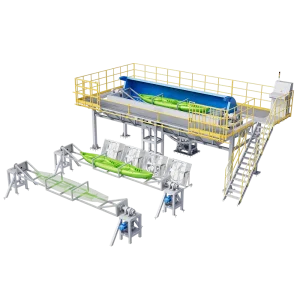
CE Certification China Rock and Roll Oven Machine Suppliers - Ideal for Large Yachts, Vessels, and Steel-Lined Pipes Factory Manufacturers, Quotes
View Details

Enterprise-grade rotomolding machinery, automated feeding lines, and quality verification systems integrated into our turnkey ODM furniture manufacturing cells.
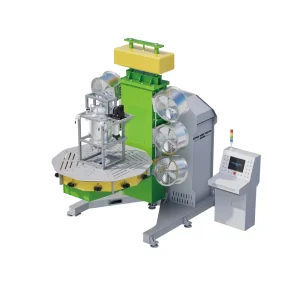
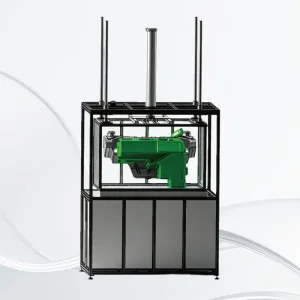
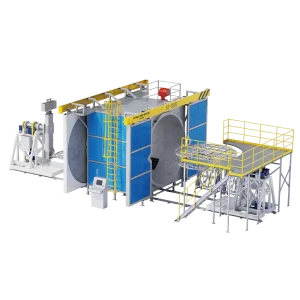
Rotational molding is redefining commercial, hospitality, architectural, and ergonomic residential furniture. Through advanced multi-axis CNC tooling, high-grade cast aluminum alloys (A356), and parametric thermal analysis, StarWay Roto provides global brands with seamless, stress-free, and complex monolithic geometries that are impossible to achieve via traditional blow or injection moulding.
Rotomolded furniture eliminates welded seams, joints, and mechanical fasteners. Our ODM moulds are engineered with optimized rib structures, internal kiss-off points, and uniform wall thickness distribution (from 3.5mm to 12.0mm) ensuring maximum static load capacities exceeding 450kg.
Achieve diverse aesthetic finishes directly from the tooling surface. Our CNC cutting and chemical etching processes allow VDI 3400 texture classes, micro-matte leatherette textures, simulated wood grains, and high-gloss architectural finishes with superior UV-8/UV-20 polymer stability.
Engineered internal cavities enable seamless retrofitting of RGBW LED solar/battery electronic modules, inductive charging cradles, weighted ballast compartments, and modular interlocking connections for modular outdoor lounges and municipal public seating.
Our R&D roadmap focuses on resolving traditional rotomolding bottlenecks: long cycle times, uneven shrinkage, and wall thinning on sharp radii. By integrating generative DFM simulations with automated manufacturing, StarWay Roto sets global engineering standards.
Utilizing transient thermal CFD analysis, we simulate oven air currents and bi-axial rotation inside the mould. This ensures optimal thermal transfer rates across varying wall sections, eliminating warpage in LLDPE, HDPE, and cross-linked XLPE materials.
Direct CNC machining from aerospace-grade forged 6061-T6 aluminum blocks guarantees porosity-free cavity surfaces, high heat conductivity, and exceptional dimensional stability for ultra-tight furniture mating assemblies.
Proprietary dynamic high-flow venting systems prevent back-pressure accumulation and vacuum collapse during the cooling stage. This results in zero pinholes on complex curved ergonomic backrests and armrests.
Mould cavities tailored for post-consumer recycled (PCR) resins and ocean-bound plastics. Special internal draft angles (from 1.5° to 3.5°) accommodate the irregular shrink dynamics of recycled olefin compounds.
| Tooling Attribute | StarWay CNC Machined 6061 Aluminum | StarWay Cast A356 Aluminum Tooling | Conventional Fabricated Steel Mould |
|---|---|---|---|
| Primary Application | High-end luxury furniture, sharp geometric planters, optical lighting chairs | Organic organic lounge chairs, curved sofas, textured public benches | High-volume industrial containers, basic geometric benches, planters |
| Surface Porosity & Finish | Zero porosity, mirror polishing or VDI 12-36 texture capable | Ultra-low micro-porosity (vacuum de-gassed), textured grain finishes | Smooth painted/blasted, visible fabrication seam risk |
| Thermal Conductivity | Very High (167 W/m·K) — 20-30% faster cycle time | High (150 W/m·K) — Rapid uniform heat distribution | Moderate (50 W/m·K) — Longer heating & cooling cycles |
| Dimensional Accuracy | ±0.15 mm to ±0.25 mm | ±0.40 mm to ±0.60 mm | ±0.80 mm to ±1.50 mm |
| Expected Tooling Lifespan | 15,000 to 25,000+ Cycles (15+ Years) | 10,000 to 18,000+ Cycles (10+ Years) | 8,000 to 12,000 Cycles (8+ Years) |
Located in Ningbo, the global epicenter of precision mould making and maritime logistics, Ningbo StarWay Roto Co., Ltd. operates a 20-acre intelligent production facility. We bridge European design fidelity with world-class Chinese industrial agility.
Our facility houses 25+ CNC machining centers (including large gantry 3-axis and 5-axis machines with working strokes up to 4500mm × 3200mm), in-house casting foundries, laser cutting systems, and clean assembly lines.
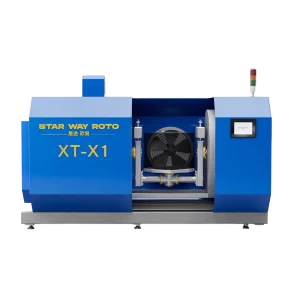
Every ODM furniture mould undergoes full-scale trial runs on our internal Carousel, Shuttle, and Rock & Roll machines before export. We provide complete CMM inspection reports, IR thermal imaging data, and molded part first-article inspection (FAI) reports.
From initial 3D STEP file review and DFM feedback to complete CNC aluminium tooling and T1 sample delivery, StarWay Roto achieves turnaround times of 30 to 45 days, cutting Western tooling lead times by more than 50%.
StarWay Roto’s ODM furniture tooling supports diverse international market sectors, fulfilling stringent environmental, fire-retardancy, and structural endurance certifications across Europe, North America, Oceania, and the Middle East.
Our six-stage turnkey ODM workflow ensures seamless collaboration from concept sketching to mass production ramp-up, mitigating technical risks and accelerating time-to-market.
In-depth CAD review analyzing parting line placement, draft angles (minimum 1.5° for smooth demoulding), uniform wall thickness transitions, kiss-off structural rib locations, and material volumetric shrink rates.
Direct 5-axis CNC machining of forged 6061-T6 aluminum or precision wooden/resin patterns for vacuum-assisted A356 aluminum casting. Spider frames and clamping assemblies fabricated from high-tensile steel.
Application of customized cavity textures (micro-sandblasting, VDI photo-etching, woodgrain), parting line hand-matching to ensure flush closure, and internal non-stick PTFE heat-cured coatings.
Moulding of initial T1 sample parts on factory rotomolding machines using specified target resin (e.g., Sabic, ExxonMobil LLDPE). Evaluation of cycle times, warpage, sink marks, and weight accuracy.
Comprehensive 3D blue-light optical scanning, drop-impact testing (-20°C low-temperature test), wall thickness ultrasonic measurement, and static load testing in accordance with ASTM and ISO standards.
Export packaging in anti-corrosion fumigated wooden crates, comprehensive operational manuals, spare clamping hardware kits, and optional on-site or remote engineering commissioning support.
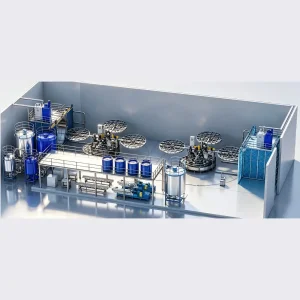
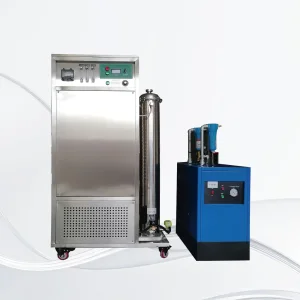
Optimize your factory workflow with specialized industrial mixers, high-speed pulverizers, air treatment units, and custom high-output rotomolding machinery.
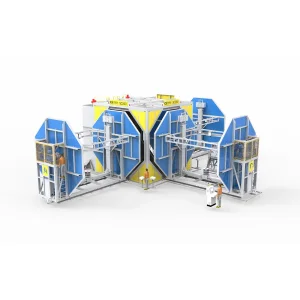
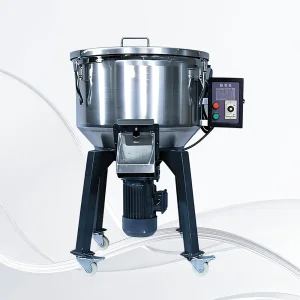
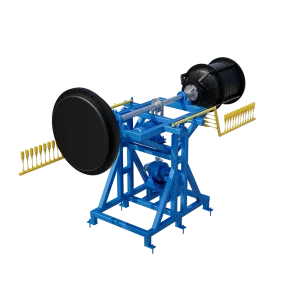
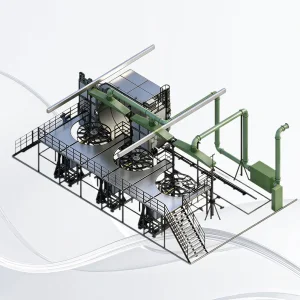

Detailed technical answers addressing design tolerances, tooling choices, material shrinkage, and international procurement for rotomolded furniture.
CNC machined aluminum moulds are carved directly from solid, forged 6061-T6 aluminum blocks. They offer zero porosity, superior heat transfer uniformity, and sub-millimeter precision (±0.15mm), making them ideal for high-gloss geometric chairs, tight modular joints, and intricate parting lines. Cast aluminum (A356) is better suited for large, organic, sculptured shapes where wood/resin patterns can achieve complex curves more economically.
Volumetric shrinkage for Polyethylene (LLDPE/HDPE) typically ranges from 2.5% to 3.8%. Our engineering team applies anisotropic shrink compensation algorithms during CAD tooling generation, scaling specific axes differently based on rib density, wall thickness, and draft angles. This guarantees that large items (e.g., 2-meter outdoor benches) fit modular frames perfectly after cooling.
Yes. We engineer customized internal threaded cores, O-ring sealing grooves, and CNC-machined recesses directly into the mould. This ensures the molded product can house IP67 or IP68 waterproof LED battery modules, solar charging components, and inductive charging plates without secondary machining operations.
For textured surfaces (VDI 27-36), we recommend a minimum draft angle of 2.0° to 3.5° to facilitate smooth demoulding without scuffing. For smooth polished surfaces, 1.5° is acceptable. Outside corner radii should ideally be no less than 6mm (preferably 10-15mm) to avoid material thinning, while internal radii should be at least 8mm to ensure smooth resin powder flow during bi-axial rotation.
Our tooling facility provides high-precision sandblasting, glass-bead peening, chemical photo-etching (VDI 3400 standards), faux leather grain, brushed stone effect, and micro-grooved wood textures. Additionally, permanent in-mould graphics (In-Mold Graphics/Mould-in Graphics) can be transferred seamlessly into the polymer matrix during heating.
Under normal operating conditions on automated shuttle or carousel machines, CNC 6061 aluminum moulds provide a lifespan exceeding 20,000 production cycles (approx. 15+ years of active manufacturing). Routine maintenance involves inspecting clamping spring locks, cleaning vent tubes with PTFE wool, and re-applying semi-permanent release coatings every 300-500 cycles.