
Precision-engineered tank molding equipment, intelligent temp-controlled lab units, and automated material handling systems directly from certified factory facilities.
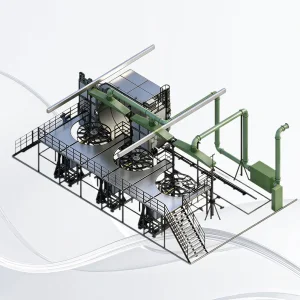
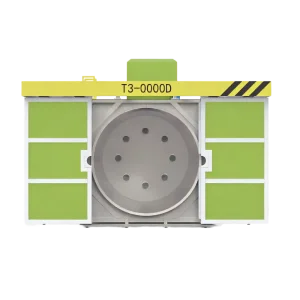
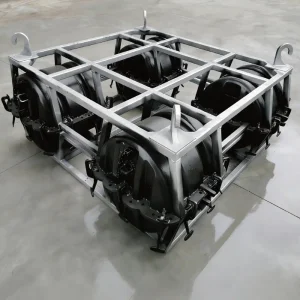
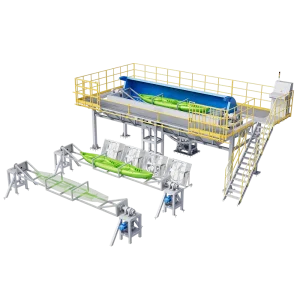
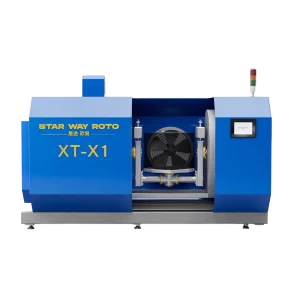
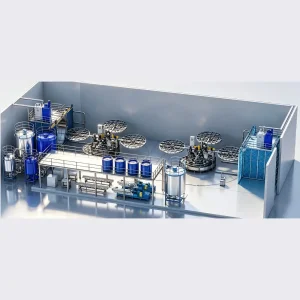
Rotational molding (Rotomolding) is a zero-pressure plastic forming process engineered specifically for producing seamless, stress-free, double-walled or hollow polymer structures ranging from small 100-liter buffer tanks to massive 50,000-liter chemical storage vessels. Unlike blow molding or injection molding, which rely on extreme shear forces and elevated hydraulic pressures, tank rotomolding relies entirely on biaxial rotation and thermal conduction kinetics. This fundamental difference eliminates residual internal stresses, providing superior environmental stress crack resistance (ESCR) and structural longevity under severe chemical and mechanical loading.
The rotational molding process for heavy-duty polyethylene (LLDPE, HDPE, XLPE) and specialty polyamides (PA6/PA12) operates through four tightly regulated thermal phases controlled by advanced PLC closed-loop systems:
Micronized resin (typically 35-50 mesh / 300-500 microns) is precisely measured using automated weighing hoppers and charged into the metal mold cavity (Cast Aluminum or Fabricated CNC Steel). Anti-static agents and UV-8/UV-20 stabilization packages are thoroughly homogenized prior to loading.
The mold moves into a forced-convection hot air oven or direct electric heating chamber (temperatures ranging from 260°C to 340°C). The mold rotates on major (primary) and minor (secondary) axes simultaneously at speeds between 1 to 12 RPM. As the mold wall heats past the polymer crystalline melting point ($T_m$), the resin particles fuse into a homogeneous layer without air entrapment.
Critical for preventing warpage, sink marks, and residual crystallization stress. The machine initiates a two-stage cooling cycle: first utilizing high-velocity ambient air mist to solidify the outer polymer skin, followed by internal mold air cooling or atomized water spray, maintaining geometric stability across thick tank wall profiles.
Selecting the optimal machinery platform based on vessel geometry, production batch size, and thermal efficiency requirements.
| Machinery Type | Target Product Range | Heating Technology | Max Swing Diameter | Key Efficiency Advantage |
|---|---|---|---|---|
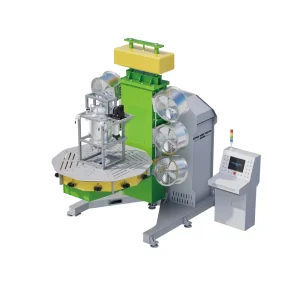
| Carousel (Independent Arm) | Small-to-Medium Tanks (200L – 5,000L), High Volume | Recirculating Hot-Air / Direct Gas Burner | 1,500 mm – 4,500 mm | Continuous production cycle; indexing arms eliminate oven idle time. |
| Shuttle Rotomolding Machine | Medium-to-Large Vessels (1,000L – 15,000L) | Dual-Chamber Forced Air or Electric Heating | 2,000 mm – 6,000 mm | Flexible production; allows running different mold sizes simultaneously on separate carts. |
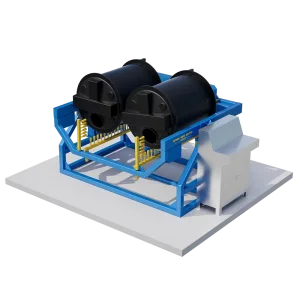
| Rock & Roll (Swing Machine) | Extra-Large Tanks (5,000L – 50,000L), Cylindrical/Elongated | Open Flame / Enclosed Oven Rock & Roll | 3,000 mm – 8,500 mm | Low capital cost; requires up to 50% less floor height and lower energy consumption per m³. |
| Direct Electric Heating Oven | High-Precision Specialty Tanks (PE, PP, PA) | Infrared / Electric Resistance Elements | 1,000 mm – 3,500 mm | Zero direct carbon emissions; ultra-precise PID thermal control within ±1.5°C. |
Featuring 3 to 4 independent indexing arms operating on a heavy-duty center turret. Each arm operates on its own programmable heating, cooling, and loading schedule. Ideal for high-output factories producing standardized water storage containers, septic tanks, and chemical containers.
Specifically engineered for large cylindrical industrial vessels, marine fuel tanks, and agricultural liquid fertilizer silos. The mold rocks 360 degrees on its longitudinal axis while tilting (rolling) up to 45 degrees vertically, ensuring uniform resin coating along long vessel bodies without complex dual-axis gears.
Over the past two decades, China has emerged as the global epicenter for rotational molding machinery innovation and mold fabrication. Global industrial buyers benefit from an unprecedented combination of vertical supply chain integration, engineering agility, and total cost of ownership (TCO) efficiency.
Leading Chinese rotomolding hubs (such as Ningbo and Zhejiang clusters) combine steel forging, CNC aluminum tooling, burner manufacturing, and PLC automation within tight geographic radius. This integration reduces equipment lead times from 6 months down to 45–60 days.
China's state-of-the-art mold factories utilize 5-axis CNC machining centers and high-density cast aluminum foundries. Mold surface finishes can be texture-matched to SPI standards, guaranteeing flawless demolding and smooth internal tank walls for hygienic liquid storage.
Unlike standardized Western machinery platforms, Chinese factories excel at bespoke engineering—configuring oven dimensions, arm load capacities, and dual-fuel heating burners (Natural Gas / LPG / Electric) to fit exact client workshop constraints.
Deploying engineered tank molding machinery across diverse global sectors to manufacture heavy-duty containment solutions.
High-density polyethylene (HDPE) vertical tanks, liquid fertilizer transport vessels, and pesticide sprayer tanks. Machines designed with multi-layer co-extrusion/rotomolding capability produce tanks with UV-resistant outer layers and chemically inert inner liners.
Heavy-duty Rock & Roll equipment ideal for manufacturing seamless marine fuel tanks, freshwater holding vessels, blackwater tanks, and floating dock pontoons compliant with USCG and CE marine safety standards.
Three-chamber underground septic tanks, oil-water separators, and rainwater harvesting cisterns. Molded on high-capacity Shuttle and Carousel rotomolders for uniform rib reinforcement and high structural crush resistance.
The rotational molding industry is undergoing a digital and environmental transformation. Manufacturers must adapt to strict global carbon emission regulations and rising labor costs by integrating smart technology into their production lines.
Transitioning from open fossil fuel combustion burners to direct electric heating arrays and infrared thermal radiation chambers. Electric heating eliminates $\text{CO}_2$/$\text{NO}_x$ stack emissions, improves workshop air quality, and enables zero-emission plant certifications.
Real-time data logging of thermal cycles, mold internal pressure, energy consumption per tank kg, and predictive maintenance alerts for arm gearbox bearings via cloud-connected edge telemetry.
Integration of loss-in-weight gravimetric feeders and automatic suction vacuum loaders that measure precise resin charges directly into hot molds, reducing operator exposure and cycle delay times.
When evaluating a Chinese tank molding machine manufacturer, procurement teams must look beyond initial equipment cost. Evaluating engineering expertise, thermal insulation performance, safety compliance, and after-sales support ensures a successful long-term investment.
Explore our line of CE-certified electric heating rotomolders, high-speed polymer mixers, and specialized vessel production equipment.
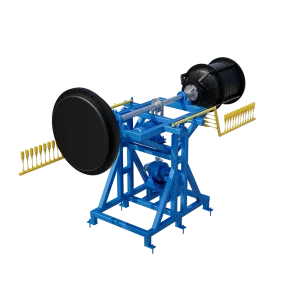
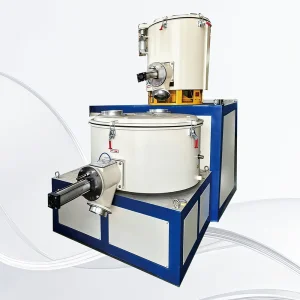
Expert engineering answers regarding machinery selection, energy efficiency, wall thickness variance, and mold maintenance.
Selection depends on tank volume and production throughput requirements. Carousel machines excel at high-volume production of small to medium tanks (up to 5,000 liters) because independent arms continuously index between heating, cooling, and unloading stations. Rock & Roll machines are specifically optimized for large cylindrical or heavy tanks (5,000 to 50,000+ liters) where swing diameter constraints make full 360-degree major/minor carousel rotation costly and space-prohibitive.
Wall thickness uniformity is governed by three primary parameters: (1) Axis Rotation Speed Ratio (major to minor axis speed tuning, typically 4:1 or 3:1 ratio), (2) Oven Temperature Uniformity via high-velocity recirculating fans, and (3) Mold Thermal Mass Distribution. Our advanced machines allow real-time PLC adjustment of rotation speeds during specific heat cycles to draw more plastic material into structural ribs and high-stress tank corners.
Electric heating rotomolding machines eliminate direct combustion emissions, making them ideal for regions with stringent environmental regulations or cleanroom manufacturing environments. Electric heating elements offer hyper-precise temperature control (±1°C), higher thermal energy conversion efficiency, lower maintenance (no burner nozzle clogging or gas piping inspections), and zero risk of exhaust fumes contaminating the polymer melt.
Our equipment processes a full range of rotational molding grade polymers, including Linear Low-Density Polyethylene (LLDPE), High-Density Polyethylene (HDPE), Cross-linked Polyethylene (XLPE for aggressive chemical storage), Polypropylene (PP), Polyvinylidene Fluoride (PVDF), and Specialty Polyamides (PA6/PA12) for high-temperature and high-impact applications.
With proper preventive maintenance, our industrial tank rotomolding machines deliver a service life exceeding 20–25 years. Routine maintenance involves monthly lubrication of high-temperature arm bearings, bi-annual inspection of burner/electric heat elements, and calibration of thermal sensors and PLC drive gearboxes every 12 months.
Thick-walled tanks retain thermal energy inside the closed mold cavity, prolonging external cooling times. Our internal cooling systems inject pressurized cool air or atomized mist directly into the tank interior through specialized spindle channels. This reduces total cooling cycle duration by 25% to 40%, significantly boosting daily factory output.