In modern rotational molding manufacturing, the transition from fabricated sheet steel to high-density cast aluminium tooling represents a critical leap in thermal efficiency, structural repeatability, and complex geometric fidelity.
Rotational molding relies heavily on continuous heat transfer across the mold boundary to melt and layer thermoplastic resins such as Linear Low-Density Polyethylene (LLDPE), Cross-linked Polyethylene (XLPE), and Polypropylene (PP). Selecting the right aluminium casting mold company & factory is vital because cast aluminium alloys—specifically modified A356.2 and C355—provide thermal conductivity rates approaching 160 W/m·K, which is nearly four times higher than conventional carbon steel tooling.
This rapid thermal exchange directly eliminates surface hot-spots, mitigates wall-thickness variations, and reduces total oven residence time by up to 35%. Premium casting foundries utilize vacuum-assisted gravity casting and low-pressure sand casting processes to prevent micro-porosity, ensuring that the mold wall remains structurally uniform under repeated thermal expansion and contraction cycles.
Technical Insight: Micro-porosity within cast aluminium walls causes localized pinholes on the final plastic part due to trapped gas expansion during heat cycles. Leading mold manufacturers employ degassing units (rotary argon purging) prior to pouring to achieve Density Index levels below 1.2%.
Understanding when to specify cast aluminium tooling over CNC-machined block aluminium or fabricated steel tooling is a fundamental decision for enterprise procurement directors. Below is an engineering comparison matrix designed to evaluate performance metrics for large-scale hollow body manufacturing:
| Performance Benchmark | Cast Aluminium Tooling (A356) | CNC Machined Block (6061-T6) | Fabricated Sheet Steel |
|---|---|---|---|
| Thermal Conductivity | High (~160 W/m·K) | Very High (~180 W/m·K) | Low (~50 W/m·K) |
| Complex Geometry Capability | Exceptional (3D Organic Curves, Textures) | Moderate (Constrained by Tool Access) | Basic (Simple Geometries/Angles) |
| Thermal Stress & Fatigue Life | Excellent (Stress-Relieved T6 Heat Treat) | Moderate (Prone to Internal Stress Warp) | Low (Weld Joint Degradation) |
| Mold Weight to Volume Ratio | Lightweight (Optimized Ribbing) | Heavy (Solid Block Milling) | Moderate |
| Tooling Cost (Medium-to-Large Parts) | Optimal / Highly Cost-Effective | Extremely High (High Material Scrap Rate) | Low Initial / High Maintenance |
As global OEMs push for sustainability, energy efficiency, and lightweight structural components, procurement specifications for aluminium casting molds are undergoing a massive technological shift.
With strict global decarbonization mandates, facilities are transitioning from gas-fired open flame rotomolding machines to smart electric heating systems. Cast aluminium molds excel here due to their rapid thermal response, reducing overall electrical KWh consumption per mold cycle.
Modern buyers demand zero-solvent manufacturing environments. Leading factories now integrate permanent nano-ceramic and PTFE fluoropolymer matrix coatings directly onto the CNC-finished cast aluminium mold cavities, eliminating continuous spray-on silicone releases.
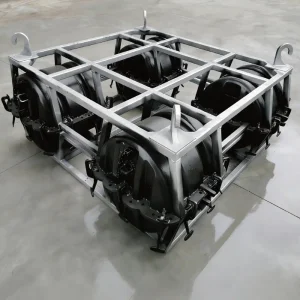
As-cast aluminium molds undergo post-casting 5-axis high-speed CNC milling to achieve exact parting-line alignment (<0.08mm gap), preventing resin flash and guaranteeing seamless fitment for complex multi-piece assembly molds.
From large industrial chemical containers to high-precision medical housing, our aluminium casting molds power critical manufacturing lines worldwide.
Large-scale water tanks, chemical IBC totes, and septic containment systems demand high structural strength and zero leakage. Aluminum casting mold factories utilize split-core casting techniques to produce monolithic molds with integrated cooling channels, ensuring even wall distribution for heavy-duty applications.
Custom rotomolded fuel tanks, adblue tanks, marine kayaks, and insulated cold-chain logistics boxes require intricate inserts, molded-in threads, and exact mounting points. Cast aluminium tooling allows for embedded copper heat-conductive pins and pneumatic drop-out cores to facilitate complex undercuts.
Precision environmental units, photo-oxygen filtration housings, and watertight test containers require ultra-smooth surface finishes and biological compliance. Cast aluminum molds receive chemical etching or glass-bead blasting to achieve textures ranging from high-gloss to fine leather-grain finishes.
Modern smart farming relies on durable, rotomolded automatic feeding systems, livestock drinking troughs, and surrounding protective fencing. Molds engineered for agricultural use are designed with reinforced clamping flanges to withstand high mechanical clamping forces on carousel rotomolding machines.
Partnering with a certified aluminium casting mold manufacturer guarantees total quality control through every milestone of tooling development. The roadmap below highlights the rigorous engineering standards applied from CAD conceptualization to factory acceptance testing (FAT):
Before pattern making, mold engineers conduct thermal modeling and mold-filling simulations. This step predicts resin shrinkage factors (typically 1.5% to 3.0% depending on PE grade), identifies potential air-entrapment zones, and optimizes internal venting pipe locations to ensure void-free plastic molding.
Using 3D CAD models (STEP/IGES), high-speed 3-axis CNC machines craft precise pattern models out of high-density wood or tooling block resin. Shrinkage allowances for both the aluminum casting shrink and the final plastic resin shrink are compound-calculated into the pattern dimensions.
Aerospace-grade A356 aluminum ingot is melted in electric induction tilting furnaces at 720°C. Nitrogen/Argon purging lance degassing removes dissolved hydrogen gas. Mold foundries utilize chill blocks within sand molds to control directional solidification, refining the Dendritic Arm Spacing (DAS) for maximum tensile strength.
Cast mold halves are mounted on 5-axis CNC machining centers to mill precise tongue-and-groove mating joints, clamping frames, and mounting plates. Hand polishers then work the mold cavity to specified surface roughness metrics (Ra 0.4 µm to Ra 3.2 µm).
Full material traceability with spectrographic chemical analysis certificates for every aluminum casting heat batch.
Coordinate Measuring Machines verify critical mold dimensions and wall thickness tolerances prior to dispatch.
On-site mold commissioning, maintenance training, and emergency field repair teams serving buyers across 40+ countries.
Expert answers regarding aluminium casting mold engineering, production lead times, thermal maintenance, and OEM customization.