Explore our benchmarked rotational molding machinery, custom tooling, and R&D laboratory apparatus exported globally.
Understanding global market dynamics, energy footprint optimization, and why top OEM plastic manufacturers favor shuttle rotational molding machinery exporters.
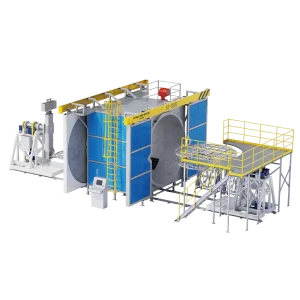
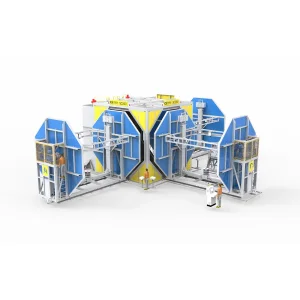
In the rapidly evolving landscape of global polymer processing, famous shuttle rotomolding machine exporters have emerged as pivotal technological catalysts for industrial expansion. Unlike traditional carousel configurations—which dictate a uniform cycle time across all operational arms—the shuttle rotomolding machine provides independent arm control, allowing manufacturers to process distinct products with drastically different thermal profiles simultaneously. This fundamental engineering shift directly addresses the volatile global energy markets, high factory floor costs, and the surging demand for large-scale, stress-free hollow plastic structures such as chemical storage vessels, agricultural septic tanks, marine floats, and heavy-duty logistics containers.
Modern procurement directors operating within global supply chains no longer evaluate machinery based solely on initial capital outlay (CAPEX). Instead, semantic search data and empirical procurement metrics reveal a sharp pivot toward evaluating Total Cost of Ownership (TCO), Thermal Uniformity Indices (TUI), and Overall Equipment Effectiveness (OEE). Leading Chinese exporters, exemplified by industry pioneers such as Ningbo StarWay Roto Co., Ltd., have reshaped the international marketplace by pairing advanced European-grade thermal design with agile, highly customized manufacturing capabilities.
Shuttle machinery permits Arm A to undergo extended heating cycles for thick-walled LLDPE chemical tanks while Arm B undergoes rapid forced-air cooling for thin-walled HDPE containers, optimizing plant throughput by up to 45%.
Integrated burner chambers featuring high-velocity airflow distribution recirculation technology dramatically reduce natural gas, LPG, or diesel consumption, yielding compliance with strict global carbon neutral directives.
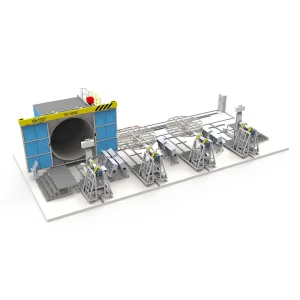
Linear and square shuttle layouts minimize floor space utilization, offering ideal engineering configurations for existing factory brownfield expansions where ceiling height and footprint are constrained.
Deconstructing the structural, thermal, and mechanical sub-systems engineered by top China rotational molding manufacturers.
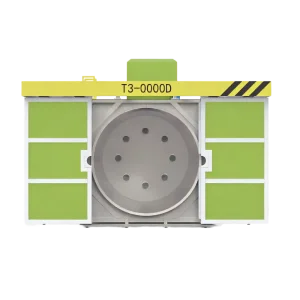
At the core of a premier shuttle rotomolding machine lies a sophisticated interplay of mechanical structural engineering, thermodynamics, and real-time algorithmic automation. Unlike basic open-flame systems, high-performance shuttle machines employ fully enclosed, heavily insulated heating chambers powered by automated modulating burners (such as Riello or Weishaupt combustion setups) combined with high-static-pressure circulation fans.
1. Heat Transfer Efficiency & Oven Fluid Dynamics: The central heating chamber uses specialized interior ducting that forces hot air in a turbulent, high-velocity vortex directly around the rotating mold assembly. This maximizes convective heat transfer coefficients while maintaining internal oven thermal variance within ±2.5°C. Consequently, plastic resins like Polyethylene (LLDPE/HDPE), Polypropylene (PP), and Polyamide (PA/Nylon) undergo uniform melting, eliminating localized wall-thickness variations, stress points, and pinholes.
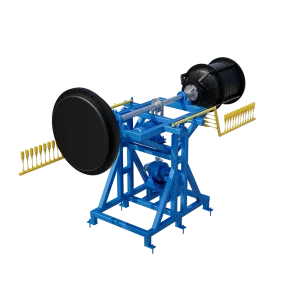
2. Bi-Axial Rotation & Mechanical Drives: The shuttle arm—typically constructed in straight arm, offset arm, or C-frame configurations—features dual independent AC variable frequency drives (VFDs). The major axis (primary rotation) and minor axis (secondary rotation) gear ratios are continuously modulated via Siemens or Omron PLC systems. Precision gearboxes ensure zero backlash under high rotational payloads, capable of carrying molds exceeding 5,000 kg.
3. Multi-Stage Intelligent Cooling Stations: Cool-down is as critical as heating in determining part crystallization and dimensional stability. Export-grade shuttle rotomolding machines feature multi-stage cooling bays equipped with dual-speed axial blowers, adjustable water-atomizing mist nozzles, and internal mold air-pressure cooling circuits. This prevents thermal shock, warpage, and shrinkage while drastically reducing total cycle times.
| Sub-System Component | Standard Market Specification | StarWay Roto Advanced Export Specification | Operational Advantage / ROI Impact |
|---|---|---|---|
| Heating Chamber Insulation | 50-80mm Rockwool Board | 150mm High-Density Ceramic Fiber + Air Gap | Reduces surface heat radiation; cuts gas consumption by 22%. |
| Automation Interface | Basic Relay / Manual Touchscreen | Siemens S7-1500 PLC + Industry 4.0 IoT Gateway | Remote diagnostic capability, real-time recipe logging, predictive maintenance. |
| Arm Drive Mechanism | Single Speed Motor with Belts | Direct Heavy-Duty Helical Bevel Gearboxes + VFD | Eliminates slipping, handles high eccentric mold weight up to 8,000 kg. |
| Burner Technology | Single-Stage On/Off Burner | Fully Modulating Proportional Combustion System | Holds pinpoint oven temperatures; eliminates thermal shock on complex molds. |
| Cooling System | Single Speed Air Blower | PWM Variable Airflow + Atomized Water Mist Sprays | Optimizes polymer crystallization; reduces cooling cycle duration by up to 30%. |
Applying Google E-E-A-T principles to benchmark international machinery manufacturers, audit manufacturing credentials, and verify engineering reliability.
Procuring heavy industrial rotomolding machinery across international borders requires stringent risk mitigation. Enterprise procurement teams, technical directors, and factory owners must evaluate prospective shuttle machine suppliers through a multi-dimensional framework spanning technical expertise, manufacturing infrastructure, quality control compliance, and long-term aftermarket field service.
Verify operational history. Established manufacturers like Ningbo StarWay Roto Co., Ltd. (founded 2009) bring over two decades of specialized expertise, backed by 40+ R&D engineers and over 230 completed turnkey installations in 40+ countries.
Ensure the equipment meets destination country electrical and safety mandates. Exported machinery must carry authentic CE marking, ISO 9001 quality management compliance, UL-compliant electrical panel wiring, and local pressure vessel safety clearances.
Leading exporters integrate secure VPN modules into machine control cabinets. This allows engineers to perform real-time code updates, PLC diagnostics, and sensor troubleshooting anywhere in the world without delaying production schedules.
When vetting high-load shuttle rotomolding machine suppliers, buyers must request documented thermal validation reports, structural finite element analysis (FEA) on shuttle arms, and customer references across key global markets such as North America, Europe, Australia, and the Middle East.
How high-load shuttle rotomolders power key global sectors: from municipal liquid storage to heavy industrial equipment.
The versatile nature of shuttle rotomolding equipment makes it the machine of choice for diverse industrial manufacturing verticals. By accommodating asymmetrical mold shapes and differing resin types on separate shuttling arms, plants can serve multiple commercial sectors simultaneously on a single machinery investment.
Challenge: Manufacturing 5,000L to 30,000L multi-layer PE water tanks requiring consistent wall thickness and zero internal stress.
Shuttle Solution: Heavy-duty straight-arm shuttle machines with high weight capacities (up to 8 tonnes payload) integrated with internal mold heating systems.
Challenge: Producing seamless, impact-resistant cross-linked PE (XLPE) diesel tanks for construction vehicles and agricultural tractors.
Shuttle Solution: Precision shuttle molder with precise, multi-zone temperature monitoring and automated nitrogen purge systems to prevent inner-wall oxidation.
Challenge: High-volume output of double-walled insulated ice boxes and medical transport containers.
Shuttle Solution: Dual-arm shuttle layout allowing fast interchange of aluminum CNC molds with automated secondary foam-injection station synchronization.
Ensuring seamless international deployment through comprehensive site engineering, regulatory compliance, and localized technical training.
Purchasing complex industrial equipment from a foreign exporter can introduce logistical and operational concerns. Recognized industry leaders bridge this gap by offering rigorous localization protocols, ensuring that exported shuttle rotomolding machines integrate flawlessly into client production facilities globally.
1. Electrical & Safety Grid Compliance: Global exporters must adapt machine power architectures to match destination regional standards—whether 480V 60Hz across North America, 400V 50Hz in Europe, or 380V in Asia-Pacific. Control panels utilize premium, globally available components (Schneider Electric, Siemens, ABB, SMC Pneumatics), guaranteeing local availability of replacement parts.
2. On-Site Erection & Commissioning: Leading Chinese rotomolding machine suppliers send multilingual senior field engineers directly to overseas customer sites. Services encompass foundational alignment, gas burner calibration, mechanical testing, resin trial runs, and operator safety certification.
3. Comprehensive Spares & Preventive Maintenance Plans: To guarantee continuous plant uptime, machinery packages include standard 2-year wearable spare parts kits (thermocouples, drive belts, pneumatic seals, burner ignition rods) backed by express global courier support.
Next-generation innovations shaping the future of automated shuttle rotomolding equipment.
As rotational molding advances into the era of Industry 4.0, shuttle machine design is undergoing rapid technological evolution. Famous exporters who maintain dedicated R&D facilities are pioneering breakthrough technologies designed to remove human error, reduce energy waste, and enable real-time quality assurance.
Integration of non-contact infrared thermal matrix cameras inside heating chambers allows the control system to monitor real-time resin fusion across complex mold contours, automatically adjusting local burner output.
Transitioning from direct combustion fossil fuel burners to high-efficiency infrared electric heating banks powered by industrial solar arrays, unlocking near-zero carbon emission manufacturing.
Combining shuttle machine arms with heavy-load robotic manipulators for automated resin powder loading, mold opening, part extraction, and automated flash trimming.
Direct technical responses addressing common engineering, procurement, and operational queries from industrial buyers.
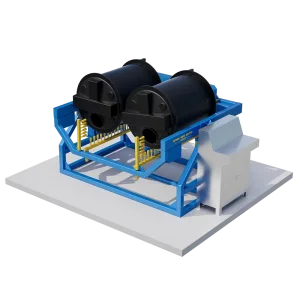
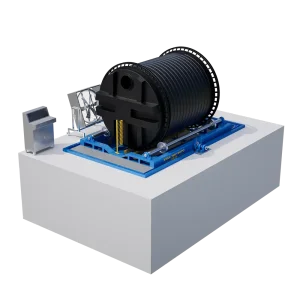
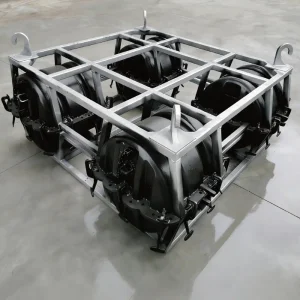
Complete your plant setup with our full range of eco-friendly heating ovens, custom tooling moulds, and rock-and-roll rotomolders.