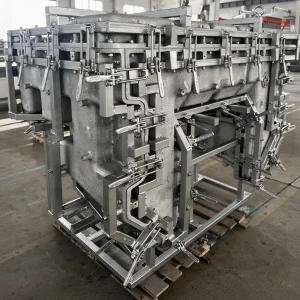
Explore our state-of-the-art rotational molding machines, precision tooling, and automated auxiliary systems engineered for global manufacturing excellence.
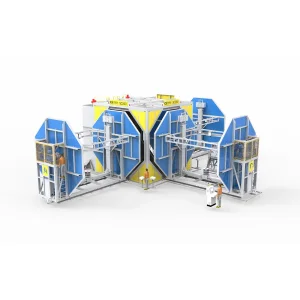
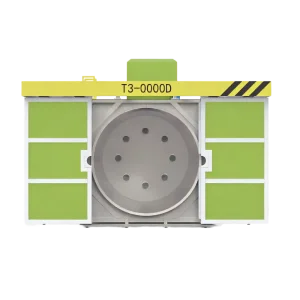
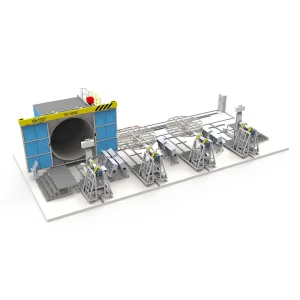
Analyzing global supply chains, polymer advancements, and the structural pivot toward high-efficiency rotational molding systems.
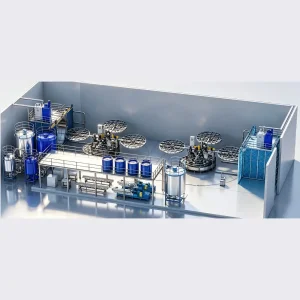
The global rotational plastics manufacturing sector has undergone a profound technological transformation over the past decade. Historically categorized as a niche, low-pressure thermal forming process suitable primarily for basic hollow containers, rotational molding (rotomolding) has matured into a mainstream, high-precision industrial discipline. Premier manufacturers and global OEMs—collectively designated under the domain of Rotational Plastics Ltd Enterprises & Companies—are now leveraging advanced biaxial kinematic machines, real-time thermodynamic telemetry, and automated material feeding infrastructure to produce stress-free, seamless, double-walled polymer structures that rival injection and blow molding in geometric fidelity while offering superior mechanical durability.
Driving this expansion are multi-industry requirements across agricultural storage, chemical process engineering, environmental sanitation, marine logistics, and heavy vehicle fluid management. As global environmental regulations tighten (such as ISO 14001, EU REACH, and stringent industrial carbon footprint caps), top-tier rotational plastics manufacturers are accelerating the adoption of electric heating rotomolding systems. Unlike traditional open-flame or direct-gas burner ovens that emit substantial combustion byproduct and exhibit volatile thermal gradients, electric heating ovens deliver uniform micro-controlled heat distribution, zero local emissions, and repeatable cure cycles that virtually eliminate resin oxidation and wall thickness variance.
Modern rotational molding success no longer depends purely on cycle length; it hinges on monitoring the Peak Internal Air Temperature (PIAT) of the resin melt inside the mold cavity. Premier manufacturers utilize wireless infrared telemetry to capture exact fusion points (typically between 180°C and 210°C for Linear Low-Density Polyethylene), ensuring maximum impact strength and preventing bubble void entrapment.
Evaluating machine kinematically, operational flexibility, footprint optimization, and thermal efficiency for optimal factory deployment.
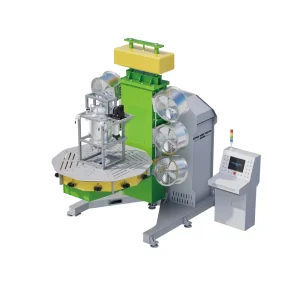
Selecting the optimal equipment footprint is a critical strategic decision for rotational plastics fabricators. The four primary machine categories—Carousel, Shuttle (Square/Linear), Rock & Roll (Open Flame/Enclosed Oven), and Electric Heating Systems—offer distinct operational trade-offs across capital expenditure, floor space utilization, product geometry adaptability, and energy consumption.
| Machine Architecture | Kinematic Profile | Target Product Geometry | Thermal Efficiency | Ideal Production Batch Size |
|---|---|---|---|---|
| Carousel (Fixed / Independent Arm) | Central indexing turret with 3 to 5 rotating arms traversing Oven, Cooling, and Loading stations. | Symmetrical products, tanks, container drums, high-volume uniform shapes. | High continuous thermal retention; minimal oven door opening loss. | Large-scale mass production runs (High throughput). |
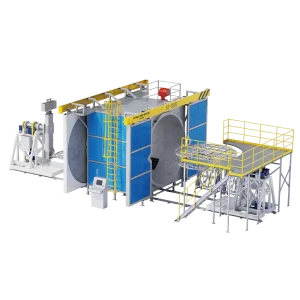
| Linear / Square Shuttle System | Horizontal tracking carts shuttling independently between central oven and dual cooling/loading bays. | Asymmetrical parts, varied mold weights, multi-resin production runs. | Moderate to High; automated fast-acting insulated oven doors. | Flexible, medium-to-high mixed batch manufacturing. |
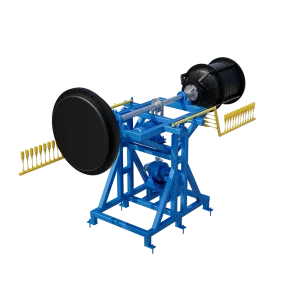
| Rock and Roll Machine (Open Flame/Oven) | 360° longitudinal axis rotation with ±45° transverse rocking action (U-Arm configuration). | Extreme length-to-width ratio items: kayaks, drainage pipes, large agricultural troughs. | Variable (Open flame has heat radiation loss; enclosed oven is efficient). | Specialized large hollow components and long tubular structures. |
| Electric Heating Rotomolding Unit | Multi-zone electric radiant heating elements with digital PID feedback loops. | High-precision engineering polymers (Nylon, PP, XLPE), medical enclosures. | Superior (92%+ thermal conversion efficiency, precise temperature control). | High-value technical parts requiring micro-tolerance wall uniformity. |
The rotational molding sequence operates under low pressure (atmospheric pressure inside the mold) relying strictly on gravitational flow and thermal conduction to deposit molten polymer powder evenly against the mold boundary. The process executes through four distinct thermodynamic windows:
Understanding the critical interplay between CNC cast-aluminum tooling, surface vent engineering, and advanced polymer grade selection.
Achieving dimensional tolerances within ±0.5% in rotational plastics requires seamless integration between machine mechanics and custom tooling mold design. Industry-leading suppliers specialize in two primary mold fabrication methodologies:
Cast aluminum tooling (typically A356 or AC4C alloys) is manufactured by creating a precision CNC-machined master pattern, followed by foundry casting. Cast molds excel in complex aesthetic geometries, deep draw ratios, integral ribbing, and textured surface finishes (ranging from smooth gloss to heavy leatherette grain). Aluminum's high thermal conductivity (approx. 160 W/m·K) facilitates rapid heat transfer, significantly shortening cycle times.
Fabricated steel molds are constructed from high-tensile sheet steel laser-cut and welded into structural shapes. They represent the gold standard for ultra-large hollow vessels, such as 10,000 to 50,000-liter agricultural storage tanks. CNC-machined block aluminum molds are reserved for ultra-high precision components (such as military housings and aerospace ducting) where parting line flash must be under 0.1mm.
How rotational plastics equipment powers infrastructure, precision agriculture, chemical logistics, and consumer recreation.
Empowering multinational enterprise buyers with rigorous certification protocols, remote diagnostic engineering, and turnkey operational commissioning.
Navigating global machinery procurement requires total transparency around safety standards, electrical codes, and post-installation lifecycle support. Top-tier rotational plastics manufacturers adhere strictly to international manufacturing benchmarks:
All automated shuttle and carousel machines comply with EU Directive 2006/42/EC, integrating dual-circuit safety light curtains, pneumatic emergency door release overrides, and zero-energy state lockout-tagout (LOTO) protocols.
From laser alignment of spindle arms to ultrasonic wall thickness verification of finished parts, production flows through standardized Quality Control (QC) checkpoints certified under ISO 9001:2015 frameworks.
Control cabinets utilize premium industrial automation components (Siemens S7-1500 PLC, Schneider Electric relays, Omron PID controllers) compliant with UL 508A and IEC 60204-1 standards for seamless regional electrical grid connection.
Deploying certified field service technicians across North America, Europe, Southeast Asia, and the Middle East for foundation layout planning, site assembly, recipe optimization, and operator training.
How Industry 4.0 IoT telemetry, AI heating optimization, and sustainable bio-polymers are redefining factory productivity.
Integrating machine learning algorithms that continuously analyze external ambient humidity, mold weight, and thermal sensor feedback to dynamically adjust burner output or electric radiant intensity in real time, reducing scrap rates to under 0.2%.
Replacing manual part extraction with 6-axis articulated industrial robots fitted with custom vacuum gripper arrays, executing automated part removal, pneumatic trimming, and flame surface treatment in continuous synchronization.
Advancing multi-layer co-rotation technology enabling the structural core of rotomolded parts to incorporate up to 60% Post-Consumer Recyclate (PCR) resin while maintaining virgin LLDPE outer aesthetic and UV protective layers.
Addressing key engineering, financial, and operational questions regarding rotational plastics equipment sourcing.
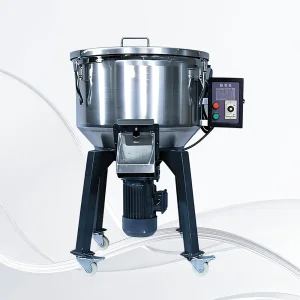
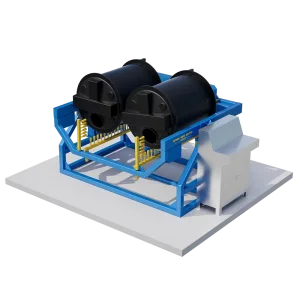
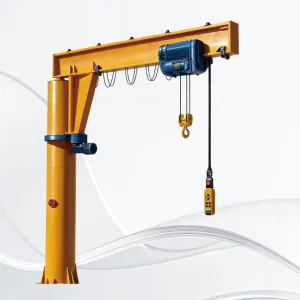
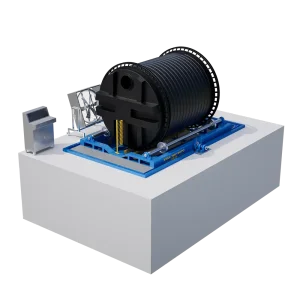
Explore our full line of specialized open-flame swing machines, heavy-duty industrial cranes, high-speed pulverizer mixers, and flexible ODM shuttle units.
Whether you are expanding existing rotational molding capacity, transitioning to eco-friendly electric heating ovens, or developing custom cast aluminum molds for technical OEM parts, our engineering team provides end-to-end technical consulting and equipment commissioning.