
Explore our industrial-grade rotational molding machines, custom steel moulds, and automated auxiliary units designed for high-throughput plastic manufacturing.
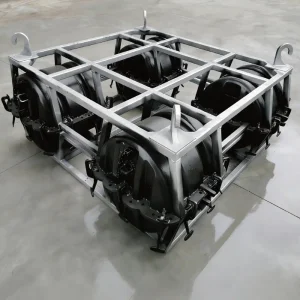
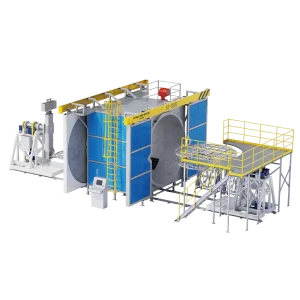
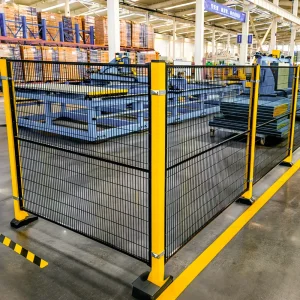
Rotational molding (rotomolding) has transcended its origins as a niche thermoplastic processing method to become a major cornerstone of global industrial manufacturing. Historically utilized for basic hollow toys and simple containers, modern rotational molding machines now construct critical infrastructure components, seamless multi-layer chemical storage tanks, automotive fuel reservoirs, aerospace ducting, and heavy-duty logistics pallets. The global rotational molding market is experiencing unprecedented demand driven by the superior structural integrity, stress-free material distribution, and corrosion resistance offered by rotomolded hollow products compared to injection or blow-molded alternatives.
As industrial procurement teams evaluate capital expenditure for plant expansions, selecting a famous rotational mold machine manufacturer with verified engineering pedigree is paramount. Advanced machinery now integrates multi-axis CNC thermo-kinematics, IoT-driven real-time thermal telemetry, closed-loop burner feedback controls, and eco-friendly electric heating ovens. The modern commercial landscape demands systems capable of handling complex engineering polymers—including linear low-density polyethylene (LLDPE), high-density polyethylene (HDPE), cross-linked polyethylene (XLPE), polypropylene (PP), and polyamide (Nylon 6/12)—with minimal thermal degradation and optimal energy consumption per kilogram of processed material.
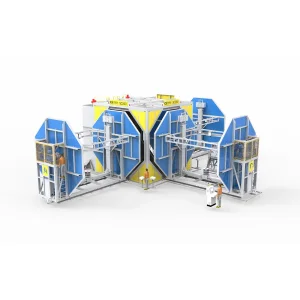
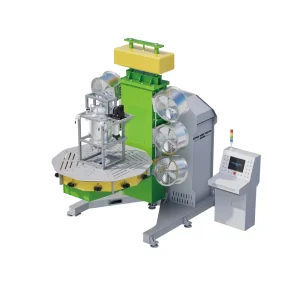
Achieving structural uniformity in hollow plastic molding requires precise control over two primary vectors: multi-axial rotation and thermal distribution inside the mold cavity. Modern rotational molding machines engineered by industry leaders fall into four distinct structural typologies, each optimized for specific production volumes, footprint limitations, and product dimensions:
Designed for continuous, high-volume mass production. Featuring up to 5 independent arms moving through heating, precooling, cooling, and loading/unloading stations, maximizing cycle efficiency and station utilization.
Engineered for large-capacity tanks (up to 30,000+ Liters) and massive industrial parts. Dual shuttles share a central oven chamber, enabling flexible cycle management for molds requiring varied heating times.
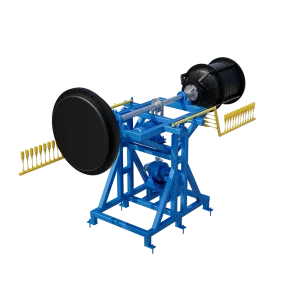
Optimized for long, narrow hollow articles such as kayaks, canoes, pipe fittings, and drainage channels. Utilizes full 360° longitudinal rotation paired with rocking transverse motion, reducing equipment footprint and fuel burn.
| Machine Category | Heating Mechanism | Optimal Product Scope | Arm Load Capacity | Automation Level |
|---|---|---|---|---|
| Fixed-Arm / Carousel | Direct Gas Combustion / Hot Air Recirculation | Medium to High volume containers, toys, automotive bins | 500 kg – 3,500 kg per arm | Fully Automated PLC Control |
| Linear Shuttle | Electric Radiant / Direct Dual Burner Oven | Large agricultural tanks, septic tanks, heavy duty totes | 1,000 kg – 10,000+ kg | Semi-Automated / Independent Station PLC |
| Open Flame Rock & Roll | Open Gas Jet Pipe Heating System | Long hollow shapes, boats, kayak hulls, culvert pipes | 300 kg – 2,000 kg | Operator-Assisted Microprocessor |
| Electric Oven Rotomolder | Precision Ceramic Electric Resistance Heating | Cleanroom products, medical cases, eco-strict zones | 200 kg – 1,500 kg | Industry 4.0 Telemetry Smart Line |
Leading rotomolding OEMs now incorporate wireless telemetry probes directly inside the mold cavity during rotation. Real-time IAT tracking captures the exact polymer melting point (PIAT) and bubble elimination phase, allowing PLC systems to auto-adjust burner output. This eliminates wall-thickness variations and under-cure/over-cure defects, cutting scrap rates below 0.5%.
Sourcing rotational molding machinery from premier Chinese manufacturers provides international buyers with a distinct strategic edge: unmatched supply chain density combined with high-precision manufacturing capability. Clusters in Ningbo, Zhejiang, and adjacent industrial zones house end-to-end supply chains comprising high-grade structural steel foundries, 5-axis CNC mold carving shops, burner combustion engineers, and specialized gearbox fabricators within a 50-kilometer radius.
This localized density dramatically compresses equipment build times and prototyping phases. While Western European or North American machine builders often quote 8 to 12-month lead times for customized shuttle or carousel lines, tier-one Chinese factories deliver fully tested, CE-certified turnkey installations within 60 to 90 days—without compromising structural steel tolerances, electrical safety specifications, or component longevity.
Direct integration between steel frame fabrication and CNC cast-aluminum mould foundries eliminates interface friction, guaranteeing sub-millimeter concentricity between mold mounting spiders and machine rotating arms.
Leveraging scaled material procurement and lean assembly protocols allows Chinese manufacturers to deliver enterprise-grade machinery at a 30% to 45% lower initial capital cost, speeding up plant ROI to under 18 months.
Whether configuring tailored arm lengths, specialized multi-zone burner manifolds, or high-static cooling blowers, Chinese factories excel at bespoke engineering to fit exact plant footprints and power grid parameters.
Rotational molding equipment must adapt to local regulatory standards, environmental conditions, and industry end-uses across diverse regional markets:
Focus on environmental compliance, zero-emission electric heating ovens, and multi-layer chemical storage tanks (IBC totes, EPA-compliant containment bunds). Machinery must feature UL/CSA or CE electrical panels and seamless integration with automated resin weighing units.
High demand for robust water infrastructure equipment—such as 500L to 10,000L vertical agricultural tanks, rainwater harvesting cisterns, and septic systems. Rugged shuttle machines with dual direct-burners are favored for continuous operation under demanding electrical grids.
Deployment of high-load machines for heavy marine docks, navigational buoys, commercial kayak hulls, and solar-shade road barriers requiring extreme UV-16 stabilizer compounding and thick, uniform wall profiles.
A reliable rotational mold machine manufacturer must adhere to rigorous international safety and quality control standards. Equipment manufactured for global delivery undergoes strict factory acceptance testing (FAT) prior to disassembly and export packaging:
1. Structural Steel & Mechanical Stress Validation: Machine frames are fabricated from heavy-gauge Q235/Q345 structural steel, stress-relieved to prevent thermal warping during decades of continuous heating cycles. Rotating arms utilize forged alloy shafts mounted on heavy-duty spherical roller bearings.
2. CE & ISO Compliance: Electrical control cabinets feature Siemens PLC or Schneider switchgear compliant with CE Low Voltage Directive (LVD) and Electromagnetic Compatibility (EMC) standards. Burner systems integrate gas leak detection safety shutoff valves meeting European EN 746-2 industrial thermoprocessing equipment regulations.
3. Global Remote Telemetric Support: Modern machine architectures integrate encrypted VPN gateway modules. Senior engineers can perform real-time diagnostics, PLC firmware updates, and PID thermal tuning remotely from anywhere in the world, minimizing operational downtime.
Discover customized rotomolding setups, energy-efficient electric ovens, and precision-machined tooling solutions.
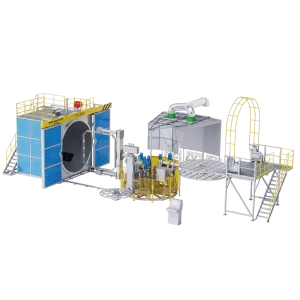
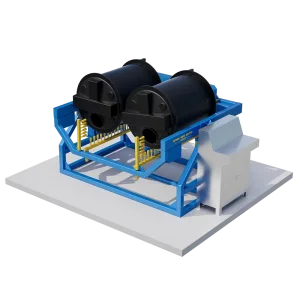
When requesting quotes for rotomolding production lines, industrial buyers must look beyond the initial FOB machinery price. A comprehensive RFQ (Request for Quotation) evaluation should assess total operational cost, thermal efficiency, and long-term modular scalability. When submitting your technical requirements to a manufacturer, include the following operational parameters:
1. Maximum Mold Dimensions & Weight Envelope: Specify the spherical diameter or maximum length, width, and height of your target mold assemblies, along with total shot weight (resin + metal mold frame).
2. Preferred Fuel Source: Evaluate natural gas (LNG), liquid petroleum gas (LPG), diesel, or clean electric resistance heating based on local utility costs and carbon emissions mandates.
3. Target Output & Station Balancing: Define expected hourly/daily unit yield. Carousel machines excel at high-volume single-part production, while shuttle machines provide versatility for running different mold sizes concurrently.
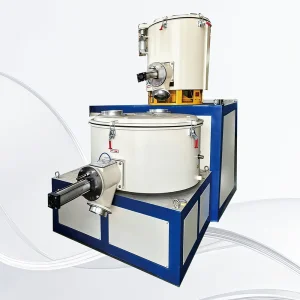
4. Auxiliary Infrastructure Requirements: Determine if your quotation requires pulverizing systems (30–50 mesh resin grinding), high-speed turbo mixers, mold release spray booms, or specialized industrial resin loaders.
Direct insights from senior rotomolding engineers regarding machinery selection, process optimization, and maintenance protocols.