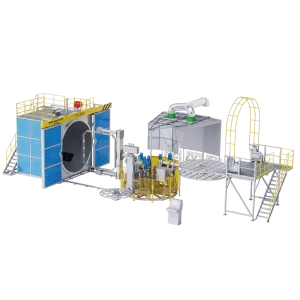
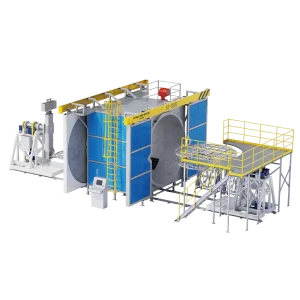
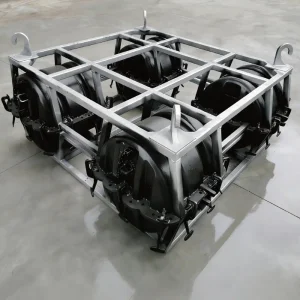
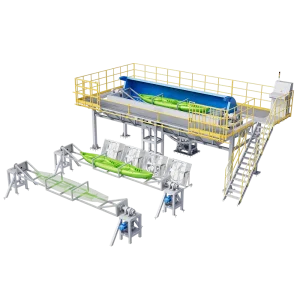
Explore our flagship lineup of eco-friendly electric rotomolding setups, automated shuttle configurations, precision lab setups, and custom steel tooling engineered for global manufacturing scalability.
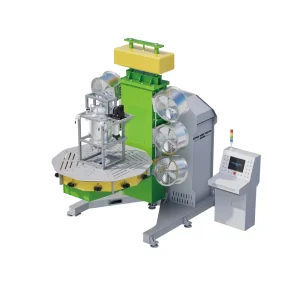
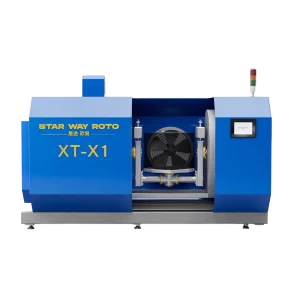
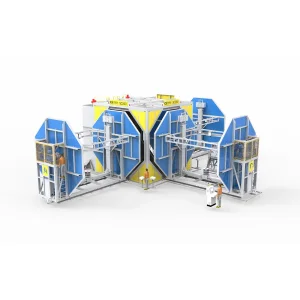
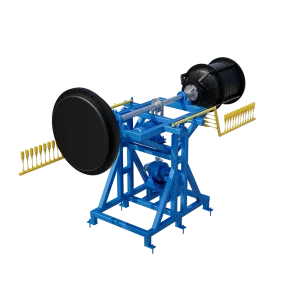
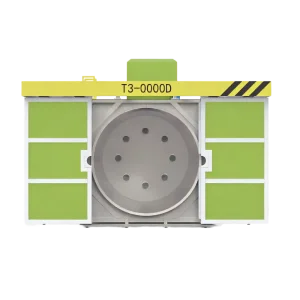
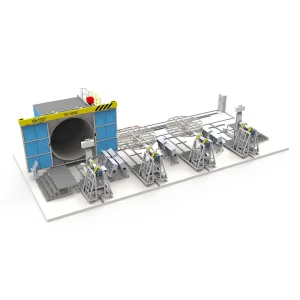
An authoritative overview of macro-market dynamics, liquid vinyl rheology, and enterprise procurement shifts powering modern rotational molding operations worldwide.
The global polymer conversion sector is undergoing a profound paradigm shift. Among specialized rotational molding technologies, Polyvinyl Chloride (PVC) Rotomolding stands out as a unique, highly specialized domain. Unlike standard Polyethylene (PE) or Polypropylene (PP) rotational molding—which processes micro-pellets or fine dry powders—PVC rotational molding operates primarily with liquid vinyl compounds, universally recognized as PVC Plastisols (dispersions of PVC resin micro-particles suspended in liquid plasticizers).
Industrial market intelligence highlights a accelerating transition across North America, Western Europe, and the Asia-Pacific region toward closed-loop, automated PVC rotomolding systems. Enterprise procurement heads are increasingly abandoning traditional dipping, slush molding, and open casting techniques in favor of fully enclosed, multi-axis rotational molding machines. The primary drivers behind this global migration include stringent environmental air quality regulations, micro-tolerance wall thickness requirements, and the rising demand for seam-free, hollow, flexible elastomeric vinyl components across medical, marine, automotive, and industrial safety sectors.
A critical competitive differentiator for enterprise manufacturers lies in mastering the rheological behavior of PVC plastisols during the thermal cycle. When liquid plastisol is metered into a heated mold, it undergoes two distinct phase transformations: initial gelation (where plasticizers swell the PVC resin particles between 60°C and 110°C) followed by full fusion (where polymer chains homogenize between 170°C and 200°C). Failing to precisely synchronize biaxial rotation speed with thermal ramps leads to severe structural flaws, such as plasticizer migration, inner wall tackiness, thermal degradation (discoloration), and uneven weight distribution. Modern PVC rotomolding factories must therefore integrate intelligent temperature control, dynamic drive arms, and custom mold alloys engineered specifically to handle low-viscosity liquid charges.
Unpacking the engineering parameters behind zero-defect PVC rotomolding: Gelation kinetics, heat transfer dynamics, infrared thermal mapping, and mold surface treatments.
Plastisol formulation dictates flow performance. Shear-thinning (pseudoplastic) behavior under low shear rates during rotation ensures uniform coverage without air entrapment. Advanced liquid metering dosing pumps maintain viscosity between 1,000 to 5,000 cPs, preventing sag or sink marks on complex mold radii.
Transitioning from traditional gas combustion to multi-zone electric infrared heating eliminates carbon deposition and thermal lag. Independent PID loops control interior mold temperatures (TP-System), ensuring exact gelation curves without overheating sensitive vinyl stabilizers.
High-volume PVC rotomolding relies heavily on electroformed nickel-copper shell molds and high-density CNC machined cast aluminum tooling. Electroforming guarantees ultra-fine detail duplication (matte, mirror, or leatherette textures) while offering superior thermal conductivity.
During the rotation phase, PVC plastisol must pass through the critical 80°C–140°C gelation window smoothly. If heat transfer is uneven, the plastisol gels prematurely on one side of the mold, creating massive wall thickness variation (thickness skews exceeding 45%). A specialized PVC rotational machine utilizes frequency-controlled gearboxes capable of micro-adjusting major and minor axis ratios from 1:1 up to 1:12 in real-time based on wireless internal mold air temperature (IAT) sensors.
| Heating Architecture | Energy Efficiency | Temperature Precision | PVC Plastisol Suitability | Maintenance & Cleanroom Standard |
|---|---|---|---|---|
| Electric Infrared / Multi-Zone Resistance | High (up to 88% thermal yield) | ±1.0°C (Closed-loop PID) | Optimal for Medical & Cleanroom Vinyl | Zero emissions; Low maintenance; ISO Class 7/8 Compatible |
| Forced Hot Air Convection (Gas/Diesel) | Moderate (55% - 65% thermal yield) | ±3.5°C (Oven Recirculation) | Ideal for Large Industrial Buoys & Automotive Fenders | Requires burner servicing, exhaust ducting & air filter management |
| Open Flame Rock & Roll Systems | Low - Medium (Direct burner contact) | ±6.0°C (Manual / Timer control) | Suitable for Simple Cylindrical/Hollow Vinyl Goods | High thermal gradient; Unsuitable for medical grade plastisol |
A strategic guide for VP of Operations, Chief Procurement Officers, and Supply Chain Executives evaluating major equipment investments in PVC rotational molding factories.
Procuring rotational molding infrastructure for PVC plastisol processing involves far more than comparing baseline CapEx equipment quotes. Strategic buyers must evaluate the Total Cost of Ownership (TCO) over a 10-to-15-year lifecycle. Given the corrosive potential of hydrochloric gas traces during vinyl overheating and the exacting viscosity windows of liquid plastisols, machine durability and mold structural integrity directly impact long-term profit margins.
From medical-grade elastomeric bladders to heavy-duty commercial marine fenders—how leading factories leverage specialized PVC rotomolding technology.
Seamless PVC respiratory bladders, squeeze bulbs, anatomical teaching models, and fluid collection bags manufactured under ISO 13485 compliant cleanroom environments using non-phthalate plasticizers.
Heavy-duty inflatable marine fenders, navigation buoys, and dock bumpers. Formulated with UV-stabilized flexible PVC plastisol capable of enduring high impact and saltwater immersion.
Slush-rotomolded vehicle armrest skins, gear shift bellows, air duct connectors, and flexible interior panels featuring complex grain reproduction and high abrasion resistance.
Seamless slush-molded chemical resistant overshoes, protective flexible bellows, anti-static utility covers, and high-durability industrial valve boots designed for extreme environments.
Next-generation innovations shaping the intelligent, sustainable, and ultra-automated future of rotational molding machinery.
Global REACH and US FDA mandates are driving the total elimination of traditional orthophthalates (DOP, DINP). Modern PVC factories are optimizing thermal recipes for bio-based plasticizers (DOTP, DINCH, acetyl tributyl citrate), requiring tighter temperature control bandwidths within rotomolding ovens.
Integrating machine learning algorithms with infrared pyrometers enables real-time dynamic adjustment of heating cycles. By analyzing heat absorption curves, the PLC automatically compensates for ambient factory humidity, raw material viscosity shifts, and gas burner fluctuation.
The future factory relies on end-to-end automation. 6-axis articulated robots automatically fill liquid vinyl charges, index molds into electric ovens, extract cured vinyl products, and trim parting lines with zero manual intervention, achieving 99.8% process repeatability.
Ensuring seamless equipment installation, full international regulatory compliance, and rapid field engineering responsiveness across global industrial hubs.
Deploying large-scale rotational molding machinery across international borders demands comprehensive field engineering infrastructure and strict adherence to international safety standards. Top-tier China manufacturers and suppliers operate robust global support networks, providing end-to-end turn-key assistance from factory floor layout design to final commissioning.
All equipment undergoes rigorous certification protocols including European Machinery Directive 2006/42/EC, Low Voltage Directive 2014/35/EU, and ISO 9001:2015 Quality Management Systems compliance.
Experienced field engineers provide localized installation, electrical integration, PLC setup, and operator training across North America, Europe, South America, and Southeast Asia.
Integrated industrial IoT gateways allow factory engineers to perform remote diagnostics, PLC software updates, and predictive maintenance monitoring worldwide.
In-depth expert answers addressing technical, operational, and financial considerations for enterprise rotomolding buyers.
Explore our high-efficiency carousel systems, lined shuttle machines, customizable large-scale swing equipment, and industrial mold solutions engineered for maximum output.