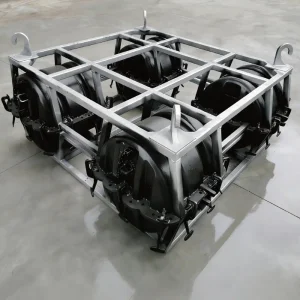
Engineered for high-throughput hull fabrication, multi-layer polymer consolidation, and ultra-durable seamless watercraft manufacturing.
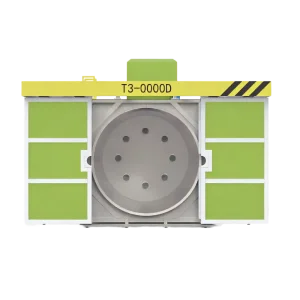
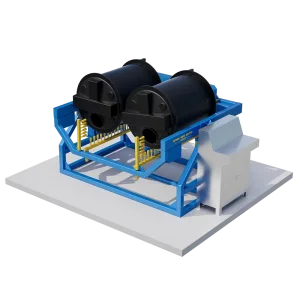
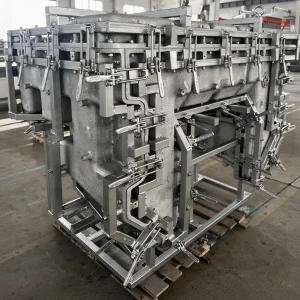
How rotational molding established itself as the dominant production technology for over 85% of commercial, recreational, and pedal-drive fishing kayaks worldwide.
Unlike thermoformed or fiberglass composite layups, rotomolded kayak hulls are formed without external pressure. This atmospheric process eliminates internal molecular shear stresses, preventing environmental stress cracking (ESC) and yielding superior impact resistance against rocky shoals and riverbeds.
The worldwide paddlesports market is expanding at a 6.4% CAGR through 2032. Professional fishing kayaks equipped with integrated pedal drives, livewells, transducer scuppers, and modular rigging require intricate tool architectures that only advanced CNC cast aluminum tooling can deliver cost-effectively.
Modern kayak rotomolds incorporate deep-draw scupper tubes, molded-in gear tracks, threaded brass insert bushings, and multi-chine hull hydrodynamics into a single mold cycle. This eliminates secondary adhesive assembly, reducing downstream labor costs by up to 65%.
Why premier watercraft brands partner with Ningbo StarWay Roto for end-to-end mold design, automated machinery, and volume batch scalability.
From wooden/resin pattern making to in-house A356 aluminum casting and 5-axis CNC multi-face milling, all operations reside within a singular 20-acre facility, compressing development cycles from months to weeks.
Streamlined industrial clusters in Zhejiang Province yield high-precision cast tooling at 40% to 60% lower capex compared to North American or European mold makers, allowing brands to launch 3x more hull models per season.
We do not just supply the mold; we build the carousel, shuttle, and open-flame rock-and-roll machines optimized for your specific hull dimensions, arm weight ratings, and thermal air circulation patterns.
Every mold undergoes Coordinate Measuring Machine (CMM) dimensional verification, pressure seal testing, and full trial-shot sampling before international ocean crating, guaranteeing zero ramp-up delays at your plant.
Achieving optimum balance between tensile modulus, puncture resistance, low-temperature ductility, and total craft displacement.
Utilizing metallocene catalysts yields narrow molecular weight distribution polymers (MFI 3.5 – 5.0 g/10min, Density 0.935 – 0.940 g/cm³). Delivers exceptional Environmental Stress Crack Resistance (ESCR > 1000 hrs) and phenomenal sub-zero impact strength down to -40°C.
Employs drop-box technology or timed barrier charging to mold a dense solid polyethylene outer skin, a microcellular foamed PE core, and a solid inner lining. Increases flexural hull stiffness by 300% while cutting overall craft weight by 15-20% with unsinkable positive buoyancy.
100% melt-compounded pigments integrated with Hindered Amine Light Stabilizers (HALS) rated for UV20 (20,000 Florida exposure hours). Prevents polymer chain degradation, chalking, embrittlement, and color fading under intense tropical marine sunlight.
From professional tournament angling platforms to extreme whitewater expedition crafts, our tooling portfolio spans every watercraft category.
Extra-wide cathedral and tunnel hull molds featuring molded-in transducer cavities, dry storage hatch flanges, motor mount inserts, and elevated aluminum seat frame tracks.
Slender, hydrodynamic V-shaped hull molds up to 5.2 meters with integrated perimeter safety line bosses, rudder/skeg drop boxes, and dual sealed bulkhead partitions.
Ultra-thick wear sections at bow, stern, and keel skid plates. Engineered for high-abuse coastal resorts, liveries, and rental operators requiring 10+ year operating life.
Precision interlocking section tooling with ratcheting latch geometry. Enables full-size tandem kayaks to be broken down into individual snap-together segments for trunk transport.
Next-generation automation, Industry 4.0 thermal analytics, and eco-efficient electric heating systems driving factory productivity.
Wireless thermocouple probes installed inside the mold air cavity track Peak Internal Air Temperature (PIAT) in real-time. Automatically triggers oven extraction at exactly 200°C–205°C, ensuring 100% complete polymer bubble dissolution without thermal degradation.
Transitioning from open-flame gas burners to precision-controlled direct-electric infrared and clean recirculating airflow ovens. Reduces carbon footprints by 35% while eliminating localized skin soot and combustion unevenness.
Automated 6-axis robotic cells perform precise CNC router trimming along parting lines, robotic flame-treatment for graphic decal adhesion, and automated cooling jig clamping to eliminate post-demolding longitudinal warp.
Key technical specifications and quality verification parameters international buyers must demand when commissioning marine rotational molds.
Verify minimum 2.5°–3.5° draft angles across deep scuppers and internal cockpit side-walls. Texture surfaces (sandblast or leatherette) require an additional 1° draft per 0.025mm texture depth to ensure defect-free part release.
Rotomolded LLDPE exhibits 2.5% to 3.5% volumetric shrinkage. Insist that your tooling supplier engineer custom contour cooling fixtures (shrink bucks) alongside the mold to lock in dead-flat gunwales and true bow-to-stern keels.
Ensure threaded marine inserts (stainless steel 316 or brass) feature deep knurling and hex anchor heads. Factory torque testing should exceed 35 Nm without polymer stripping or rotational slippage.
Practical engineering insights from senior rotational molding tooling directors.
Cast aluminum (such as A356 alloy) possesses nearly triple the thermal conductivity of steel (~165 W/m·K vs ~50 W/m·K). This ensures significantly faster, more uniform heat transfer across complex curved hulls, reducing oven cycle time by 25-35%. Furthermore, casting allows complex organic styling, molded-in handles, beverage recesses, and deep scupper tubes without extensive manual sheet-metal welding seams that create weak points and uneven wall thicknesses.
Warpage is prevented through three combined strategies: First, optimizing the mold's internal air temperature curve using high-flow PTFE breather tubes that prevent differential pressure drop. Second, utilizing controlled two-stage cooling (ambient air mist followed by gentle forced air rather than aggressive cold water quenching). Third, placing the demolded kayak immediately onto dedicated water-cooled CNC-machined shrink fixtures (cooling bucks) until the core polymer drops below 40°C.
With standard factory preventive maintenance (regular mold release re-application, pneumatic toggle clamp inspection, and non-abrasive dry ice blast cleaning), our CNC-machined A356 cast aluminum kayak molds comfortably achieve over 10,000 to 15,000 molding cycles. This equates to over 8 to 12 years of continuous multi-shift production for typical watercraft manufacturing plants.
Yes. On modern independent-arm carousel rotomolding machines or high-load dual-shuttle systems, each arm can be configured with distinct biaxial rotation speed ratios (e.g., 4:1 for a 4-meter fishing kayak vs. 3:1 for a compact sit-on-top) and variable oven dwell times, allowing different mold weights and geometries to run concurrently on the same assembly line without sacrificing part quality.
We strongly recommend 35-mesh (500 micron) cryogenically pulverized virgin LLDPE powder with a dry flow rate under 25 seconds (per ASTM D1895). High-quality micropellets or coarser 20-mesh grinds can cause pinhole voids and incomplete powder sintering around tight scupper radii and threaded insert bosses during the early stage of the heating cycle.
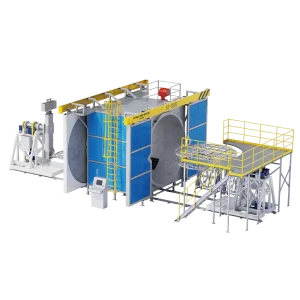
Complete your production line with high-capacity carousel machines, space-saving lined shuttles, and heavy-duty steel tooling.