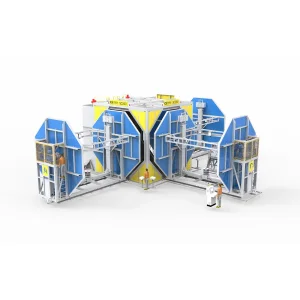
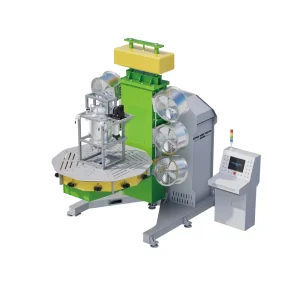
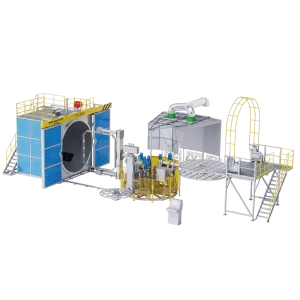
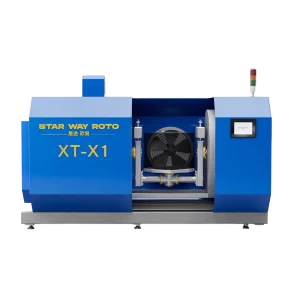
Explore our flagship OEM & ODM rotational moulding machinery, custom precision molds, and auxiliary automation equipment engineered for global industrial deployment.
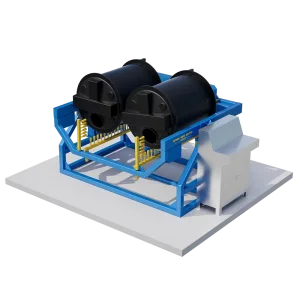
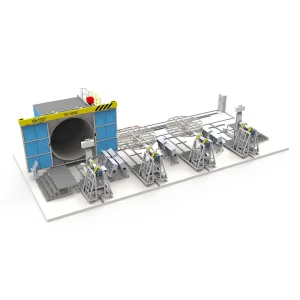
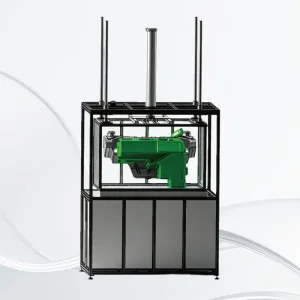
In modern industrial polymer processing, Custom Rotational Moulding (Rotomolding) stands out as a unique manufacturing technology optimized for producing seamless, stress-free, double-walled or hollow thermoplastic structures. For procurement officers, design engineers, and global exporters, accurately recognizing the identifying features of rotational moulding is vital when conducting quality audits, reverse-engineering OEM components, or verifying supplier compliance.
Unlike blow molding or injection molding—which rely on extreme hydraulic pressures and fast cycle times—rotational molding utilizes biaxial atmospheric heating and cooling cycles inside a rotating mold cavity. This pressureless thermal sintering process leaves distinct physical, geometric, and metallurgical signatures on the final product. Understanding these identifying features enables buyers to audit supplier quotes effectively, optimize wall thickness distribution, and select qualified China exporters skilled in high-precision CNC aluminum and fabricated steel tooling.
| Manufacturing Parameter | Rotational Moulding | Blow Moulding | Injection Moulding |
|---|---|---|---|
| Internal Pressure | Atmospheric / Zero Cavity Pressure | Medium (25–100 PSI) | Very High (5,000–20,000 PSI) |
| Part Wall Stress | Virtually Residual-Stress Free | Moderate Molecular Orientation | High Induced Shear & Thermal Stress |
| Identifying Feature: Parting Line | Flat/Pin Flash, Manual Trim Marks | Heavy Pinch-Off Ridge at Base | Precision Flush Micro-Line |
| Corner Wall Thickness | Thicker Outer Radii (Material Accumulation) | Thinner Corners (Material Stretched) | Uniform (Controlled by Core Ribs) |
| Internal Structure | Hollow, Uniform Cavity with Vent Relief | Hollow with Open Neck/Bore | Solid or Ribbed Internal Sections |
When evaluating high-end rotational molded components, technical buyers must analyze key structural marks left by the thermomechanical molding process. These features serve as direct physical evidence during quality audits and sourcing valuations:
Rotomolded parts always exhibit a continuous perimeter parting line where the mold halves match. Because tools operate under zero hydraulic clamping force, parting lines feature a subtle, smooth flash line—often hand-finished or CNC-trimmed—leaving a uniform matte band around the component geometry.
To prevent wall collapse or ballooning from internal air expansion during oven cycles, rotomolds require PTFE or metal vent tubes. The finished hollow component will feature a small, cylindrical circular impression (vent plug mark) where the vent tube penetrated the mold cavity.
For large structural tanks, pallets, or marine containers, designers implement "kiss-off" posts where opposing mold walls meet. When fused, these create internal cylindrical conical pillars that bridge structural loads, offering high stiffness-to-weight ratios without adding mass.
Metal fasteners, brass bushings, and mounting studs can be loaded directly into the mold prior to resin charging. The polymer melt encapsulates these components seamlessly, producing leak-proof, high-torque structural mounting points without secondary tapping.
Unlike sharp-cornered injection molded parts, rotomolded parts feature generous outside radii (typically 3mm to 6mm minimum) to allow smooth resin powder flow during rotation. Draft angles can be minimal (1° to 2°), and on polyethylene parts, sometimes 0° on short walls due to material shrinkage.
Custom rotational moulding is deployed across demanding global sectors where impact resistance, chemical inertness, and structural integrity are critical. Below are key localized industrial applications:
Cross-linked Polyethylene (XLPE) and High-Density Polyethylene (HDPE) vertical tanks (up to 50,000 Liters), agricultural sprayer hoppers, and IBC chemical totes. Free of weld lines, these containers resist stress cracking under corrosive liquid storage.
Seamless yacht hulls, dock floats, pontoon boats, and navigation buoys filled with PU foam. Rotomolded PE marine structures withstand saltwater corrosion, UV degradation, and heavy wave impacts without structural fatigue.
Diesel fuel tanks, DEF/AdBlue tanks, hydraulic oil reservoirs, tractor engine canopies, and HVAC air ducting. Rotomolding allows intricate custom geometries that fit tight vehicle chassis spaces.
Insulated rotomolded commercial coolers, vaccine transport containers, and dry ice hoppers. Dual-wall polyurethane foam-injected constructions deliver ultra-low thermal transfer rates for extended ice retention.
As global manufacturers shift toward Industry 4.0 and carbon-neutral production, rotational moulding machinery and tooling are undergoing rapid technological evolution. StarWayRoto leads this transformation through integrated R&D roadmaps:
Transition from hand-fabricated steel to 5-axis CNC machined cast aluminum (A356 grade) molds with internal cooling channels for 25% faster cycle times.
Real-time internal air temperature (TPAT) monitoring systems embedded inside rotating molds to optimize resin cook cycles and eliminate pinholes.
Replacing open gas burners with energy-efficient electric heating elements embedded inside the mold frame, reducing carbon emissions by up to 40%.
Automated robotic powder charging arms coupled with dynamic wall-thickness sensors for real-time process closed-loop control.
Sourcing custom rotomolding machines and mold tooling from Chinese manufacturing hubs like Ningbo provides unparalleled economic and operational advantages for international industrial brands:
From raw LLDPE/HDPE resin compounding and CNC mold casting to final automated machine assembly, Chinese industrial clusters eliminate middleman markups and reduce tooling lead times by 30% to 50%.
Custom rotomolding equipment manufactured in China delivers world-class PLC automation (Siemens/Schneider) at 40% lower capital outlay compared to European or North American machinery equivalents.
Engineering teams equipped with SolidWorks, UG, and Moldflow simulation software can transform client CAD concepts into production-ready aluminum tooling within 30 to 45 business days.
When evaluating global exporters for custom rotomolding quotes, strategic buyers must look beyond raw unit prices. Establishing a holistic Total Cost of Ownership (TCO) model guarantees seamless international procurement:
Ensure your exporter utilizes high-density A356 alloy for cast aluminum molds or high-strength Q235/Q345 plate steel for fabricated tank molds. Request CMM inspection reports for critical tolerances.
Review machine burner specifications (Weishaupt or Riello gas burners) and airflow circulation fans to verify minimum BTU consumption per kilogram of processed plastic.
Confirm machinery incorporates multi-language touchscreen HMIs, recipe storage, independent arm speed modulation, and remote diagnostic ethernet modules for international troubleshooting.
International compliance is non-negotiable for enterprise buyers. Exported rotational moulding machinery and molded products must adhere to stringent global directives:
Machinery electrical cabinets and mechanical safety guards are built to EU CE standards. Quality management systems undergo annual third-party audits (SGS/TÜV Rheinland).
All food-grade and potable water tank resins are certified to FDA 21 CFR 177.1520 and REACH EU regulations, ensuring zero heavy-metal leaching or toxic migration.
StarWayRoto offers turnkey overseas commissioning, technician training, and rapid spare-parts delivery via regional service partners across 40+ countries.
Look for a hollow, stress-free double-wall geometry, a continuous thin parting line perimeter, a distinct small circular mold vent mark, smooth rounded outside corners (radii > 3mm), and uniform wall thickness distribution without internal rib ejection marks.
Standard CNC machined cast aluminum molds typically take 35 to 45 calendar days from CAD design approval to first article sampling (T1). Sheet steel molds for simple tanks can be delivered in as little as 25 to 30 days.
Linear Low-Density Polyethylene (LLDPE) represents ~80% of production. Other compatible engineered resins include HDPE, XLPE (Cross-linked Polyethylene), Polypropylene (PP), Polyvinyl Chloride (PVC plastisols), Polyamide (Nylon PA6/PA12), and Fluoropolymers (PVDF).
To receive an immediate engineering quotation, provide: 3D CAD step files of the part, estimated annual volume, material specifications, required wall thickness, color preference, and desired machine automation level (Shuttle vs. Carousel vs. Rock & Roll).
Connect directly with our engineering team to request factory quotes, technical specifications, and custom tooling CAD evaluations.