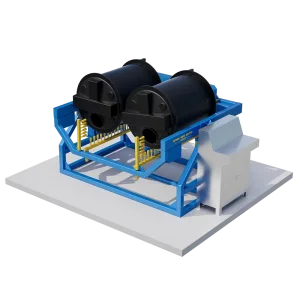
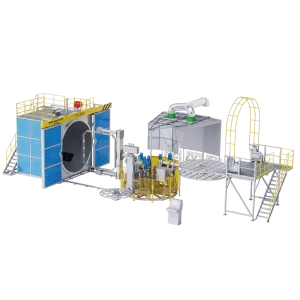
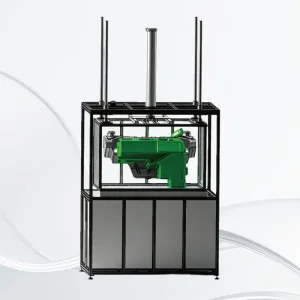
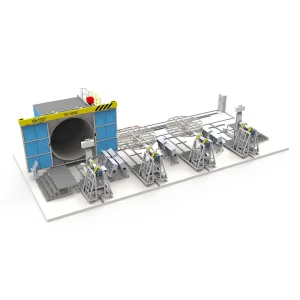
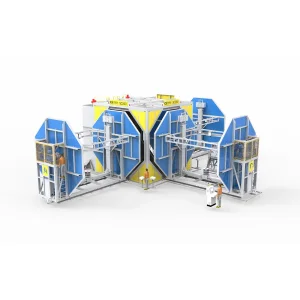
High-precision rotational molding equipment and CNC-machined tooling designed for seamless single-piece hull fabrication and heavy hollow watercraft manufacturing.
Examining the paradigm shift from traditional Fiber-Reinforced Plastic (FRP) and welded aluminum to seamless rotational molded High-Density Polyethylene (HDPE) watercraft across global marine sectors.
The global marine vessel industry is undergoing a structural transformation. For over half a century, fiberglass (FRP) and welded aluminum dominated commercial workboats, recreational tenders, and municipal rescue craft. However, these legacy materials carry inherent engineering vulnerabilities: fiberglass suffers from osmosis, delamination, and brittle fracture under impact, while aluminum requires labor-intensive welding, expensive surface primers, and remains highly susceptible to galvanic corrosion in saltwater environments.
Today, leading China molded plastic boats manufacturers and factories are leveraging advanced rotational molding (rotomolding) technology to engineer single-piece, seamless High-Density Polyethylene (HDPE) and Linear Low-Density Polyethylene (LLDPE) hulls. By heating polymer resin powders inside biaxially rotating molds, rotomolding creates hollow, stress-free hulls featuring uniform wall thickness, zero internal joints, and natural impact-absorbing elastic memory. The global market adoption of molded plastic boats is expanding rapidly at an estimated CAGR of 6.8%, driven by commercial aquaculture expansion, intense eco-tourism growth, and stringent safety mandates from international maritime authorities.
| Performance Metric | Rotomolded PE Boats | Fiberglass (FRP) Boats | Welded Aluminum Boats | Inflatable Craft (RIB) |
|---|---|---|---|---|
| Impact Resistance | Exceptional (Elastic Memory) | Brittle (Cracks & Delaminates) | Moderate (Dents & Warps) | Vulnerable to Puncture |
| Maintenance & Osmosis | Zero Osmosis / No Painting | High (Osmosis Repair / Gelcoat) | Moderate (Anode replacement) | High (Seam degradation) |
| Unsinkability & Safety | Dual-Hull Foam Core (Unsinkable) | Requires Air Cavities | Requires Flotation Foam | Multi-Chamber Air Chambers |
| Environmental & Recyclability | 100% Thermoplastic Recyclable | Non-Recyclable (Landfill) | 100% Metal Recyclable | Complex Composite Waste |
| Mass OEM Unit Cost | Low (High Automation) | High (Manual Layup Labor) | High (Manual Welding) | Moderate |
How Chinese rotomolding factories are advancing material compounding, multi-layer foam sandwich structures, and automated CNC tooling to build larger, lighter, and indestructible marine vessels.
Modern plastic boat manufacturing utilizes triple-layer co-extrusion and sequential rotomolding. The outer shell consists of high-density UV-stabilized virgin PE for maximum puncture resistance, followed by a middle layer of expanding closed-cell Polyurethane (PU) foam, and an inner skin of tough polyethylene.
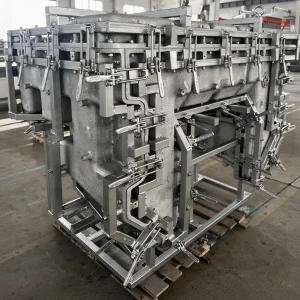
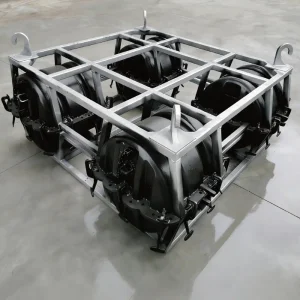
Transitioning away from hand-fabricated steel sheet molds, leading Chinese factories employ giant 5-axis CNC machining centers to carve mold cavities directly out of high-grade cast aluminum blocks. This yields flawless surface finishes and tight dimensional tolerances.
Standard PE degrades under intense ocean UV radiation. Chinese resin compounding centers integrate Hindered Amine Light Stabilizers (HALS) and nano-titanium dioxide additives into virgin LLDPE/HDPE, raising UV resistance from standard UV8 to extreme UV24 rating.
Rotomolded plastic boats are engineered to perform across diverse operational environments—from harsh industrial marine aquaculture to high-stakes disaster rescue missions.
Offshore fish farming, oyster bed harvesting, and coastal mussel cultivation require workboats that can withstand constant collision against steel cage frames, concrete docks, and jagged rocky shorelines without denting or puncturing.
During urban flooding or hurricane relief operations, rescue craft must navigate debris-strewn waters containing submerged fences, concrete rebar, vehicle wreckage, and shallow obstacles.
Recreational watersports rentals, electric eco-tourist launches, and specialized sit-on-top fishing kayaks demand high stability, aesthetic colorways, and ergonomic interior layouts.
Industrial harbor maintenance, environmental water sampling, oil spill response containment, and dredging support require ultra-durable utility tenders.
Why international OEM buyers, marine distributors, and government agencies partner with Ningbo and Zhejiang rotomolding clusters to achieve unmatched scale and speed-to-market.
The global dominance of China molded plastic boats manufacturers and factories is anchored in vertically integrated industrial ecosystems located around major maritime hubs such as Ningbo and Taizhou. Unlike regional competitors who rely on outsourced tooling or imported masterbatch resins, leading Chinese manufacturers control the entire value chain—from 3D CAD hydrodynamic design, finite element analysis (FEA), in-house CNC mold casting, polymer compounding, to final automated rotomolding assembly.
Proximity to world-class petrochemical refineries (Sinopec, Sabic, ExxonMobil Ningbo) ensures direct access to top-grade prime LLDPE/HDPE resins. In-house pulverizing facilities grind raw pellets into 35-mesh micro-powder for void-free mold flow.
Utilizing dedicated 5-axis CNC gantry mills, Chinese toolmakers reduce custom boat mold lead times from industry standard 12 weeks down to just 25–35 days. This enables rapid prototype testing and agile product launches for international OEMs.
Export-oriented factories engineer boat dimensions specifically tailored to standard 40ft High Cube (40HC) ocean containers. Nestable hull designs and knock-down (CKD) accessory kits maximize shipping density and slash unit freight costs.
Rigorous international certification compliance ensures smooth customs clearance, regulatory approval, and operator safety across North America, Europe, and Asia-Pacific markets.
Navigating global compliance is critical for commercial import. Leading Chinese factories manufacture molded plastic watercraft under strict ISO 9001:2015 quality management systems and hold full international marine compliance:
Before leaving the factory floor, every batch of rotomolded hulls undergoes standardized non-destructive and destructive quality control inspections:
Expert answers to common engineering, OEM customization, and bulk procurement inquiries for molded plastic boats.
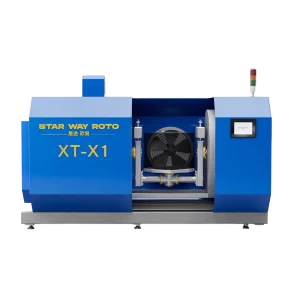
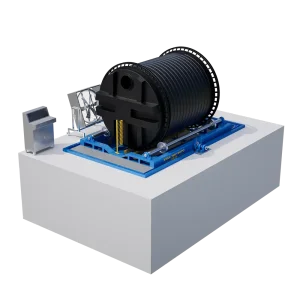
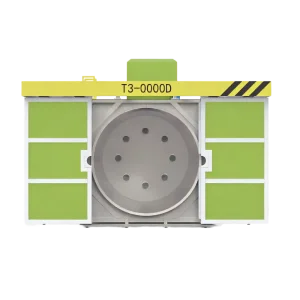
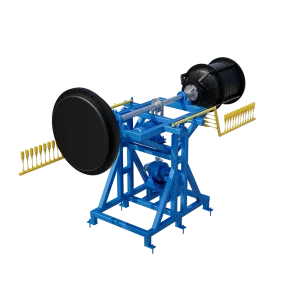
Complete factory manufacturing infrastructure including Carousel, Shuttle, and U-Arm machines engineered for maximum throughput and consistent wall thickness control.