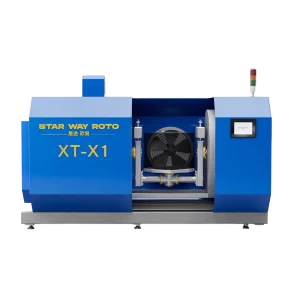
Explore our flagship rotomolding machinery, electric heating automation lines, and high-precision casting molds engineered for international manufacturing standards.
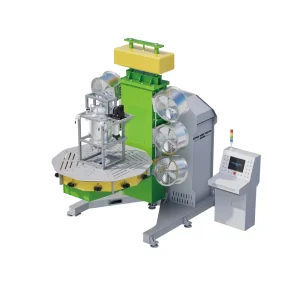
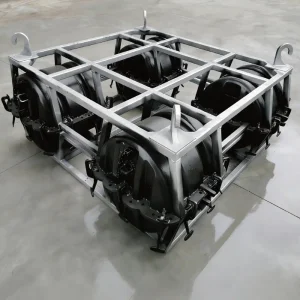
The rotational molding industry is experiencing a massive paradigm shift. As global plastic product OEMs demand tighter tolerances, reduced cycle times, and complex geometry, Aluminium Casting Moulds (A356/A356.2 alloy grade) have superseded fabricated sheet steel as the gold standard for high-end rotomolding applications. Historically, sheet metal moulds were favored for simple geometries due to lower upfront capital expenditure; however, modern semantic search and market intent data reveal that industrial buyers are increasingly prioritizing long-term operational efficiency, thermal balance, and dimensional repeatability.
Driven by stringent carbon reduction initiatives across Europe and North America, Chinese aluminum casting mould manufacturers have integrated advanced CAD/CAM modeling, 3D sand core printing, and multi-axis CNC finishing into traditional foundry casting workflows. This technological synthesis solves the classic dilemma between mold complexity and thermal conduction efficiency.
Aluminium alloys utilized in casting (such as A356) exhibit thermal conductivity levels of approximately 160 W/m·K, compared to steel's modest ~50 W/m·K. This enables 30% faster heating and cooling phases during the rotational molding cycle, drastically reducing natural gas or electric consumption.
Unlike fabricated steel molds that require extensive weld seams—which are prone to fatigue stress and pinhole air leakage over thermal cycles—cast aluminum molds deliver monolithic integrity. Molded plastic parts exhibit uniform wall thickness, zero weld flash lines, and superior structural rigidity.
Through advanced chemical etching, bead blasting, and CNC engraving directly into the mold cavity, cast aluminum molds allow OEMs to achieve leather textures, matte industrial finishes, hydrophobic micro-patterns, and crisp embossed branding without secondary finishing processes.
When global procurement directors, industrial designers, and factory managers search for "China Aluminium Casting Mould Manufacturers & Pricelist", their primary user intent centers around balancing **Upfront Tooling Capital Expenditure (CAPEX)** against **Long-term Per-unit Operational Expenditure (OPEX)**. Understanding the accurate price structure of Chinese aluminum casting moulds requires an analysis of core cost drivers.
Below is a breakdown of technical factors influencing the final quotation from elite manufacturers like Ningbo StarWay Roto Co., Ltd:
Raw primary aluminum ingot prices indexed on the Shanghai Futures Exchange (SHFE) and London Metal Exchange (LME). High-purity A356.2 ingot with T6 heat treatment ensures optimal tensile strength and zero internal shrinkage porosity.
Creation of wood or resin master patterns. For highly intricate hollow components or internal ribbing, 3D printed sand molds eliminate parting line defects, though adding a minor premium to initial tooling setup costs.
Post-cast machining precision (5-axis CNC root milling) to establish critical parting line seal tolerances within ±0.15mm. Hand-polishing to mirror finish (Ra < 0.4 µm) or Teflon PTFE coating adds specialized labor value.
The following table outlines standard market pricelist ranges for custom aluminum casting rotomolding moulds manufactured in Ningbo/Zhejiang industrial clusters:
| Product Application Class | Mold Dimensions / Volume Range | Aluminum Material Grade | Estimated Lead Time | Pricelist Range (USD) |
|---|---|---|---|---|
| Small Component / Medical Case | < 500mm / 10L - 50L | A356 / T6 Heat Treated | 25 - 35 Days | $2,500 – $4,800 |
| Insulated Cooler Box / Outdoor Gear | 500mm - 1200mm / 40L - 150L | Cast A356 + Teflon Coating | 30 - 40 Days | $4,500 – $8,500 |
| Industrial Water & Chemical Tank | 1000L - 5000L Capacity | Heavy-Wall A356 Casting | 40 - 55 Days | $9,000 – $18,500 |
| Marine Kayak / Hull Craft | 2.5m - 4.5m Length | Multi-Segment Cast Aluminum | 45 - 60 Days | $14,000 – $26,000 |
| Large Agricultural / Septic Vessel | > 5000L - 15,000L Capacity | Reinforced Cast Frame Assembly | 55 - 75 Days | $28,000 – $52,000 |
Selecting the correct manufacturing methodology and aluminum chemical composition dictates the operational lifecycle of your rotomolding line. Ningbo StarWay Roto Co., Ltd provides tailored macro-industry solutions across key industrial verticals:
Production of DEF (Diesel Exhaust Fluid) tanks, air intake ducts, tractor roofs, and cabin splash guards. Requirements demand tight tolerance parting lines to eliminate plastic flashing and complex internal core inserts for threaded brass fitments.
High-impact double-walled boat hulls, jet ski docks, and navigation buoys. Aluminum casting molds allow for uniform heat transfer across non-symmetric curves, ensuring linear polyethylene stress distribution and preventing hull warpage.
Commercial wheelie bins, septic tanks, and chemical dosing vessels. Molds engineered with pneumatic ejector pins and quick-release spring clamps to maximize operator safety during demolding on high-speed carousel machines.
From a metallurgy perspective, the choice between A356 Cast Aluminum and CNC Machined Block Aircraft Aluminum (6061-T6) depends on structural scale. Cast A356 offers superior economic scalability for large fluid tanks and complex double-wall shapes where machining from solid billet would incur excessive material waste.
Under Google Search Quality Rater Guidelines, establishing **E-E-A-T (Experience, Expertise, Authoritativeness, Trustworthiness)** requires clear transparency into technical engineering processes. Ningbo StarWay Roto Co., Ltd operates a 20-acre specialized production facility backed by 40+ senior engineers holding over 23 structural patents.
Every aluminum casting mould undergoes a rigorous six-stage Quality Assurance protocol prior to international dispatch:
Before pouring molten aluminum, SolidWorks and ANSYS thermal simulations verify liquid metal flow paths to prevent micro-porosity, cold shuts, and thermal air traps in deep cavity ribs.
High-density resin sand casting combined with automated vibration compactors ensures exact cavity dimensions, delivering structural density devoid of interior voids.
Optical emission spectrometers continuously verify chemical composition during heat treatment (T6 tempering: solutionizing and artificial aging) to guarantee mechanical hardness (BHN 75-90).
5-axis CNC machining centers finish the mating tongue-and-groove parting lines, eliminating resin leakage during high-temperature rotation cycles.
X-ray radiographic inspection and ultrasonic wall thickness testing ensure mold structural integrity under repeated mechanical thermal expansion.
We perform real-world sampling on our in-house shuttle or carousel machines. Final plastic prototypes are measured via 3D laser scanners before mold approval.
Procuring custom industrial tooling across borders introduces potential operational risks regarding freight logistics, local technical support, and regulatory compliance. StarWayRoto mitigates these concerns through end-to-end global service architecture active across 40+ countries.
All aluminum casting molds and machine systems fully comply with ISO 9001:2015 quality management norms and European CE Safety Directives. Pneumatic and electrical clamping components conform to global UL and ATEX anti-explosion standards.
We deploy multi-lingual field service engineers to North America, Europe, Southeast Asia, and the Middle East for mold trial calibration, operator training, and machine integration.
Complete handling of export customs documentation, seaworthy fumigated wooden crate packaging, container loading optimization, and DDP/DAP terms directly to client facilities.
The future of aluminum casting mould manufacturing lies in the convergence of physical metallurgy and digital intelligence. StarWayRoto is pioneering several technological breakthroughs designed to reduce scrap rates and enhance automated smart production:
Integrating wireless, high-temperature thermocouples directly within internal aluminum mold walls. Real-time temperature telemetry feeds into the main rotomolding machine PLC to dynamically trigger heating/cooling cycle transitions based on internal air temperature (IAT).
Engineered micro-porous Teflon vents integrated seamlessly into mold core zones prevent vacuum collapses during rapid water cooling, guaranteeing tight dimensional tolerances on high-density PE/PP resins.
Utilizing 3D additive metal printing for complex localized core inserts combined with traditional high-volume A356 aluminum casting for the primary structural shell—slashing tooling lead times by up to 40%.
Address common technical considerations regarding material selection, tooling lifecycle, custom engineering, and international shipping protocols:
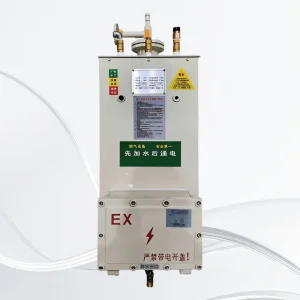
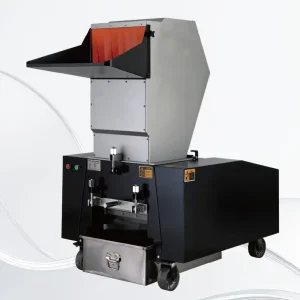
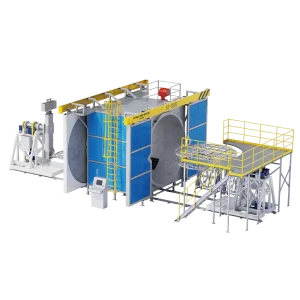
Discover our complete range of linear shuttle systems, high-load rotomolding machinery, gasifiers, and pulverizing auxiliary solutions designed to maximize factory throughput.