
Engineered for industrial-scale water tank production. High thermal efficiency, heavy-duty mechanical payloads, and seamless compliance with European and global safety standards.
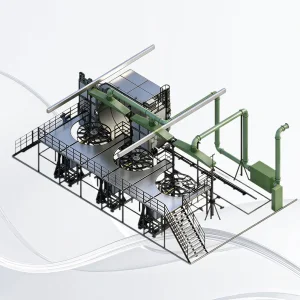
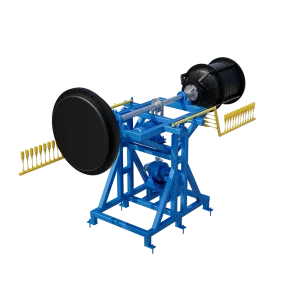
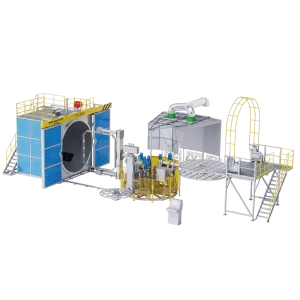
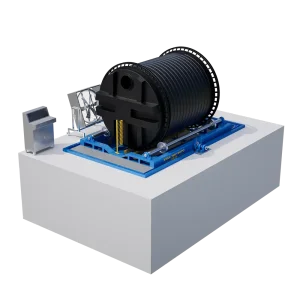
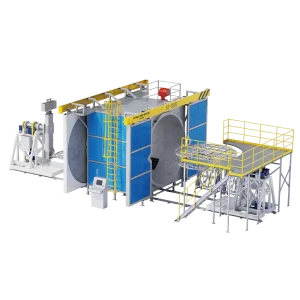
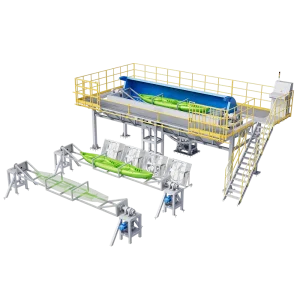
Procuring rotational molding tooling requires balancing upfront capital expenditure (CAPEX) with operational cycle-time efficiency (OPEX). Below is an engineering cost matrix reflecting standard industrial configurations.
| Tank Capacity (Liters) | Mould Architecture | Alloy / Steel Grade | Thermal Cycle Efficiency | Wall Thickness Uniformity | Typical FOB Price Range (USD) | Compliance Standards |
|---|---|---|---|---|---|---|
| 500L – 1,000L Vertical Potable | Cast Aluminum / CNC Machined | A356 Al-Si Alloy | High (14–18 min) | ± 0.4 mm | $4,200 – $7,500 | CE, EN ISO 12100, FDA/WRAS Resin |
| 2,000L – 3,000L Standard Storage | Fabricated Sheet Steel / Cast Dome | Q235B / 4mm Structural | Moderate (20–25 min) | ± 0.8 mm | $6,800 – $11,500 | CE 2006/42/EC, Hydrostatic Proof |
| 5,000L Agricultural / Cistern | Precision CNC Cast Aluminum | A356 T6 Treated | High (22–27 min) | ± 0.5 mm | $12,000 – $18,500 | CE, EN 13341 Heavy-Duty Type |
| 10,000L Industrial Chemical | Heavy Fabricated Steel + Internal Polish | SS304 Contact / Mild Steel Shell | Standard (32–38 min) | ± 1.0 mm | $19,500 – $28,000 | CE, PED 2014/68/EU Sound Engineering |
| 15,000L – 25,000L Mega Tank | Segmented Bolted Steel Fabricated | Boiler Plate Q345R / St52-3 | Custom Rock & Roll Burner | ± 1.2 mm | $32,000 – $48,000+ | CE Machinery Directive, ISO 9001:2015 |
Cost Drivers in Water Tank Mould Fabrication: The commercial valuation of a water tank rotational mould is dictated by three primary factors: volumetric geometry complexity (e.g., reinforcement ribs, threaded inlet/outlet inserts, level indicator recesses), metallurgical composition, and the chosen manufacturing technique. While fabricated sheet steel moulds offer a significantly lower entry barrier for large-volume storage tanks (5,000L to 30,000L), cast aluminum A356 moulds yield unmatched thermal conductivity (approx. 160 W/m·K compared to 50 W/m·K for mild steel), cutting oven dwell times by up to 25% and mitigating the risk of polymer thermal degradation.
Furthermore, tooling investment must account for parting line engineering. A precision CNC-cut tongue-and-groove parting flange prevents resin flash, eliminating labor-intensive post-demolding trimming and preserving the mechanical structural integrity of the tank rim under circumferential hydrostatic hoop stress.
Navigating the European Union single market mandates rigorous conformity assessments. Discover how StarWay Roto embeds CE compliance from initial 3D finite element analysis (FEA) to factory validation.
All rotational machines and automated spider clamping systems meet Annex I Essential Health and Safety Requirements. Dual emergency circuit relays, Category 4 optical light curtains, and mechanical fail-safe arm locks guarantee operator protection during mold loading and rotation.
While static water storage tanks typically operate under atmospheric pressure, dynamic transport tanks and sealed pressure-rated auxiliary degassing vessels comply with PED 2014/68/EU Sound Engineering Practice (SEP) or Category I/II verification, preventing vacuum collapse or over-pressurization.
Mould cavity mirror finishes (SPI A2/A3) eliminate micro-porosities where bacteria nest. Mould release coatings are formulated in complete accordance with FDA 21 CFR 177.1520, EU Regulation No 10/2011, and WRAS (Water Regulations Approval Scheme) guidelines for drinking water safety.
The Criticality of Venting Architecture in CE Tooling: In rotomolding, air inside the sealed mould expands dramatically as chamber temperatures climb toward 200°C–280°C. Without properly engineered venting systems, internal pressurization generates microscopic pinholes, wall thinning at tight internal radii, and severe mold warpage. StarWay Roto integrates dual-stage PTFE breathable vent tubes packed with high-temperature refractory fibers. This allows volatilized polymer gases to exhaust safely without allowing virgin LLDPE/HDPE melt powder to enter the tube, guaranteeing dimensional consistency complying with EN ISO 9001 and ISO 14001 environmental directives.
Rooted in Ningbo—the world's premier plastics machinery and precision tooling hub—Ningbo StarWay Roto leverages complete vertical integration to supply global Tier-1 industrial buyers.
Unlike tooling brokers who outsource casting, StarWay operates dedicated aluminum alloy foundries and large-bed 5-axis CNC machining gantries (up to 12 meters stroke). This closed loop guarantees zero metal impurities, structural density, and rapid pattern-to-tool cycles.
European and North American tooling shops typically quote 16 to 26 weeks for 10,000L water tank moulds. Leveraging localized raw material supply networks and parallel manufacturing workflows, StarWay delivers certified, test-pulled moulds in just 6 to 8 weeks.
From rheological resin shrinkage simulation to CNC mold cutting, machine arm mounting spider frames, pneumatic ejector installations, and factory test shots (FAT), our clients receive production-ready tooling that slots immediately into ongoing factory operations.
Metallurgical Purity and Thermal Fatigue Resistance: Rotational moulds undergo severe cyclic thermal loading, fluctuating from room ambient up to 300°C and back to 40°C during water-mist quenching hundreds of times per month. Inferior aluminum castings exhibit internal micro-porosity and grain boundary coarsening, resulting in premature stress-crack failure along deep rib intersections. StarWay utilizes premium virgin A356.2 ingots subjected to rotary degassing and titanium-boron grain refinement, achieving tensile strengths exceeding 220 MPa and elongation rates that absorb repetitive thermal expansion without geometric distortion.
Global industrial enterprises operate under stringent procurement protocols. Our quality engineering process mitigates technical risk at every stage of mold development.
Rotomolding polyethylene exhibits volumetric shrinkage ranging between 2.5% and 3.5%, depending on resin density (MFI 3.5 to 5.0). We model exact resin crystallization kinetics, applying differential shrinkage factors along the tank base, threaded neck, and vertical wall ribs to ensure tight finished part dimensional stability.
Before export packaging, every mould undergoes rigorous Factory Acceptance Testing: laser coordinate measuring machine (CMM) verification of cavity dimensions, clamping mechanism torque audits, pneumatic seal pressure drop checks, and actual test shot molding on our in-house carousel machines.
StarWay field engineers deploy on-site to assist overseas clients with machine arm balancing, burner angle calibration, and Peak Internal Air Temperature (PIAT) curve profiling, ensuring your operators achieve optimal part curing, zero bubble entrapment, and targeted cycle times immediately.
The rotational molding industry is experiencing an unprecedented transition toward energy efficiency, digital process control, and multi-layer material engineering.
Modern water storage demands 3-layer and 4-layer tank structures: a UV-resistant outer barrier layer, a foamed insulating core for thermal preservation, and an antimicrobial food-grade inner layer. Our moulds feature engineered thermal release profiles compatible with automated multi-drop drop-box systems.
Replacing traditional fossil-fueled hot-air convection ovens, electrically heated moulds feature embedded ceramic resistive heating elements directly on the exterior mold surface. This breakthrough cuts thermal energy consumption by 30% to 45% and eliminates greenhouse gas emissions on the production floor.
Precision rotomolding relies on real-time Peak Internal Air Temperature (PIAT) diagnostics. StarWay integrates wireless radio-telemetry thermocouple transmitters directly into the mould spider arm, giving plant managers live dashboards of polymer sintering, fusion, and crystal solidification phases.
Water storage requirements differ dramatically across global geographical climates. We engineer customized tooling topologies to satisfy specific localized operational environments.
Designed for high UV index environments where ambient temperatures exceed 50°C. Moulds feature deep circumferential stiffening corrugations that maintain vertical column stiffness when tanks are filled with high-temperature ground water, preventing sidewall bulging and catastrophic rupture.
Underground installations must resist intense external soil lateral pressure and groundwater buoyancy uplift. StarWay engineers heavy-ribbed toroidal and cylindrical moulds engineered according to EN 12566 standards, ensuring tanks withstand backfill compaction without structural collapse.
Engineered for high-density liquids (specific gravity up to 1.9 SG, such as sulfuric acid and sodium hypochlorite). Mould designs incorporate thickened radiused transitions, reinforced flanged nozzles, and specialized high-grade steel linings resistant to aggressive chemical attack.
Authoritative answers to critical procurement, engineering, and manufacturing questions gathered from international technical audits.
Complete auxiliary ecosystems, precision cast aluminum tooling, and laboratory test equipment to ensure zero-defect rotational production.
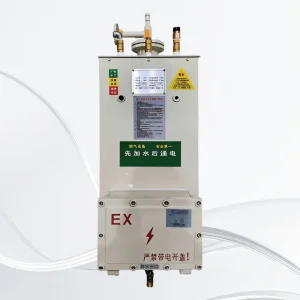
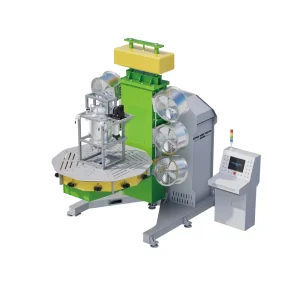
To receive a rapid, engineering-validated quotation for CE-certified water tank moulds within 24 hours, ensure your technical dossier includes the following core operational parameters.
Submitting precise technical specifications expedites finite element simulation, CNC path generation, and exact tooling quote generation without iterative revisions.