
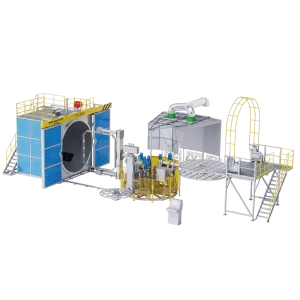
Understanding polymer thermomechanics, biaxial rotation kinetics, and cavity heat transfer optimization in modern plastic processing.
Rotational molding (popularly known as Roto Molding or rotomolding) is a high-temperature, low-pressure thermoplastic process utilizing biaxial rotation to produce hollow, seamless, stress-free single-piece plastic structures. Unlike injection molding or blow molding, which rely on extreme hydraulic pressure to force molten polymer into a cavity, rotational molding distributes micro-ground thermoplastic powder inside a heated mold purely through thermal conduction and gravitational flow along dual orthogonal axes.
The mold assembly rotates simultaneously around a primary major axis and a secondary minor axis at differential speed ratios (typically 4:1 to 1:1). Rotation speeds remain low (4 to 20 RPM) to ensure centrifugal forces do not exceed gravitational force, facilitating smooth powder tumbling over heating surfaces.
As ambient oven temperatures reach 260°C to 380°C (500°F–715°F), the inner mold wall passes the polymer's melting point. Micro-granules of Linear Low-Density Polyethylene (LLDPE), High-Density Polyethylene (HDPE), or Polypropylene (PP) stick to the metal wall, fusing into a homogenous bubble-free melt layer.
After complete polymer consolidation, the rotating mold moves to a cooling chamber where forced air and high-dispersion water mist cool the plastic below its crystallization temperature. Precise temperature gradients prevent internal stress, warpage, and shrinkage deformation.
Modern rotomolding factories monitor Internal Air Temperature (IAT) in real-time. Key phase transitions include: Phase 1 (Powder Heating & Dry Tumbling), Phase 2 (Initial Polymer Sintering at ~120°C IAT), Phase 3 (Complete Bubble Removal & Homogenization at 180°C–210°C IAT), and Phase 4 (Controlled Recrystallization during Cooling). Monitoring IAT guarantees stress-free wall consistency without polymer degradation.
Navigating European safety mandates, electrical security, pressure vessel integrity, and risk assessment standards for rotomolding plant equipment.
Purchasing machinery from international suppliers requires comprehensive verification of safety and environmental compliance. CE Certification (Conformité Européenne) is mandatory for rotomolding machines exported to the European Economic Area (EEA), signaling compliance with strict EU safety, health, and environmental directives.
| EU Directive | Standard Reference | Engineering Integration Requirement | Verification Method |
|---|---|---|---|
| Machinery Directive 2006/42/EC | EN ISO 12100:2010 | Dual-circuit emergency stops, interlocked physical safety gates, anti-crush perimeter sensors on moving arms. | Third-party Notified Body audit & Risk Assessment documentation. |
| Low Voltage Directive (LVD) 2014/35/EU | EN 60204-1:2018 | IP54 industrial electrical enclosures, short-circuit protection, standardized wiring color-coding, surge arrestors. | High-voltage insulation testing, ground continuity verification. |
| EMC Directive 2014/30/EU | EN 61000-6-2 / EN 61000-6-4 | Shielded VFD motor cables, line filters on power inputs to prevent electromagnetic interference with factory sensors. | Laboratory radiated emission and immunity frequency testing. |
| Pressure Equipment Directive (PED) 2014/68/EU | EN 13445 / ASME Sec VIII | Overpressure relief valves, certified air tanks, and expansion joints for gas-fired or pneumatic demolding systems. | Hydrostatic pressure testing & non-destructive weld testing (NDT). |
CE certified rotomolding machines manufactured in top-tier Chinese factories undergo rigorous Factory Acceptance Testing (FAT) before shipment. This involves thermal imaging of oven insulation to eliminate thermal leakage, acoustic vibration analysis on primary drive gearboxes, and emergency stop reaction timing under maximum arm load capacity.
Quantifiable advantages delivered by modern electric heating, automated carousel, and high-load shuttle rotomolding plants.
Unpacking the structural economics, local supplier integration, and direct factory pricing structures for international procurement managers.
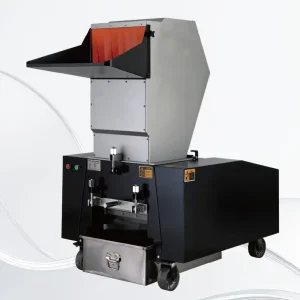
Global plastic manufacturers increasingly source rotomolding machinery, CNC aluminum molds, and auxiliary pulverizing equipment from China. China's industrial clusters (notably in Ningbo, Zhejiang, and Jiangsu) offer a consolidated ecosystem where high-grade structural steel, precision CNC milling, Siemens/Schneider electrical components, and industrial gas burner systems are localized within a 50-kilometer radius.
Chinese rotomolding equipment offers a 30% to 55% CapEx savings compared to North American or Western European equivalents without sacrificing component quality. Leading factories integrate international brands such as Siemens PLC touchscreens, SEW Eurodrive gear motors, Honeywell burners, and SKF bearings into CE-compliant frames.
Chinese suppliers excel in rapid prototype-to-tooling workflows. Utilizing 5-axis CNC high-speed milling machines, cast aluminum (A356) and fabricated steel sheet molds are manufactured in 30 to 45 days, compared to the 12 to 16 week lead times standard in European tooling shops.
When requesting an OEM or ODM factory quote for rotomolding production lines, international buyers should analyze the following cost components:
Comparing Shuttle, Carousel, Rock & Roll, and Electric Heating technologies for industrial applications.
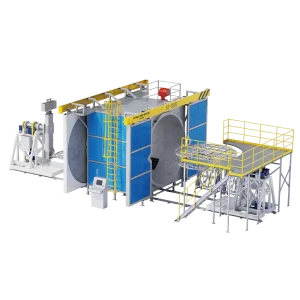
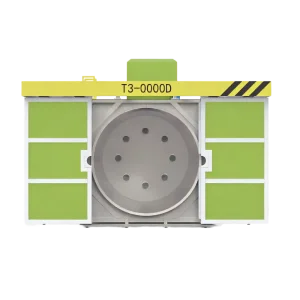
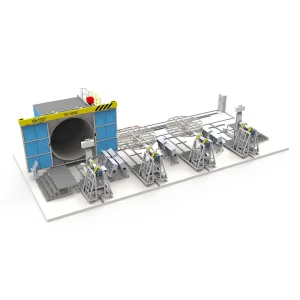
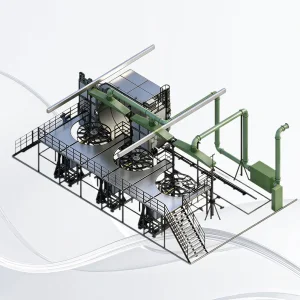
Featuring a central heating oven with two independent carts moving on parallel tracks. While one cart heats inside the oven chamber, the second cart undergoes cooling and demolding outside. Perfect for oversized industrial tanks, septic systems, and varied cycle times.
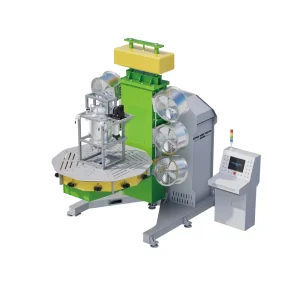
Configured with 3 or 4 arms rotating sequentially through heating, cooling, and loading/unloading stations. Independent arm carousel systems allow each arm to spend different durations in the oven, optimizing production efficiency for automated assembly lines.
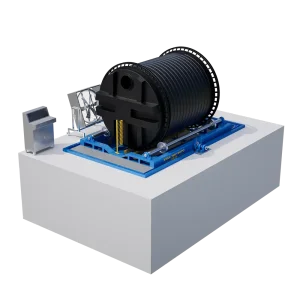
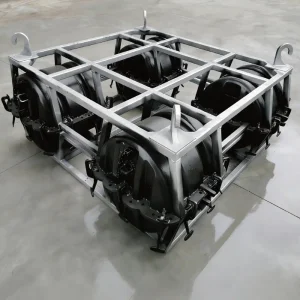
Designed specifically for long, linear hollow items such as steel-lined plastic chemical storage tanks, kayaks, fuel containers, and pipes. The mold rotates 360° continuously on its longitudinal axis while rocking back and forth horizontally at ±45° angles.
With global net-zero regulations and carbon tax implementations, electric heating rotomolding machines represent the fastest-growing sector. Electric heating ovens eliminate combustion exhaust fumes, reduce environmental noise below 65 dB, provide precise multi-zone PID thermal control (±1°C resolution), and reduce factory heat emissions by over 40% compared to open-flame systems.
Ensuring seamless operational integration, remote IoT diagnosis, and localized regulatory approval across international production sites.
Acquiring heavy industrial machinery requires comprehensive post-sale infrastructure. High-performing OEM suppliers provide end-to-end localization support designed to bridge geographical, electrical, and linguistic barriers during installation and commissioning.
Systems are custom-wired to match regional power grids, whether 380V/50Hz (Europe/Asia), 480V/60Hz (North America), or 220V 3-Phase (Latin America), complete with UL/CSA or CE marked switchgear.
Siemens HMI interfaces are pre-programmed with multi-language switching (English, German, Spanish, French, Arabic, Russian) with customizable recipe storage for up to 500 mold profiles.
Integrated VPN routers allow factory engineers to perform real-time firmware updates, diagnostic error code tracking, and thermal sensor calibration remotely from China headquarters within minutes.
From chemical-resistant lined steel storage tanks to heavy agricultural equipment and consumer recreation.
Steel-lined plastic tanks engineered on Rock & Roll machines feature a seamless inner polyethylene layer molecularly bonded to outer carbon steel shells. These deliver zero-leakage containment for concentrated acids (H2SO4, HCl), sodium hypochlorite, and industrial wastewater.
Large-scale Shuttle machines produce heavy-duty agricultural chemical sprayers, tractor diesel fuel tanks, 10,000L rain harvesting vats, and underground double-wall septic filtration tanks resistant to soil acidity and mechanical impact.
Automated Carousel systems facilitate rapid production of UV-stabilized LLDPE kayaks, dock floats, highway traffic safety barriers, and insulated roto-molded cooler boxes capable of retaining ice for over 7 days.
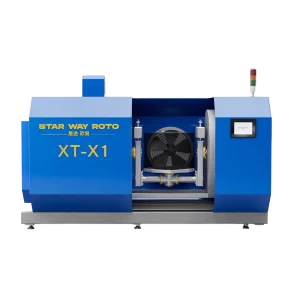
Specialized scaled Lab Rotomolding Machines enable material science laboratories and resin manufacturers to test experimental PE, PP, and Polyamide (PA12) formulations, MFI parameters, and pigment dispersion before full-scale commercial manufacturing.
Smart automation, recycled polymer processing (PCR/PIR), and zero-emission thermal tech.
The rotational molding sector is experiencing an unprecedented technical evolution driven by Industry 4.0 integration, strict environmental ESG regulations, and smart materials science. Key innovations shaping the next decade include:
Expert responses addressing CE compliance, factory pricing, thermal efficiency, mold lead times, and operational requirements.
A legitimate CE compliant machine is supplied with a formal EU Declaration of Conformity (DoC) signed by the manufacturer, a comprehensive Risk Assessment file according to EN ISO 12100, electrical test certificates under EN 60204-1, and an official Operator Manual bearing the CE mark. Third-party Notified Body certificates (e.g., TÜV, SGS) are provided for high-risk pressure vessel assemblies.
While natural gas or LPG often has a lower raw energy cost per kilowatt-hour in certain regions, electric heating machines achieve up to 92% thermal transfer efficiency directly to the mold versus 35-45% efficiency in traditional open air circulation gas ovens. Furthermore, electric systems eliminate gas line infrastructure costs, require zero burner maintenance, reduce factory insurance premiums, and comply effortlessly with zero-emission municipal codes.
Standard lead times for shuttle or carousel machines range from 45 to 60 business days post engineering design approval. Precision CNC aluminum molds require 35 to 45 days, while complex fabricated steel sheet molds for steel-lined tanks require approximately 30 to 40 days, including initial trial sampling (T1 mold testing).
Rock and Roll rotomolding machines are optimized for narrow, long cylindrical geometries. They utilize a single major axis rotation paired with a ±45° rocking motion, requiring a significantly smaller oven envelope and lower floor area footprint than a shuttle machine. This results in up to 40% lower gas or electrical energy consumption when lining heavy carbon steel tanks with chemical-resistant PE.
While Linear Low-Density Polyethylene (LLDPE) and High-Density Polyethylene (HDPE) represent ~85% of market volume, advanced machines process Cross-Linked Polyethylene (XLPE for chemical resistance), Polypropylene (PP for elevated temperature rigidity), Polyamide/Nylon (PA6/PA12 for automotive fuel permeability resistance), and Fluoropolymers (PVDF) for ultra-pure fluid handling.
Leading Chinese exporters conduct comprehensive Live Tele-FAT procedures. This includes high-definition live video streaming of full dry-run machine cycles, thermal camera temperature mapping, arm load deflection testing, PLC safety interlock validation, and third-party pre-shipment inspection (SGS/Bureau Veritas) documentation.