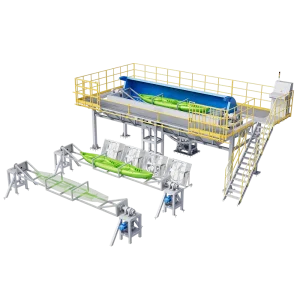
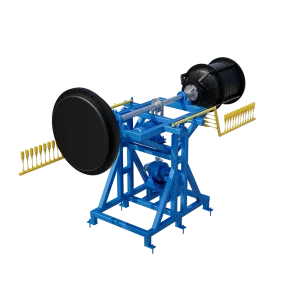
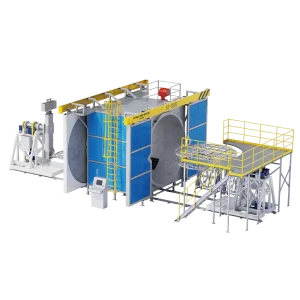
Direct factory solutions engineered for precise polymer wall distribution, extreme thermal efficiency, and zero-defect hollow body fabrication.
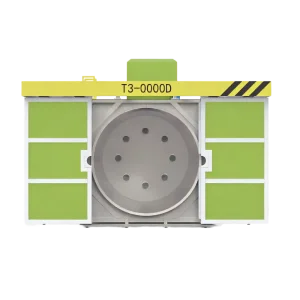
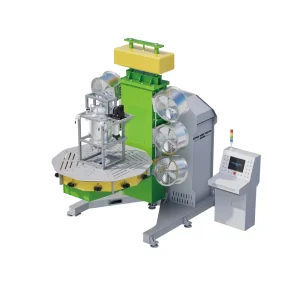
An exhaustive technical evaluation of market size trajectories, bi-axial thermodynamics, and industrial polymer processing economics.
The global market for Rotating Mold Machines (Rotomolding Equipment) has entered a pivotal transformative phase. Historically categorized as a low-shear, open-flame processing niche for rudimentary hollow containers, modern rotational molding has evolved into an advanced, scientifically governed thermoforming discipline. Driven by demanding engineering sectors—ranging from aerospace fluid delivery and subsea exploration buoys to large-scale chemical storage and automotive structural components—the demand for precision bi-axial kinematic control has reached an all-time high.
According to comprehensive industrial manufacturing indexes, the global rotomolding equipment market is projected to expand at a compound annual growth rate (CAGR) exceeding 6.2% through 2032. This growth is predominantly catalyzed by the conversion of traditional metal, fiberglass (FRP), and blow-molded assemblies into monolithic, stress-free, rotomolded thermoplastic structures that exhibit superior chemical inertness, high impact resilience, and exceptional design freedom without weld seams.
Unlike high-pressure injection molding or extrusion blow molding, rotational molding relies entirely on the gravity-assisted bi-axial rotation of a mold within a precisely regulated thermal chamber. The rotation occurs around two perpendicular axes—the primary major axis and secondary minor axis—at variable speed ratios (typically ranging from 1:1 up to 8:1 depending on mold topology).
As the thermoplastic micro-pellets or micronized powder (such as Linear Low-Density Polyethylene - LLDPE, Cross-Linked Polyethylene - XLPE, Polypropylene - PP, or Polyamide PA6/PA12) tumble across the heated internal walls of the CNC-machined or cast aluminum mold, the material transitions through endothermic glass transition, tackification, coalescence, and final bubble-free densification. Precise thermal regulation is critical: a temperature deviation of just ±5°C can cause catastrophic resin degradation or severe inner-surface pinholing.
| Polymer Process Type | Tooling CAPEX | Stress-Free Hollow Geometry | Wall Thickness Uniformity | Max Part Size Potential | Design Iteration Agility |
|---|---|---|---|---|---|
| Rotating Mold Machine (Bi-Axial) | Ultra-Low ($15k - $60k) | 100% Seamless & Stress-Free | High (Controlled via Rotation Speed) | Massive (>50,000 Liters) | Rapid (2–4 Weeks Tooling) |
| Extrusion Blow Molding (EBM) | High ($80k - $250k) | Moderate (Pinch-off lines) | Prone to Parison Sag thinning | Limited (<2,000 Liters) | Slow & Expensive |
| Injection Molding (Large Part) | Extreme ($250k - $1M+) | High residual molding stress | Uniform (Fixed by Core/Cavity) | Restricted by Clamping Tonnage | Rigid / High Modification Cost |
| Fiberglass Layup (FRP/GRP) | Low Initial Tooling | High Delamination Risk | Manual Inconsistency | Large, but labor-intensive | High VOC / Hazardous Emission |
For large hollow structures (>500L volume) or complex double-walled geometry, rotating mold machines deliver up to 70% tooling cost reductions compared to blow molding and eliminate the hazardous VOC emissions and brittle failure modes associated with fiberglass manufacturing.
Why authentic European Machinery Directive compliance is critical for enterprise safety, structural durability, and international insurance approval.
Strict compliance with EN ISO 12100 harmonized standards for comprehensive risk assessment. Mandates fail-safe interlocks on oven access doors, automated swing perimeter optical curtains, anti-rebound transmission brakes, and redundant Category 4 emergency stop circuitry.
Standardized industrial electrical engineering featuring IP55/NEMA 4 rated main control enclosures, segregated high-voltage power conduits, industrial-grade surge suppression, full phase-reversal protection, and internationally standard Schneider or Siemens componentry.
For gas-fired thermal chambers, adherence to EN 746-2 industrial thermo-processing equipment rules ensures automatic flame ionization monitoring, dual solenoid safety shut-off valves, automatic pre-purge ventilation sequences, and zero gas accumulation risk.
Combining 23+ years of dedicated machine design, deep supply chain integration, and precision Chinese engineering to maximize customer ROI.
Located in the global machining capital of Ningbo, StarWay leverages an agile 20-acre production plant with on-site heavy steel fabrication, CNC 5-axis gantry milling centers, and specialized heat-treatment ovens. This eliminates middleman markups and slashes machine build lead times by up to 45% compared to European builders.
We do not compromise on reliability. Every StarWay rotating mold machine integrates globally recognized, easily serviceable parts: German Weishaupt / Riello combustion burners, SEW-Eurodrive helical planetary gearboxes, Siemens S7-1500 PLC control suites with multi-language HMI, and Japanese NSK heavy spherical bearings.
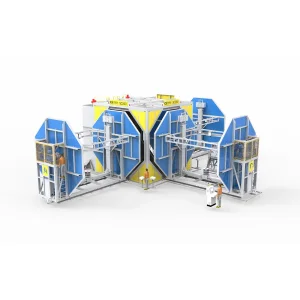
StarWay engineered and delivered the historic S2-8500—recognized as the world’s largest operational shuttle rotomolding machine, featuring an 8.5-meter spherical swing capability. This engineering milestone demonstrates our unmatched ability to design heavy-load arms exceeding 10,000 kg carrying capacity.
StarWay engineers utilize computational fluid dynamics (CFD) to design high-velocity, turbulent recirculating hot air channels. By maintaining an ultra-uniform thermal envelope with air velocities between 10–14 m/s, heating cycle durations are reduced by 18% to 26%, drastically minimizing electrical or fuel consumption per kilogram of processed plastic.
Every machine undergoes an exhaustive 72-hour continuous dry-run cycle test at our Ningbo facility prior to container packing. Thermal sensors map 32 distinct oven zones, transmission vibration amplitudes are verified below 1.2 mm/s, and full PLC automation sequences are client-approved via live HD video audit.
Explore how StarWay rotating mold equipment powers mission-critical production lines across heavy industry, transport, marine, and agriculture.
Engineered for seamless monolithic tanks up to 50,000L with zero weld-weakness points.
Impact-absorbing, anti-biofouling polyethylene hulls and offshore floating systems.
Lightweighting solutions replacing structural metal and fiberglass assemblies.
Double-wall insulated containers filled with high-density polyurethane (PU) foam.
Hygienic, anti-corrosive, non-toxic feeding, drinking, and housing apparatus.
High-safety, vibrant, UV8-stabilized commercial recreational and public works assets.
Next-generation Industry 4.0 integration, zero-carbon electric heating, and wireless telemetric in-mold diagnostics.
Traditional time-based heating recipes are giving way to Peak Internal Air Temperature (PIAT) algorithms. Wireless telemetric transmitters mounted inside rotating molds measure real-time air core temperatures, triggering the cooling phase at the precise millisecond of resin densification, eliminating both under-curing and thermal degradation.
To comply with stringent EU and North American carbon neutrality mandates, StarWay’s innovative electric-heating rotating mold machines utilize high-efficiency ceramic infrared and enclosed induction heating, cutting carbon footprints to zero when integrated with factory solar microgrids.
Advanced rotating mold machine platforms now incorporate inert gas (Nitrogen) injection purging to process high-temperature engineering plastics like PA6, PA12, and PVDF without oxidation, as well as handling up to 50% Post-Consumer Recycled (PCR) circular polyolefin resins.
A systematic framework for calculating Total Cost of Ownership (TCO), machine sizing parameters, and requesting precise turnkey quotes.
When procuring rotating mold equipment, savvy plant directors calculate TCO across a 10-year operational lifecycle rather than considering only initial capital purchase price:
By optimizing burner thermal recapture and utilizing low-friction planetary gearboxes, StarWay rotating mold systems yield annual energy savings between $18,000 and $42,000 USD per machine arm compared to legacy equipment.
To receive a comprehensive turnkey proposal within 24 hours, prepare the following engineering metrics:
Clear, authoritative answers addressing user search intents, machine configurations, cycle optimization, and installation logistics.
Heavy-payload arms, high-precision swing mechanisms, and lab-scale testing systems for complete turn-key manufacturing plants.