
Direct export configurations engineered for high-volume rotational molding operations across 40+ countries.
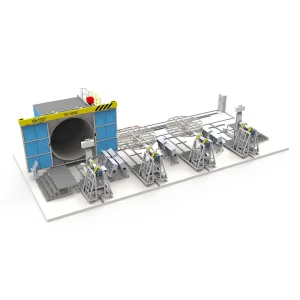
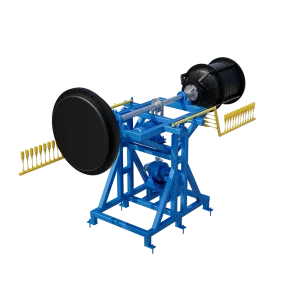
Analyzing key technological shifts transforming rotational molding tool manufacturing from traditional casting to AI-optimized smart tooling systems.
Modern rotational molding demands real-time telemetry inside the mold cavity. Next-generation tools integrate wireless thermocouple sensors directly into critical core sections to measure Peak Internal Air Temperature (PIAT).
Pioneering manufacturers are transitioning from conventional sand-cast aluminum to high-density forged block CNC machining. This guarantees zero internal porosity, superior thermal conductivity, and micron-level parting line precision.
Moving away from gas-fired hot air ovens, direct-electric rotomolding tooling uses multi-zone heating elements embedded within the mold wall structure, drastically slashing carbon footprints and heating cycle durations.
Advanced CAD/CAM platforms utilize finite element analysis (FEA) to simulate polymer flow kinetics, thermal mass distribution, and cooling-induced warpage long before steel or aluminum cutting begins.
Why leading global enterprises partner with Ningbo-based rotomolding exporters for high-precision molds and heavy industrial equipment.
Situated in the heart of China’s advanced manufacturing belt, Ningbo StarWay Roto leverages a fully integrated supply chain: from certified raw aluminum ingot foundries to 5-axis CNC machining, PTFE fluorocarbon surface coating, and automated machine assembly. This tight geographical integration delivers unparalleled lead-time efficiency and structural quality control.
| Evaluation Parameter | Western European / US Toolmakers | China Industry 4.0 Standard (StarWay Roto) | Buyer Advantage & Impact |
|---|---|---|---|
| Lead Time (Design to First Article) | 12 – 18 Weeks | 5 – 7 Weeks | 60% Faster Time-to-Market for New Products |
| Tooling Machining Technology | Manual Casting + 3-Axis Finishing | High-Precision 5-Axis CNC & FEA Thermal Balancing | Zero Internal Porosity & Seamless Parting Lines |
| Tooling & Machinery Capex | High Baseline Investment | Optimized Cost Model (35-50% Savings) | Lower Breakeven Threshold for Complex Tooling |
| Quality Assurance Standard | ISO 9001 Inspection | ISO 9001:2015 + CMM Inspection + CE Certification | Full Traceability & Compliance Assurance |
Custom rotomolding tooling and automated machinery engineered for demanding global commercial sectors.
Custom tooling engineered to produce chemical-resistant, stress-crack resistant vertical and horizontal storage tanks ranging from 500 Liters to 50,000 Liters capacity.
High-precision tooling systems for seamless insulated cooler boxes, commercial vehicle fuel tanks, DEF/AdBlue reservoirs, and air intake ducts.
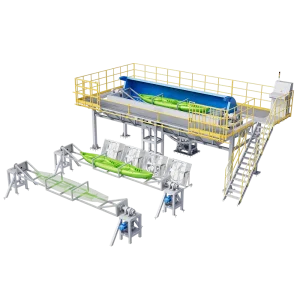
Large-format Rock & Roll oven and swing machines paired with long-span multi-piece split molds for marine vessels, kayaks, and military-grade packing trunks.
Durable, high-impact rotomolding tools for cattle troughs, feeding hoppers, liquid fertilizer containers, and modular agricultural fencing.
Strategic framework for calculating Total Cost of Ownership (TCO) when buying rotomolding tools and exporters' plant machinery.
Selecting a rotomolding tool supplier solely on initial purchase price often leads to hidden operating costs. Higher thermal mass in poorly designed cast aluminum molds requires extended heating cycles, dramatically raising gas or electricity consumption per cycle.
By utilizing FEA-guided thermal mass reduction and copper-alloy heat sinks, optimized molds shorten cycle times by 15-25%, directly lowering operational expenditure (Opex) over 10,000+ production cycles.
Complete risk mitigation through global field engineering, compliance certifications, and reliable export logistics.
All machinery and tooling systems strictly conform to European Union CE safety directives (Machinery Directive 2006/42/EC) and ISO 9001:2015 quality assurance frameworks, guaranteeing seamless customs clearance and operational safety compliance.
We provide global installation supervision, trial mold commissioning, operator safety training, and scheduled preventive maintenance across North America, Europe, the Middle East, and Southeast Asia.
Heavy-duty reinforced fumigated wooden crates, moisture-proof barrier vacuum wrapping, and custom steel transport cradles ensure pristine delivery of high-precision CNC tooling and heavy machines via sea or air freight.
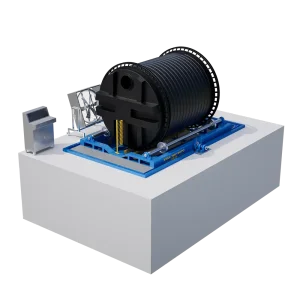
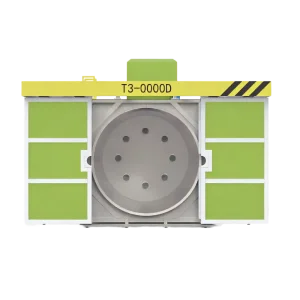
Explore our complete export series of heavy-duty ovens, shuttle machines, and custom tooling arrays.
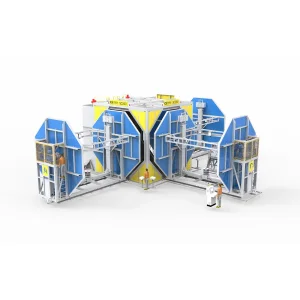
Authoritative answers to critical procurement and engineering queries regarding rotational molding tooling and equipment sourcing.
CNC machined aluminum molds are carved directly from solid forged A356/A357 alloy blocks. They exhibit zero internal porosity, superior thermal conductivity, and micron-level parting line tolerances (±0.05mm), making them ideal for complex geometries with tight tolerance requirements (e.g., fuel tanks, automotive ducting, electronic enclosures). In contrast, fabricated steel molds are welded from sheet metal, offering a lower initial capex for massive, low-complexity hollow parts such as large agricultural water storage tanks (5,000L to 30,000L).
Rotational molding is a zero-pressure thermal process where energy is required to heat both the mold metal and the internal plastic powder. Excessive tool wall thickness adds unwanted thermal mass, increasing oven heating cycle times by up to 30% and accelerating natural gas or electricity consumption. By employing FEA-driven wall thickness balancing and high-conductivity copper inserts, professional tool exporters engineer molds with optimized thermal response, directly shortening production cycle times and saving thousands of kilowatt-hours annually.
To receive an precise engineering proposal and quotation, global buyers should provide: 1) 3D CAD models (STEP/IGES format) with defined shrinkage rates for the intended resin (e.g., LLDPE, HDPE, XLPE, or PP); 2) Expected surface finish specifications (e.g., SPI mirror, sandblasted, fluorocarbon non-stick, or custom grain texture); 3) Machine mounting arm details (e.g., straight arm, drop arm, spider plate dimensions); 4) Target cycle time requirements and daily volume targets.
During the heating stage, air trapped inside the mold expands rapidly. Without adequate venting, positive pressure builds up inside the cavity, causing pinholes, surface bubbles, and parting line blow-outs. Conversely, during the cooling phase, shrinking air creates a vacuum that can distort or collapse thin-walled molded products. High-quality rotomolding tools incorporate Teflon-lined or spring-loaded dynamic vent tubes sized proportionately to the cavity volume to equalize pressure seamlessly throughout the thermal cycle.
Reliable exporters must hold ISO 9001:2015 Quality Management System certification. For electrical safety and mechanical risk mitigation, machines must carry full European CE Declaration of Conformity under the Machinery Directive 2006/42/EC and Low Voltage Directive 2014/35/EU. Furthermore, burner assemblies should utilize UL, CSA, or CE-marked industrial gas trains (e.g., Maxon or Riello systems) to ensure compliance with local factory insurance regulations.
A high-density 5-axis CNC machined aluminum mold constructed from certified forged alloy blocks can easily exceed 15,000 to 20,000 thermal cycles with minimal maintenance, as it is free from subterranean micro-voids. Standard cast aluminum molds typically offer a service life of 5,000 to 8,000 cycles before requiring seam restoration or cavity repolishing due to thermal fatigue and pinhole erosion caused by internal casting porosity.