
Precision-engineered rotational molding machinery, automated shuttle lines, energy-optimized electric ovens, and heavy-duty rock-and-roll systems designed to integrate seamlessly with powder blending units.
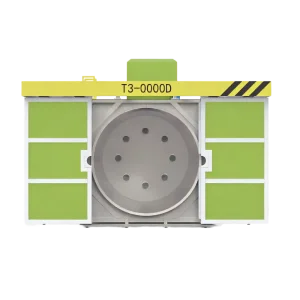
High-efficiency electric oven configuration featuring precision thermal convection and zero direct emissions for advanced cleanroom molding.
View Electrical Oven Machine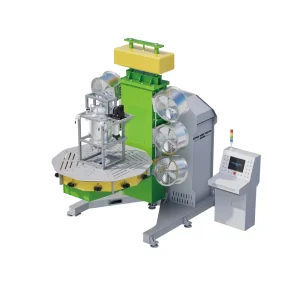
Direct-contact electric heated tooling and high-precision cast aluminum moulds engineered for rapid cycle times and wall-thickness consistency.
Explore Mould Systems
Smart factory certified electric heating rotomolding systems with intelligent recipe control and integrated thermal runaway safety monitoring.
Explore Electric Series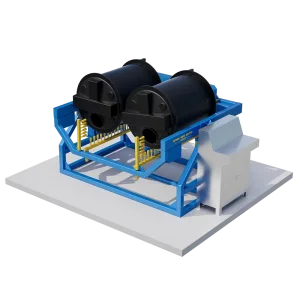
Heavy-duty open flame rock-and-roll machine tailored for extra-large hollow storage vessels, septic tanks, and horizontal cylindrical tanks.
View U-Arm Tank Machine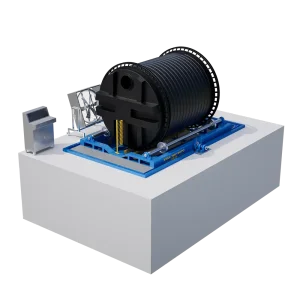
Specialized rotational lining equipment designed to apply seamless internal fluoropolymer and polyolefin coatings to industrial steel structures.
View Lining Solutions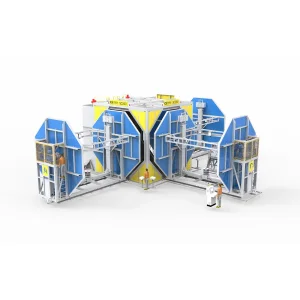
Flexible multi-station shuttle cell with independent multi-arm indexing, insulated pneumatic oven doors, and synchronized variable speed axes.
View Square Shuttle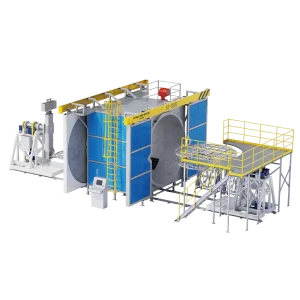
High-payload dual-station shuttle architecture designed for heavy automotive modules, complex recreational hulls, and drainage infrastructure.
Explore Shuttle Series
Reinforced mechanical rock-and-roll frame delivering stable continuous bi-directional rocking for uniform wall distribution in cylindrical designs.
View Custom Rock & RollIn the rotational molding sector, raw material preparation directly determines mechanical strength, surface finish, and thermal degradation thresholds. Historically, converters relied on pre-compounded colored pellets—a process burdened by high lead times, minimum order quantities (MOQs), and prohibitive supply chain costs.
Today’s leading rotomolding companies are establishing in-house powder processing cells comprising high-throughput cryogenic/ambient pulverizers and high-intensity turbo dry blenders (rotomolding mixers). High-speed dry blending allows processors to mix natural micro-pellets or 35–50 mesh LLDPE/HDPE powders with pigments, UV stabilizers, flame retardants, and cross-linking agents directly on the factory floor, achieving up to 28% raw material cost reduction and reducing color switchovers from weeks to minutes.
A comparative analysis between third-party melt compounding and in-house high-intensity turbo mixing for a 2,500-ton/year rotational molding operation reveals decisive operational metrics:
Unlike standard low-speed ribbon blenders that merely tumble materials, specialized high-intensity rotomolding turbo mixers utilize multi-tier peripheral blades reaching tip speeds of 25–35 m/s. This generates kinetic frictional heating ($ΔT$), causing the carrier resin surface to soften just enough for micro-pigments and anti-oxidant additives to physically adhere to the polymer particle contours without melting the bulk powder.
Selecting the right blending mechanism determines batch cycle times, bulk density consolidation, and pinhole prevention during the rotational sintering process in the oven.
Equipped with multi-tier fluidizing impellers and deflector baffles. Operates at 800–1,500 RPM. Generates an internal vortex where centrifugal shear forces coat fine pigment particles (<5 microns) onto polyethylene powder without agglomeration. Ideal for masterbatch-free dry coloring.
Integrates an upper high-speed thermal kinetic vessel with a lower horizontal slow-speed cooling chamber. After the powder reaches the target thermomechanical binding temperature (typically 50°C–65°C), it drops automatically into the cooling vessel to prevent agglomeration before storage.
Designed for fragile additives, cross-linking peroxides, and shear-sensitive mineral fillers (such as calcium carbonate or glass micro-spheres). Employs low-shear mechanical fluidization to preserve additive morphology while achieving 99.5% compositional homogeneity.
| Equipment Type | Typical Batch Volume | Impeller Peripheral Speed | Mixing Cycle Duration | Primary Resin Compatibility | Ideal Application Domain |
|---|---|---|---|---|---|
| High-Speed Kinetic Turbo Mixer | 100 L – 1,000 L | 28 – 35 m/s | 3 – 6 Minutes | LLDPE / HDPE / MDPE | Pigment dispersion, UV masterbatch dry blending |
| Heater-Cooler Blending Combination | 300/1000 L – 1000/3000 L | High: 30 m/s / Low: 4 m/s | 6 – 10 Minutes Total | Cross-linked PE / XLPE / PP | Heavy-duty chemical tanks, offshore marine floats |
| Horizontal Ploughshare Blender | 500 L – 5,000 L | 12 – 18 m/s | 8 – 15 Minutes | PA6 / PA12 / Reinforced PE | Mineral-filled automotive ducts, conductive compounds |
| Multi-Axis Tumbling Batch Mixer | 200 L – 2,000 L | 1.5 – 3 m/s | 15 – 25 Minutes | Fluoropolymers / PVDF | Corrosive chemical liners, medical-grade components |
How world-class rotomolding operations deploy precision mixer systems across specialized manufacturing verticals.
Requires complete, streak-free carbon black or UV-8/UV-15 stabilizer integration into 35-mesh LLDPE. Eliminates localized stress cracking caused by pigment agglomerates.
Demands cross-linkable PE compounding with internal anti-static and anti-permeation barriers. Mixers must feature precise temperature sensors to avoid premature cross-linking.
Multi-color marble and granite effect blending requires controlled, low-shear vortex modulation to retain distinct colored powder swirl boundaries without over-homogenizing.
FDA food-grade compliance mandates complete stainless steel (SS304/SS316L) mirror-polished contact surfaces with zero blind spots to prevent cross-batch contamination.
A rigorous 5-pillar engineering audit checklist for procurement managers, factory directors, and operations leads evaluating global machinery suppliers.
High-speed polymer dry blending causes severe abrasive wear, especially when mixing inorganic pigments (e.g., Titanium Dioxide, Iron Oxide). Ensure mixer manufacturers provide impellers cast from high-grade stainless steel with Tungsten Carbide or Hardox cladding along peripheral leading edges.
Frictional kinetic energy rapidly increases batch temperature. Advanced mixers must feature double-wall water jackets with high-flow spiral baffles, dual RTD Pt100 temperature sensors embedded in the vessel wall, and automated PLC speed throttling to protect resin melt indices.
Polymer micronized powder (<150 microns) easily penetrates inferior mechanical seals, destroying main drive bearings. Require suppliers to utilize dual-action air-purged mechanical labyrinth seals backed by heavy-duty spherical roller bearing pedestals isolated from the mix chamber.
Fine polyethylene dust in high-speed kinetic environments presents combustible dust explosion hazards (Kst values up to 150 bar·m/s). Verify ATEX/IECEx certified explosion-venting burst disks, static grounding brushes on drive shafts, and nitrogen-purging solenoid integration.
Direct high-torque V-belt drives paired with industrial vector-control Variable Frequency Drives (VFDs—Siemens, ABB, or Schneider) allow customized multi-step velocity profiles: low-speed distribution, high-speed kinetic binding, and medium-speed discharge aeration.
Rapid color turnaround requires contour-matching pneumatic discharge valves flush with the vessel bottom wall. Zero dead-zones eliminate unmixed virgin pockets, enabling thorough air-lance clean-downs in under 5 minutes between contrasting color batches.
How world-class rotomolding facilities synchronize auxiliary powder handling, precision dry blending, and rotational moulding machinery into a closed-loop Industry 4.0 ecosystem.
Virgin resin pellets enter high-speed disc pulverizers. Ground powder passes through continuous ultrasonic rotary sifters to yield a tightly controlled particle size distribution (PSD) between 300–500 microns (35–50 mesh), eliminating unground tails that cause inner-surface porosity.
Vacuum conveyors transfer sifted powder to gravimetric batch hoppers above the rotomolding mixer. Automated micro-feeders dose pigments, light stabilizers, and flow promoters. The high-speed mixer executes recipe-governed kinetic heating and uniform dispersion cycles.
Compounded powder transfers via closed-loop pneumatic dense-phase transport directly to automated mould charging stations on carousel or shuttle rotomolding machines. Synchronized dual-axis rotation melts and sinters the uniform blend into void-free finished articles.
Complete your rotomolding production cell with high-precision steel tooling, multi-arm shuttle systems, and CE-certified electric rotational moulding machinery.
Square shuttle configuration engineered with integrated oven door systems and ultra-low thermal loss insulation blankets for industrial productivity.
View Integrated Shuttle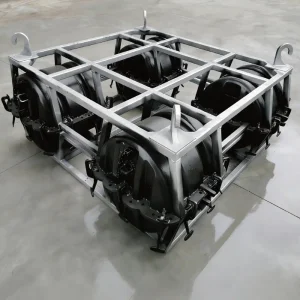
Fabricated carbon steel and stainless steel rotational moulds with mirror-finish cavity surfaces, high thermal conductivity, and quick-clamp frames.
Explore Steel Moulds
Heavy-duty industrial rock-and-roll systems built for extreme volumetric capacity products including agricultural feed troughs and chemical vessels.
View U-Arm Exporter Unit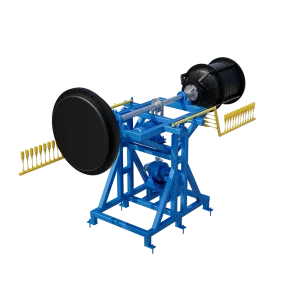
Compact open-flame swing machine designed for small workshops, prototyping laboratories, and rapid low-volume hollow part manufacturing.
View Compact Machine
Direct factory custom steel tooling for automotive fuel tanks, complex ducting, wastewater septic tanks, and marine navigation buoys.
Request Mould Quote
Full European CE-compliant electric heating rotomolding machine featuring zero gas emissions, low decibel operation, and high thermal recovery.
View CE Certified Unit
Robust, field-proven open-flame rock and roll machine engineered for rapid heating, minimal maintenance downtime, and simple burner operation.
Explore Standard Unit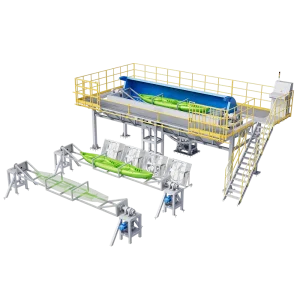
Enclosed insulated oven type rock-and-roll swing machine engineered for optimized fuel consumption and uniform temperature distribution.
View Enclosed Oven SwingAuthoritative answers to critical operational, chemical, and mechanical questions regarding rotomolding mixers and raw material compounding.
Melt compounding requires passing resin through an extruder, subjecting the polymer to an extra thermal history cycle that degrades antioxidant packages and increases Melt Flow Index (MFI) instability. High-speed dry blending in a dedicated rotomolding turbo mixer coats pigments onto virgin micronized powder via kinetic friction without melting the polymer core, preserving original elongation-at-break and impact properties.
The industry standard is 35 mesh (500 microns) with less than 15% passing through 100 mesh (150 microns) and zero particles exceeding 30 mesh (600 microns). If powder is too coarse, mixing will not distribute pigments evenly and sintering time in the mould increases. If too fine, dry-flow bulk density drops, causing bridging in hoppers and micro-bubbles in finished parts.
Pigment streaking is primarily caused by insufficient mixer tip speed, low batch temperature during blending, or agglomerated dry pigments. To resolve this, maintain peripheral blade speeds above 28 m/s, ensure the mix reaches the threshold frictional temperature (55°C–60°C for LLDPE), and use pre-treated organic/inorganic pigments with surface active wetting agents or metal stearates (0.05% zinc/calcium stearate).
Due to airborne organic polymer dust risks, industrial mixers must feature ATEX-certified pneumatic safety interlocks preventing lid opening while the impeller spins, dynamic shaft earthing rings to dissipate static electrostatic charges, explosion-relief vent ports, and motor thermistor overcurrent protection connected directly to emergency stop circuits.