Explore high-capacity rotational molding machinery, automated rock-and-roll swing systems, precision steel molds, and industrial quality testing solutions.
Analyzing the paradigm shift from traditional steel and fabrication to heavy-duty, corrosion-proof rotational molding polymers across global civil infrastructure projects.
The modern civil construction sector is rapidly moving away from metal and fiberglass due to weight, oxidation, and fatigue limitations. Advanced Linear Low-Density Polyethylene (LLDPE), High-Density Polyethylene (HDPE), and Cross-linked Polyethylene (XLPE) compounds engineered with UV8 to UV20 stabilization packages now offer 30+ year design lifespans under extreme climatic exposure, thermal swings (-40°C to +60°C), and aggressive chemical environments.
Urbanization and rapid civil engineering projects demand lightweight, seamless, hollow structural components that can be deployed rapidly without heavy crane machinery. Seamless rotomolded trench shoring systems, subterranean inspection chambers, underground septic management tanks, and interlocking ballast safety barriers reduce field installation timelines by over 45% compared to cast-in-place concrete.
Global environmental regulations and ESG mandates are forcing EPC contractors to source 100% recyclable, zero-emissions products. Rotomolded construction products produce near-zero material waste during manufacturing because virgin and post-consumer recycled (PCR) resin powders are precisely measured and fused entirely inside closed CNC-machined mold cavities.
Evaluating procurement criteria, material specifications, and engineering parameters for global infrastructure buyers and contract manufacturers.
Procurement directors and municipal project engineers evaluating structural polymer components must evaluate material grades against rigorous physical, mechanical, and thermal parameters. Below is an executive material evaluation framework designed to streamline supplier qualification and specification compliance:
| Polymer Grade | Density (g/cm³) | Tensile Yield (MPa) | ESCR (Hours @ 100% Igepal) | UV Resistance Rating | Primary Construction Applications |
|---|---|---|---|---|---|
| Hexene LLDPE (C6) | 0.935 - 0.940 | 18.5 - 21.0 | > 1,000 hrs | UV8 to UV15 | Standard Water Tanks, Cones, Barrier Walls, Waste Containers |
| Octene LLDPE (C8) | 0.938 - 0.942 | 21.0 - 24.0 | > 1,500 hrs | UV16 to UV20 | High-Impact Underground Vaults, Fuel Storage Tanks, Trench Liners |
| Cross-linked PE (XLPE) | 0.942 - 0.948 | 24.0 - 28.0 | > 5,000 hrs | UV20+ Superior | Heavy Chemical Storage, Underground Septic Tanks, Industrial Acid Vessels |
| Polyamide (Nylon PA12) | 1.02 - 1.05 | 45.0 - 55.0 | Immune | High Thermal/UV | High-Pressure Hydraulic Reservoirs, Severe Impact Civil Components |
Rotational molding ensures stress-free multi-layer wall distribution. Biaxial rotation coats the mold inner walls evenly, avoiding thin corners common in thermoforming or injection molding.
For heavy civil machinery assemblies, high-torque brass, stainless steel, or carbon steel threaded inserts are encapsulated directly during the thermal fusion cycle.
Rotomolded polyolefins resist acids, alkalis, aggressive soils, and industrial wastewater, eliminating costly cathodic protection required for steel tanks.
Unlike high-pressure injection molding, rotomolding relies on atmospheric pressure thermal sintering, resulting in structural parts immune to internal stress cracking.
Integrating advanced finite element analysis (FEA), multi-axis rotational machine kinematics, and smart heating systems to produce heavy-duty civil products.
Before mold fabrication begins, our engineering team executes 3D Finite Element Analysis (FEA) to simulate external hydrostatic pressures, soil overburden loads, and dynamic vehicle impacts on underground vaults and utility chambers. Ribbing patterns, wall thickness gradients, and corner radii are optimized to achieve structural rigidity while minimizing total resin consumption.
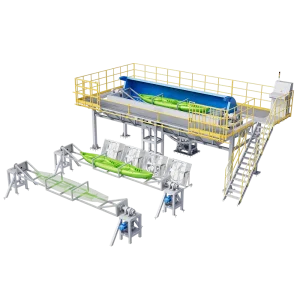
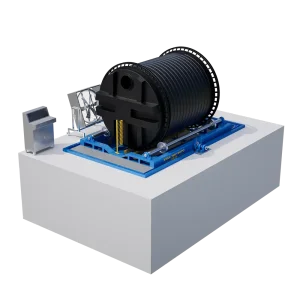
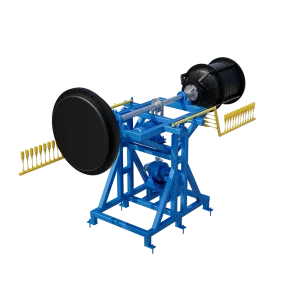
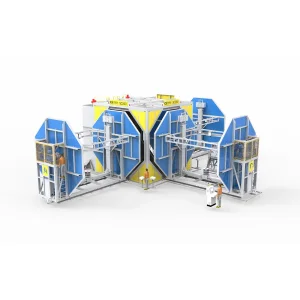
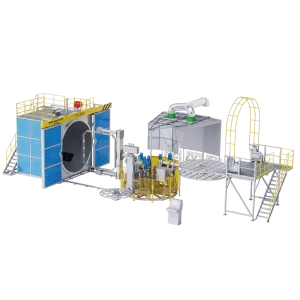
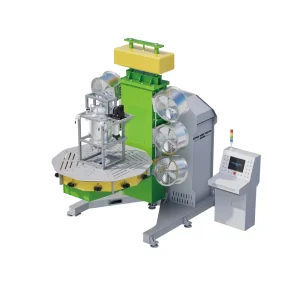
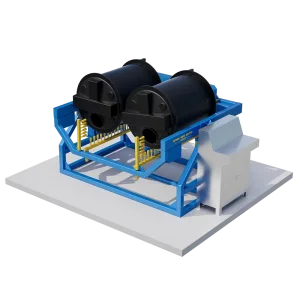
Choosing the optimal rotational molding machinery configuration depends on product volume and geometry. Large hollow construction tanks (exceeding 5,000 to 20,000 liters) utilize open flame or oven-type Rock & Roll machines for low energy footprint. High-volume items like road safety cones and barrier blocks leverage multi-arm Carousel machines for maximum throughput.
Thermal control is the backbone of polymer sintering. Advanced Wireless In-Mold Temperature Sensors (TP-System) log internal air temperatures throughout heating, bubble-removal, and forced-air cooling phases. This guarantees 100% polymer crystallization without thermal degradation or internal void formation.
Rotomolding construction products requires strict control of resin melt flow index (MFI) between 3.5 and 6.0 g/10min. Lower MFI resins offer higher impact strength and environmental stress crack resistance (ESCR), making them ideal for heavy civil underground retention systems. Our automated temperature control systems ensure complete bubble dissipation during powder sintering.
Complete your production ecosystem with customized shuttle machines, small open flame rockers, eco-friendly heating systems, and high-efficiency multi-station setups.
Ensuring full alignment with North American, European, and Asia-Pacific structural codes, environmental standards, and turnkey engineering support.
All machinery and molded construction products adhere strictly to international manufacturing frameworks including CE marking, ISO 9001:2015 Quality Management Systems, ASTM D1998 standards for upright polyolefin storage tanks, and European Machinery Directive 2006/42/EC. Material formulations comply fully with REACH and RoHS chemical safety mandates.
Every structural batch undergoes rigorous ultrasonic wall thickness verification, drop-impact energy testing at -40°C, and hydrostatic pressure hold testing. Dedicated OEM Watertight Testers guarantee leak-proof performance across hollow underground chambers and municipal water retention units prior to shipment.
We provide comprehensive global installation, operator training, and field commissioning support. Global regional service centers maintain inventory of critical burner spare parts, PLC control modules, hydraulic cylinders, and spider arms to ensure continuous factory uptime and zero project delays.
Pioneering the next era of smart rotational molding, bio-resin integration, and zero-emissions electric thermal sintering.
Replacing traditional gas combustion burners with high-efficiency electric IR and convection heating systems to achieve zero direct carbon emissions during the thermal sintering process.
Embedding real-time strain gauges, pressure sensors, and wireless telemetry chips directly into rotomolded construction products during molding for real-time infrastructure structural health monitoring.
Industrial qualification of 100% bio-derived polyethylene resins synthesized from agricultural waste, delivering identical mechanical tensile properties with a negative net carbon footprint.
Full integration of AI vision systems and machine-learning algorithms to adjust mold rotation speed and internal air heating cycles dynamically based on real-time polymer viscosity feedback.
Addressing core technical, financial, and operational inquiries from enterprise buyers and procurement leaders.
Rotational molding produces stress-free, 100% hollow seamless products with reinforced corners and uniform wall distribution. Unlike fiberglass, rotomolded PE components do not delaminate, chip, or require secondary gel-coat repairs. Unlike blow molding, rotational molding requires significantly lower tooling investment costs, making it economically viable for large-scale construction products such as 10,000L septic tanks, road barriers, and utility vaults.
Uniform wall thickness is achieved by precise computer-modeled biaxial rotation speed ratios (major axis to minor axis) combined with optimized mold heat transfer design. Cast aluminum molds with uniform CNC-machined wall thicknesses are utilized alongside localized mold heat shields and internal air deflectors to direct powder flow evenly during sintering.
Yes. Heavy-duty threaded brass inserts, stainless steel flanges, and structural carbon steel lifting lugs can be molded-in during the thermal cycle. The molten polymer encapsulates the metal knurling or anchors completely, forming a permanent, gas-tight, high-torque joint that outperforms secondary threaded fasteners.
Typical engineering design to mold completion ranges from 30 to 45 business days. This includes 3D CAD modeling, FEA structural stress simulation, CNC machining or pattern casting, surface polishing/sandblasting, and initial sampling (T1 production run) with ultrasonic wall inspection report delivery.
Electric heating rotomolding machines provide precise thermal uniformity (±1°C across the heating chamber), lower energy consumption through targeted IR reflection, zero localized CO2 emissions, and quieter operation. This simplifies environmental permitting for factories located in strict clean-air regulatory zones.
All rotomolding machinery systems ship with full CE Declaration of Conformity, ISO 9001:2015 quality inspection documentation, electrical schematics, PLC source documentation, hydraulic load test reports, and complete English operational and preventive maintenance manuals.