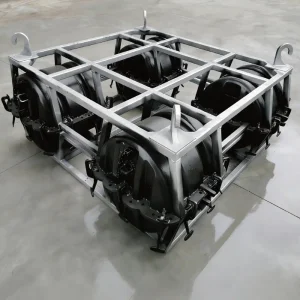
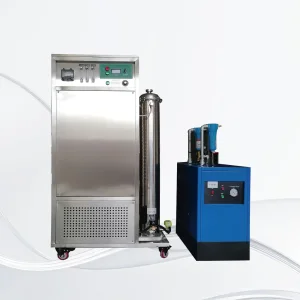
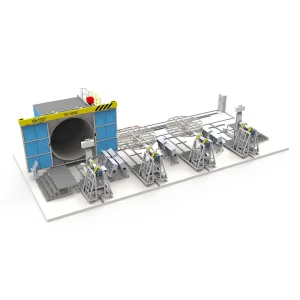
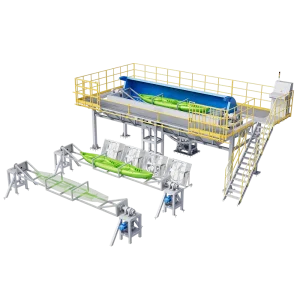
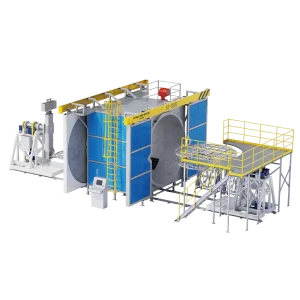
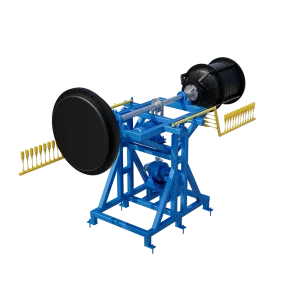
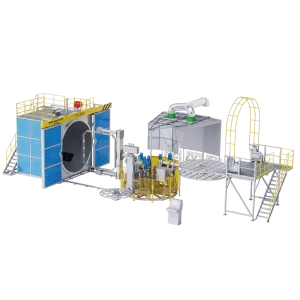
Explore our industry-leading carousel, shuttle, and specialized rock & roll machine configurations engineered for high-capacity tank production.
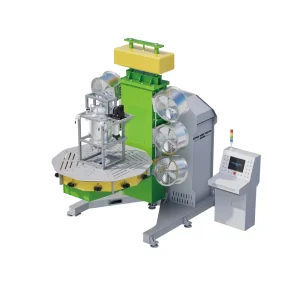
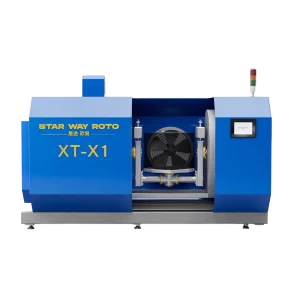
Understanding the macroeconomic drivers, material evolution, and technological shifts reshaping the global liquid storage container industry.
Rapid expansion of urban centers across Latin America, Southeast Asia, Africa, and the Middle East has exerted immense strain on centralized municipal water distribution systems. As a result, commercial developers and municipal planners are mandating on-site secondary water storage solutions. Water tank making machines—specifically high-capacity rotational molding machinery—have transitioned from standard industrial tools to critical infrastructure assets required to produce multi-layer 500-liter to 20,000-liter polyethylene (PE) tanks.
Global climate volatility and recurring drought patterns have escalated agricultural demand for large-format liquid containment. Modern farm management relies heavily on UV-stabilized, seamless chemical and water storage tanks capable of holding liquid fertilizers, pesticides, and harvested rainwater. Industrial buyers require rock and roll machines and carousel rotomolding systems capable of producing stress-free, corrosion-resistant tanks exceeding 10,000 liters with high wall thickness uniformity.
The evolution from basic low-density polyethylene to Linear Low-Density Polyethylene (LLDPE), High-Density Polyethylene (HDPE), and cross-linked polyolefin polymers (XLPE) has elevated performance benchmarks. Modern water tank making equipment must incorporate precise digital thermal controls to handle narrow processing windows, ensuring optimal polymer fusion without thermal degradation or internal stress concentration.
Selecting the optimal production route for hollow, large-format plastic containment: Rotomolding vs. Large-Scale Blow Molding vs. Injection Molding.
| Evaluation Parameter | Rotational Molding (Rotomolding) | Extrusion Blow Molding | Injection Molding |
|---|---|---|---|
| Typical Product Volume Range | 200L to 50,000L+ | 100L to 3,000L | 1L to 500L (Max Limits) |
| Tooling & Mold Initial Cost | Low to Moderate (Cast/Fabricated Al/Steel) | Very High (Forged Alloy Steel) | Extremely High (Hardened Tool Steel) |
| Internal Residual Stress | Zero / Stress-Free (Biaxial Low Speed) | Moderate (High Extrusion Shear) | High (High Pressure Injection) |
| Wall Thickness Uniformity | Excellent (Multi-Axis Speed Tuning) | Moderate (Parison Sag Risks) | High (Limited by Draft Angles) |
| Multi-Layer Co-Extrusion Capability | Yes (Sequential Powder Dosing / Drop Boxes) | Yes (Multi-Head Die Extrusion) | Extremely Complex & Costly |
| Equipment Maintenance Cost | Low (Simple Mechanical Hydraulics & PLC) | High (Complex Hydraulics & Extruders) | High (High Hydraulic Pressure Systems) |
Technical Expert Insight: For industrial water tanks exceeding 500 liters, rotational molding remains the globally dominant engineering choice. Because rotomolding is a zero-pressure forming process, the resulting polyethylene water tanks exhibit near-zero residual stress, dramatically lowering the risk of stress cracking over 15 to 30 years of continuous outdoor UV exposure and hydrostatic loading.
How StarWayRoto machine design achieves a 30% reduction in thermal energy consumption while guaranteeing pinpoint wall-thickness control.
Energy expenditure represents up to 40% of total operational costs in a tank manufacturing facility. Modern water tank machines utilize direct electric heating or high-efficiency burner chambers with recirculating high-velocity air ducts. By optimizing air velocity to 18 m/s within the oven chamber, thermal transfer rates to the mold surface increase by 35%, cutting melt-cycle durations significantly.
High-end water tanks feature 3-layer or 4-layer wall construction: an outer UV-resistant layer, a middle black carbon foam insulating layer, and an inner food-grade virgin anti-bacterial white layer. Modern carousel rotomolding machines incorporate pneumatic automatic drop boxes controlled via Siemens PLC touchscreens, allowing seamless multi-layer resin release without opening oven doors or losing heat.
Eliminate guesswork in polymer cooking. Wireless radio-frequency temperature sensors positioned inside the mold cavity measure internal air temperature (IAT). By tracking exact polymer phase changes—from initial powder stickiness to complete pinhole-free bubble suppression—the system automatically triggers the cooling phase, maximizing structural integrity while preventing polymer thermal oxidation.
A strategic framework for buyers, factory owners, and procurement directors calculating CAPEX, floor space, and target daily output.
Ideal For: High-volume, continuous 24/7 mass production of standard 500L, 1,000L, and 2,000L vertical water tanks.
Key Advantages: Maximum station utilization. While Arm 1 is heating in the oven, Arm 2 is in the cooling chamber, and Arm 3 is undergoing demolding/loading. Yields up to 60-80 tanks per day per arm configuration.
Ideal For: Flexible manufacturing plants producing diverse product lines (e.g., mixing 3,000L tanks with 10,000L heavy-duty chemical vessels).
Key Advantages: Allows independent indexing of two separate carts into a central oven. One cart can run a 25-minute thermal cycle while the opposing cart undergoes mold setup, reducing idling downtime.
Ideal For: Ultra-large cylindrical tanks, septic tanks, and horizontal transport tanks from 10,000L to 50,000L+.
Key Advantages: Rotates 360° on the longitudinal axis while rocking +/- 45° vertically. Reduces required factory ceiling height and oven cubic volume, lowering gas consumption for massive molds.
A complete ecosystem approach for establishing a world-class, automated water tank manufacturing facility.
Precision micro-pulverizer systems turn virgin LLDPE granules into 35-50 mesh powder, essential for rapid melting and void-free wall structures during rotation.
Turbine mixers combine LLDPE powder with UV masterbatch, anti-microbial additives, and color pigments to achieve homogeneous dispersion prior to mold loading.
Cast aluminum or CNC-fabricated steel molds with optimized draft angles, quick-clamping systems, and mirror-smooth internal surface finishing.
Ultrasonic thickness gauge testing, hydrostatic pressure test stations, pneumatic mold lid openers, and automatic tank stacking systems.
Guaranteeing smooth factory integration with strict international certification and dedicated field engineering support.
All StarWayRoto machinery complies with strict European Machinery Directives, low-voltage electrical safety standards (EN 60204-1), and electromagnetic compatibility (EMC). Molds and machine contact parts align with NSF/ANSI 61 requirements for potable water safety.
Custom electrical cabinet engineering tailored to local regional grids (e.g., 380V 50Hz, 480V 60Hz, or 220V 3-Phase). Integrated Schneider or Siemens VFD drives protect heavy arm gearboxes against voltage fluctuations in remote operating zones.
On-site installation, mold commissioning, and operator training conducted by senior rotomolding field engineers. Standard IoT gateways allow our technical team to perform remote PLC diagnostics and firmware updates 24/7 globally.
Pioneering smart automation, green thermal management, and AI-driven process optimization.
Integrating machine-learning thermal vision sensors inside burner chambers to dynamically modulate rotation speeds based on real-time mold heat distribution.
Transitioning oven heating systems to hydrogen-natural gas blend burners, cutting direct factory carbon emissions by up to 45% for global ESG compliance.
Robotic arm cells dedicated to high-speed mold parting line unclamping, automated tank extraction, and real-time internal trimming.
Engineering high-precision thermal profiles designed for processing bio-based LLDPE and recycled post-consumer resin blends without sacrificing burst strength.
Addressing key commercial, engineering, and operational inquiries for enterprise machinery buyers.
Standard machine manufacturing lead time ranges between 45 to 60 days. If custom cast aluminum or sheet steel molds are required concurrently, complete factory acceptance testing (FAT) is typically finalized within 75 to 90 days from technical drawing approval.
Multi-layer tanks (typically 3 or 4 layers) significantly outperform single-layer tanks. The outer layer protects against UV radiation, the middle black layer blocks sunlight to prevent internal algae growth, and the inner virgin layer guarantees non-toxic, anti-bacterial contact with drinking water.
Natural Gas (LNG) and Liquefied Petroleum Gas (LPG) generally provide the lowest operating cost per cycle in regions with established gas infrastructure. In locations where gas is unavailable or strictly regulated, direct electric heating or high-efficiency diesel burners offer reliable performance.
Yes. Independent carousel machines and shuttle machines allow different molds (e.g., a 1,000L mold and a 2,000L mold) to be mounted on separate arms/carts with customized cycle times, rotation speeds, and thermal profiles.
A standard production line featuring a 3-arm carousel machine requires approximately 500 to 800 square meters of floor space, with a minimum clear ceiling height of 6.5 to 8 meters to accommodate arm swing diameters and overhead crane demolding operations.
Explore additional specialized machinery, custom molds, and auxiliary processors from StarWayRoto's industrial catalog.