
Engineered for extreme durability, high-pressure foam core cavity precision, and uniform heat distribution across multi-cavity cooler box production cycles.
The international high-performance cooler market has expanded rapidly from traditional outdoor recreation into critical cold-chain biopharma logistics, commercial fishing preservation, and military expeditionary supply chains.
Modern end-users expect ice retention spanning 5 to 10 days under ambient temperatures above 38°C (100°F). Meeting this requires moulds that yield seamless, stress-free double-walled polyolefin shells with zero internal micro-cracking and perfectly uniform polyurethane (PU) foam injection bonding.
Fabricated steel sheet moulds have been largely phased out by top-tier cooler manufacturers. Cast aluminum A356 alloy and forged 6061-T6 billet CNC-machined moulds have become the global standard due to their 4x higher thermal conductivity ($k \approx 160\text{ W/m}\cdot\text{K}$), reducing cycle times by 30%.
Today's heavy-duty rotomolded coolers incorporate complex integrated features directly into the mould tooling: interlocking lid hinges, recessed heavy-duty rubber latches, built-in bottle openers, drain plug threaded brass inserts, and non-slip rubber footings.
Comparing the two primary tooling methodologies for rotomolded insulated containers to optimize cost, lead time, dimensional accuracy, and cavity surface finish.
| Engineering Parameter | A356 Cast Aluminum Mould | CNC Billet 6061-T6 Aluminum Mould | Fabricated Sheet Steel Mould |
|---|---|---|---|
| Primary Application | Complex exterior contours, textured logos, high-volume cooler lines (20QT to 110QT) | Ultra-precision biopharma containers, strict tolerance sealing lips, rapid prototyping | Low-cost large utilitarian tanks, simple agricultural bulk containers |
| Machining Precision | ±0.20 mm (after CNC finish pass) | ±0.05 mm (Direct 5-Axis Milling) | ±1.50 mm (Hand-formed) |
| Thermal Conductivity | 160 W/m·K (Rapid, uniform curing) | 170 W/m·K (Highest heat transfer) | 45 W/m·K (Hotspots & thermal lag) |
| Cavity Surface Texture | Micro-sandblast, Leather grain, Acid-etch, Mold-Tech standard textures | Mirror SPI-A1 to A3, High-gloss optical, Precision diamond cut | Standard welded/ground bead, mill scale finish |
| Tooling Weight & Arm Load | Medium (Cast cored out rear cooling ribs) | Medium-High (Optimized pocket milling) | High (Heavy structural steel backing) |
| PU Foaming Expansion Resistance | Withstands up to 4.5 bar internal cavity pressure | Withstands up to 6.0 bar internal cavity pressure | Prone to wall bulging without heavy external clamps |
| Expected Production Lifespan | 100,000+ Cycles (with proper PTFE release) | 150,000+ Cycles | 25,000 - 40,000 Cycles |
During the rotational molding cycle, virgin LLDPE/HDPE powders undergo a melting phase between 160°C and 200°C. If venting is improperly engineered, internal pressures cause pinholes, localized blowouts, and uneven wall thickness.
The cooler box is only as good as its insulating core. High-density polyurethane foaming generates substantial exotherm and internal expansion forces that can deform improperly braced moulds or finished cooler outer walls.
Ningbo StarWay Roto Co., Ltd. sits at the heart of the world's most concentrated precision casting and plastic machinery industrial cluster in Ningbo, Zhejiang Province.
By maintaining in-house aluminum foundries, pattern shops, and multi-axis CNC milling centers under one 20-acre facility, we eliminate outsourced tooling markup. Global brand owners can deploy complete 4-size cooler lines for the cost of a single tool in Western Europe or North America.
From initial DFM (Design for Manufacturability) sign-off and 3D simulation to wooden pattern creation, sand casting, CNC finishing, clamping hardware fitment, and trial rotational moulding testing, our integrated timeline runs weeks ahead of the industry average.
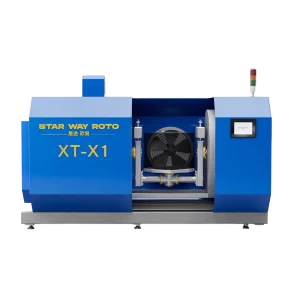
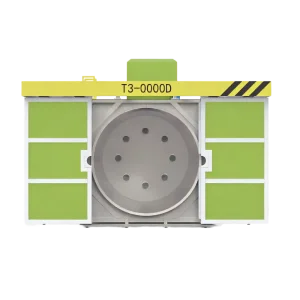
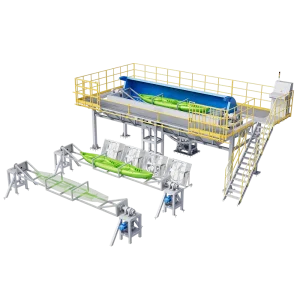
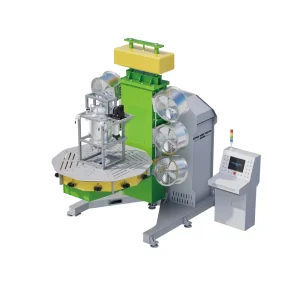
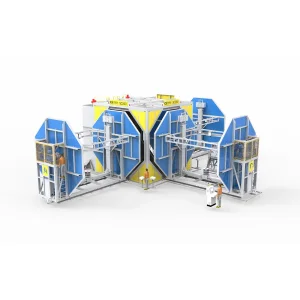
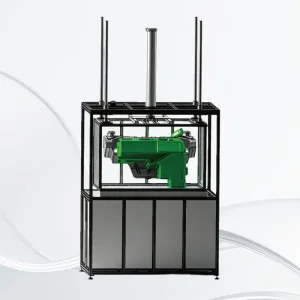
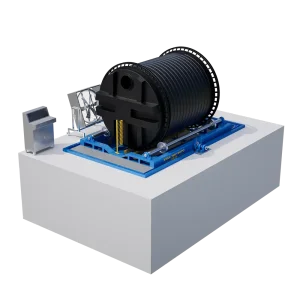
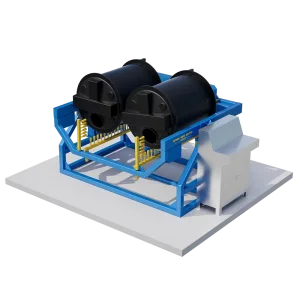
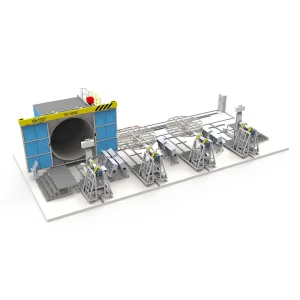
We don't merely manufacture moulds; we build the Carousel, Shuttle, and Rock & Roll machines that run them, alongside high-pressure polyurethane foaming machinery, pulverizers, watertight testing rigs, and mold cooling stations for complete one-stop procurement.
Analysis of draft angles (minimum 3°-5° on textured surfaces), wall thickness transitions, hinge pin cores, and gasket canal shrinkage.
Degassed molten A356 alloy gravity casting with integrated cooling fins to guarantee non-porous cavity walls and crack-free longevity.
Precision CNC machining of mating parting lines, stainless steel clamping frames, and CNC engraved logo inserts with razor-sharp definition.
Every cooler mould undergoes trial molding in our lab, followed by PU foam injection, dimensional CMM verification, and watertight leak testing.
Customized rotomolding tooling tailored for specific environmental stresses, compliance certifications, and structural load factors across diverse sectors.
Heavy-duty insulated fish chests engineered with 316 stainless steel hinges, UV8-stabilized virgin food-grade PE materials, oversized quick-drain valves, and non-marking rubber skids that withstand intense marine saltwater degradation.
Ultra-low temperature preservation boxes certified for -80°C dry-ice biomedical transport. Incorporates VIP (Vacuum Insulation Panel) cavity inserts, digital temperature logger mounting slots, and zero-leak EPDM gasket compression tracks.
Grizzly bear-resistant IGBC-certified rugged coolers. Mould features include dual padlock holes, integrated bottle opener housings, tie-down slat anchors, heavy-duty wheels with steel axle housings, and non-slip textured lid surfaces.
Stackable insulated food pan carriers and dry cargo containers complying with NSF/ANSI Standard 2. Moulded-in stacking ribs allow 4-tier warehouse vertical staging without wall crushing or thermal escape.
How modern automation, telemetry-assisted curing cycles, and multi-layer material co-moulding are redefining production throughput and energy footprints.
Peak Internal Air Temperature (PIAT) wireless sensor modules are integrated directly into our mould spider arms. Real-time cavity air temperature feedback automatically triggers oven exit when optimal polymer fusion (typically 195°C for LLDPE) is reached, eliminating scrap and under-curing.
Transitioning from open-flame burners to closed intelligent electric heating systems reduces factory carbon emissions while ensuring ±2°C oven chamber temperature uniformity. This prevents warping across multi-cavity cooler lid moulds.
Dual-drop drop-box automated systems allow multi-layer molding: a virgin anti-microbial inner liner, a foamed microcellular PE intermediate core for weight reduction, and an ultra-tough UV-resistant outer shell moulded in a single thermal cycle.
Key engineering criteria professional procurement directors, brand founders, and OEM supply chain managers must inspect before releasing capital for rotomolding tooling assets.
Clear, technical answers to common queries regarding rotomolded cooler box tooling, resin parameters, cycle times, and maintenance procedures.
For smooth machined aluminum surfaces, a minimum draft angle of 1.5° to 2° is acceptable. However, for textured cooler box exteriors (such as heavy sandblast, stipple, or leather grain finishes common on premium outdoor coolers), a draft angle of 3° to 5° is strictly required to prevent scuffing and ease de-moulding without distorting the warm polyethylene part.
Warpage in rotomolding is primarily caused by differential cooling rates between inner and outer surfaces. We counteract warpage through three design protocols: 1) Incorporating structural stiffening ribs and internal kissing points into the mould design; 2) Uniform mould wall thickness (typically 8mm to 10mm for cast aluminum) to avoid thermal gradients; and 3) Controlled stage cooling utilizing pulsed forced-air before water misting in the cooling chamber.
We recommend Metallocene or hexene-copolymer Linear Low-Density Polyethylene (mLLDPE / LLDPE) or High-Density Polyethylene (HDPE) with a Melt Flow Index (MFI) of 3.5 to 5.0 g/10 min and a density between 0.935 and 0.945 g/cm³. Virgin resin compounded with UV-8 or UV-15 thermal stabilizers and food-contact FDA 21 CFR 177.1520 certification ensures superior drop-impact performance down to -40°C.
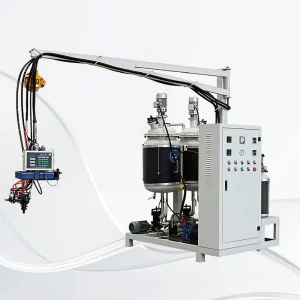
Yes. Ningbo StarWay Roto delivers complete turnkey manufacturing packages: Carousel or Shuttle rotomolding machines, precision A356 cooler moulds, high-pressure two-component polyurethane (PU) metering/foaming injection stations, hydraulic lid clamping fixtures, watertight integrity vacuum testers, and CNC resin pulverizer milling equipment.
Cast A356 aluminum moulds manufactured with steel-reinforced parting edges exceed 100,000 thermal cycles (approximately 10 to 15 years of standard production). Maintenance includes periodic cleaning of PTFE micro-vents, inspecting parting line toggle clamps every 500 cycles, and applying semi-permanent water-based mould release agents to avoid resin residue buildup.
After demoulding and cooling, the double-walled hollow PE cooler shell is clamped into a rigid hydraulic foaming fixture to prevent exterior wall expansion. Two-component rigid polyurethane foam (polyol and isocyanate) is injected via a high-pressure mix head at controlled temperature ($20^\circ\text{C}-25^\circ\text{C}$) and pressure ($150-180\text{ bar}$), creating a high-density, closed-cell insulation core ($38-45\text{ kg/m}^3$).
Complementing our precision moulds with high-efficiency rotational molding production machines, compact shuttle systems, and PU foaming technology.
Submit your 3D CAD (.STEP / .IGES) file or product concept to Ningbo StarWay Roto Co., Ltd. Our senior rotomolding engineering team provides full DFM feedback, thermal shrinkage modeling, and detailed tooling quotation within 24 hours.
Request Technical Consultation & Tooling Quotation