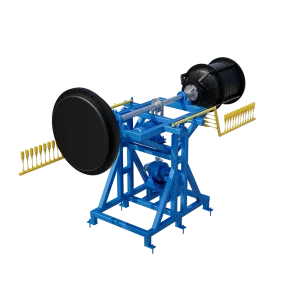
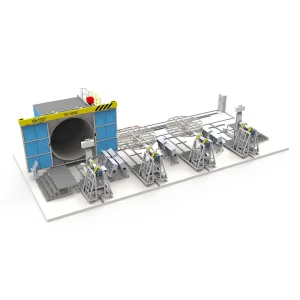
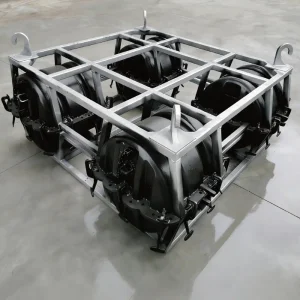
Explore our core engineering product line manufactured in China, designed for heavy industrial applications, low energy consumption, and high operational throughput globally.
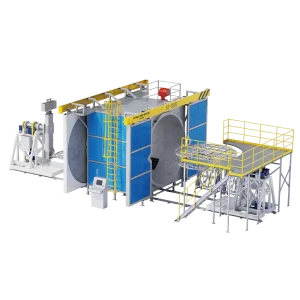
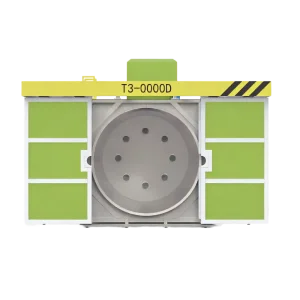
Understanding the engineering metrics, thermodynamic principles, and manufacturing capability shifts defining modern rotational molding machinery exports worldwide.
Rotational molding (commonly designated as Rotomolding or Roto Moulding) has evolved from a niche plastics processing method into a cornerstone of heavy-duty industrial manufacturing. Across international markets, procurement executives and factory directors face increasing pressure to balance thermal efficiency, wall-thickness structural integrity, cycle time optimization, and operational carbon reduction. As premier Roto Moulding Equipment exporters, Chinese OEM factories have positioned themselves at the forefront of this industrial transformation by combining precision mechanical engineering with high-capacity digital control architectures.
Unlike high-pressure injection molding or extrusion blow molding, rotational molding operates on a pressureless thermal fusion process. Micronized thermoplastic powder (predominantly LLDPE, HDPE, Cross-linked PE, PP, or Polyamide PA) is metered into a hollow matrix mold. The mold is simultaneously rotated along bi-axial perpendicular axes within a controlled thermal environment (ranging from 220°C to 380°C depending on polymer thermodynamics). The combination of gravity-driven powder flow, thermal sintering, and uniform heat transfer coats the interior mold surface seamlessly, delivering stress-free, hollow polymer products with unmatched impact strength and seamless structural durability.
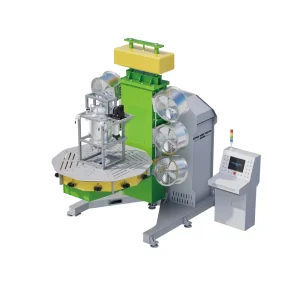
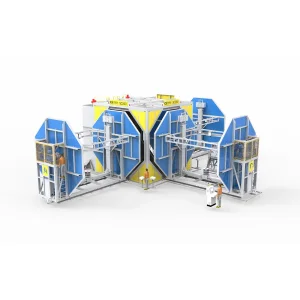
Today's enterprise purchasing buyers demand far more than basic structural steel frames. Premium rotomolding machines exported globally must incorporate multi-zone intelligent temperature sensing, PLC automated arm indexing, high-torque gearboxes with variable frequency drives (VFD), and modular heat exchanger configurations. Whether deploying a Carousel Rotomolding Machine for continuous volume production or an Independent Arm Shuttle System for custom oversized vessels, sourcing from direct OEM exporters ensures seamless alignment between customized mold dimensions and machinery structural footprints.
Why leading global manufacturers rely on China-manufactured rotomolding machinery, cast aluminum tooling, and turnkey auxiliary systems.
By leveraging China's dense industrial manufacturing hubs, localized raw material supply networks, and specialized heavy-engineering clusters, Chinese equipment exporters deliver premium machinery with up to 40% capital expense reduction compared to European or North American machinery builders—without sacrificing structural steel density or component quality.
Chinese exporters provide end-to-end integration: machine design, 5-axis CNC mold machining, cast aluminum mold foundry, and pneumatic arm manufacturing under one roof. This single-source accountability eliminates sizing errors between mold mounting plates and arm clearance dimensions.
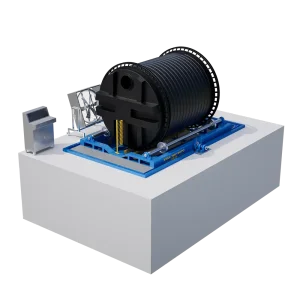
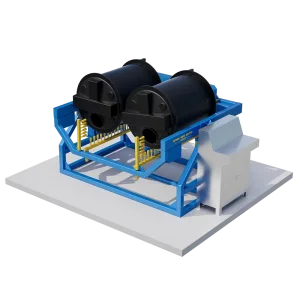
Whether your operation demands specialized open-flame Rock and Roll machinery for steel-lined chemical tanks or clean-room electric heating shuttle systems, Chinese export engineers rapidly tailor mechanical arm configurations, chamber volumes, and burner choices to match local factory footprints.
A rigorous technical comparison of heating mediums, energy efficiencies, and operational safety metrics across modern roto moulding equipment options.
Thermal energy transfer accounts for over 60% of total operational expenditure in a rotomolding facility. Modern equipment exporters must assist factory directors in selecting the exact heating technology tailored to local energy costs, environmental emission standards, and product complexity. The table below highlights key parameters across primary heating methodologies:
| Heating Technology | Thermal Efficiency | Temperature Precision | Environmental Carbon Impact | Ideal Application Profile | Initial Capital Investment |
|---|---|---|---|---|---|
| Electric Heating Oven | 88% - 94% (Direct Electric Infrared/Resistance) | ±1°C to ±2°C Micro-zone PLC control | Zero direct emissions; carbon-neutral ready | High-precision medical, food-grade, multi-layer PP/PA components | Moderate to High |
| Indirect Natural Gas/LPG Oven | 72% - 82% (Heat Exchanger Blower System) | ±3°C to ±5°C Dual-burner regulation | Moderate NOx emissions; requires exhaust ducting | High-volume commercial PE water tanks, kayaks, septic systems | Standard Benchmark |
| Open Flame Rock & Roll | 50% - 65% (Direct Radiant Flame Burners) | ±8°C Operator-monitored pyrometer | Higher localized thermal dissipation | Ultra-large cylindrical tanks, steel-lined chemical vessels, boat hulls | Low Initial CAPEX |
| Hybrid Diesel / Gas Oven | 70% - 78% (Combustion Chamber Circulation) | ±4°C Automatic damper modulation | Combustion emissions; regular filter maintenance | Remote industrial facilities with limited electrical infrastructure | Moderate |
Global market trends indicate a sharp acceleration toward Custom Electric Heating Rotomolding Machines, particularly across European and North American manufacturing hubs subject to stringent carbon tax legislation. Conversely, heavy chemical container producers in Latin America, Southeast Asia, and Africa continue to favor Open Flame Rock & Roll systems for their unmatched structural simplicity, high payload capabilities, and low maintenance overheads when producing 10,000L+ steel-jacketed storage vessels.
Navigating international engineering standards, CE machinery certifications, UL electrical compliance, and factory acceptance testing (FAT).
Procuring industrial equipment across international borders requires absolute assurance that the machinery complies with destination country safety codes, grid electrical frequencies (50Hz vs 60Hz), and environmental regulations. Leading exporters prioritize total compliance verification throughout the manufacturing lifecycle:
All machinery exported to the European Single Market must feature dual-circuit safety interlocks, pneumatic door safety latching, emergency stop loops, physical guard fencing, and CE-marked burner control modules to ensure full operator protection during thermal cycles.
For North American buyers (USA & Canada), export machinery is built using UL-508A certified industrial control enclosures, utilizing Siemens S7 PLC architectures, Schneider electrical breakers, and standard NEMA enclosure standards for effortless local code inspection.
Prior to export packaging, machinery undergoes rigorous 48-hour continuous dry-run thermal cycling, arm rotation vibration stress analysis, pneumatic leak checks, and remote real-time video verification with customer engineering teams.
How specialized roto moulding machines empower high-margin hollow component manufacturing across distinct economic sectors.
Utilizing specialized Standard & U-Arm Rock and Roll machines, industrial chemical equipment manufacturers bond thick-walled polyethylene liners directly inside steel outer shells. This process produces corrosion-proof tanks capable of holding concentrated acids, hazardous alkalis, and industrial effluents up to 50,000 Liters without risk of pinhole leaks.
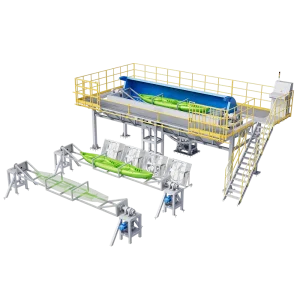
Custom long-oven Shuttle and Rock & Roll Oven systems allow marine shipyards to produce multi-chamber polyethylene boat hulls, luxury yacht pontoon floats, and ultra-durable sea kayaks up to 12 meters in length. Thermal cycle stability prevents hull warpage and guarantees equal wall thickness along high-stress keel lines.
High-output Carousel Rotomolding Machinery operates continuously on 24/7 schedules to produce food-grade vertical water storage tanks, pesticide spray hoppers, and septic digestion systems. High thermal throughput maximizes output while reducing energy expenditure per unit weight.
Rotomolded cold-chain shipping containers require dense polyurethane foam injection between double-walled PE shells. Precision electric heating shuttle ovens maintain exact surface gloss and structural rigidity required for military specification packing cases and commercial food preservation coolers.
Ensuring seamless operational uptime through overseas field engineering, rapid spare parts distribution, and remote digital diagnostics.
Purchasing machinery from international exporters requires robust, reliable local support infrastructure. Premium Chinese rotomolding exporters bridge geographic distance through a multi-tiered global service framework engineered to eliminate operational downtime:
Experienced field service engineers are dispatched to buyer facilities worldwide to oversee foundation anchoring, oven assembly, ductwork connection, electrical wiring integration, and initial raw material thermal balancing test runs.
Equipped with secure IoT gateway modules, exported machines allow factory engineers in China to perform real-time PLC code optimization, burner fault code troubleshooting, and predictive maintenance alerts remotely via encrypted cloud networks.
Critical mechanical wear parts—such as high-temperature oven door seals, rotating arm swivel joints, burner spark igniters, and drive sprockets—are standardized across globally available SKUs and backed by 72-hour air-freight emergency dispatch SLAs.
Direct engineering answers to the most common search queries and evaluation criteria raised by global machinery importers.
Explore additional specialized machinery solutions, testing equipment, lab scale units, and heavy-duty moulds from China's leading exporter.