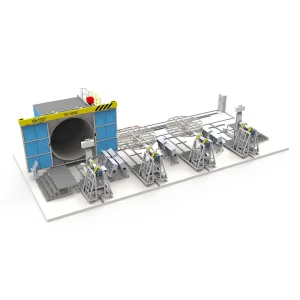
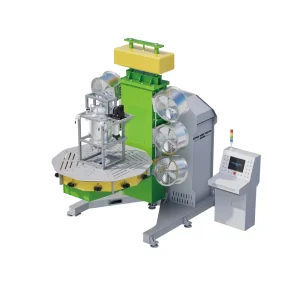
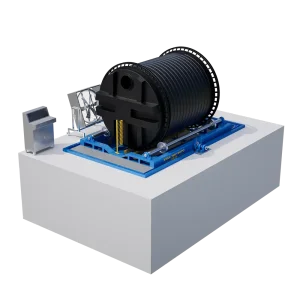
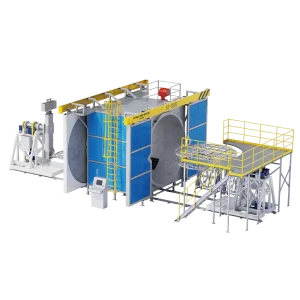
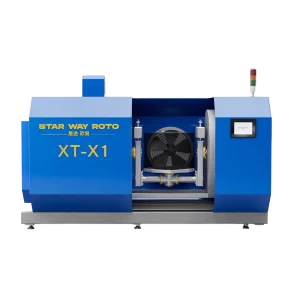
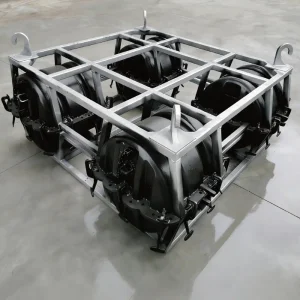
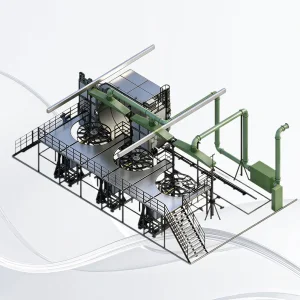
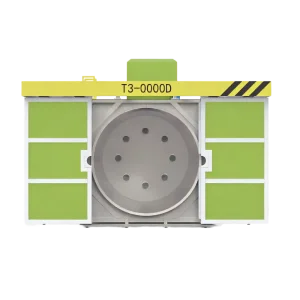
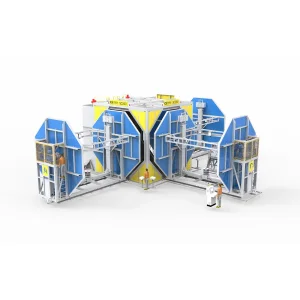
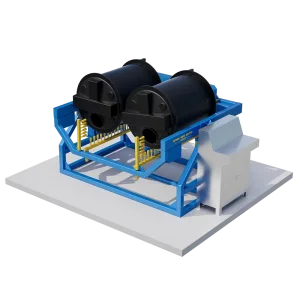
Explore our core machine configurations compatible with CNC aluminium moulds, optimized for minimum cycle times and maximum energy efficiency.
An authoritative engineering analysis on the transition from legacy cast aluminum tooling to 5-axis CNC machined aluminum moulds in advanced polymer processing.
In modern industrial plastic processing, the global rotomolding industry is undergoing a paradigm shift. Buyers are moving away from traditional cast aluminum moulds toward 5-axis CNC machined aluminium moulds. Cast molds inherently suffer from internal pinholes, inconsistent wall thickness, structural fatigue, and variable cooling rates. In contrast, CNC-machined aluminium moulds cut directly from forged, high-density aerospace-grade aluminium billets (such as EN AW-6061-T6 or 7075-T6) eliminate subsurface micro-porosity entirely. This delivers flawless cosmetic surfaces, perfect parting lines, and exceptionally uniform heat transfer across complex hollow components.
As global energy prices fluctuate and carbon emission targets tighten, thermal efficiency during oven heating cycles has become a vital financial indicator. Aluminum possesses a thermal conductivity of approximately 167 to 205 W/(m·K), which is more than triple that of fabricated sheet steel (approx. 50 W/(m·K)). This permits significantly faster heat transfer from the rotomolding machine oven to the resin powder inside the cavity, drastically cutting oven dwell times, reducing natural gas/electric power usage, and ensuring faster structural curing.
An engineering comparison evaluated across critical physical parameters, production lifetimes, and total cost of ownership (TCO).
| Performance Parameter | CNC Machined Aluminium (Al 6061 / 7075) | Cast Aluminium (A356 / C355) | Fabricated Sheet Steel |
|---|---|---|---|
| Internal Micro-Porosity | 0% (Zero Porosity Solid Billet) | 3% - 8% (Pinhole risk high) | 0% (Welded Sheet) |
| Thermal Conductivity | 167 - 200 W/m·K | 140 - 160 W/m·K | 45 - 52 W/m·K |
| Machining Precision / Tolerance | ±0.05 mm (High Precision) | ±0.50 mm to ±1.5 mm | ±1.0 mm to ±2.5 mm |
| Parting Line Quality | Seamless tongue-and-groove CNC match | Hand-ground, potential flash seam | Welded flange, manual alignment |
| Surface Finish Options | Mirror Polish, Sandblast, PTFE/Teflon, Texturing | Peened, limited high-gloss detail | Basic smooth or painted |
| Expected Service Life (Cycles) | 50,000+ Cycles | 15,000 - 25,000 Cycles | 30,000+ Cycles |
| Oven Heat-Up Speed | Ultra-Fast (Optimal energy saving) | Moderate | Slow (High energy load) |
How StarWay Roto integrates AI-assisted Moldflow simulations, IoT sensor channels, and hybrid sub-assemblies into next-generation export tooling.
Prior to cutting metal, our engineering team utilizes CAD/CAM finite element analysis (FEA) and dynamic thermal flow modeling. By simulating powder distribution, shrinkage behavior, and thermal gradient shifts inside the rotating aluminum core, we optimize wall thickness variations across complex geometric corners, eliminating structural warp and thin-wall defects before production.
Modern high-end export moulds are now retrofitted with integrated high-temperature wireless data loggers embedded directly into the CNC aluminum frame. Real-time temperature sensors (TPAT - Temperature Probe Inside Mold) measure internal air temperatures, signaling the precise moment polymer melting and consolidation occur to trigger automatic cooling cycles.
To support shortened product development lifecycles for global clients, our CNC machining facility incorporates interchangeable modular inserts. Single mold bases can produce multiple product variants—such as varying thread sizes, localized logo branding plates, or different tank outlet ports—by swapping out precision-milled aluminum inserts in under 15 minutes.
Detailed case studies and engineering implementations across key global industrial sectors.
Automotive clients in Europe and North America demand zero-leakage, tight-tolerance components for DEF (Diesel Exhaust Fluid) urea tanks, off-road fuel reservoirs, and heavy-truck air intake ducts. CNC aluminium moulds provide the exact dimensional consistency required to integrate secondary robotically welded fittings, embedded brass threaded bushings, and precision sensor mounts directly during the rotational molding cycle.
High-performance polyurethane-foamed cold chain containers, ultra-low temperature vaccine transport boxes, and medical equipment housings demand perfectly flat sealing surfaces and smooth, hygienic wall surfaces. Our CNC moulds undergo multi-axis micro-milling and bead-blasting to ensure uniform foam expansion without surface sink marks, satisfying strict FDA and EU hygienic standards.
Large-scale chemical dosing tanks, septic systems, and water filtration vessels require robust mold parting lines capable of withstanding internal pressurization test cycles. StarWay Roto’s massive CNC centers construct heavy-duty mold frames equipped with spring-loaded clamping systems, dual-lip silicone gasket seals, and multi-stage air release vents to produce structural plastic tanks up to 10,000 liters.
Consumer kayaks, marine dock floats, and luxury pontoon hulls require aesthetic perfection combined with hydro-dynamic structural symmetry. By leveraging 5-axis simultaneous CNC milling, complex dual-hull curves, textured grip patterns, and custom brass logo inserts are directly machined into the aluminum cavity with zero distortion.
Our rigorous 6-stage engineering and quality control framework ensures every exported mould performs straight out of the crate.
Comprehensive Design for Manufacturing (DFM) review. We analyze draft angles (minimum 1.5° to 3°), wall thickness uniformity, radius optimization, and shrinkage allowance based on resin Grade (LLDPE, HDPE, XLPE, PP).
Ultrasonic non-destructive testing (NDT) of forged aluminum blocks to certify zero internal voids, grain structure integrity, and uniform mechanical hardness prior to roughing operations.
High-speed rough milling followed by 5-axis finish profiling. Tool paths are generated via advanced CAM software to maintain ultra-smooth surface finishes (Ra < 0.8 µm) directly off the cutter.
Precision fitting of parting line tongue-and-groove alignments, heavy-duty toggle clamps, spring vents, Teflon core tubes, and mounting frames customized for carousel or shuttle machines.
Application of specialized surface finishes: high-gloss mirror hand polish, uniform micro-shot peening, or food-grade PTFE (Teflon) non-stick coatings for effortless part ejection.
3D Laser Coordinate Measuring Machine (CMM) dimensional verification followed by real-world factory pilot sampling on our in-house rotomolding machinery to supply verified T1 plastic samples.
Expert answers to key engineering, procurement, and logistics queries for international tool buyers.
CNC machined aluminum moulds are carved from dense, forged aluminum blocks, ensuring zero internal porosity, higher tensile strength, superior surface finish options, and precise parting line matches. Cast molds often contain micro-porosity that causes pinholes in plastic parts, structural cracking, and flash lines that require excessive manual trimming.
We primarily utilize Aluminium 6061-T6 for its excellent balance of thermal conductivity, structural yield strength, and resistance to thermal fatigue. For high-wear internal moving core slides or extreme pressure locking mechanisms, we deploy Aluminium 7075-T6 due to its ultra-high mechanical hardness.
For un-textured vertical walls, a minimum draft angle of 1.5° to 2° is recommended. If a textured surface or shot-peened finish is applied, we recommend increasing the draft angle to 3° to 5° to allow effortless demolding without scratching the plastic part.
Aluminum's thermal conductivity (~167 W/m·K) transfers thermal energy from the oven atmosphere into the resin powder up to 300% faster than fabricated steel tooling. This high thermal transfer rate reduces oven cycle times by 20% to 35%, significantly improving hourly factory throughput and reducing gas usage per part.
Every completed mould undergoes rigorous 3D laser CMM inspection against the approved CAD model. We issue full CMM dimensional inspection reports, material chemical composition certificates, and full pilot trial sample (T1) inspection documentation prior to wooden crate packaging and shipment.
Depending on geometric complexity and mould dimensions, typical production lead times range from 3 to 6 weeks. This includes complete 3D design validation, CNC roughing and finishing, surface treatment, frame assembly, and trial sample testing.
Browse our extensive range of high-efficiency open flame machines, precision steel and aluminum moulds, linear shuttles, and auxiliary accessories.