
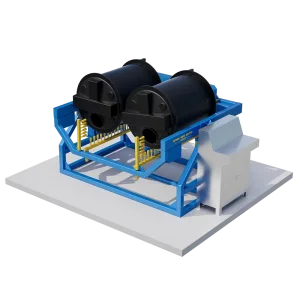
Primary heavy-duty manufacturing equipment optimized for South American industrial specifications.
An authoritative analysis of economic catalysts, trade corridors, and manufacturing modernization driving demand for specialized rotational molding tooling across the Andean region.
Colombia represents the fourth-largest economy in Latin America, characterized by rapid urbanization, significant infrastructure investments, and a robust agricultural export sector. Industrial centers such as Bogotá D.C., Medellín (Antioquia), Cali (Valle del Cauca), and Barranquilla (Atlántico) are undergoing a strategic transition toward advanced polymer processing. The rotational molding sector—historically relied upon for basic agricultural water tanks—is now called upon to deliver high-precision, multi-layer, and chemically resistant hollow plastic structures.
The national government's focus on expanding potable water access (Plan Nacional de Desarollo) alongside strict environmental mandates has accelerated the phase-out of legacy single-wall storage solutions. Consequently, Colombian plastic fabricators require advanced rotomolding molds capable of molding complex linear low-density polyethylene (LLDPE), cross-linked polyethylene (XLPE), and polypropylene (PP) formulations with zero internal stress and consistent wall thickness distribution.
Manufacturing plastic products in Colombia presents unique thermodynamic challenges. Major industrial zones in Bogotá operate at altitudes exceeding 2,600 meters above sea level. Lower ambient atmospheric pressure significantly affects gas combustion rates, heat transfer coefficients, and polymer cooling cycles inside rotomolding ovens.
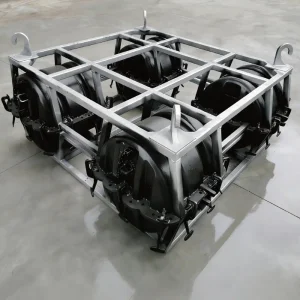
Standard rotomolding machinery imported without altitude thermal compensation frequently suffers from uneven curing, prolonged cycle times, and localized thermal degradation. Leading global toolmakers and machinery suppliers must supply molds engineered with optimized thermal mass ratios, integrated air-assist cooling manifolds, and custom internal venting systems (utilizing high-temperature PTFE and silicone cores) to maintain dimensional stability under Andean atmospheric conditions.
A rigorous technical comparison between CNC machined cast aluminum molds and hand-crafted fabricated steel molds designed for Colombian manufacturers.
| Engineering Parameter | Cast Aluminum Tooling (A356 Grade) | Fabricated Steel Molds (C45 / SS304) | Colombia Sector Advantage |
|---|---|---|---|
| Thermal Conductivity | 160–180 W/m·K (Rapid Heat Transfer) | 45–55 W/m·K (Standard Transfer) | Aluminum reduces oven cycle times by 22% in high-altitude plants (Bogotá). |
| Surface Finish & Detailing | CNC Milled & Texture Etched (Ra 0.8 to 3.2µm) | Hand Polished / Sheet Welded | Aluminum provides high aesthetic appeal for retail coolers, furniture, and toys. |
| Structural Integrity & Durability | Medium-High (100,000+ Cycles) | Ultra-High Stress Tolerant (250,000+ Cycles) | Steel excels in multi-ton agricultural tanks and septic containment units. |
| Mold Weight & Handling | Lightweight (Low inertia on machine arms) | Heavy (Requires heavy-duty arm load capacity) | Aluminum extends gear and bearing life on Carousel & Shuttle machines. |
| Initial Capital Investment | Higher initial tooling cost (CNC pattern required) | Cost-effective for large hollow parts (>5000L) | Steel delivers minimal cost-per-liter for large-scale municipal water tanks. |
Exploring real-world industrial deployments where custom rotomolding tooling solves critical operational and logistical challenges.
In the Coffee Triangle (Quindío, Risaralda, Caldas), rotomolded fermentation tanks, washing tubs, and bean transport hoppers require seamless interior surfaces to prevent microbial contamination. Custom cast aluminum molds with mirror-polished interiors guarantee effortless cleaning, chemical resistance to organic acids, and zero crevice corrosion.
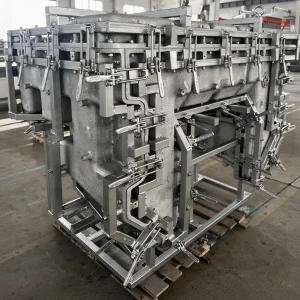
With expanding rural aqueduct initiatives across La Guajira and Chocó, the demand for underground septic tanks (1,000L to 15,000L) is soaring. Sheet-steel rotomolding molds equipped with internal ribbing structures enable the production of heavy-wall, crush-resistant polyethylene tanks designed for harsh terrain burial.
Mining operations in Colombia require cross-linked high-density storage vessels for hydrochloric acid, cyanide solutions, and water treatment reagents. Precision CNC molds facilitate double-wall containment construction, eliminating seam vulnerability and meeting strict NTC (Norma Técnica Colombiana) environmental safety guidelines.
Along Colombia’s dual Atlantic and Pacific coastlines, fishing industries are adopting foam-filled rotomolded marine buoys, docks, and workboat hulls. Molds utilizing specialized high-strength clamping mechanisms prevent parting line flash, yielding watertight structures resistant to high-salinity UV environments.
How Industry 4.0 automation, smart thermal sensors, and sustainable polymer dynamics are reshaping international manufacturing standard operating procedures.
Embedding wireless thermal sensors directly into mold cavities provides real-time Internal Air Temperature (IAT) telemetry, allowing automated oven adjustments and preventing under-curing or resin degradation.
Transitioning from traditional open gas flames to enclosed electric heating elements reduces energy losses by up to 35%, aligning Colombian manufacturing plants with international ESG sustainability standards.
Integrating robotic arm auto-weighing dispensers and pneumatic mold opening systems drastically decreases operator labor intensity, cutting cycle changeover times by more than 40%.
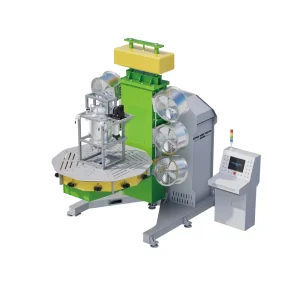
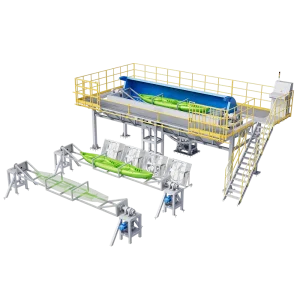
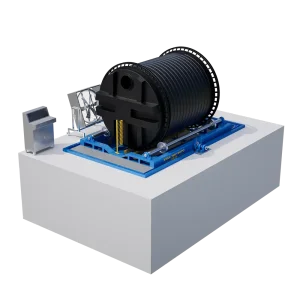
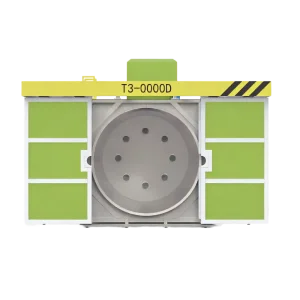
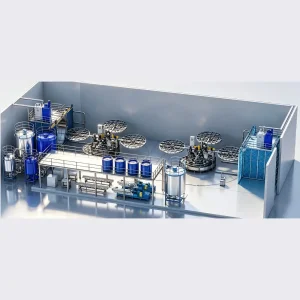
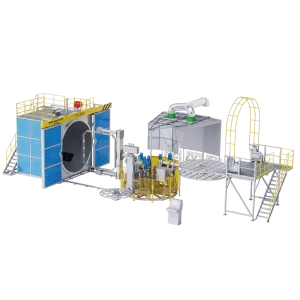
Explore our full line of industrial rock-and-roll machines, independent carousel stations, precision molds, and automated auxiliary feeding systems.
Expert technical insights regarding mold importation, maintenance, altitude adaptation, and production parameters for Colombian plastic processors.