Smart Industrial Engineering • Industry 4.0 Ecosystem
ODM Hot Products Exporters & Factories for Sandy Point Town
Empowering Saint Kitts & the Caribbean with High-Precision Rotational Molding Machinery, CNC Tooling, and Turnkey Polymer Manufacturing Systems Engineered for Tropical Climates and Maritime Resilience.
Primary Hot Products for Sandy Point Town Infrastructure
Directly matching Caribbean logistics, water storage, marine engineering, and municipal growth initiatives with proven automated rotational molding platforms.
Heavy Hollow Vessels
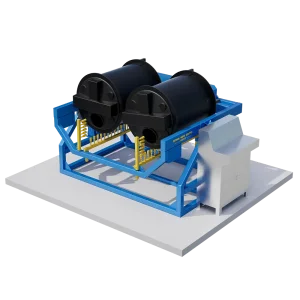
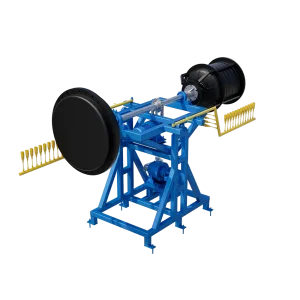
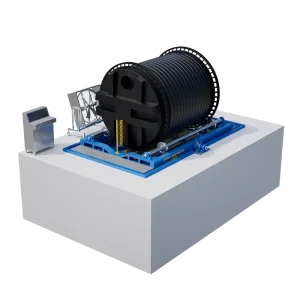
U-Arm Open Flame Rock & Roll Machine (Sandy Point Edition)
Designed for high-durability production of extended cylindrical potable water cisterns, chemical tanks, and drainage culverts with low idle fuel consumption.
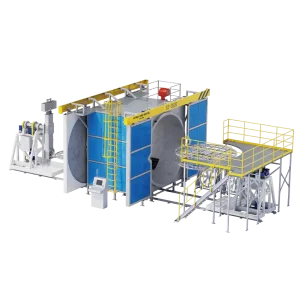
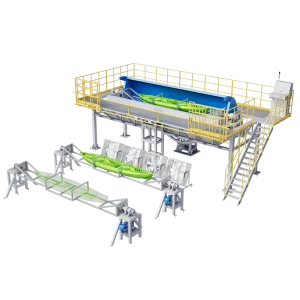
Electric Heating Eco-Rotomolding Machine (Sandy Point Series)
Cutting-edge electric resistance thermal chamber engineered for island environments seeking zero local emissions, tight heat curves, and solar microgrid integration.
Sandy Point Town: Commercial Realities & The Freight-Penalty Paradigm
Sandy Point Town, situated on the scenic north-western coast of Saint Kitts beneath the historic silhouette of Mount Liamuiga and Brimstone Hill, serves as a vital secondary commercial and agricultural anchor for the Federation of Saint Christopher and Nevis. Historically anchored by agrarian output, the region's contemporary economic roadmap focuses on commercial decentralization, modern agro-processing, coastal fisheries, eco-tourism, and infrastructural disaster hardening against tropical storm events.
For decades, commercial enterprises, contractors, and public works authorities in Sandy Point Town have faced the punitive economics of shipping voluminous, hollow polymer products across ocean lanes. Importing pre-molded water storage cisterns, coastal aquaculture floats, septic tanks, and chemical drums incurs excessive container freight fees—essentially paying international shipping lines to transport Caribbean air.
Strategic Economic Imperative: Implementing localized or regional Original Design Manufacturer (ODM) rotomolding capability eliminates up to 75% of landed freight costs while securing critical supply-chain autonomy for water security and coastal infrastructure.
By establishing targeted manufacturing partnerships with Chinese Industry 4.0 rotational molding exporters, local entrepreneurs, industrial cooperatives, and municipal developers in Sandy Point Town can transition from passive importers to autonomous producers. With modern automated machinery requiring minimal labor overhead and adaptable to localized power supplies, Sandy Point Town is ideally positioned to serve as a manufacturing and distribution node for northwest Saint Kitts and the neighboring Leeward Islands.
72%
Landed Freight Elimination
Ocean freight volume fees for imported hollow tanks are converted directly into local manufacturing margin and consumer savings.
Category 5
Hurricane Resilience Rating
Seamless rotomolded vessels engineered with UV-20+ stabilized LLDPE offer superior structural survivability compared to brittle fiberglass.
100%
Food & Potable Water Safe
Certified virgin FDA-grade resins provide zero-leach drinking water containment across extended Caribbean dry seasons.
< 18 Mo.
Capital Payback Period
High local gross margins on water storage and maritime hardware yield rapid capital recovery on turnkey ODM rotomolding lines.
Technical Innovation
Global Rotomolding Trends: Intelligence, Thermal Efficiency & Materials
The rotational molding sector is experiencing an unprecedented technological renaissance, migrating from empirical trial-and-error to digital-twin simulation and closed-loop thermodynamic control.
Closed-Loop IAT Process Telemetry
Traditional rotational molding relied heavily on ambient oven run-times, causing inconsistent cross-linking and structural embrittlement under fluctuating ambient temperatures. Modern platforms employ real-time Internal Air Temperature (IAT) sensors transmitting radio-frequency thermal telemetry directly through the mold cavity. This enables precise triggering of bubble dissolution and optimal polymer densification, trimming cycle times by 14% to 22% while guaranteeing absolute part-to-part repeatability.
Advanced Polyolefin & Engineering Polymers
While standard hexene and octene Linear Low-Density Polyethylene (LLDPE) remain the bedrock of volume manufacturing, high-performance compounding has unlocked cross-linked polyethylene (XLPE), high-density polyethylene (HDPE-100), and liquid polyamides (Nylon 6/12). These advanced matrices deliver extreme Environmental Stress Crack Resistance (ESCR > 1,000 hours ASTM D1693), elevated chemical resistance for fuel containment, and high impact performance in sub-tropical UV environments.
Thermodynamic Efficiency & Clean Energy
Faced with volatile fossil-fuel markets, manufacturers are adopting ultra-dense ceramic fiber insulation, modulating natural gas/LPG digital burners, and high-efficiency electric resistance heating systems. By redirecting turbulent forced-air flow through aerodynamically contoured oven plenums, convective heat transfer efficiency is increased by up to 35%, slashing therms consumed per kilogram of molded resin and enabling seamless compatibility with clean power grids.
Enterprise Procurement
The Strategic Procurement Matrix: Mitigating Cross-Border Capex Risk
International industrial equipment procurement demands structured risk management, rigorous Factory Acceptance Testing (FAT), and comprehensive lifecycle evaluation.
Core Procurement Audit Criteria
01
Tooling Metallurgy & CNC Tolerances
Molds must be machined from pore-free wrought aircraft-grade 6061-T6 aluminum blocks or precision cast A356 alloys to prevent thermal fatigue and porosity blisters.
02
Harmonized Automation Architecture
Machinery controls must utilize globally serviceable components (e.g., Siemens S7-1500, Schneider Electric switchgear) with bilingual HMI and remote VPN diagnostic bridges.
03
FAT Video Validation & Resin Test Runs
Pre-shipment Factory Acceptance Testing must execute full thermal cycles with the client’s designated resin specifications, documenting cycle timing and dimensional integrity.
04
Harsh Maritime Corrosion Protection
Structural frames, oven skins, and drive carriages require sandblasted epoxy-zinc priming and heavy polyurethane topcoats rated for C5-M marine exposure.
Total Cost of Ownership (TCO) vs. Landed Initial Outlay
For industrial buyers in isolated geographical zones like Saint Kitts, upfront equipment price represents less than 30% of a machinery line's true 10-year lifecycle expenditure. Substandard mechanical tolerances, poorly engineered drive bearings, or fragile burner controllers quickly induce catastrophic downtime when replacement components must be flown in under expensive customs clearance.
Procuring through premier Chinese ODM engineering exporters delivers an optimal intersection of robust industrial engineering and compelling capital expense. Chinese manufacturing hubs like Ningbo combine mature industrial supply ecosystems—enabling access to world-class precision gearbox manufacturers, automated laser cutting facilities, and advanced thermal modeling laboratories—with unmatched agility in custom equipment scaling.
A rigorous procurement strategy insists upon integrated spare-part staging (guaranteeing 24 months of high-wear seals, thermocouples, slip rings, and pneumatic actuators accompany the primary container) and complete turn-key auxiliary equipment synchronization, from high-speed cryogenic turbo-mill pulverizers to multi-arm chillers.
Manufacturing Supremacy
China Factory 4.0: Supply Chain Resilience & Custom ODM Agility
How Ningbo’s world-leading rotational molding equipment clusters engineer robust, highly automated platforms delivered with unmatched speed to the Caribbean basin.
End-to-End Vertical Integration
Unlike Western equipment aggregators who outsource primary structural fabrication, China's Tier-1 rotomolding plants in Ningbo host 5-axis gantry CNC milling, automatic submerged arc welding, mold heat-treatment furnaces, and electrostatic powder coating beneath a single corporate umbrella. This eliminates subcontractor delays, maintains stringent quality checks at every fabrication gate, and cuts lead times from 9 months down to 45–60 business days.
Agile ODM Customization Protocol
Every commercial application in Sandy Point Town presents specific spatial and physical demands—from plant floor ceiling limitations to high-voltage grid disparities (e.g., 230V/400V 60Hz Caribbean electrical standards). Chinese ODM engineering centers execute rapid finite element analysis (FEA) and mold draft modifications within 72 hours, optimizing structural arm loading, mold mounting patterns, and burner configurations before steel is cut.
Global Certification & Compliance
Export-ready rotational molding systems are fully certified according to European CE Machinery Directives (2006/42/EC), Low Voltage Directives (2014/35/EU), and ISO 9001:2015 quality frameworks. Machine safety packages include physical interlocked perimeter fences, dual-channel emergency stop circuits, pneumatic oven door anti-drop catchers, and burner flame supervision systems (EN 746-2 industrial thermal standard).
Applied Technology
Localized Deployment Scenarios: Transforming Sandy Point Town
Targeted, high-yield product categories engineered to solve acute environmental, municipal, and commercial challenges in northwest Saint Kitts.
Seasonal precipitation fluctuations necessitate reliable household and municipal water reservoirs. Multi-layer rotomolded tanks (with light-blocking black inner walls to prevent algae growth and food-grade virgin PE interior liners) provide hygienic, puncture-resistant water storage that withstands seismic shifts and tropical storm wind shear without structural failure.
Marine Aquaculture Cages & Floating Marinas
Sandy Point’s deep coastal waters provide ideal conditions for modern near-shore mariculture and small-craft docking. Rotomolded hollow HDPE pontoon floats, filled with high-density closed-cell polyurethane foam, resist marine boring organisms, salt encrustation, and aggressive UV photodegradation, maintaining positive buoyancy indefinitely.
Heavy-Duty Insulated Fish Coolers for Artisanal Fleets
Preserving the catch between fishing grounds and local markets in Sandy Point and Basseterre requires professional cold-chain hardware. Double-walled, foam-filled rotomolded cooler totes offer superior structural toughness, food-grade antimicrobial interiors, and ice-retention capabilities surpassing 7 days under direct equatorial sunlight.
Eco-Tourism Watercraft & Recreational Kayaks
Capitalizing on Brimstone Hill maritime tourism, seamless rotomolded sit-on-top kayaks, paddleboards, and utility dinghies molded from super-tough metallocene PE eliminate hull seams and rivets. They are virtually unsinkable, require no painting, and endure extreme shore impacts along rocky volcanic coastlines.
Protecting Saint Kitts' pristine groundwater table requires subterranean containment that will not crack under geological settling or soil saturation. Heavy-ribbed rotomolded septic cisterns and fertilizer mixing tanks withstand heavy soil loads without deformation while delivering complete chemical inertness against harsh liquid agricultural amendments and domestic sewage effluent.
Technical Comparison
Rotomolding Machine Architecture Benchmark Matrix
Engineering evaluation comparing kinematics, thermodynamic efficiency, capital commitment, and production suitability for Caribbean plant deployment.
Large Cylindrical Tanks, Workshop Batch Production
Lowest Initial Capex
Complete ODM Portfolio
Specialized Machinery & Tooling Systems for Sandy Point Exporters
Explore our complete lineup of precision-engineered shuttle platforms, high-tolerance CNC steel molds, clean heating units, and specialized testing equipment.
Compact Footprint
Compact Lined Shuttle Machine for Space-Optimized Plants
Linear configuration engineered specifically for facilities with limited floor footprints, reducing building capex while retaining high thermal throughput.
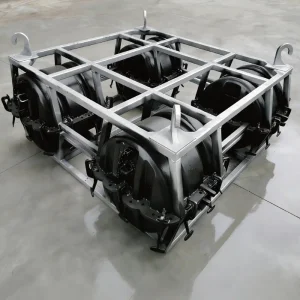
High-Tolerance Fabricated Steel Moulds for Large Water Cisterns
Reinforced fabricated carbon and stainless-steel molds tailored for massive vertical and horizontal water storage vessels with durable clamp-locking edges.
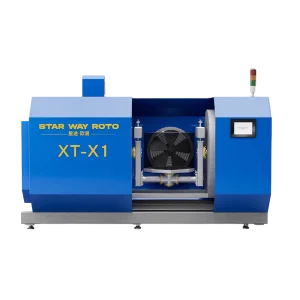
Small Open Flame Rock & Roll Machine: Starter Workshop Series
Ultra-cost-effective open-flame platform suited for Sandy Point micro-enterprises manufacturing intermediate drainage pipes, buoys, and chemical drums.
Intelligent Laboratory Machine for PE/PP/PA Resin Validation
High-precision scale machine designed for material formulation trials, color masterbatch melt testing, and academic material qualification before mass production.
Open Flame System for Steel-Lined Anti-Corrosion Tanks
Engineered for rotational lining of heavy steel pressure vessels, creating an impermeable chemical-resistant polyethylene layer for hazardous industrial liquids.
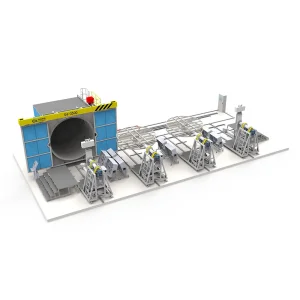
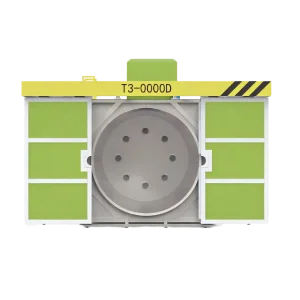
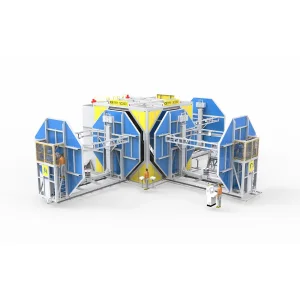
Square Shuttle Machine with Integrated Automated Oven Doors
Patented carriage-mounted door architecture that dramatically minimizes heat loss during station indexing, providing outstanding energy economy in 24/7 production.
Authoritative answers to critical engineering, installation, electrical compatibility, and logistical considerations for Caribbean manufacturing operations.
How does our plant configure machinery electrical systems for Saint Kitts' power infrastructure?
The public grid in Saint Kitts and Nevis generally provides 230V single-phase / 400V three-phase at 60Hz. During the preliminary engineering phase, our electrical design team specifies motor windings, servo drives, and Siemens or Schneider PLC modules engineered specifically for 60Hz inductive frequency. This prevents internal motor overheating and premature bearing failure caused by operating standard 50Hz equipment on 60Hz grid frequencies, while integrated industrial surge protectors guard against island line voltage fluctuations.
Which heating medium is optimal for a Sandy Point Town manufacturing facility: LPG, Diesel, or Electric?
The choice hinges upon local utility economics. Liquefied Petroleum Gas (LPG) provides the cleanest combustion among fossil fuels, minimizing burner nozzle carbon fouling and delivering fast thermal ramp rates (15–20 minutes to reach 280°C). Industrial Diesel provides lower fuel costs per BTU across the Caribbean but demands dual-fuel European burners (such as Riello or Baltur) with fuel pre-heaters and scheduled soot management. Electric Heating is highly recommended where factories have integrated rooftop solar PV arrays or where environmental regulations prioritize zero local emissions, eliminating the logistics of bulk liquid fuel delivery.
When should we invest in CNC-Machined Aluminum molds versus Cast Aluminum or Fabricated Steel?
CNC Machined 6061-T6 Aluminum is essential for consumer items requiring flawless surface cosmetics, tight dimensional tolerances, molded-in inserts, and complex parting lines—such as high-end cooler boxes, commercial kayaks, and playground assemblies. Cast A356 Aluminum is optimal for medium-sized organic shapes like agricultural troughs and chemical containers. Fabricated Steel Molds represent the most economical tooling investment for large, geometrically simple structures like 5,000L to 20,000L vertical water cisterns and underground drainage pipes, where tooling amortisation per unit dominates unit cycle time considerations.
What is the typical ocean transit schedule and customs routing to Saint Kitts?
Shipments depart directly from the Port of Ningbo-Zhoushan, proceeding via modern container transport routes connecting through Kingston (Jamaica) or Port of Spain (Trinidad) before arriving at the deep-water port in Basseterre. Ocean transit typically spans 35 to 45 calendar days. Complete logistics dossiers—including Bill of Lading, detailed packing lists, HS Code classification declarations (e.g., 8477.80 for plastics machinery), and Certificate of Origin documents—are coordinated in advance to ensure streamlined customs clearance and transport via the island’s ring road up to Sandy Point Town.
How are machine installation, commissioning, and technician training handled on-site?
We provide comprehensive two-tier commissioning protocols. First, our engineering team can dispatch experienced mechanical and process engineers directly to your plant in Sandy Point Town to oversee structural erection, burner gas-line balancing, PLC network configuration, and live-mold commissioning with your local personnel. Second, all systems include dedicated industrial 4G/Wi-Fi remote VPN modules, enabling our Ningbo software and thermal engineers to provide real-time remote process diagnostics, cycle telemetry optimization, and parameter backups around the clock.
Can your equipment process post-consumer recycled (PCR) plastics or eco-composites?
Yes. By pairing our machines with high-speed pulverizers fitted with multi-stage air classifiers, client plants can successfully incorporate 20% to 50% rotomolding-grade recycled polyethylene regrind into multi-layer wall configurations. A virgin food-grade PE barrier is applied to the interior, an economical recycled PE layer provides structural core mass, and a virgin UV-stabilized outer skin shields the component from solar degradation—drastically reducing virgin resin purchase costs while supporting Caribbean circular-economy goals.
Initiate Your Rotomolding Project for Sandy Point Town
Connect directly with our senior process engineers. Send us your component CAD drawings, target annual volume, and facility layout to receive a customized plant proposal, machine kinematic specification, and definitive ROI financial forecast within 48 hours.