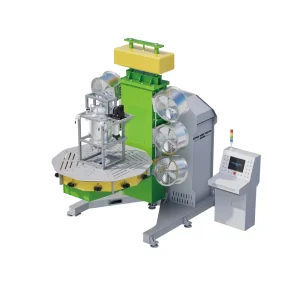
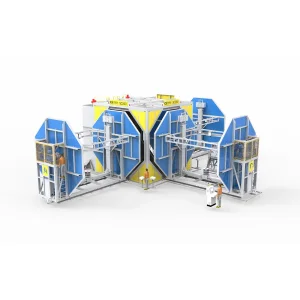
High-performance rotational molding equipment engineered for high throughput, precise thermal control, and zero-defect hollow product manufacturing.
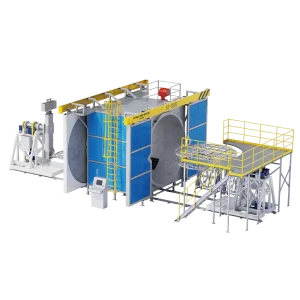
London, as a premier global hub for international trade, financial clearing, and engineering design standard-setting, plays a vital role in shaping the modern manufacturing supply chain. While physical fabrication often takes place in dedicated industrial parks across Europe, Asia, and North America, London-based engineering buyers, procurement executives, and international export companies dictate the quality metrics, sustainability mandates, and technical compliance specifications for heavy manufacturing equipment.
The contemporary economic landscape demands scalable, high-efficiency manufacturing solutions that minimize environmental footprints while maximizing operational yields. In the field of rotational molding—a process essential for manufacturing seamless, stress-free hollow plastic products ranging from massive chemical containment vessels to automotive fluid reservoirs and marine buoyancy systems—the demand for advanced equipment supplier partnerships centered through London management corridors has reached an all-time high.
The Thames corridor, connected UK port systems, and urban regeneration projects throughout Greater London drive immense consumption of heavy-duty hollow polymer assets. High-density polyethylene (HDPE) underground drainage tanks, specialized water treatment vessels, and chemical storage drums are subject to strict British Standard (BS) and UKCA certifications. Sourcing rotomolding machines that meet precision thermal profiling ensures zero micro-voids, guaranteeing long-term stress-crack resistance in challenging environments.
Corporate buyers headquartered in London are under strict regulatory mandates to report Scope 1, 2, and 3 emissions. Conventional rotomolding machinery, traditionally known for high gas consumption, is rapidly being replaced by electric-heating ovens, smart flame-management rock-and-roll units, and automated insulation chambers. Sourcing from export-compliant manufacturers guarantees that global operations align with Net-Zero carbon targets.
Rotational molding is fundamentally distinct from injection or blow molding due to its stress-free forming mechanism. Polymeric powder (typically LLDPE, HDPE, XLPE, PP, or PA12) is loaded into a hollow mold, which is subsequently heated while rotating biaxially along major and minor axes. Achieving uniform wall thickness across complex geometry requires precise control over thermal transfer, rotational speed ratios, and phase-change cooling curves.
The mathematical ratio between the major shaft rotation (speed ratio 1:1 to 1:5) and minor arm rotation dictates powder distribution dynamics. Advanced Siemens PLC control panels utilize real-time frequency inverters to dynamically adjust axis velocity depending on mold geometry, preventing resin pooling in deep recesses or severe thinning on sharp corners.
State-of-the-art wireless internal air temperature telemetry systems track resin melting phases, bubble pinhole dissolution, and crystallization onset. By accurately identifying the peak internal air temperature (PIAT—typically 190°C to 220°C for polyethylene), cycle times are reduced by up to 18% while preventing thermo-oxidative degradation of polymer chains.
Improper cooling induces warpage, residual internal stress, and dimensional variance. Multi-stage cooling chambers incorporating forced air convection, micro-mist water spraying, and pressure-regulated venting ensure controlled polymer crystallization rates (60%-70% crystallinity index), preserving impact strength even at sub-zero working temperatures (-40°C).
| Machine Category | Heating Technology | Primary Industrial Application | Max Product Capacity | Thermal Efficiency Rating |
|---|---|---|---|---|
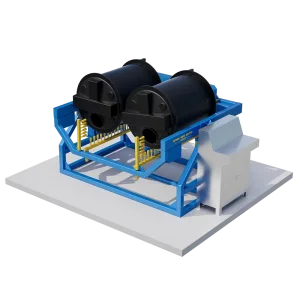
| U-Arm Open Flame Rock & Roll | Direct Gas Flame / Infrared | Large Cylindrical Tanks, Marine Pontoons | Up to 30,000 Liters | 88% Direct Contact Efficiency |
| Multi-Arm Carousel System | Enclosed Recirculating Hot Air Oven | Mass Production: Coolers, Automotive Parts | 2,000 - 8,000 Liters / Cycle | 94% Chamber Heat Recovery |
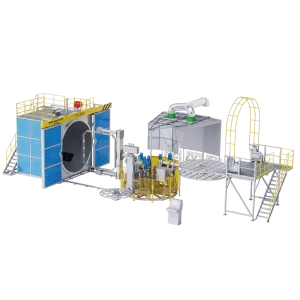
| High-Load Shuttle Machine | Hybrid Electric / Gas Chamber | Custom Moldings, Heavy Chemical Drums | Up to 20,000 Liters | 91% Variable Load Efficiency |
| Eco Electric Heating Oven | Zero-Emission Resistance Heating | Medical Containers, Cleanroom Components | 1,000 - 5,000 Liters | 98% Carbon-Neutral Compatible |
When multinational firms in London, Europe, and North America evaluate capital expenditure (CapEx) investments for heavy polymer molding machinery, capital price represents only 25% to 35% of the total 10-year operational cost structure. Energy consumption, scrap rate reduction, maintenance downtime, and tooling versatility comprise the overwhelming balance.
Disruptions in global logistics routes emphasize the need for standardized commercial components. By integrating internationally recognized control architecture (e.g., Schneider electrics, Siemens PLCs, Omron temp modules, Italian Riello burners), London-backed global plants can source replacement components locally in under 24 hours, eliminating extended factory downtime.
As rotational molding evolves into an automated, data-driven smart manufacturing process, leading machinery exporters are deploying advanced digital twin architectures and real-time process monitoring tools. The strategic integration of Industry 4.0 paradigms guarantees higher reproducibility and minimal human intervention.
Infrared thermal imaging arrays inside the oven chamber scan mold surfaces continuously. Deep-learning algorithms analyze thermal maps to detect localized cold spots before powder adhesion begins, dynamically modulating burner flame vectors to eradicate thin spots and pinhole porosity.
Cloud-connected PLC systems allow London engineering managers to oversee performance metrics across global production units in real time. Predictive maintenance algorithms monitor motor current draw, arm bearing vibration levels, and heating element resistance to prevent unplanned factory outages.
Modern rotomolding systems must process bio-based polyethylene and high-percentage Post-Consumer Recycled (PCR) resins without sacrificing tensile properties. Special low-shear nitrogen purging arms during heating cycles prevent oxidation of recycled polymer matrixes.
Exporters serving London and the wider UK market must strictly align with European CE directives and UKCA (UK Conformity Assessed) legislation. Mechanical safety, electrical enclosure isolation, pressuring vessel compliance, and burner safety interlocks are non-negotiable prerequisites for industrial operation.
To ensure zero installation friction for international buyers, certified field engineers execute pre-shipment Factory Acceptance Testing (FAT). Comprehensive Site Acceptance Testing (SAT), foundational vibration isolation checks, calibration of burner air-to-fuel stoichiometry, and operator training are conducted directly at client facility sites worldwide.
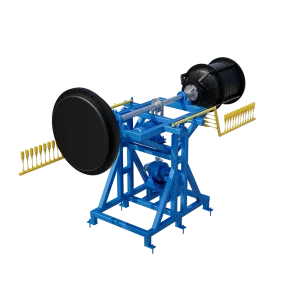
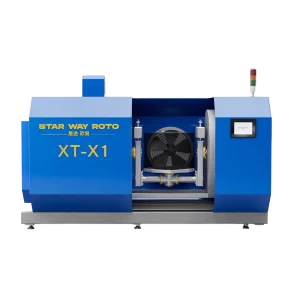
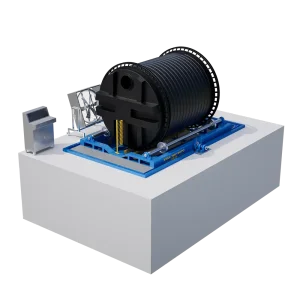
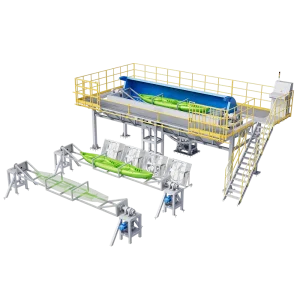
Explore our full range of custom shuttle systems, specialized open flame machinery, laboratory test platforms, CNC aluminum tooling, and eco-friendly electric ovens.
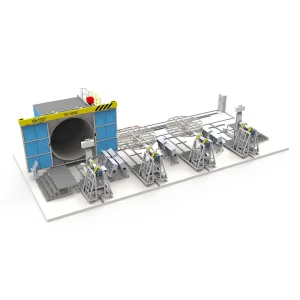
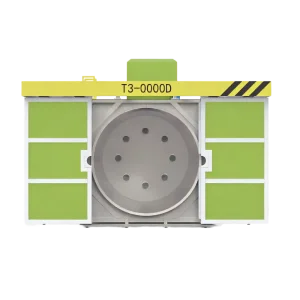
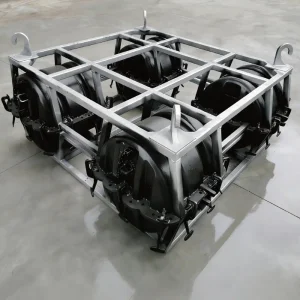
Expert engineering responses tailored for procurement directors, plant engineers, and international equipment importers.
Partner with an industry-leading rotomolding equipment manufacturer and exporter. Request a customized technical quote, plant floor layout analysis, or machinery catalog today.
Send Inquiry Now