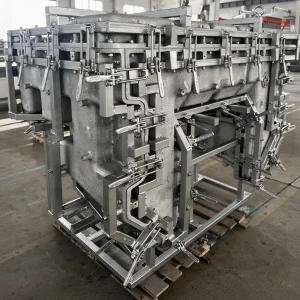
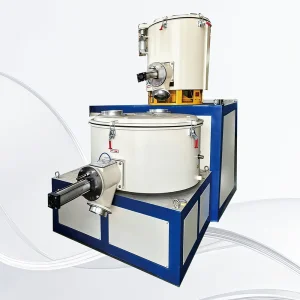
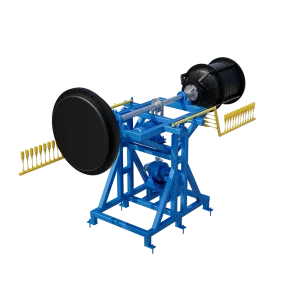
High-durability cast aluminum and CNC steel moulds tailored for Chubu industrial applications.
Why Greater Nagoya (Greater Chubu Hub) represents Japan's most demanding plastic tooling landscape.
Nagoya is the nerve center of Japan's automotive empire (anchored by Toyota Motor Corporation and its Tier-1 suppliers like Denso, Aisin, and Toyoda Gosei). Lightweight rotational molding is increasingly replacing metal weldments for complex HVAC ducting, DEF/AdBlue expansion tanks, sub-frame covers, and EV battery cooling fluid reservoirs.
The Port of Nagoya, handling the highest international cargo throughput in Japan, generates massive demand for durable material handling assets—including heavy-duty plastic pallets, chemical dosing tanks, marine buoy systems, and ruggedized housing shells for industrial machinery manufacturers located in Aichi, Mie, and Gifu prefectures.
Manufacturing buyers in Nagoya operate under zero-defect methodologies (Kaizen and Poka-Yoke). Delivering rotational moulds to this market requires strict dimensional tolerances (±0.5mm), flawless CNC surface finishes, engineered venting systems, and uniform heat dissipation across complex geometries.
Traditional domestic Japanese mould suppliers face rising energy costs, labor shortages, and extended tooling lead times (often 14–20 weeks). By integrating advanced Chinese precision CNC machining and A356 aluminum casting with direct ocean shipping from Ningbo to Nagoya Port (just 3 to 5 days transit), Nagoya enterprises achieve a 40% reduction in lead times while maintaining strict JIS compliance.
Why leading Nagoya procurement teams choose our integrated Ningbo manufacturing plant for rotational moulds and automated machinery.
| Evaluation Parameter | Local Domestic Tooling (Japan) | StarWay Roto OEM Synergy (Ningbo Base) | Advantage for Nagoya Procurement |
|---|---|---|---|
| Tooling Fabrication Lead Time | 12 – 18 Weeks | 4 – 6 Weeks (Including CAD Validation) | 65% Faster Time-to-Market for New OEM Parts |
| Mould Construction Material | Standard Cast Aluminum / Fabricated Steel | High-Density A356 Aircraft Aluminum & CNC Steel | Superior Thermal Conductivity & Longer Cycle Life |
| CAD/CAM Simulation & Flow | Basic Thermal Mapping | 3D MoldFlow Thermal Analysis & FEA Stress Testing | Eliminates Part Warpage & Wall Thickness Defects |
| Surface Finishing (VDI/Texturing) | Manual Polish / Outsources Tech | In-house CNC Texture Engraving & Sandblasting | Meets Automotive Interior Aesthetic Standards |
| Overall Tooling Capital Expenditure | High Overhead Costs | Optimized Cost Structure (35%-50% Savings) | Maximizes ROI for High-Volume OEM Contracts |
Adapting to Japan's 2030 Carbon Neutrality goals and intelligent manufacturing initiatives.
With Japan targeting aggressive decarbonization, open-flame rotomolding is rapidly yielding to eco-friendly electric heating rotomolding machines. Electric heating provides zero on-site combustion emissions, precise thermal zone regulation (+/- 1°C), and lowers factory energy costs by up to 30%.
Modern Nagoya applications demand high-performance polymers beyond basic LLDPE. Advanced rotomolding machinery must now process Polyamide 12 (PA12) for high-temperature automotive ducts and Cross-Linked Polyethylene (XLPE) for aggressive chemical storage containers.
Integration of internal mould temperature sensors (TP-Pi wireless systems) and real-time infrared thermal camera loops allows operators to monitor polymer densification and bubble elimination automatically, ensuring consistent structural density.
Customized rotomolding systems deployed across Nagoya's primary manufacturing sectors.
Custom CNC aluminum moulds designed for seamless, air-tight DEF tanks, washer fluid reservoirs, roof fairings for heavy trucks, and shock-absorber ducting. Mold design includes integrated brass inserts and complex parting line locks.
For chemical refiners along Ise Bay and Nagoya Port, our Rock & Roll machines and large-scale steel moulds manufacture steel-lined plastic storage vessels ranging from 500L to 20,000L with corrosion-resistant lining layers.
Rotomolded insulated fish boxes, dry ice containers, and fresh food distribution crates optimized for Chubu’s agricultural and seafood supply chains. Dual-wall polyurethane foam injection capability ensured by precise mould tolerances.
Demonstrated expertise, rigorous inspection standards, and reliable international delivery.
Every rotational mould and machine manufactured in our 20-acre facility undergoes full compliance testing under ISO 9001 quality management protocols and European CE safety standards.
Mould mating surfaces and complex curved contours are verified using FARO 3D laser scanners and stationary CMM machines to guarantee exact alignment with your native 3D CAD step files.
We perform pre-shipment plastic sampling in our R&D test bay. Customers receive complete resin melt index reports, sample part wall-thickness ultrasonic test maps, and video trial footage prior to container loading.
Addressing technical, logistical, and commercial inquiries for Japanese industrial buyers.
Our primary production base in Ningbo is directly adjacent to Ningbo-Zhoushan Port. Direct container shipping lanes to Port of Nagoya take approximately 3 to 5 transit days. Including export customs clearance, total port-to-factory delivery to Aichi Prefecture typically requires less than 7–10 days post-completion.
Cast aluminum (A356) moulds offer significantly higher thermal conductivity, resulting in faster heating/cooling cycles and uniform wall thickness distribution—ideal for complex automotive components and consumer products. Fabricated steel moulds are more cost-effective for large, simple geometric forms like 5,000L+ water tanks or vertical chemical storage vessels.
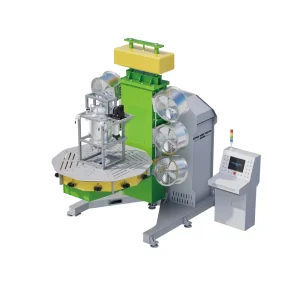
Yes. Our advanced carousel and shuttle rotomolding machines feature closed-loop micro-processor temperature control systems capable of maintaining accurate oven temperatures up to 350°C. Combined with inert gas purging systems (nitrogen blanketing), our lines reliably process PA6, PA12, Polypropylene (PP), and Cross-linked PE (XLPE).
Our engineering team supports native CAD formats (STEP, IGES, SolidWorks, CATIA). We perform comprehensive MoldFlow simulations to optimize wall thickness variation, draft angles (minimum 3° to 5° recommended), parting line locations, and venting channel sizes before tool steel or aluminum casting begins.
We provide remote diagnostic support via integrated IoT PLC gateways on all our equipment. In addition, we supply critical spare parts kits (burners, arm bearings, seal gaskets, heaters) with every shipment and coordinate on-site technician deployment for commissioning and operator training across the Chubu region.
Electric heating rotomolding eliminates direct hydrocarbon emissions, simplifies environmental permitting in urban industrial parks near Nagoya, provides uniform heat transfer across multi-cavity moulds, and reduces thermal wear on mould structures, significantly extending tooling lifecycle.
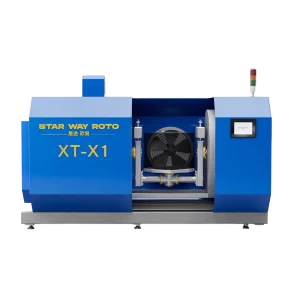
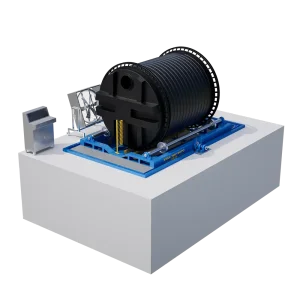
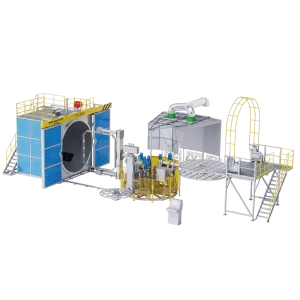
Complete rotomolding production lines, laboratory testing systems, and high-capacity carousel machinery.
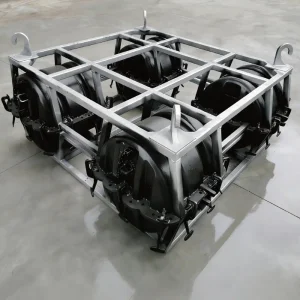
Contact our senior engineering leads today for CAD reviews, tooling quotes, or complete automated machine line consultations tailored for Chubu industrial standards.
Send Inquiry Now