
High-efficiency rotational molding systems optimized for Japanese energy protocols, compact footprint limits, and extreme dimensional precision.
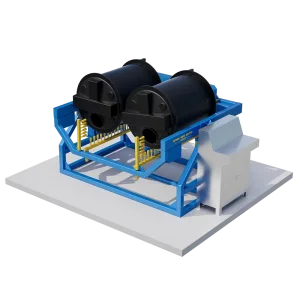
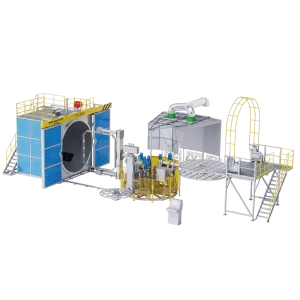
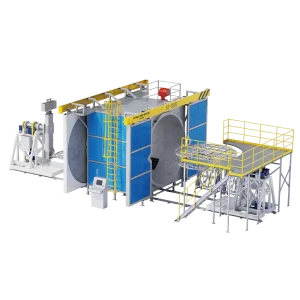
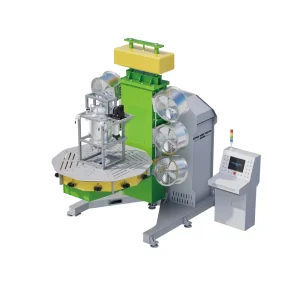
The Greater Tokyo Area, encompasses over 37 million residents and serves as the economic nerve center of Japan, boasting one of the world's most dense concentrations of high-tech manufacturing, urban infrastructure logistics, environmental engineering firms, and commercial marine transport networks. As Tokyo advances its ambitious "Zero Emission Tokyo Strategy" and aggressively upgrades its urban resiliency against natural seismic events and super typhoons, the regional demand for heavy-duty, seamless, chemical-resistant polymer products has surged exponentially.
Rotational molding (rotomolding) has emerged as the premier manufacturing technology for Tokyo’s industrial sectors due to its unique capability to produce stress-free, uniform-wall, large hollow objects with exceptional structural integrity. Unlike injection or blow molding, rotomolding eliminates structural weak points caused by weld lines or high internal stress, making it the preferred method for producing Tokyo's critical civil infrastructure components—ranging from subterranean stormwater attenuation modules and JIS-compliant hazardous chemical storage units to smart city automated waste management systems and heavy-duty maritime navigation buoys deployed in Tokyo Bay.
However, supplying the Tokyo market demands an unprecedented commitment to precision engineering, space-optimized equipment design, and strict material safety certifications. Japanese industrial buyers enforce zero-defect quality management regimes, such as 5S and Kaizen frameworks, requiring imported manufacturing equipment to meet exact tolerances, energy consumption limits (TEPCO 50Hz grid compatibility), and low carbon output standards. Consequently, Tokyo manufacturers actively seek strategic partnerships with advanced foreign original equipment manufacturers (OEMs) capable of delivering customized, automated, and certified rotomolding systems.
China’s rotomolding equipment manufacturing sector, particularly centered around the East China industrial clusters in Ningbo and Zhejiang, has undergone a technological revolution. By combining high-capacity digital manufacturing, advanced CNC tooling, intelligent PLC automation, and deeply integrated raw material supply chains, top-tier Chinese manufacturers now deliver world-class machinery at compelling Total Cost of Ownership (TCO) benchmarks. For Tokyo-based enterprises facing high local land costs, steep labor rates, and rigorous environmental mandates, importing machinery and tooling from verified Chinese manufacturers provides a decisive competitive edge.
Integration of Siemens or Mitsubishi PLC automated control systems, multi-zone thermal closed-loop feedback, real-time wireless arm temperature monitoring, and high-precision CNC machined aluminum tooling ensures compliance with Tokyo’s strict JIS product specifications.
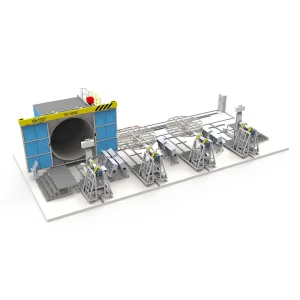
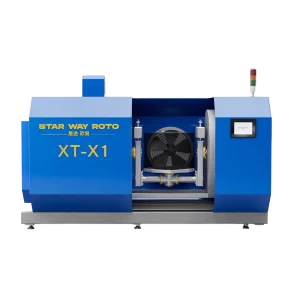
Specially engineered Lined Shuttle and Multi-Arm Carousel configurations designed to maximize usable chamber volume while minimizing floor space utilization—critically important for Tokyo factories where real estate costs per square meter are among the highest in East Asia.
Advanced burner technology (natural gas/LPG) featuring ceramic insulation, fast heat transfer ovens, and eco-friendly clean electric heating options that comply directly with Tokyo Metropolitan Government’s stringent air quality and carbon noise pollution regulations.
Direct sea logistics routes operating daily from Ningbo/Shanghai Ports directly to the Port of Tokyo (Oi and Shinagawa Terminals) reduce transit lead times to as short as 3 to 5 days, enabling rapid deployment of customized machinery and spare parts.
To meet the specialized demands of Tokyo’s diversified economic ecosystem, modern rotational molding equipment must be tailored to specific micro-applications. Below are four key industrial sectors in the Tokyo Metropolitan Area where our advanced rotomolding machines and custom tooling provide high-value operational solutions:
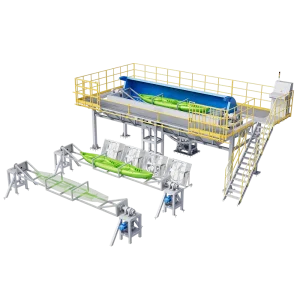
Due to Tokyo’s vulnerability to seismic activity and torrential rainfall events, municipal planning authorities mandate robust subterranean water management systems. Rotomolded linear low-density polyethylene (LLDPE) rainwater harvesting tanks, underground septic systems, and emergency potable water reservoirs offer superior flexibility against ground movement compared to traditional brittle concrete or welded metal tanks. Our U-Arm and Shuttle rotomolding machines produce multi-layer anti-microbial storage tanks ranging from 1,000L to 20,000L with zero seamless leak points.
The Port of Tokyo handles tens of millions of metric tons of cargo annually. Marine infrastructure demands ultra-durable, UV-stabilized, foam-filled rotomolded buoys, floating dock pontoons, and barrier systems. Using highly accurate CNC aluminum moulds, our equipment manufactures heavy-duty outer hulls featuring uniform wall thickness, high impact resistance, and long-term resistance to saltwater corrosion and marine biofouling.
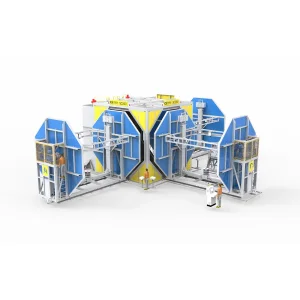
Tokyo serves as the premier distribution hub for Japan’s pharmaceutical and high-end food industries. Maintaining precise temperature integrity across the last-mile delivery network requires heavy-duty insulated passive cooling containers. Rotomolded insulated boxes produced on our automated Carousel and Square Shuttle machines feature double-wall polyurethane (PU) foam injection capability, ensuring thermal retention for over 72 hours under ambient summer temperatures in Tokyo.
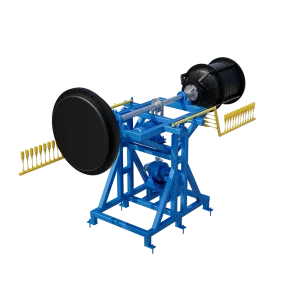
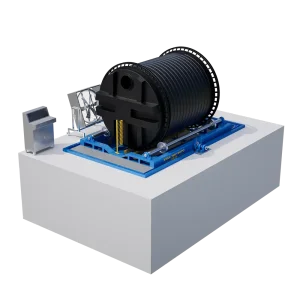
With major semiconductor R&D facilities and electronic manufacturing lines surrounding the Tokyo Bay industrial area, the safe storage of ultra-pure chemicals, acids, and alkalis is paramount. Our specialized Rock and Roll machines for steel-lined plastic storage tanks allow Tokyo enterprises to produce dual-laminate chemical vessel systems, combining the structural strength of outer steel with the high corrosion resistance of seamless inner fluoropolymer or high-density polyethylene (HDPE) linings.
Achieving flawless structural integrity in rotomolded parts requires precise mathematical control over thermal cycles, internal air temperature (IAT), biaxial rotation speed ratios, and polymer crystallization dynamics. In traditional open-flame systems, thermal variance across the mould surface often leads to warped geometry, uneven wall thickness, and reduced impact strength—unacceptable defects under Japanese Industrial Standards (JIS K 6760 / JIS K 6922).
Our latest generation of rotomolding equipment addresses these engineering challenges through four core technological innovations:
Navigating international machinery acquisition requires complete transparency across regulatory compliance, factory acceptance testing, and post-installation support. We adhere to a structured, 6-stage Quality Assurance & Delivery Framework customized for Tokyo industrial importers:
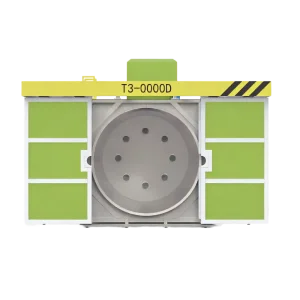
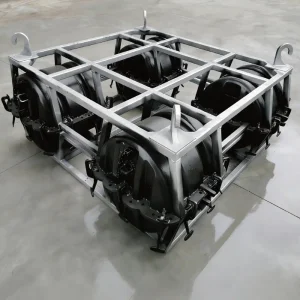
Explore our full line of specialized rotomolding equipment, space-saving shuttle units, laboratory testing systems, and custom steel tooling.
Detailed answers regarding electrical grid compatibility, Japanese Industrial Standards (JIS), lead times, and thermal management.
All equipment exported to the Tokyo Metropolitan Area is custom-built with localized electrical control cabinets engineered specifically for Tokyo Electric Power Company's (TEPCO) 200V 3-phase 50Hz grid system. We utilize top-tier industrial control components, including Schneider electric breakers, Omron relays, and Mitsubishi or Siemens VFDs certified for 50Hz operation. Dual-voltage transformers and dedicated ground fault protection circuits are integrated into every control unit to satisfy Japanese Industrial Safety and Health Law regulations.
For manufacturing plants located inside Tokyo's urban districts or strict environmental zones, we offer CE-certified Electric Heating Rotomolding Series machines. These systems eliminate open combustion emissions completely, utilizing high-density infra-red electric heating elements with thermal efficiency ratings exceeding 92%. For high-capacity plants outside urban cores using natural gas or LPG, our closed-loop forced air ovens incorporate ultra-low NOx burners and thick high-density rock wool thermal insulation, easily complying with Tokyo’s Environmental Protection Ordinance.
Our primary manufacturing base in Ningbo is situated adjacent to the Port of Ningbo-Zhoushan, which offers direct fast-boat container shipping lanes to the Port of Tokyo (Oi and Shinagawa Terminals). Ocean transit time takes approximately 3 to 5 days. Total delivery lead time—including machine fabrication, Factory Acceptance Testing (FAT), custom export packing, and maritime transit—typically spans 45 to 60 days depending on machine complexity and custom tooling requirements.
Yes. Our tooling facility employs 5-axis CNC high-speed machining centers capable of holding dimensional tolerances within ±0.1mm. Milled aluminum and fabricated steel moulds undergo rigorous coordinate measuring machine (CMM) inspections and ultrasonic wall thickness validation. We supply full metallurgical certification for raw materials (such as A356 or 6061-T6 aluminum alloys), verifying that finished polymer products molded from our tooling consistently satisfy JIS K 6760 and JIS K 6922 mechanical performance benchmarks.
Whether you require a compact electric heating shuttle machine for space-restricted urban operations or custom CNC precision moulds for industrial logistics containers, our engineering team is ready to deliver tailored solutions.
Send Inquiry Now