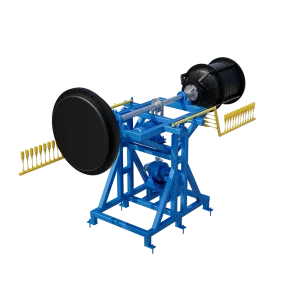
Decoding how Original Design Manufacturing (ODM) redefines structural polymer performance, thermal cycle efficiency, and total cost of ownership (TCO) in rotational molding.
Rotational moulding (rotomoulding) has undergone a fundamental metamorphosis over the past decade. Once categorized as a low-pressure processing technique restricted to basic, low-tolerance hollow containers, modern rotational moulding now occupies a critical nexus in industrial manufacturing. Today, original equipment manufacturers (OEMs) and tier-1 procurement executives demand complex, stress-free, seamless, multi-wall hollow parts capable of replacing heavy metal fabrications, fiberglass structures, and multi-component assemblies. At the epicenter of this technological leap is an experienced ODM Rotational Moulds Manufacturer & Company capable of bridging the gap between advanced polymer physics, thermal fluid dynamics, and precision CNC/cast tooling metallurgy.
The traditional OEM subcontracting model—where a customer provides a static 2D drawing and expects the toolmaker to reproduce it mechanically—is rapidly becoming obsolete. Under the Original Design Manufacturing (ODM) framework, engineering leadership shifts to specialized tooling architects. An elite ODM partner integrates raw resin behaviors (such as linear low-density polyethylene [LLDPE], cross-linked polyethylene [XLPE], polypropylene [PP], polyamide [PA/Nylon], and fluoropolymers) directly into the tooling's structural geometry. Through advanced computer-aided design (CAD), Finite Element Analysis (FEA), and Computational Fluid Dynamics (CFD) thermal modeling, ODM tooling eliminates chronic manufacturing defects like localized wall-thinning, post-mould warpage, internal stress concentrations, and extended heating cycles before steel or aluminum is ever cut.
Unlike injection moulding, where molten plastic is driven into a cavity under extreme hydraulic pressure (up to 2,000 bar), rotational moulding relies entirely on gravity-driven powder flow and biaxial thermal sintering under atmospheric pressure. Consequently, the mould cavity is not merely a geometric boundary—it acts as the primary heat exchanger. Thermal transfer efficiency through the mould wall governs polymer nucleation, bubble dissolution, and mechanical isotropic strength.
To understand the enterprise value proposition, procurement directors must evaluate the structural divergence between transactional OEM mould fabrication and strategic ODM rotomould engineering:
| Evaluation Parameter | Legacy OEM Contract Tooling | Advanced ODM Enterprise Engineering |
|---|---|---|
| Design Authority & IP | Client provides static CAD; manufacturer blindly builds to drawing specs without thermal validation. | ODM co-engineers CAD for rotational sintering physics, parting line optimization, and structural ribbing. |
| Thermal Budgeting | Uniform wall thickness across mould base; ignores differential cooling rates across complex contours. | CFD-driven wall thickness zoning, tailored heat-sink fins, and integrated forced-air cooling channels. |
| Material Compatibility | Restricted to standard LLDPE/HDPE powders due to rigid mould release dynamics. | Custom engineered for engineering polymers (PA12, XLPE, PP, recycled PC/ABS blends) with micro-textured surfaces. |
| Dimensional Precision | Typically ±1.5% to ±2.0% variance; relies heavily on post-mould cooling jigs and manual flame adjustments. | Precision CNC/Cast tolerances down to ±0.05mm; predictable shrink management via volumetric FEA. |
| Production Cycle Time | Standard thermal inertia; prolonged heating/cooling cycles increase energy consumption per part. | Optimized thermal conductivity alloys reduce cycle times by 15%–30%, directly lowering unit production costs. |
Key structural vectors driving the adoption of high-precision rotational moulds across international industrial and commercial sectors.
Global original equipment manufacturers are aggressively transitioning from fabricated steel, aluminum sheet metal, and stainless tanks to single-piece rotomoulded polymers. This shift reduces total component count, eliminates weld-seam failure points, and imparts 100% corrosion resistance for marine, chemical, and heavy infrastructure applications.
Modern applications increasingly mandate multi-skin wall structures—such as an aesthetic outer PE layer, a closed-cell insulated polyurethane/PE foam core, and a chemical-resistant virgin inner liner. ODM tooling is now engineered with specialized drop-box mechanisms and thermal barriers to execute sequence dosing without opening the oven.
Energy consumption during the oven heating phase represents up to 35% of total rotomoulding operational expenditure. High-tier ODM manufacturers deploy advanced aluminum alloys (such as A356 cast aluminum and 6061-T6 billet) engineered with optimized thermal mass to maximize BTU absorption while minimizing cooling cycle hysteresis.
Industry 4.0 standards have introduced Internal Air Temperature (IAT) monitoring directly into the rotating mould arm. Advanced ODM moulds are pre-machined with wireless thermocouple glands, allowing real-time telemetry of polymer melting, bubble removal, and peak internal air temperature (PIAT) during live production runs.
Industrial design requirements now mirror automotive-grade interior standards. ODM rotomould makers utilize micro-bead blasting, chemical acid-etching, and direct 5-axis laser texturing to produce matte, leather-grain, or slip-resistant geometric patterns directly onto the mould cavity's interior walls.
How multinational buyers evaluate tooling vendors to protect capital investment, guarantee tooling longevity, and ensure global compliance.
Sourcing heavy rotomoulding capital equipment and custom tooling from overseas vendors requires rigorous risk management. Corporate procurement teams, supply chain directors, and chief technology officers (CTOs) must balance aggressive target unit costs against long-term operational risks. Selecting a certified, audited ODM Rotational Moulds Manufacturer & Company mitigates systemic risks through four core engineering pillars:
The primary point of failure in low-quality cast aluminum moulds is internal porosity. Micro-voids embedded deep within the cast aluminum structure act as thermal insulators, causing localized "cold spots" on the mould cavity surface. This results in uneven resin sintering, unpredictable pinholes, and premature fatigue cracking under thermal cycling (200°C to 20°C). Premier ODM manufacturers enforce strict foundry controls: utilizing virgin A356.2 aluminum ingot, degasifying melt pools with argon purging, and performing X-ray non-destructive testing (NDT) to guarantee zero porosity in critical structural zones.
Parting line mismatch is the leading cause of excessive post-mould finishing labor and aesthetic rejections. Advanced ODM rotomould tooling incorporates CNC-machined tongue-and-groove or double-stepped steel/aluminum parting lines. Engineered with heavy-duty toggle latches or pneumatic clamping systems, these parting lines maintain perfect registration even after thousands of expansion-contraction thermal cycles, virtually eliminating plastic flash and reducing manual trimming costs to zero.
Global buyers operating across North America, Europe, and Asia-Pacific require complete traceability. Factory production lines must operate under certified ISO 9001:2015 quality management systems, with raw material mill certificates, heat-treatment logs, and full CE-marking compliance for integrated automation machinery, carousel arms, and burner assemblies.
Why Ningbo and Yangtze River Delta industrial clusters represent the premier global destination for high-complexity rotomould tooling.
China’s transformation into an advanced industrial powerhouse is nowhere more evident than in specialized polymer machinery and precision tooling fabrication. Anchored in key manufacturing hubs such as Ningbo, Zhejiang Province, Chinese ODM rotomould manufacturers combine complete vertical supply-chain integration with cutting-edge Industry 4.0 digital infrastructure.
Within a 50-kilometer radius of Ningbo's industrial zones, the entire rotomoulding ecosystem is concentrated: specialized aluminum foundries, 5-axis CNC machining centers, chemical etching laboratories, heat treatment facilities, frame fabrication shops, and rotomoulding test labs. This geographic density compresses tooling lead times by up to 40% compared to European or North American counterparts.
Investment in large-format 5-axis CNC machining centers allows Chinese ODM factories to mill massive billet aluminum moulds (up to 4.5 meters in length) directly from solid forged blocks. This eliminates internal welds, yields pristine surface uniformity, and delivers sub-millimeter geometric accuracy across ultra-large structural components.
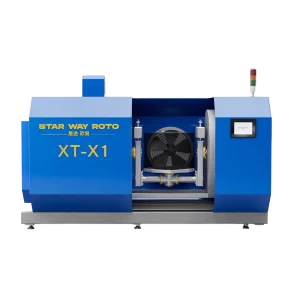
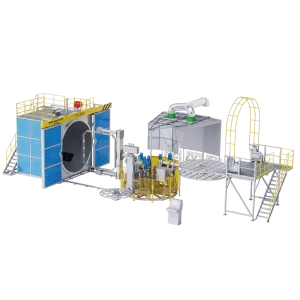
Leading Chinese ODM suppliers do not merely ship unproven steel or aluminum molds. Equipped with internal carousel, shuttle, and rock-and-roll rotomolding machines, ODM manufacturers perform real-world trial runs (T1 samples) using client-specified resins. Full CMM dimensional reports and wall-thickness ultrasound scans are delivered prior to final export shipping.
Selecting the optimal tooling material matrix based on production volume, part geometry, surface finish requirements, and capital budget.
A fundamental role of an expert ODM Rotational Moulds Manufacturer & Company is advising global clients on the precise metallurgical selection for their specific project requirements. Below is an engineering breakdown of the three primary rotomould construction methods:
| Tooling Material / Type | Optimal Applications | Thermal Conductivity | Structural Durability | Lead Time & Cost Profile |
|---|---|---|---|---|
| Cast Aluminum (A356 Alloy) | Complex 3D geometries, sculpted shapes, outdoor toys, medical housings, and textured consumer goods. | High (~160 W/m·K); rapid, even heat transfer minimizes cycle time. | Excellent; withstands thermal cycling up to 50,000+ shots with proper care. | Moderate lead time; cost-effective for intricate contours requiring wood/CNC pattern carving. |
| CNC Machined Billet (6061-T6 / 7075) | Ultra-high precision industrial parts, small-to-medium automotive components, threaded caps, and zero-defect enclosures. | Very High (~170–200 W/m·K); uniform grain structure eliminates thermal hotspots. | Superior tensile strength; zero porosity, highly resistant to deformation or parting-line wear. | Higher initial capital investment; rapid 5-axis CNC machining compresses production timeline. |
| Fabricated Sheet Steel / Stainless Steel | Large cylindrical water tanks, septic vessels, chemical storage containers, simple geometric utility products. | Moderate (~50 W/m·K); requires longer thermal soaking cycles in the oven. | Robust structural steel; easily repaired or modified in the field via standard welding. | Lowest initial tooling cost; fast turnaround for large-volume hollow structures. |
Engineered rotomould solutions tailored to stringent international standards and specialized operating environments.
Heavy-duty navigation buoys, marina floating docks, vessel fuel tanks, and jet-ski docks. Tools are engineered with internal foam-filling ports, salt-water corrosion-resistant parting lines, and UV-stabilized resin specs to withstand harsh maritime environments.
Seamless hydraulic oil reservoirs, DEF (Diesel Exhaust Fluid) tanks, tractor cabins, and air intake ducts for construction equipment. ODM tooling ensures strict wall-uniformity to pass zero-leakage pressure testing (up to 0.5 bar continuous pressure).
Large-capacity chemical sprayers, liquid fertilizer storage tanks, waste management containers, and septic bio-reactors. Moulds feature multi-piece collapsible cores to create deep undercut threads and integrated sumps.
Insulated vaccine transport boxes, dry-ice shippers, and medical waste carts. ODM designs incorporate precise latching surfaces, gasket channels, and dual-wall polyurethane insulation cavities for strict temperature retention.
Illuminated LED furniture, high-end outdoor seating, playground slides, and safety traffic barriers. Moulds are surface-treated with high-polish or bead-blasted textures for aesthetic consumer-facing products.
Direct, expert engineering answers to critical questions regarding tooling design, lead times, polymer compatibility, and factory validation.