StarWayRoto
Request a Catalog
Advanced Polymer Machinery & Mould Systems

High-Quality Rotational Mouldings Limited Manufacturers & Products

Engineering Excellence in Thermoplastic Hollow Processing: Multi-Axis Carousel Machinery, Precision CNC Tooling, and Turnkey Industrial Solutions for Tier-1 Global Procurement.

Precision Equipment Catalog

Flagship Rotational Moulding Systems & Tooling

Explore our certified rotational moulding machinery, customized laboratory testing systems, high-temperature open-flame carousels, and precision-milled structural moulds engineered for maximum volumetric integrity and zero-stress polymer sintering.
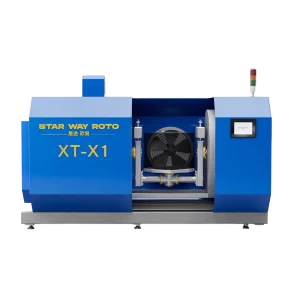
Custom Lab Machine for PE, PP, PA
Custom Lab Machine for PE, PP, PA - Intelligent Temperature Control
View Product Details
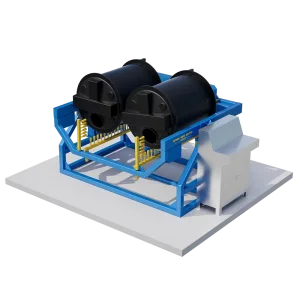
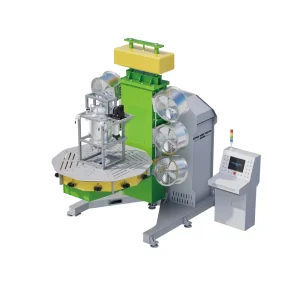
Small Open Flame Rock and Roll Machine
Small Open Flame Rock and Roll Machine for Hollow Products
View Product Details
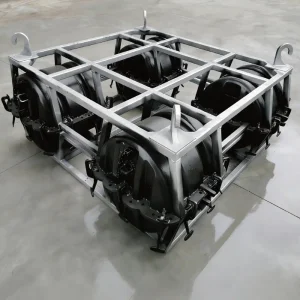
ODM Steel Mould
ODM Precision Steel Mould for Structural Tanks & Vessels
View Product Details
China Lab Machine Manufacturer
Pilot R&D Lab Rotomolding Machine for Material Testing
View Product Details
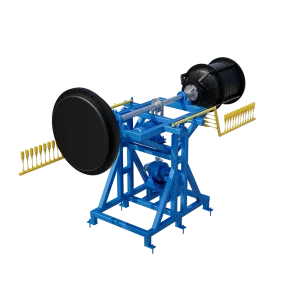
U-arm Open Flame Rock and Roll Machine
Custom U-arm Open Flame Rock and Roll Machine for Hollow Products
View Product Details
Customizable Shuttle Rotomolding Machine
High-Load Customizable Shuttle Rotomolding Machine
View Product Details
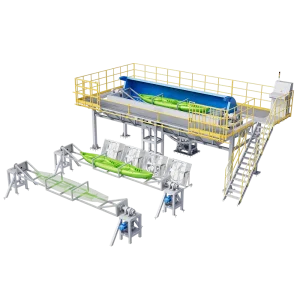
Oven Type Rock and Roll Swing Machine
Oven Type Rock and Roll (Swing) Machine for Marine Yachts & Vessels
View Product Details
CE Electric Heating Rotomolding Machine
CE Certification Electric Heating Eco-Friendly Rotomolding Machine
View Product Details
Technical Whitepaper: Industry Analysis

The Evolution of Rotational Moulding in Modern Polymer Engineering

Rotational moulding (rotomolding) has evolved from a niche manufacturing method for simple hollow toys into a high-precision, low-pressure, high-temperature thermodynamic polymer processing discipline. Unlike high-pressure injection molding or extrusion blow moulding, rotational moulding generates components with essentially zero residual in-mold stress, continuous wall thicknesses across sharp geometry transitions, and uniform molecular density.

In contemporary industrial manufacturing, Rotational Mouldings Limited Manufacturers & Products operate at the confluence of advanced metallurgy, digital twin process control, and complex polymer rheology. Today’s high-capacity carousel, shuttle, and open-flame swing systems process a wide matrix of technical resins—including high-density polyethylene (HDPE), cross-linked polyethylene (XLPE), polypropylene (PP), and technical polyamides (PA6/PA12)—to satisfy mission-critical parameters in fluid dynamics, impact resistance, and environmental stress cracking resistance (ESCR).

CapEx vs. Tooling ROI Dynamics
Rotomolding offers a capital expenditure advantage of 65% to 80% compared to heavy injection tooling. The absence of internal hydraulic clamping forces allows for lighter CNC-milled aluminum or fabricated steel tooling, making it the mathematically superior choice for large-format, double-walled, or geometrically intricate hollow products.
Key Metric: Tooling amortization achievable within <500 production cycles.
23+
Patented Core Technologies
40+
Export Destination Countries
230+
Turnkey Plant Deployments
8,500mm
Max Swing Diameter Envelope
Manufacturing Process Benchmarking

Rotational Moulding vs. Alternative Large-Format Molding Disciplines

Strategic comparison of technical metrics for engineers, supply chain directors, and product designers evaluating hollow part fabrication methods.

Engineering Parameter Rotational Moulding (Rotomolding) Extrusion Blow Moulding Heavy Injection Moulding
Tooling Cost Structure Low to Medium ($5,000 – $45,000 avg.) CNC Cast / Fabricated Steel High ($40,000 – $180,000) High-pressure hardened steel Extremely High ($80,000 – $500,000+) Hardened steel cavity
Molded Residual Stress Virtually Zero (Atmospheric gravity sintering) Medium to High (Radial expansion stress) High to Very High (Hydraulic injection shear forces)
Wall Thickness Uniformity Excellent corner thickening, multi-layer capable Prone to thinning at deep draw corners Extremely uniform, but restricted by draft depths
Volumetric Capacity Range 5 Liters up to 50,000+ Liters seamless Up to 1,000 Liters (constrained by parison sag) Up to 250 Liters (constrained by platen size)
Insert Moulding Flexibility Exceptional (Threaded brass, stainless bushings cast in-situ) Limited (Requires secondary post-mold ultrasonic welding) High (Requires robotic insert placement automation)
Material Matrix Adaptability LLDPE, HDPE, XLPE, PP, PA6, PA12, PVDF, Bio-composites Standard Polyethylene, Polypropylene, PET Broadest range, but sensitive to viscosity variations
Procurement Engineering Matrix

Global Enterprise Procurement Requirements for Rotational Systems

Key auditing checkpoints utilized by Fortune 500 procurement teams when vetting rotational moulding machinery and precision tooling OEM suppliers.

Thermodynamic Airflow Optimization
Direct forced-convection thermal chambers with high-efficiency modulating gas or zero-emission electric infrared heating elements. Guaranteed chamber temperature uniformity within ±3°C to eliminate localized polymer degradation and warpage.
Independent Variable-Speed Bi-Axial Drive
Multi-axis servo-synchronized gearboxes offering precise primary and secondary speed ratios (1:1 up to 1:12). Integrated torque limiting sensors safeguard transmission shafts during rapid heating and cooling thermal cycling.
Real-Time In-Mold Thermal Telemetry (PIAT)
Wireless radio-frequency thermal monitoring recording Peak Internal Air Temperature (PIAT). Guarantees exact polymer sintering and curing stages, eliminating bubble voids, under-cure brittleness, and over-bake thermal oxidation.
Structural Frame Deflection Resistance
Heavy-gauge structural tubular steel armatures normalized for residual weld stress. Capable of bearing extreme mold tooling dynamic payloads from 1,500 kg up to 12,000 kg without mechanical deflection or thermal binding.
Macro Industry Solutions

Turnkey Applications Across Core Global Industrial Sectors

Engineering durable, monolithic, seamless plastic structural solutions engineered to survive extreme mechanical shock, UV degradation, and chemical exposure.

Chemical Storage & Industrial Water Handling
Ultra-heavywall vertical, horizontal, and conical tanks up to 50,000L. Manufactured from cross-linked high-density polyethylene (XLPE) with multi-layer barrier linings engineered for aggressive sulfuric acid, sodium hypochlorite, and diesel fuel handling without permeation.
Marine, Aquatics & Offshore Buoyancy
Zero-leakage monolithic marine hulls, navigation buoys, offshore floating docks, and recreational kayaks. Utilizing UV15-stabilized virgin polymer matrices with internal polyurethane foam-fill structural cores for unsinkable marine architecture.
Heavy Automotive, AgTech & Commercial Cabins
Integrated fuel tanks, DEF/Urea reservoirs, air intake ducts, mudguards, and dual-skin insulated tractor roof canopies meeting ISO 3471 ROPS/FOPS structural strength standards and UL94-V0 flammability criteria.
Cold Chain Logistics & Pharmaceutical Shippers
High-R-value roto-molded passive cold boxes, ultra-low temperature dry-ice shippers, and insulated fish boxes. Designed with continuous hermetic sealing gaskets and zero-thermal-bridge wall geometry for 120+ hour passive hold times.
Global Compliance & Quality Assurance

Global Engineering Support, Localized Lifecycle Service

Operating an enterprise rotational moulding facility demands uninterrupted reliability. We provide complete Factory Acceptance Testing (FAT), digital commissioning, and on-site engineering installation across North America, the European Union, Latin America, Southeast Asia, and the Middle East.

Every rotomolding system and tooling set engineered by Ningbo StarWay Roto Co., Ltd. is manufactured to the highest international safety, environmental, and structural standards. Our facilities adhere strictly to ISO 9001:2015 quality management and ISO 14001 environmental frameworks.

Compliance Framework
International Certification Adherence
  • CE Machinery Directive 2006/42/EC & Low Voltage Directive
  • ISO 9001:2015 Quality Management Systems
  • FDA 21 CFR 177.1520 & NSF/ANSI 61 Compliant Food/Water Tooling
  • UL94 Flammability & UN Packing Group II/III Drop Test Validation
R&D Roadmap (2026–2035)

Next-Generation Rotational Moulding Innovations

Pioneering smart manufacturing technologies, closed-loop AI temperature regulation, direct-electric heating, and circular polymer recycling paradigms.

Phase 01 · 2026-2027
AI Smart Closed-Loop Thermal Control
Real-time infrared surface pyrometers coupled with neural networks that modulate burner intensity millisecond-by-millisecond to match fluctuating ambient humidity and mould mass variations.
Phase 02 · 2028-2029
Zero-Carbon Direct Electric Tooling
Elimination of massive convection ovens. Integration of embedded conductive silicone and ceramic heating elements built directly into the mould shell, slashing thermal energy waste by up to 60%.
Phase 03 · 2030-2032
100% Post-Consumer Recycled (PCR) Optimization
Novel twin-stage compounding and pulverized compatibilizers enabling high-performance structural roto-molding with 100% ocean-bound and post-consumer polyolefin resins without loss of impact ductility.
Phase 04 · 2033-2035
Autonomous Robotic De-Moulding & Trimming
End-to-end lights-out rotomolding cells utilizing 6-axis articulated industrial robots for automatic resin dispensing, mold clamping, pneumatic part extraction, and flash-less CNC routing.
Industrial Production Machinery

High-Capacity Production Lines & Specialized Systems

Review our heavy-duty carousel systems, electrical-heated machines, compact lined shuttle equipment, and large-capacity swing arm installations for commercial mass manufacturing.
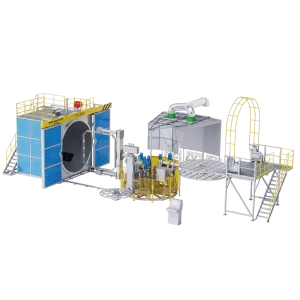
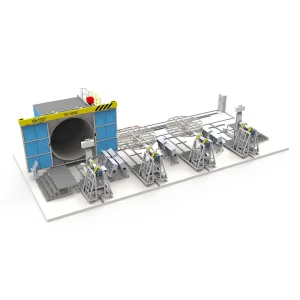
Carousel Rotomolding Machine Suppliers
High-Quality Carousel Rotomolding Machine with Independent Stations
View Product Details
China Small Open Flame Rock And Roll Machine
Small Open Flame Rock And Roll Machine for Hollow Plastic Tanks
View Product Details
Lab Machine for PE PP PA Materials
Intelligent Temperature Control Lab Machine for PE, PP, PA R&D Testing
View Product Details
ODM Electric Heating Rotomolding Machine
ODM Electric Heating Rotomolding Machine for Clean Energy Factories
View Product Details
Electrical Heating Rotomolding Machine Mould
Electrical Heating Rotomolding Machine & Precision Mould Engineering
View Product Details
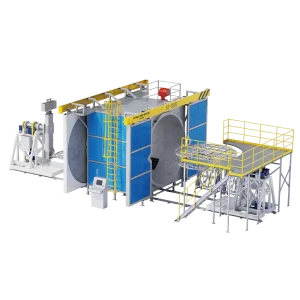
High-Load Shuttle Rotomolding Machine
High-Load Shuttle Rotomolding Machine for Extra-Large Tanks
View Product Details
U-arm Open Flame Rock and Roll Machine for Large Hollow Products
U-arm Open Flame Rock and Roll Machine for Large Cylindrical Tanks
View Product Details
Famous Lined Shuttle Machine
Lined Shuttle Machine with Reduced Floor Footprint Production
View Product Details
Knowledge Base & FAQ

Technical & Commercial FAQ on Rotational Mouldings Limited Solutions

Authoritative answers to the most critical mechanical engineering, polymer chemistry, and operational questions surrounding industrial rotational moulding.

How does Peak Internal Air Temperature (PIAT) affect the mechanical ductility of rotomolded parts?
PIAT is the definitive metric governing the fusion and sintering of polymer powders. If the internal air temperature inside the mould cavity fails to reach the resin's optimal sintering threshold (typically 195°C–215°C for standard LLDPE/HDPE), microscopic air bubbles remain trapped in the polymer wall, resulting in brittle failure and low impact strength. Conversely, exceeding the optimal PIAT induces thermal degradation, cross-linking breakdown, and discoloration, severely reducing Environmental Stress Cracking Resistance (ESCR).
When should an engineer choose CNC Machined Aluminum Moulds versus Cast Aluminum or Steel Tooling?
CNC Billet Machined Aluminum moulds are recommended when high dimensional tolerances (±0.2mm), complex parting line geometries, fine micro-textures, or zero-porosity surface finishes are required (e.g., automotive interior ducts, high-end medical enclosures). Cast Aluminum moulds provide an optimal balance of cost and performance for organic shapes and aesthetic consumer products (e.g., kayaks, playground equipment). Fabricated Sheet Steel moulds are best suited for large, simple geometric forms like large bulk chemical storage tanks (5,000L to 50,000L) due to lower initial tooling expense and fast fabrication lead times.
What are the advantages of Carousel Systems versus Shuttle and Rock & Roll Machines?
Carousel rotomolding machines feature 3 to 5 independent arms operating on synchronized indexing cycles through dedicated Heating, Pre-Cooling, Secondary Cooling, and Loading/Unloading stations. This maximizes high-volume output and minimizes oven idle time. Shuttle machines feature a central oven with two independently driven carts that enter from opposite sides, providing superior operational flexibility for running moulds with radically different cycle times. Rock & Roll machines utilize bi-directional rock (tilt) along one axis and 360° roll around another, making them exceptionally cost-efficient and ideal for long, slender hollow products like kayaks, pipes, pontoons, and cylindrical tanks.
How are multi-layer barrier structures achieved in a single rotomolding cycle?
Multi-layer parts (e.g., 2-layer or 3-layer fuel tanks, insulated cooler boxes) are manufactured using drop-box technology or thermally activated barrier capsules inside the mould. The outer layer resin (e.g., virgin UV-stabilized HDPE) is sintered first. Once the outer layer melts against the mould wall, the internal drop-box opens automatically via pneumatic or thermal actuators, releasing the second charge (such as foamed polyethylene or EVOH/Polyamide barrier resin) to form a seamless composite wall without demoulding.
What is the typical shrink rate calculation for rotomolded Polyethylene components?
Linear shrinkage for rotational molding grade polyethylene typically ranges between 2.5% and 3.5% (0.025 to 0.035 mm/mm). The exact rate is influenced by resin density, cooling rate, wall thickness, and pigment formulations. Forced rapid cooling with water mist increases internal void density and warpage while reducing overall shrinkage, whereas slow, controlled convective air cooling yields higher polymer crystallinity, increased stiffness, and higher shrinkage. Advanced mold cavities are CNC-machined with volumetric compensation algorithms tailored to the exact raw material resin specification.