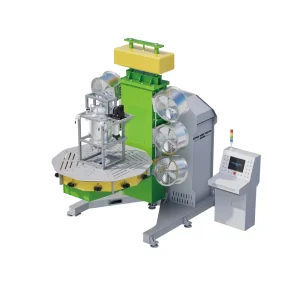

Explore our top-tier rotational molding machinery, automated rock and roll lines, cast aluminum moulds, and precision laboratory testing systems designed for global industrial applications.
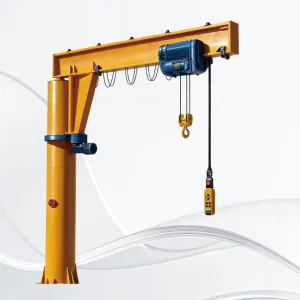
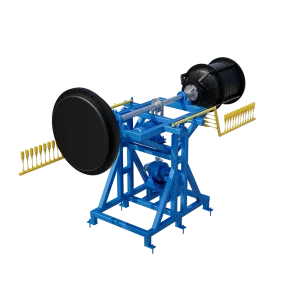
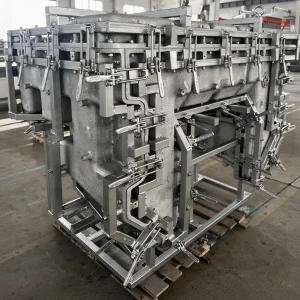
Understanding the thermoforming kinetics, biaxial stress minimization, and dynamic wall-thickness uniformity in large-scale hollow polyolefin manufacturing.
Rotational molding (commonly known as roto molding) represents a unique thermomechanical processing method tailored specifically for producing seamless, stress-free, hollow plastic products ranging from small intricate medical containers to massive multi-thousand-liter industrial chemical storage tanks. Unlike high-pressure injection molding or extrusion blow molding, custom roto molding operates under near-ambient atmospheric pressure within a closed heating chamber. This absence of external clamping pressure prevents shear stress generation inside the polymer matrix, resulting in finished products with unparalleled impact resistance, structural longevity, and uniform wall thickness distribution.
At Ningbo StarWay Roto Co., Ltd. (established in 2009, bringing together over 23 years of core rotational molding engineering experience), our production framework integrates state-of-the-art 5-axis CNC mold machining, dynamic biaxial balance arms, and real-time internal air temperature (IAT) telemetry. Operating across a modern 20-acre production hub with over 40 dedicated R&D engineers (80% holding specialized degrees in mechanical and polymer science), StarWay Roto continues to redefine global expectations for custom roto molding plastic manufacturers and finished machinery products.
Analysis of technological disruptions, decarbonization mandates, and material science advances reshaping global plastics manufacturing.
Global decarbonization initiatives are driving a rapid transition from traditional open-flame gas burners to intelligent electric heating rotomolding machines. Closed-loop electric heating chambers achieve up to 35% thermal energy savings, eliminate localized hot spots, reduce thermal degradation of polyolefins, and maintain precise chamber temperatures within ±1.5°C.
Modern rotomolding lines now utilize wireless Internal Air Temperature (IAT) telemetry probes inside the mould cavity. By measuring exact polymer melting, bubble dissolution (densification), and crystallization phases in real-time, software algorithms dynamically optimize arm rotational speeds and heating cycle durations, eliminating human error.
While Linear Low-Density Polyethylene (LLDPE) remains the dominant material, high-value industrial applications are shifting toward Cross-linked Polyethylene (XLPE), Polyamide 12 (PA12), and Polypropylene (PP). These advanced polymers allow rotomolded products to withstand aggressive industrial chemicals, higher working pressures, and extreme thermal conditions.
Procurement demands for ultra-lightweight yet structurally rigid products have catalyzed the adoption of multi-layer rotomolding. By combining an outer solid UV-stabilized skin with a middle micro-cellular polyethylene foam core and a chemical-resistant inner liner, structural stiffness increases up to 400% without increasing component mass.
Decoding what B2B buyers, Tier-1 automotive integrators, and OEM engineers require when selecting custom roto molding plastic manufacturers.
Global enterprise buyers face stringent risk management protocols when selecting custom rotational molding partners. The sourcing process has evolved from simple unit-cost evaluation to a holistic assessment of Design for Manufacturability (DFM), finite element structural validation, raw material traceability, and long-term tooling durability.
| Industry Sector | Core Product Focus | Primary Technical Intent | Critical Sourcing Requirements |
|---|---|---|---|
| Automotive & Heavy OEM | Diesel Fuel Tanks, Hydraulic Fluid Tanks, Engine Air Ducts | Zero-leakage, high impact resistance, complex tight-tolerance geometries | ISO/IATF compliance, PA12 processing capability, 3D CMM inspection, flame retardancy |
| Agriculture & Livestock | Automatic Feeders, Chemical Dosing Hoppers, Fertilizer Vessels | Chemical inertness, smooth interior walls for easy cleaning, UV-8 stabilization | Food-grade FDA/REACH compliance, high-volume carousel output, mold cost optimization |
| Water & Chemical Storage | Vertical Bulk Tanks, Septic Systems, Double-Wall Chemical Vessels | ESCR (Environmental Stress Crack Resistance), high hoop stress capacity | Wall thickness monitoring (+/- 5%), large swing diameter machines (e.g., StarWay S2-8500) |
| Cold-Chain & Logistics | Insulated Fish Boxes, Vaccine Transport Containers, Heavy Pallets | Thermal insulation coefficient, structural foam core retention, hygienic surface | Multi-layer polyurethane or PE foam injection capability, impact toughness at -40°C |
One of the main criteria separating world-class custom roto molding manufacturers from generic suppliers is the management of polymer crystallization dynamics. When cooling rotational molded polyethylene, non-uniform cooling rates between the mold face and internal air cause severe warpage and residual tensile stresses. Top-tier manufacturers like StarWay Roto employ computerized, multi-zone air and water mist cooling cycles coupled with real-time mold pressure relief valves to ensure dimensional stability and zero internal stress accumulation.
How Ningbo StarWay Roto leverages full vertical integration, specialized industrial clusters, and 23+ technology patents to deliver unmatched global value.
In the global machinery and custom plastic component market, supply chain agility and cost-to-performance ratios dictate competitive dominance. Ningbo StarWay Roto Co., Ltd., located in Ningbo, Zhejiang—one of the world's premier advanced manufacturing hubs—operates as a fully integrated enterprise encompassing design, mold foundry, machine fabrication, assembly, testing, and direct global export.
Many western equipment vendors outsource mold casting or structural steel framing to third parties, adding sub-vendor lead times and margin stack. StarWay Roto manages the entirety of the manufacturing chain inside its 20-acre facility:
In 2022, StarWay Roto completed a landmark milestone in the rotational molding industry by designing, manufacturing, and commissioning the world's largest rotational molding machine—Model S2-8500. Capable of handling colossal molds with swing diameters exceeding 8.5 meters, this engineering breakthrough demonstrated StarWay's structural calculation capabilities, dynamic counterweight balancing systems, and advanced multi-zone burner control under extreme payload conditions.
Selecting the appropriate machine architecture based on production throughput, mold footprint, and heating technology.
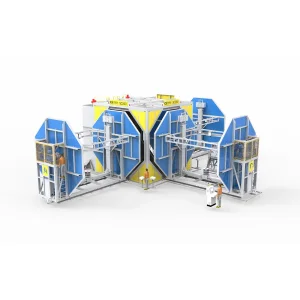
Configured with 3 or 4 independent arms operating in a fixed circular index pattern. Ideal for high-volume, standardized production runs (such as water tanks and road barriers). Each station (Heating, Pre-Cooling, Cooling, Unloading/Loading) operates independently, maximizing overall plant output rate.
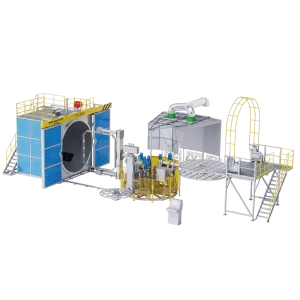
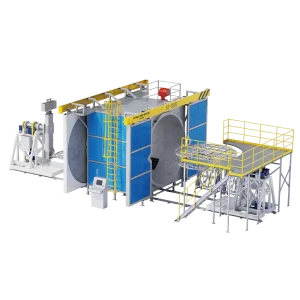
Features a central heating chamber with one or two shuttle carts moving linearly along heavy-duty tracks. Offers supreme flexibility for custom molding operations where different molds require drastically different cook times, arm rotation ratios, or resin changeovers.
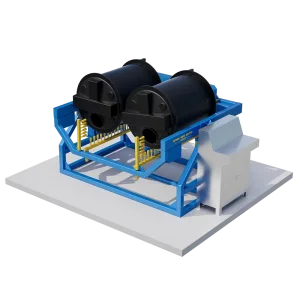
Designed specifically for long, cylindrical, or narrow hollow items such as kayaks, canoes, pipes, and slender agricultural troughs. The machine rotates the mold 360 degrees along the major axis while rocking it incrementally along the minor axis, drastically reducing floor space footprint.
From harsh agricultural fields to extreme marine environments—how custom rotomolded products perform under real-world stresses.
In modern agricultural applications, equipment must withstand constant exposure to corrosive liquid fertilizers, animal waste, and intense solar UV radiation. Custom rotomolded automatic feeding systems, calf hutches, and pesticide spray tanks produced via StarWay Roto equipment incorporate high-density UV-stabilized LLDPE powders (UV-8 to UV-24 ratings). The seamless continuous wall construction eliminates stress-concentration seams, preventing premature cracking under cyclic mechanical vibrations in tractor-towed units.
Leading global manufacturers of excavators, agricultural tractors, and mining trucks are replacing traditional welded steel fuel and hydraulic fluid tanks with custom rotomolded plastic assemblies. Rotomolded tanks offer complex 3D shape conformity that fits neatly into tight engine bay spaces, weight reductions of up to 40%, zero interior corrosion rust flakes that clog fuel injectors, and superior impact absorption when operating on rugged construction terrains.
Large-scale vertical chemical storage vessels engineered for containment of acids, sodium hypochlorite, and industrial wastewater require strict wall-thickness control. By pairing StarWay's Carousel and Shuttle machines with precision cast aluminum tooling, chemical plant integrators achieve precise multi-layer wall profiles—featuring an outer UV protective shell, a thick virgin PE structural core, and a modified chemical-resistant liner layer.
Detailed answers to critical engineering, tooling, material selection, and procurement questions regarding custom roto molding.
Custom rotomolded plastic components offer three main structural advantages: 1) Zero Residual Molded-in Stress: Because the polymer powder melts under atmospheric pressure without high-pressure injection shear, the finished part retains maximum impact resistance and zero internal strain. 2) Uniform Corner Thickness: In contrast to blow molding, where outer corners stretch thin, rotational molding causes polymer powder to naturally build up extra wall thickness on exterior radii, enhancing structural rigidity. 3) Economic Tooling Cost: Rotomolding moulds operate under ambient pressure, allowing them to be constructed from lightweight cast aluminum or fabricated sheet steel at 25% to 40% of the cost of heavy steel injection moulds.
Wall-thickness distribution is controlled through precise control of the major-to-minor arm rotational speed ratio (Biaxial Rotation Ratio), mold heat transfer optimization, and multi-zone burner control. StarWay's PLC software allows engineers to dynamically alter the speed ratio mid-cycle. Furthermore, specialized thermal shielding or external mold heat sink pins are placed on specific mold faces to pull more heat and draw thicker polymer deposition where structural reinforcement is needed.
Cast Aluminum Tooling (A356 Alloy): Best suited for products with complex 3D curves, intricate surface textures, logos, or tight dimensional tolerances (such as kayak hulls, medical housings, and engine ducts). Aluminum offers superior heat conductivity, reducing heating cycle times. Fabricated Steel Moulds: Ideal for large, straightforward hollow shapes such as simple rectangular or cylindrical water tanks. Steel molds have lower initial tooling costs for very large sizes but lack the fine surface detail capabilities of CNC cast aluminum.
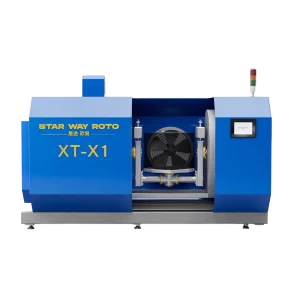
Measuring chamber oven temperature alone is insufficient because different mold wall thicknesses delay heat transfer inside the cavity. IAT telemetry directly measures the air temperature inside the hollow mold cavity. Key thermodynamic phase points—such as the exact moment the polymer melts (T1), the completion of bubble removal/densification (T2), and the onset of polymer crystallization during cooling (T3)—are revealed by IAT curves. This prevents under-curing (brittle parts) or over-curing (thermal degradation and pinholes).
StarWay equipment handles a wide spectrum of thermopolymer powders, including Linear Low-Density Polyethylene (LLDPE), High-Density Polyethylene (HDPE), Cross-linked Polyethylene (XLPE), Polypropylene (PP), Polyamide 6 / Polyamide 12 (PA6/PA12), and Polyvinyl Chloride (PVC) plastisols. Advanced electric heating ovens provide the strict temperature stability needed for high-temperature engineering plastics like PA12 (melting point ~178°C with strict degradation thresholds).
Thanks to StarWay's vertically integrated facility in Ningbo, standard custom cast aluminum mold development (from CAD sign-off to sample part testing) takes 30 to 45 days. Complete turnkey rotomolding machine fabrication (Shuttle or Carousel lines) typically ranges between 60 and 75 days, including factory acceptance testing (FAT) prior to international container shipment.
StarWay Roto provides comprehensive post-sales service across 40+ countries. We deploy senior field service engineers for on-site foundation layout, mechanical assembly, electrical wiring verification, PLC debugging, and operator safety training. Remote IoT diagnostic modules installed on our PLC panels allow our engineering team in China to perform real-time software updates and trouble diagnostics 24/7 worldwide.
All StarWay rotational molding machinery lines carry full European Conformity (CE) certification, adhering strictly to EN ISO 12100 machine safety standards and EN 60204-1 electrical safety directives. Electrical enclosures utilize premium Siemens, Schneider, and Omron automation components to ensure compliance with North American UL and European IEC standards.
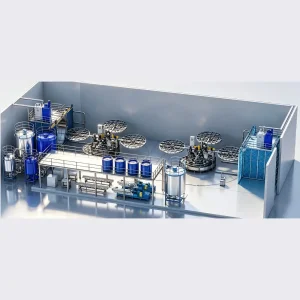
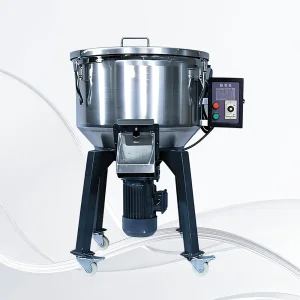
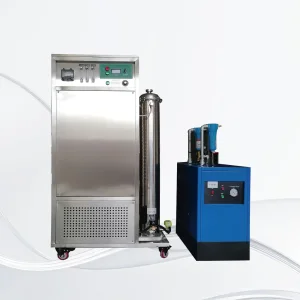
Discover our comprehensive range of high-load shuttle systems, precision automated feeding stations, and high-efficiency rock and roll equipment.
Whether you require an automated carousel machinery line, precision CNC aluminum tooling, or expert DFM analysis for new plastic product development—our senior engineering team is ready to assist.
Contact Engineering Team