The industrial landscape for rotational molding (rotomolding) machinery is undergoing a monumental paradigm shift. As global procurement directors, manufacturing executives, and OEM design engineers seek to buy rotary moulding machinery, the focus has evolved from basic mechanical reliability to high-precision thermo-dynamics, Industry 4.0 IoT connectivity, and carbon-neutral operational capability. Selecting the right manufacturer requires a granular understanding of machine kinematics, thermal distribution physics, and long-term total cost of ownership (TCO).
Rotational molding is uniquely suited for producing seamless, stress-free, double-walled hollow plastic items ranging from massive 20,000-liter chemical storage tanks to complex automotive air ducts, insulated medical cold-chain containers, and high-performance marine craft. Unlike injection or blow molding, which require extreme hydraulic clamping pressures and expensive hardened-steel tooling, rotomolding relies on biaxial rotation inside a heated oven zone under atmospheric pressure. This fundamental physical distinction grants rotomolding its hallmark structural advantages: uniform wall thickness at corners, zero residual stress concentrations, and unmatched flexibility for complex geometries.
Strategic Insight for Procurement Officers: Modern enterprise purchasing decisions must transcend initial equipment acquisition costs. Top-tier global manufacturers now differentiate themselves through thermal control precision (reducing cycle times by 15-25%), automated mold balancing arms, and low-emission hybrid heating chambers.
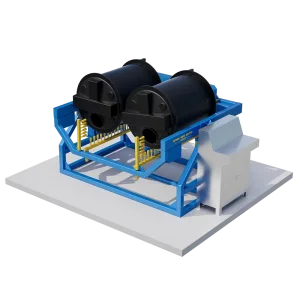
When evaluating rotary moulding companies, procurement teams must align their operational throughput requirements with the correct machine architecture. Industrial manufacturers primarily construct four distinct equipment configurations:
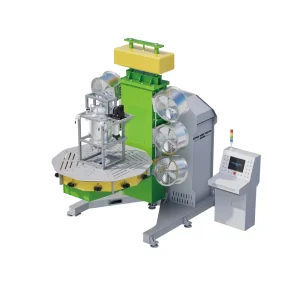
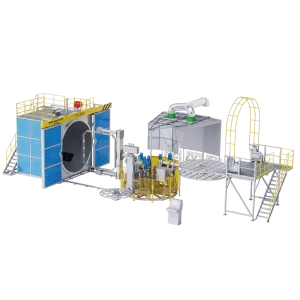
Featuring 3 to 4 indexing arms rotating around a central hub. Independent arm carousels allow each station (heating, cooling, loading/unloading) to cycle autonomously, optimizing thermal recipes for multi-product operations.
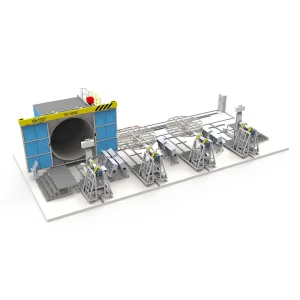
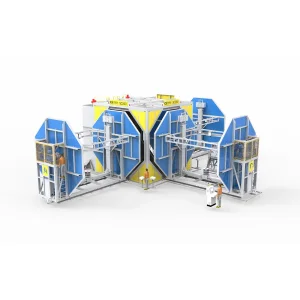
Designed for high flexibility and large product footprints. Two carts travel linearly on tracks into a shared central heating oven from opposite sides, offering up to 30% reduction in factory floor space requirement.
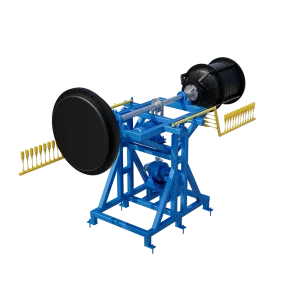
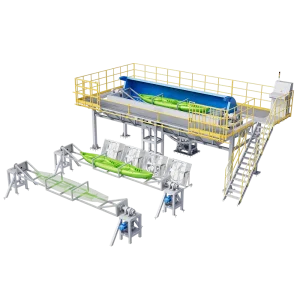
Specialized for long, narrow hollow components such as kayaks, vessel hulls, and steel-lined pipes. The mold rotates 360° on its longitudinal axis while rocking up to 45° vertically, drastically minimizing oven volume.
When enterprise buyers query search engines for "Buy Rotary Moulding Manufacturers & Companies," their underlying search intent spans technical feasibility verification, factory capability audits, supply chain compliance, and financial risk mitigation.
To make an informed capital investment, procurement executives must dissect the complete lifecycle expenditures of rotomolding equipment. While machinery purchase price accounts for initial CapEx, long-term operational expenditures (OpEx)—specifically gas/electric energy burn rates, compressed air utilization, mold maintenance downtime, and scrap material rates—dominate 75% of total lifecycle costs over a 10-year machine lifespan.
| Evaluation Dimension | Traditional Open Flame Systems | Standard Gas-Fired Oven Systems | Advanced Electric/Smart Heating Systems |
|---|---|---|---|
| Thermal Energy Efficiency | Low (30% - 40%) | Moderate (60% - 70%) | High (88% - 94%) |
| Temperature Uniformity | ±15°C Variance | ±5°C Variance | ±1.5°C Smart Closed-Loop Control |
| Floor Space Utilization | Medium Footprint | Large Oven Footprint | Compact (30% Space Optimization) |
| Environmental Impact | High Direct Emissions | Low-to-Medium CO2 Footprint | Zero Direct Emissions / Eco-Friendly |
| Material Compatibility | Standard LLDPE / HDPE | LLDPE, HDPE, Cross-linked PE | Specialty PE, PP, PA (Nylon 6/12), PC |
| Automation Integration | Manual Arm Controls | Semi-Automated PLC | Full Industry 4.0 IoT & Robotic Arms |
China has established itself as the world’s undisputed epicenter for rotational molding machinery engineering, precision mold casting, and smart automation integration. Enterprise buyers looking to purchase rotary moulding systems benefit immensely from the synergistic industrial clusters established in regions like Zhejiang and Jiangsu.
The advantage of sourcing from tier-one Chinese rotomolding manufacturers extends far beyond competitive labor dynamics. It lies in vertical supply chain consolidation, rapid custom prototyping, and massive capital reinvestment into Industry 4.0 infrastructure.
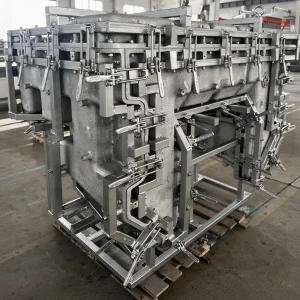
Chinese manufacturers leverage high-speed 5-axis CNC machining centers to produce A356-grade cast aluminum molds. This guarantees micro-fine surface finishes, zero porosity, and perfectly balanced thermal conductivity.
With localized component ecosystems (Siemens PLC, Italian Riello/Weishaupt burners, Schneider electrics), equipment build lead times are reduced by up to 40% compared to traditional European machinery builders.
Leading exporters comply strictly with European CE directives, ISO 9001 quality management, and international safety protocols, ensuring seamless factory integration and regulatory approval worldwide.
Rotational molding is not a one-size-fits-all technology. Industrial application demands vary significantly across geographical markets and regulatory domains. Top-tier machinery suppliers engineer custom configurations tailored to specific regional operational requirements.
Demand centers around massive ASTM D1998 compliant vertical water tanks, chemical storage vessels, double-walled septic tanks, and heavy-duty DOT transport containers. Machines require high weight-capacity spindles (up to 5,000 kg load capacity) and extra-large oven chambers.
Driven by strict EU environmental directives and high natural gas tariffs. European buyers prioritize electric heating ovens, closed-loop thermal recovery, and automated loading cells for manufacturing automotive urea tanks, EV battery housings, and high-end outdoor leisure products.
Focuses heavily on high-throughput multi-layer tank production capable of processing UV-stabilized LLDPE resins resistant to extreme ambient operating temperatures. Rock & Roll and multi-arm shuttle machines dominate this regional industrial sector.
Evaluating heating mediums involves analyzing local energy tariffs, factory emission standards, and material processing sensitivity. Gas-fired ovens (utilizing natural gas or LPG burners) offer lower per-BTU operational costs in regions with cheap gas infrastructure. However, they introduce thermal gradients (±5°C to ±10°C) and require exhaust flue management.
Electric heating ovens, by contrast, deliver exceptional thermal control precision (±1.5°C), zero localized carbon emissions, and silent operation. They are ideal for high-tech engineered polymers such as Polypropylene (PP), Polyamide (Nylon 6/12), and Polycarbonate (PC), where minor thermal variances cause pinholes, degradation, or wall thickness distortion.
In a fixed-arm carousel machine, all arms index simultaneously. The total cycle time is dictated by whichever station takes the longest (usually the heating cycle of the largest mold). This forces smaller molds on adjacent arms to overheat or wait idly in the cooling bay, creating severe operational bottlenecks.
Independent arm carousel rotomolding machines allow each arm to index autonomously into the oven, cooling chamber, and servicing station based on customized thermal recipes. This increases overall plant throughput by 20% to 35%, reduces scrap rates, and enables simultaneous production of drastically different product sizes on a single machine framework.
Fabricated sheet steel molds are cost-effective for large, geometrically simple products like cylindrical water tanks and basic containers. They offer quick fabrication times but limited complex detailing and slower thermal heat transfer rates.
Cast aluminum molds (CNC machined from A356 alloy) are essential for complex products requiring intricate surface textures, tight dimensional tolerances, molded-in threads, or undercut features (such as kayaks, fuel tanks, and medical housings). Aluminum possesses superior thermal conductivity—heating and cooling nearly twice as fast as steel—which directly reduces overall cycle times and lowers energy consumption per part.
Traditional rotomolding relied on timer-based oven cycles, leading to high scrap rates caused by day-to-night ambient temperature fluctuations. Internal Air Temperature (IAT) monitoring systems utilize wireless, real-time thermo-sensors inside the mold cavity during rotation.
By measuring the exact phase transitions of the polymer resin—powder melting, solid fusion, bubble removal, and peak internal air temperature (PIAT)—the machine’s PLC automatically triggers arm transfer into the cooling chamber at the exact moment of optimal polymer cure. This eliminates under-curing (brittle parts) and over-curing (thermal degradation and unpleasant odor).
Standard circular carousel machines require a large radial footprint to allow for 360-degree arm rotation and multiple servicing stations, often demanding a minimum factory clearance of 15m x 15m. Lined shuttle rotomolding machines arrange stations in a linear layout.
With a central shared heating chamber and shuttle carts traveling left and right along heavy-duty floor rails, lined shuttle systems reduce factory floor space requirements by up to 30% while retaining the ability to run large-volume molds independently. This layout is particularly advantageous for retrofitting existing industrial facilities with constrained ceiling heights or narrow bay spans.
Leading Chinese rotational molding machinery exporters integrate industrial IoT gateways and cloud-connected PLCs (such as Siemens MindSphere or Delta IoT) into their control panels. This architecture allows factory engineers in China to perform real-time diagnostic checks, firmware updates, and PLC logic troubleshooting remotely anywhere in the world.
Furthermore, premier manufacturers maintain regional spare parts hubs, partner with local industrial automation integrators, and provide comprehensive 3D digital twin maintenance manuals to ensure maximum machine uptime (MTBF > 15,000 hours) for global buyers.